
News
UN demands accountability and public apology over what it claims enforced disappearances here


Sri Lanka must take tangible measures to determine and disclose the fates and whereabouts of tens of thousands of people who have been subjected to enforced disappearance over the decades and hold those responsible to account, a UN Human Rights Office said yesterday (17)
The UN special report asked the Government to acknowledge the involvement of state security forces and affiliated paramilitary groups, and to issue a public apology.
“This report is yet another reminder that all Sri Lankans who have been subjected to enforced disappearance must never be forgotten,” said UN High Commissioner for Human Rights Volker Türk. “Their families and those who care about them have been waiting for so long. They are entitled to know the truth”.
“The Government owes it to all those who have been forcibly disappeared. It is critical for these crimes to be investigated fully. These crimes haunt not only their loved ones, but entire communities and Sri Lankan society as a whole”, the report added.
Despite some positive formal steps by successive governments, such as the ratification of the International Convention for the Protection of All Persons from Enforced Disappearance, the establishment of the Office on Missing Persons and the Office for Reparations, tangible progress on the ground towards comprehensively resolving individual cases has remained limited, the report finds.
Between the 1970s and 2009, widespread enforced disappearances were carried out primarily by Sri Lankan security forces and affiliated paramilitary groups. The Liberation Tigers of Tamil Eelam also engaged in abductions which the UN Working Group on Enforced or Involuntary Disappearances described as “tantamount to enforced disappearances”, it mentioned.
Based on individual and group interviews, the report details the enduring psychological, social, and economic impact of enforced disappearances on the families of those forcibly disappeared, especially women. As most disappeared individuals have been male, women have often become the sole income-earner for a family, in a labour environment that poses many obstacles to women’s participation, including risks of sexual harassment and exploitation.
It adds that many women who have been at the forefront of efforts to find the disappeared have themselves been subjected to violations, including harassment, intimidation, surveillance, arbitrary detention, beatings and torture at the hands of army and police. “They told me if I continue, they will cut my husband in pieces or that they will go after my children,” said a woman who is still seeking a loved one.
Under international law, it is a clear obligation for the State to resolve cases of enforced disappearances, which constitute continuing violations, until the fate and whereabouts of those disappeared are clarified, said the High Commissioner.
Yet, most victim families remain without such clarification. “Two weeks passed, then two months, then two years. Now it has been 32 years, and I am still waiting,” said a man who testified before a national commission of inquiry about his disappeared son.
“Successive commissions of inquiry have been created by the Government. However, only a few of their reports have been made public and even when published, access has usually been limited. Most recommendations, particularly those relating to criminal accountability, have not been implemented. Alleged perpetrators, including current and former senior officials and diplomats, continue to evade justice.”
Despite the passage of nearly 15 years since the end of the armed conflict, and many decades since the earliest waves of enforced disappearances, Sri Lankan authorities are still failing to ensure accountability for these violations, it added..

News
Development projects can deliver results to the people more quickly when the political authority and the public service work together towards a common goal – PM

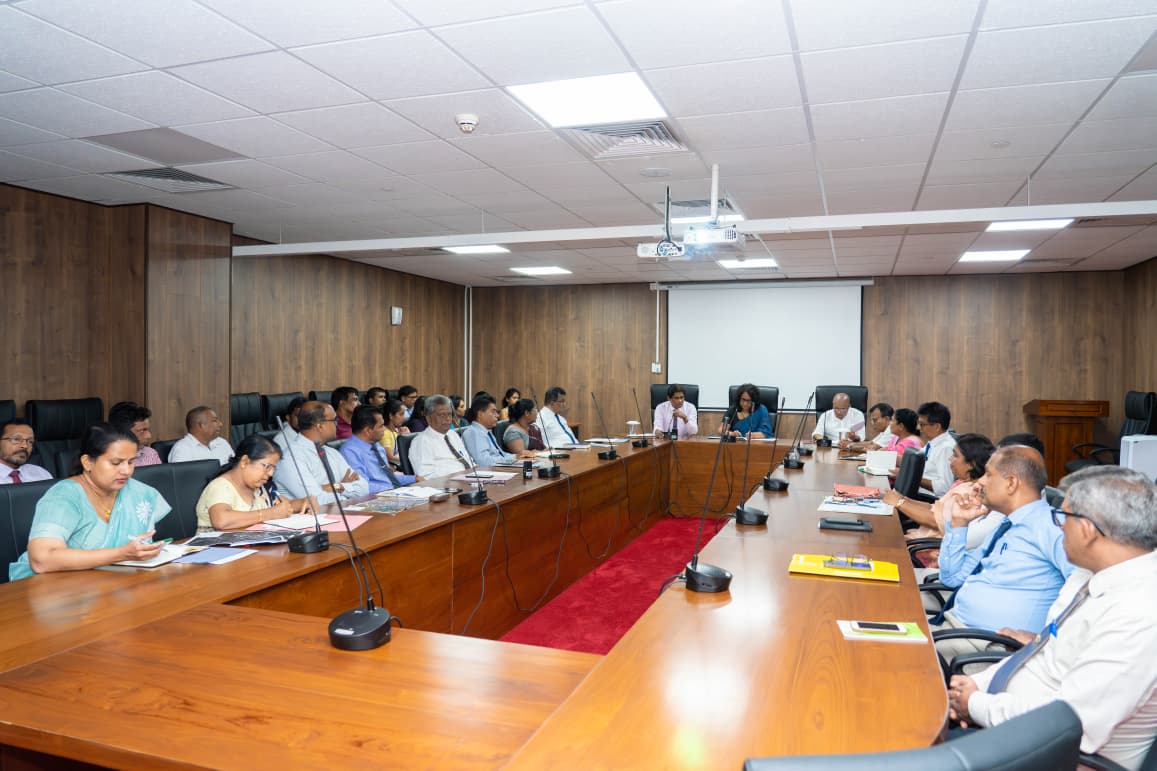
Prime Minister Dr. Harini Amarasuriya stated that development projects can deliver results to the people more quickly when the political authority and the public service work together towards a common, people-oriented objective.
The Prime Minister made these remarks while participating in a discussion held on Friday [September 18] at the Western Province Council Auditorium to review the progress of the development project to rehabilitate Rathmalana Kandawala Road and the drainage system on either side of the road, within the Dehiwala–Mount Lavinia Municipal Council limits in the Colombo District.
The project, which commenced on September 10, 2026, is scheduled to be completed before June 30, 2027. Implemented by the Provincial Road Development Authority (PRDA), the project includes the construction of a bridge at a cost of Rs. 64 million, the rehabilitation of the drainage system at a cost of Rs. 930 million, and the rehabilitation of the road at a cost of Rs. 115 million.
The Prime Minister also paid special attention to the progress of the responsibilities assigned to the Western Province Council, the Irrigation Department and the Ratmalana Divisional Secretariat in accordance with decisions taken at the previous committee meeting. Attention was also given to the current status of the plans being carried out by the Sri Lanka Land Development Corporation (SLLRDC), as well as the construction and maintenance activities being undertaken by the Provincial Road Development Authority (PRDA).
Commending the expedite and commendable progress of the project, the Prime Minister particularly appreciated the commitment demonstrated by officials of the relevant government institutions to work in close coordination with one another and in collaboration with the political authority.
The Prime Minister also emphasised the importance of taking measures well in advance to control flooding and minimise its impact on Colombo and several other districts in view of the rainy weather that may affect the Western Province during the latter part of this year.
The meeting was attended by the Chairman of the Colombo District Coordinating Committee and Member of Parliament Lakshman Nipuna Arachchi, Chairperson of the Ratmalana Divisional Coordinating Committee and Member of Parliament Samanmalee Gunasinghe, Chairman of the Roads Sub-Committee of the Colombo District Coordinating Committee Dewananda Suraweera, Mayor of the Dehiwala–Mount Lavinia Municipal Council Parakum Shantha, Chief Secretary of the Western Province K.G. Pradeep Pushpakumara, along with a number of government officials.
[Prime Minister’s Media Division]
News
Landslide Early Warnings issued to the Districts of Colombo, Galle, Kalutara, Kandy, Kegalle, Matara, Nuwara Eliya and Ratnapura

The National Buliding Research Organization has issued Landslide Early Warnings to the Districts of Colombo, Galle, Kalutara, Kandy, Kegalle, Matara, Nuwara Eliya and Ratnapura from 10:00 hrs on 20.09.2026 To 10:00 hrs on 21.09.2026
Accordingly,
LEVEL II (AMBER) landslide early warnings have been issued to the Divisional Secretaries Divisions and surrounding areas of Nagoda and Neluwa in the Galle district, Pasbage Korale in the Kandy district, Dehiowita and Yatiyanthota in the Kegalle district, Pitabeddara in the Matara district, Kotmale, Ambagamuwa and Norwood in the Nuwara Eliya district and Ayagama, Pelmadulla, Ratnapura and Eheliyagoda in the Ratnapura district.
LEVEL I (YELLOW) landslide early warnings have been issued to the Divisional Secretaries Divisions and surrounding areas of Seethawaka in the Colombo district, Palinda Nuwara and Bulathsinhala in the Kalutara district, Ganga Ihala Korale in the Kandy district, Deraniyagala in the Kegalle district, Kotapola in the Matara district and Ratnapura, Kalawana, Kuruwita and
Elapatha in the Ratnapura district.
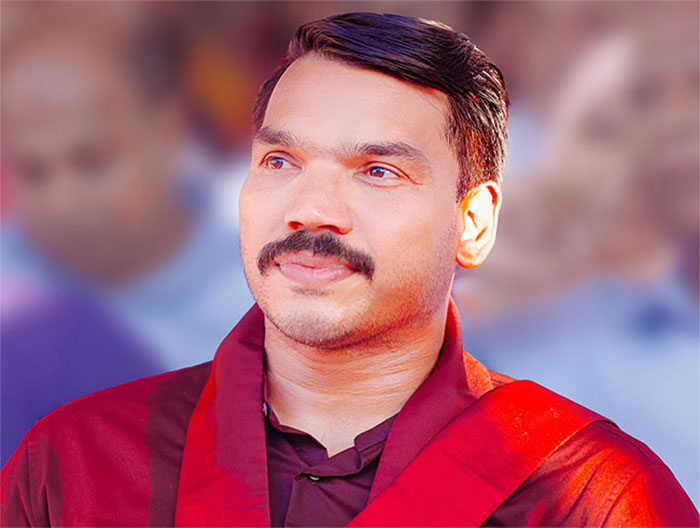
MONETABRIEF – Namal Rajapaksa, son of Sri Lanka’s former leader Mahinda Rajapaksa, was denied bail by the Colombo chief magistrate despite pleading that he needed to attend important Buddhist rituals and travel to India.
The 40-year-old opposition MP’s lawyer, Shavindra Fernando, told the court that Namal had been invited to take part in a pinnacle-capping ceremony at the Pothgul Vihara temple on September 26.
“If my client fails to attend this event, it should be regarded as a disrespect shown to the chief incumbent of the temple,” Fernando said.
He added that Namal had also received an invitation to visit India from 27 September to 1 October and therefore sought bail.
However, he was remanded until September 29 in connection with allegations that he received kickbacks of $800,000 from the $2.3 billion Airbus aircraft purchase deal his father – Mahinda Rajapaksa – approved as president in 2013.
Deputy Solicitor General Janaka Bandara invoked the Buddha’s teachings in response to Namal’s lawyer, Fernando, saying that a judicial matter was far more important than attending a religious ceremony.
“According to what is being said here, the accused himself should have considered this while conducting dealings with Nimal Perera,” Bandara said, referring to the businessman who allegedly routed the bribe money to Namal.
Bandara quoted at length from a recent Supreme Court decision that expanded on the Buddha’s teachings, noting that when a ruler is righteous, the people follow; but when the ruler is dishonest, the citizenry follows that example too.
The 40-year-old MP was arrested on 4 September under the new anti-graft legislation parliament adopted unanimously in 2023.
Namal is primarily accused of accepting $800,000 out of a 1.4 euro million bribe that the then SriLankan Airlines chief executive, Kapila Chandrasena, is alleged to have received from Airbus after finalising a $2.3 billion purchase of aircraft in 2013.
Magistrate Asanga S. Bodaragama told the previous court hearing that he did not have the power to grant Namal bail because the Director-General of the Commission to Investigate Allegations of Bribery or Corruption (CIABOC) had issued a certificate under section 149 of the Act.
The provision stipulates that a magistrate may not grant bail when the CIABOC DG presents a certificate confirming that an offence under the Act has been committed.
The magistrate noted that he could grant bail only in “exceptional circumstances”, but there was no acceptable argument from the defence for him to do so.
A Buddhist temple festival and an invitation from India could not be considered good enough reasons to grant bail.
The businessman who acted as a conduit for the bribe – Nimal Perera – had turned state witness, providing details of how the money was given to Namal through two bank transfers in 2014 and 2015, the court was told.
Under the provisions of the August 2023 Act, Namal Rajapaksa could be held in custody until the conclusion of the trial, even though the magistrate remanded him until September 18, the maximum he could be incarcerated at a time.

Shafali dazzles with 49-ball unbeaten 100 and India march into Asian Games final

Development projects can deliver results to the people more quickly when the political authority and the public service work together towards a common goal – PM

Landslide Early Warnings issued to the Districts of Colombo, Galle, Kalutara, Kandy, Kegalle, Matara, Nuwara Eliya and Ratnapura

Chamari Athapaththu’s unbeaten 83 leads Sri Lanka into final

Showers expected in the Western, Uva, Sabaragamuwa and North-western provinces and in Galle, Matara, Kandy and Nuwara-Eliya Districts.

Namal Rajapaksa Buddhist gambit fails, bail denied

‘Dates have the highest sugar content to fight Coronavirus’

Sunday Island 27 December – Headlines

#SundayIsland 17th December – Headlines

Sunday Island – 28th March

Sunday Island Headlines – 21 March

Sunday Island – 21st February – Headlines
-

 Opinion6 days ago
From Galkissa (Mount Lavinia) to Tambuttegama
-

 News3 days ago
US embassy won’t comment on IGP’s probe into joint drug raid
-

 Features5 days ago
The emptying university: why are academics leaving?
-

 Features6 days ago
Sri Lanka’s university crisis: Brain drain and union action demand urgent reform
-

 Business3 days ago
All-new Bolero MaXX unveiled in Sri Lanka
-

 Opinion6 days ago
Ashraff: From the SLMC towards the National Unity Alliance
-

 Editorial6 days ago
Muscle flexing, astroturfing and dog-and-pony shows
-

 News2 days ago
Bid for Basil’s extradition nears final stage: Police