
News
Climate Zero Foundation roundtable discussion with high-profile delegates on climate change and ZeroPlastic Movement


The Climate Zero Foundation recently hosted a roundtable discussion together with some key delegates, with the keynote address delivered by Erik Solheim, a former diplomat, Minister, UN under Secretary-General and advisor to the Sri Lankan president.
During the discussion held at the Presidential Secretariat, Climate Zero Foundation revealed its plans in tackling climate change backed with an unwavering support from its flagship initiative, ZeroPlastic Movement which has garnered over 10,000 volunteers across the country, to become the largest environmental group in Sri Lanka.
Among the distinguished guests were Himanshu Gulati, a parliamentarian from Norway; Dr. Vipula Wanigasekera, former diplomat; Kotaro Katsuki, Minister and Deputy Head of Mission at the Embassy of Japan in Sri Lanka, joined together with partners from the ZeroPlastic Movement including its founder Nishshanka De Silva and leaders from across various organizations.
It went onto stress the urgency of establishing a climate movement in the island, focused on climate adaptation, mitigation, and advocacy, and how ZeroPlastic Movement can mobilize its pool of youth, communities, and resources to create an impactful, meaningful change. The event was moderated by Jacklin Elizabeth Mazumder.
One of the other highlights during the event was the launch of the Climate Zero Foundation website (www.climatezero.lk), and a formal introduction towards the foundation’s purpose and values. The event extended an open invitation to partners, stakeholders, and changemakers to join hands in shaping a brighter tomorrow, said a press release issued by the foundation.



Officials of the Ministry of Transport and Highways and Urban Development yesterday said that due to the destruction of roads and bridges across the country by Cyclone Ditwah, the Road Development Authority alone had incurred a loss of approximately Rs. 75 billion.
The officials said the restoration of disaster-hit roads and bridges would require approximately Rs. 190 billion.
This was disclosed at the meeting of the Sectoral Oversight Committee on Infrastructure and Strategic Development, convened to discuss the nature of the Ditwah disaster and the measures to be taken to assess the resulting social, economic, and environmental damage. The meeting was held recently (11) in Parliament under the Chairmanship of Member of Parliament S.M. Marikkar.
During the meeting, officials of the Ministry of Transport and Highways and Urban Development pointed out that as a result of the disaster situation, 316 roads and 40 bridges, under the purview of the Road Development Authority, had been damaged.
However, the Chair of the Committee pointed out that assessments regarding damage to railway lines and regional roads across the country had not yet been carried out. The Chair further emphasised the importance of the Ministry taking the lead in formulating a mechanism to provide financial allocations for the rehabilitation of regional roads.
Accordingly, the officials informed the Committee that it was currently expected to obtain a loan of Rs. 2 billion from the World Bank, and that funds required to carry out these rehabilitation works were also expected to be obtained from several other institutions.
Meanwhile, officials of the Ceylon Electricity Board (CEB) informed the Committee that the CEB had incurred a loss of approximately Rs. 20 billion due to recent natural disasters. It said discussions are underway to obtain a loan from the World Bank for this purpose. Commenting on this, the Chair of the Committee advised the CEB officials to obtain these funds as a grant rather than as a loan. He emphasised the importance of securing the funds as a grant, as obtaining them as a loan could result in an increase in electricity bills for consumers.
In addition, officials informed the Committee that Lanka Electricity Company (Pvt.) Ltd. had incurred an estimated loss of Rs. 252 million due to the Ditwah disaster. Officials representing the company further stated that since the expenditure required for the repair work could be covered with budgetary allocations already provided to them, no additional loan or grant was required.
Officials also informed the Committee that the National Water Supply and Drainage Board had incurred an estimated loss of Rs. 5.6 billion due to the disaster. The Secretary of the Ministry of Housing, Construction and Water Supply informed the Committee that 156 water supply schemes of the National Water Supply and Drainage Board were damaged, and that all of them had now been restored. The Secretary further informed the Committee that arrangements were being made to obtain the funds required for rehabilitation as a grant from the Asian Development Bank.
Accordingly, emphasising the importance of preparing plans to face potential future disasters, the Chairman of the Committee said the Sectoral Oversight Committee on Infrastructure and Strategic Development was ready to provide necessary support to the relevant ministries and officials for this purpose.
Members of Parliament Nalin Bandara Jayamaha, Ajith P. Perera, and Asitha Niroshana Egodavithana, along with a group of officials, were present at the discussion.

The expansion of Sri Lankan Ayurveda in the United Kingdom was marked a few days ago at the Sri Lanka High Commission in London, with the official launch of the Siddhalepa & Ayurveda Medical UK Collaborative. The occasion brought together dignitaries, Ayurvedic and medical professionals, wellness industry leaders, and members of the Sri Lankan and British communities to celebrate the formation of a strategic partnership aimed at improving access to authentic Sri Lankan Ayurveda medicine in the UK.
Delivering the welcome remarks, Dr Roshan Jayalath, Director of Ayurveda Medical UK, outlined the collaborative’s commitment to strengthening clinical standards, preserving cultural integrity, and enhancing global recognition of Sri Lanka’s rich medical heritage. Addressing the gathering, Sri Lanka’s High Commissioner in London, Nimal Senadheera, underscored the initiative’s significance in promoting Sri Lanka’s cultural legacy, deepening bilateral relations, and creating new opportunities for cooperation in the fields of Ayurveda and wellness. He reaffirmed the High Commission’s support for initiatives that elevate Sri Lanka’s international profile.

Joining the event virtually from Sri Lanka, Asoka Hettigoda, Chairman of the Siddhalepa Group, spoke of the company’s 200-year Ayurvedic lineage, its 90-year commercial history, and its standing as a global leader in authentic Ayurveda. This was followed by a presentation by Mrs. Shevanthie Goonesekera, titled The Origins of Siddhalepa, which traced the brand’s evolution and its enduring contribution to Sri Lanka’s cultural heritage.
Directors Prof Vijay Nayar and Dr Prag Moodley outlined the collaborative’s vision for a structured, clinically responsible model of Ayurveda practice in the UK, while Dr Vani Moodley spoke on Ayurvedic diagnostic principles and the philosophy underpinning the “Signs of Life” approach.

By Sujeeva Nivunhella
in London

As global attention focusses on high-stakes peace negotiations, a definitive Sri Lankan perspective on the promise and perils of negotiated conflict resolution comes to print
At a moment when the world is closely watching peace efforts linked to conflicts in Thailand and Cambodia, Gaza and Ukraine, a new book by Prof. G. L. Peiris revisits one of the most closely scrutinised peace initiatives of recent times: the negotiations between the Government of Sri Lanka and the Liberation Tigers of Tamil Eelam (LTTE).
Titled ‘The Sri Lanka Peace Process: An Inside View,’ the book is published by Vijitha Yapa Publications. The hardcover volume provides a scholarly, candid and first-hand account of the peace process that began in Sattahip, Thailand, on 16 September 2002, amid widespread international expectation that a brutal 30-year conflict was finally nearing its end.

Prof. Peiris
The talks drew global attention not only for their ambition, but also for what they symbolised: the hope that dialogue could succeed where decades of violence had failed, and that Sri Lanka might offer lessons for the negotiated resolution of other ethnic conflicts. The reality proved more complex. The process unfolded amid international scrutiny, encountering structural weaknesses, competing agendas and political vulnerabilities that ultimately led to its collapse.
This book examines that journey in detail. It analyses the design of the peace process, its strengths and inherent flaws, the limited gains that were achieved, and the factors that precipitated its failure. Importantly, it does so through the lens of the individual who led the Government of Sri Lanka’s negotiations in face-to-face talks with one of the world’s most ruthless terrorist organisations, the LTTE.
Prof. Peiris brings exceptional authority to this narrative. A former Dean of the Faculty of Law and Vice Chancellor of the University of Colombo, he has also served Sri Lanka as Minister of External Affairs, State Minister of Defence, Minister of Education and Minister of Justice. His academic credentials include a Bachelor of Laws with First Class Honours from Ceylon, and Doctorates from Oxford University and Sri Lanka.
Drawing on this blend of academic rigour and experience at the highest levels of governance, Prof. Peiris offers an objective, analytical and deeply personal account of the peace talks. The narrative is enriched by first-hand insights into the personalities involved, the strategic calculations on both sides, and the realities of negotiating under intense domestic and international pressure.
As contemporary global leaders grapple with the complexities of ending armed conflicts through dialogue, ‘The Sri Lanka Peace Process: An Inside View’ serves as a timely reminder of both the potential and the fragility of peace processes, and of the high cost of missteps along the way.
The book is available in hardcover at Rs. 7,500.

Post-Ditwah recovery efforts: Rs. 190 bn needed to restore roads and bridges countrywide

Siddhalepa takes authentic Lankan Ayurveda medicine to UK through a collaborative

Prof. G. L. Peiris offers rare insider’s account of Sri Lanka’s peace talks with LTTE

Burnt elephant dies after delayed rescue; activists demand arrests

A harsh reflection of Sri Lanka’s early-warning gap

When water becomes the weapon

‘Dates have the highest sugar content to fight Coronavirus’

Sunday Island 27 December – Headlines

#SundayIsland 17th December – Headlines

Sunday Island – 28th March

Sunday Island Headlines – 21 March

Sunday Island – 21st February – Headlines
-
 Business6 days ago
Cabinet approves establishment of two 50 MW wind power stations in Mullikulum, Mannar region
-
 News6 days ago
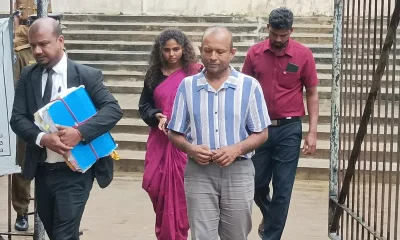
Gota ordered to give court evidence of life threats
-

 Features6 days ago
Cliff and Hank recreate golden era of ‘The Young Ones’
-
 Features6 days ago
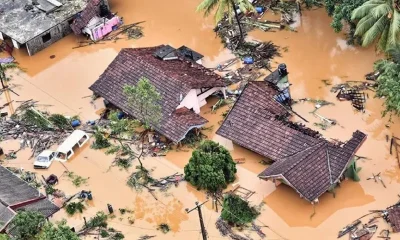
Sri Lanka and Global Climate Emergency: Lessons of Cyclone Ditwah
-

 Latest News7 days ago
Sri Lanka squad named for ACC Men’s U19 Asia Cup
-

 Editorial6 days ago
Experience vs. Inexperience
-
 News6 days ago
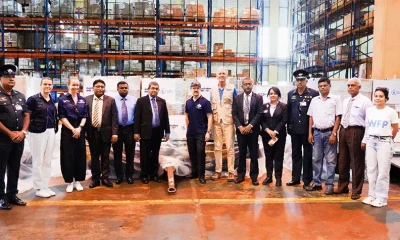
WFP scales up its emergency response in Sri Lanka
-

 News6 days ago
Special programme to clear debris in Biyagama