
Business
SEC Sri Lanka approves Accredited Shariah Scholars for Islamic capital market products certification

The Securities and Exchange Commission of Sri Lanka (SEC) has approved a list of Accredited Shariah Scholars as “Supplementary Service Providers”. These scholars are authorized to certify the Shariah compliance of Islamic Capital Market Products intended for listing on the Colombo Stock Exchange (CSE) in accordance with the Listing Rules. The SEC considers this as an essential step in view of products that require Shariah compatibility and to satisfy the needs of Islamic investors.
Recognizing the growing demand for Shariah Compliant Debt Securities such as Sukuk, both domestically and internationally, the SEC took a proactive step by approving an enabling regulatory framework to introduce such products on the Colombo Stock Exchange. The Accredited Shariah Scholars and compliance certification process approved by the SEC will provide credibility to the products listed on the Exchange.
The SEC published an advertisement calling for applications from Shariah Scholars with the requisite academic / professional qualifications, work experience and other eligibility criteria and through a rigorous selection process has approved the following six persons as Accredited Shariah Scholars to serve as Supplementary Service Providers under the provisions of the SEC Act:
1. Ibrahim Saad Yousif Abd Elaziz (based in United Arab Emirates)
2. Shafique Ahmed Jakhura (based in South Africa)
3. Muhammad Murshid Merza Mulaffar (based in Sri Lanka)
4. Dr. Aishath Muneeza (based in Malaysia)
5. Mohammed Siraj Najubudeen (based in Saudi Arabia)
6. Dr. Suleiman Dalhatu Sani (based in Saudi Arabia)
As outlined in the published Guidelines and SEC’s directive to the CSE, issuers of Islamic capital market products seeking a listing on the CSE are required to obtain a Shariah compliance certification from any three of the Accredited Shariah Scholars. The Guidelines define the duties of a Shariah Scholar, qualifications and experience required, submission of reports and record maintenance, governance standards, conflict of interest management, and fit & proper criteria.
The SEC believes that selecting Shariah Scholars based on a set of clearly defined eligibility criteria and setting minimum standards will help establish a better Shariah compliance governance process and build market credibility for both local and international investors.The SEC will review and update the list of Accredited Shariah Scholars periodically.







Business
Zydus, Sunshine launch US$20 million pharma plant in Horana to boost local drug manufacturing
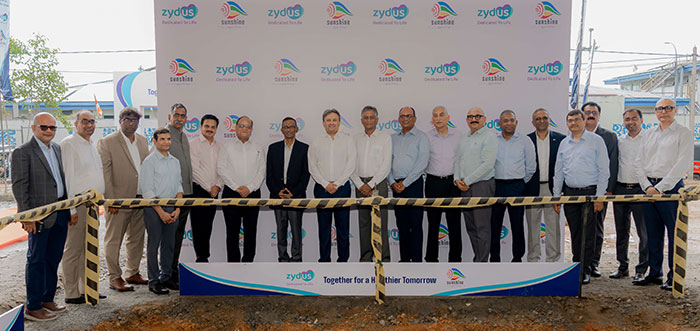
A market-driven investment backed by confidence in local pharmaceutical manufacturing
Sri Lanka’s drive to strengthen domestic pharmaceutical manufacturing received a major boost last week with the launch of a US$20 million joint venture between India’s Zydus Lifesciences and Sri Lanka’s Sunshine Healthcare to establish a modern pharmaceutical manufacturing facility at the Board of Investment (BOI) zone in Horana.
The foundation stone for the new plant, to be built on nearly four acres, was laid by the leadership of the two companies in the presence of senior executives and stakeholders. The facility will manufacture pharmaceutical products for the local retail market, helping improve the availability of quality medicines while reducing Sri Lanka’s dependence on imports.
The venture, operating as Zydus Sunshine Lifesciences Pvt. Ltd., combines Zydus’ global pharmaceutical manufacturing expertise with Sunshine Healthcare’s extensive distribution network and strong presence in Sri Lanka’s healthcare sector. The project is expected to facilitate technology transfer, create skilled employment, and strengthen the country’s healthcare supply chain.
Speaking at the ceremony, Dr. Sharvil P. Patel, Managing Director of Zydus Lifesciences, said the investment reflected the company’s long-standing commitment to Sri Lanka, where it has operated for more than three decades.
“We have always believed that strong local capabilities are key to resilient healthcare ecosystems,” he said. “Through Zydus Sunshine Lifesciences, we seek to contribute to the development of a stronger pharmaceutical manufacturing base in Sri Lanka by combining global scientific expertise with deep local execution capabilities.”
Dr. Patel added that the project would go beyond manufacturing by creating high-quality employment opportunities across science, technology, healthcare and operations, helping nurture the next generation of talent in Sri Lanka’s pharmaceutical industry.
Sunshine Holdings Deputy Chairman Vish Govindasamy described the venture as a significant progression in Sri Lanka’s future at a time when countries are seeking to secure stable supply chains.
“The establishment of Zydus Sunshine Lifesciences contributes directly to building greater pharmaceutical security for Sri Lanka,” he said. “Together, we are combining global knowledge with local capability to strengthen pharmaceutical manufacturing, healthcare resilience and our commitment to serving the Sri Lankan people.”
Govindasamy noted that the project represents the largest foreign direct investment into Sri Lanka’s pharmaceutical manufacturing sector to date, with the initial equity capital of US$10 million contributed equally by the two partners. Sunshine Healthcare’s participation has been supported by the International Finance Corporation’s US$11 million equity investment made last year to support the company’s growth strategy.
The new manufacturing facility will operate under the oversight of the BOI, with the Ministry of Health and the National Medicines Regulatory Authority providing regulatory supervision. All products manufactured at the plant will comply with NMRA standards and applicable pricing regulations.
The investment comes as Sri Lanka continues efforts to expand local production of essential medicines following recent economic challenges that exposed vulnerabilities in import-dependent supply chains. By increasing domestic manufacturing capacity, the partners expect the project to improve medicine availability, strengthen supply security and support the country’s broader healthcare resilience while generating high-value employment and industrial growth.
The foundation stone ceremony marked the formal commencement of construction, with both partners expressing confidence that the venture would play a meaningful role in advancing Sri Lanka’s long-term healthcare and manufacturing ambitions.
Unlike many local pharmaceutical manufacturers that operate under government buy-back agreements guaranteeing sales to the public health system, Zydus Sunshine Lifesciences will initially rely entirely on Sri Lanka’s private healthcare market. The partners are betting that locally manufactured, high-quality medicines can successfully replace imported products, making the venture commercially viable without state purchase guarantees. However, Sunshine Holdings Deputy Chairman Vish Govindasamy told The Island Financial Review that the company would welcome opportunities to supply the government sector as well, should the authorities choose to procure its products in the future.
By Sanath Nanayakkare
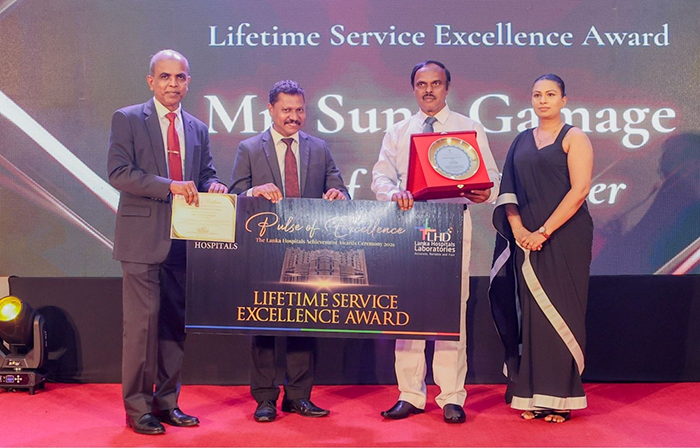
The Lanka Hospitals Corporation PLC successfully hosted its exclusive “Pulse of Excellence” awards ceremony recently. The event was organized to recognize and celebrate the institution’s remarkable milestone achievements and outstanding overall performance in 2025.
The ceremony was graced by Dr. Nalinda Jayatissa, Minister of Health and Mass Media and Chief Government Whip, who attended as the Chief Guest and delivered a special address. During his address, the Minister highlighted the institution’s profound contribution to the country, stating: “These achievements are now an integral part of the hospital’s enduring legacy and a testament to its vital role within our nation’s healthcare sector. Lanka Hospitals has consistently demonstrated that true medical excellence is achieved when world-class clinical standards are driven by a genuine, compassionate duty of care toward the people.”
Other distinguished dignitaries in attendance included Dr. Hansaka Wijayamuni, Deputy Minister of Health, and Dr. Priyantha Tennakoon, Director of Private Health Sector Development.
The evening highlighted Lanka Hospitals’ continued commitment to shaping the future of healthcare through a comprehensive awards program, with accolades distributed across several key categories. In the area of Financial and Operational Excellence, departments such as Cardiology, Bariatric Surgery, Neurosciences, Out-Patient, and Radiology were recognized for record-breaking performances in 2025. Notably, the Neurosciences department was commended for achieving the highest number of advanced neurosurgical procedures during the year.
Furthermore, National and International Excellence Awards were presented to the Departments of Finance, Quality Assurance, Infection Prevention and Control, and Marketing. A significant highlight in this category was the hospital’s prestigious nomination by the World Health Organization (WHO) as the first private mentor hospital for Antimicrobial Stewardship in Sri Lanka.
The ceremony also celebrated leadership and dedication. A highly anticipated Lifetime Service Excellence Award was presented to Mr. Sunil Gamage, Chief Ward Master, in recognition of his enduring commitment and service. Additionally, special recognition was bestowed upon Lanka Hospitals Diagnostics (Pvt) Ltd. in honor of its outstanding service excellence and exceptional financial performance throughout the year.
A major milestone of the evening was the official launch of the LHD Mobile Laboratory Service, which was ceremonially inaugurated during the event.
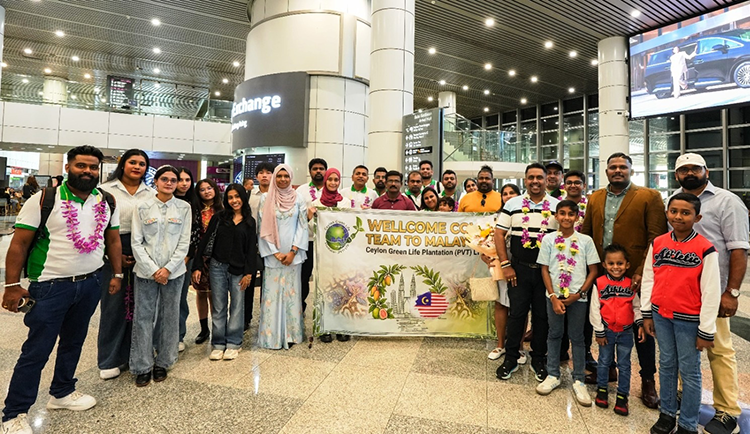
Ceylon Green Life Plantation (CGLP) has marked a significant milestone in its growth journey by launching its first international agricultural venture in Malaysia, reinforcing its commitment to modern, sustainable farming and global market expansion. The company recently announced the commencement of a large-scale greenhouse cultivation project in Malaysia, which is expected to create new opportunities for Sri Lankan agricultural expertise while strengthening regional agricultural collaboration.
Implemented with the support of the Malaysian Government, the initial phase of the project will be carried out on a fifty-acre land allocation. The venture will utilise advanced greenhouse technology, modern cultivation methods and high-yield seed varieties to produce vegetables tailored to the demands of the Malaysian market.
CGLP Founder and Chairman Dr. Malan Francis Peter said the initiative represents a major step towards positioning Sri Lankan agricultural knowledge and expertise on the international stage. “This project provides access to advanced agricultural technologies, improved cultivation practices and a ready market for produce. It creates opportunities not only for our organisation but also for Sri Lankan farmers and agricultural professionals who can benefit from international exposure and knowledge transfer,” he said.

Tector and Moondra headline Ireland’s historic series sweep against India

Roach’s 300th wicket headlines West Indies’ innings win over Sri Lanka

Showers will occur at times in the Western, Sabaragamuwa and North-western provinces and in Galle, Matara, Kandy and Nuwara-Eliya districts.

LAWASIA warns against ad hoc initiative to increase judges’ retirement ages

Countrywide drug bust:7, 300 youths arrested

ANP leader further remanded

‘Dates have the highest sugar content to fight Coronavirus’

Sunday Island 27 December – Headlines

#SundayIsland 17th December – Headlines

Sunday Island – 28th March

Sunday Island Headlines – 21 March

Sunday Island – 21st February – Headlines
-

 Opinion6 days ago
Ranasinghe Premadasa: The man who would not take ‘No’ for an answer
-
 News2 days ago
Another 1,132 Sri Lankan Personnel to be deployed for United Nations Peacekeeping Missions
-

 Opinion5 days ago
Sri Lanka’s national security: Justice, reconciliation, and forward-looking vigilance
-

 News6 days ago
US Assistant Secretary of State for South and Central Asian Affairs meets President
-

 News3 days ago
Kelaniya emerges as highest ranked Lankan uni in Times Higher Education Sustainability Impact Ratings
-

 Opinion4 days ago
A triumph for Pakistan’s skilled diplomacy at Iran-US talks
-

 Editorial6 days ago
FCID’s big catch
-

 Features5 days ago
US-Iran war, global exchange rates and Sri Lankan Rupee