
Latest News
Jacks and Kohli ace Royal Challengers Bangaluru’s 201-run chase in 16 overs against Titans


RCB took 124 off the 11 overs of spin bowled by Rashid Khan (0 for 51), Noor Ahmad (0 for 43) and R Sai Kishore (1 for 30) as GT were hiding for cover on a surface that became conducive to strokeplay as the game progressed.
Jacks’ late assault – he hit four fours and nine sixes in his last 17 balls – helped RCB ransack 58 off two overs when they needed 53 off 36 balls, and in the process he brought up a 41-ball 100. It was an innings that changed speeds in a blink of an eye, and had Kohli gesturing that he missed only a bucket of popcorn and a cold drink from the best seat in the house to witness the Will-storm.
This was all after Gujarat Titans posted 200 for 3 on the back of an unbeaten 84 fromB Sai Sudrshan and a 30-ball 58 from Shahrukh Khan. With the track assisting spin at the start of the game, it looked as if GT had enough on the board. Until it wasn’t.
RCB’s powerplay squeeze
Before the start of Sunday’s fixtures, RCB had the second-worst economy rate in the powerplay, their 10.53 being only marginally better than Kolkata Knight Riders’ 10.68. But against GT, the RCB bowlers were on the money, and it all started in the first over. Swapnil Singh, playing only his second game in IPL 2024, deceived Wriddhiman Saha by flight, having him caught at short third in an attempt to go inside out.
Thereon, Shubman Gill and Sai Sudharsan merely consolidated. Their attempts to free the shackles did not bear fruit as they could manage only one four in the last three overs of the powerplay to finish on 42 for 1. Glenn Maxwell, back in the XI for RCB, then preyed on Gill’s quiet start to have him caught brilliantly at long-on in a diving effort by Cameron Green.
Sai Sudharsan and Shahrukh inject momentum
At 45 for 2 in the seventh over, GT decided to send in Shahrukh at No. 4 and the move paid rich dividends. He got going straightaway, sweeping Maxwell over long-on for six before pulling a not-so-short one between long-on and deep midwicket for four. Shahrukh was asked to be the disruptor and he essayed that role to perfection. He was severe on Karn Sharma, hitting him for two sixes in two overs, which put him out of the attack. He then hit Green for 4, 4, 6 to bring up a 24-ball fifty, his first in the IPL.
Shahrukh’s carnage allowed Sai Sudharsan to change gears. He was on 18 off 16 when the powerplay ended, and on 32 off 23 at the 10-over mark. He attacked Karn’s legspin before putting away an-almost-perfect yorker from Mohammed Siraj to bring up his half-century off 34 balls. Titans managed to score 106 in the middle overs (7 to 16), the most they have in the phase this season. In fact, GT scored 86 off just 45 balls through the time Shahrukh was in the middle.
Even after Shahrukh’s dismissal – castled by a reverse-swinging full delivery from Siraj – Sai Sudharsan did not relent. In his next 15 balls, he scored 34 and was particularly severe on spin – a strike rate of 205 (41 off 20) as opposed to 153.57 (43 off 28) against the quicks. However, the 51 GT managed at the death did seem a tad underwhelming.
Kohli spins it the RCB way
Faf du Plessis targeted Azmatullah Omarzai in the third over of the chase, hitting him for 6, 6, 4 – a sequence that ended with a scoop over the wicketkeeper. But R Sai Kishore, introduced in the fourth over, managed to have him hole out to deep midwicket to break the opening stand. That did not deter Kohli, who lofted Rashid Khan over his head before hitting two sixes in two balls off Sai Kishore’s next.
It looked like Sai Kishore had managed to deceive him in the flight but Kohli’s loft over wide long-off just evaded a leaping David Miller, before he firmly flicked the next one cleanly over wide long-on. He used the sweep to good effect, taking 22 off the shot in six attempts. That Jacks was still only coming to grips with the surface and GT’s spinners at the other end seemed to have little effect on Kohli, who slashed one through backward point to race away to a 32-ball fifty.
Jacks cuts loose in the end
The only four Jacks had to his credit before the tenth over was a flashy outside edge after not picking Noor Ahmad’s wrong’un. Mohit Sharma’s introduction only helped him unleash his full range. He thwacked one over deep midwicket before smacking a slower one over extra cover. He then muscled Sai Kishore and Noor over long-on and deep square leg respectively in successive overs as he moved from a run-a-ball 16 to 44 off 29 inside four overs.
He just upped the destruction a level in Mohit’s second over, which went for three sixes – including one off a no-ball – and two fours as RCB came within touching distance. Jacks then went 6, 6, 4, 6, 6 to complete his century as well as RCB’s third win in ten outings and a net-run-rate boost.
Brief scores:
Gujarat Titans 200/3 in 20 overs (Sai Sudharsan 84*, Shahrukh Khan 58, David Miller 26*; Swapnil Singh 1/23, Mohammed Siraj 1-34, Glenn Maxwell 1-28) lost to Royal Challengers Bengaluru 206/1 in 16 overs (Will Jacks 100*, Virat Kohli 70*, Faf du Plesis 24; Sai Kishore 1-30) by 9 wickets
(Cricinfo)














Asif Khan the UAE batter, has been banned for 15 months after admitting to having tested positive for a banned substance – “a metabolite of mesterolone” – in an out-of-competition test conducted in September 2025, the ICC said in a statement on Thursday.
The statement said that Asif, 36, “had admitted the violation” of Article 2.1 of the ICC’s anti-doping code and accepted the period of ineligibility “pursuant to a case resolution agreement entered into with the World Anti-Doping Agency and the ICC”, which means there is no right to appeal on the part of the player.
The sanction is effective from September 8, 2025 and will run until December 7, 2026.
“Asif may return to training with a team or use the facilities of a club or other ICC Member organisation from 8 October 2026 but will only be eligible to play from 8 December,” the statement added. “The player’s individual results from 8 September 2025 until his provisional suspension on 29 December 2025 have been disqualified, along with all resulting consequences, including the loss of any medals, points, prize money or prizes.”
Asif, a former Pakistan Under-19 cricketer, made his UAE debut in March 2022 in an ODI against Oman in the ICC’s Cricket World Cup League 2. He turned out in 38 ODIs and 56 T20Is between then and September 2025.
The last three of those T20Is, against India, Oman and Pakistan in the T20 Asia Cup in 2025, came after September 8, and will be removed from his record.
[Cricinfo]

On Wednesday, part of a glacier collapsed high in the Himalayas, triggering catastrophic flooding along the Nepal-Tibet border.
At least 160 people have been confirmed dead, while nearly 1,500 people are missing across Nepal and China’s Tibet.
In Nepal, 826 people are missing, including almost 600 foreign tourists, according to police and tourism officials. Across the border, Chinese state media reported that 558 people were missing in Tibet’s Gyirong County, including 260 foreign nationals.
Here is what we know about what triggered the disaster, where the floods struck, and the risks facing the rapidly warming Himalayan region.
What happened in Nepal?
At about 8:40am local time (02:55 GMT) on Wednesday, flash floods and mudslides swept through mountainous areas along the Nepal-Tibet border, killing at least 157 people in Nepal and three in Tibet and leaving nearly 1,500 people missing across the region.
A huge flood of water, mud and rocks swept through the Lhende Khola river valley, engulfing villages and destroying homes and critical infrastructure. At least 19 bridges and about 40km (25 miles) of roads were washed away.
Nepalese soldiers and rescue teams have been deployed with helicopters, drones and search dogs, but high river levels, damaged roads and mud have complicated efforts to reach some of the worst-hit areas.
Across the border in Tibet, deep sediment has also delayed Chinese rescue teams trying to reach the border zone.
Officials were caught off-guard by the floods on Wednesday because it was not raining, according to local news editors
The disaster appears to have begun high in the Himalayas, where part of a glacier collapsed, triggering a chain of events that caused a powerful surge of water and debris downstream
Satellite imagery showed that a substantial section of the lower end of the glacier broke away at an elevation of about 5,200 metres (17,000 feet), plunging about 1,200 metres (3,900ft) onto the valley floor, gathering rock and sediment as it fell.
The resulting ice-rock avalanche struck the Lhende River in Tibet, about 20km (12 miles) northeast of the Nepal-China border crossing. Debris temporarily blocked the river before the natural dam gave way, releasing a powerful flood downstream.
Early reports suggested that a magnitude 4.4 earthquake had triggered the collapse. However, the United States Geological Survey (USGS) later revised its assessment, saying the seismic signal had been generated by the landslide itself rather than an earthquake.
The landslide eventually registered as a magnitude 5.2 seismic event.
Where exactly did the floods happen?
The disaster struck the mountainous Nepal-Tibet border region, with some of the worst damage in Nepal’s Rasuwa district, immediately south of the Chinese border.
The initial surge entered the Lhende Khola, which feeds into the Bhote Koshi and then the Trishuli River, carrying floodwaters south through Nepal. Water levels in the Trishuli reportedly rose by as much as 9 metres (27 ft) in just 30 minutes.
In the Rasuwa district, Timure and Syapru Besi were among the affected settlements. Further downstream, flooding reached parts of Nepal’s Nuwakot and Dhading districts, damaging homes, roads and other infrastructure.
Across the border in Tibet, mud and debris hit Gyirong Port in the Shigatse region.
The Trishuli eventually joins the Narayani River, which crosses into India’s Bihar state, where it is known as the Gandak River.
What do we know about the victims?
At least 160 people have been confirmed dead, while nearly 1,500 remain missing on both sides of the Nepal-Tibet border.
- Nepal: Police have recovered at least 157 bodies.
- Tibet: Authorities have reported at least three deaths in Gyirong County, where 558 people are missing, including 260 foreign nationals.
“My brother-in-law had a liquor store here. I got a call from him this morning, and they were crying and said their entire house had been swept away,” Raju Bhadel, a local businessman in Nepal, told Al Jazeera.
Manoj Mishra, a teacher, described seeing vehicles and people being carried away by the floodwaters in Nepal. “I saw around nine trucks being swept away by the floods, including people. It’s a heartbreaking incident,” he said.

Who is missing?
Nearly 1,500 people are missing across Nepal and Tibet, including at least 800 foreign nationals.
In Nepal, 826 people were reported missing, including almost 600 foreign tourists, according to police and tourism officials. The missing tourists come from more than two dozen countries.
Among those reported missing in Nepal are:
- India: 177
- United States: 63
- Australia: 34
- United Kingdom: 33
- Canada: 25
Authorities have not yet provided a complete nationality breakdown for all the missing foreign nationals.
Across the border, Chinese state broadcaster CCTV said 558 people were missing in Tibet’s Gyirong County, including 260 foreign nationals.
Many of those caught up in the disaster were pilgrims travelling towards Kailash Mansarovar in Tibet. Tourism officials are working to account for groups that had been travelling through the region when the floods struck.
The injured and rescued
At least 65 people were being treated for injuries in local hospitals and in Kathmandu.
More than 5,000 Nepalese army and police personnel have been mobilised for the rescue operation, while helicopters are searching for survivors and delivering emergency supplies to communities cut off by damaged roads and flooding.
Survivors from badly affected areas have also been evacuated by military helicopter, including some taken to hospitals in Kathmandu.
Countries and international organisations have offered emergency assistance, funding and technical support as rescue operations continue in Nepal and Tibet.
Humanitarian and financial aid
India has sent a rescue aircraft carrying about 10 tonnes of emergency supplies to Nepal, including temporary shelters, blankets, hygiene kits, solar lamps and medicines.
Indian Prime Minister Narendra Modi spoke with Nepalese Prime Minister Balendra Shah and pledged India’s support.
The International Federation of Red Cross and Red Crescent Societies (IFRC) has released 1 million Swiss francs ($1.2m) in emergency funding to support the Nepal Red Cross Society’s relief operations and damage assessments.
The United Nations has deployed personnel in Nepal to support government-led relief efforts, while its office in China has said it is ready to assist rescue operations in Tibet.
UN Secretary-General Antonio Guterres expressed his condolences to those affected and said the organisation stood in solidarity with communities hit by the disaster.
The European Union has activated its Copernicus Emergency Management Service, which uses satellite imagery to map disaster zones and provide information that can help authorities assess damage and coordinate rescue operations.
South Korea has established a government task force after several South Korean nationals working at a hydropower project were reported missing. Seoul said it planned to send a rapid-response team involving government, fire and police personnel to Nepal to assist with the search.
The United States said it was sending a disaster response adviser and providing $500,000 in assistance.
Canadian Prime Minister Mark Carney said Canada was closely following the situation, describing the floods as “absolutely devastating”.
On the Chinese side, President Xi Jinping ordered an “all-out” search-and-rescue operation for people missing in Tibet and called for efforts to prevent further disasters.
Scientists are still investigating what triggered the glacier collapse, and it is too early to determine how much climate change contributed to this specific event.
However, the disaster comes against a backdrop of rapid warming and glacial loss across the Himalayas. Glaciers across the Hindu Kush Himalaya mountain range – which spans Afghanistan, Bangladesh, Bhutan, China, India, Myanmar, Nepal and Pakistan – lost ice 65 percent faster between 2011 and 2020 than during the previous decade. Nepal’s glaciers have lost close to one-third of their ice volume in roughly three decades.
As glaciers retreat, mountain slopes can become increasingly unstable, and meltwater can accumulate in or around glaciers, increasing the potential for sudden floods.
Satellite observations showed unusually warm conditions around the affected glacier before the collapse, with snow cover diminishing considerably and exposing more bare ice.
Researchers are investigating whether melting contributed to the glacier’s instability, but a direct link between climate change and this week’s collapse has not been established.
What is the situation now?
More than 5,000 Nepalese army and police personnel are searching for survivors and recovering bodies, while helicopters are delivering tents, food and other emergency supplies to communities cut off by the floods.
Officials have warned that the death toll is likely to rise as rescuers reach areas that remain inaccessible because of damaged roads, high water levels and thick layers of mud.
In Tibet, Chinese authorities are also monitoring a still-dammed lake upstream from the disaster zone in Gyirong that could complicate rescue efforts and pose a further flood risk.
[Aljazeera]
Latest News
UPDATE: Flash flood on Nepal-Tibet border kills more than 100, with hundreds of tourists missing
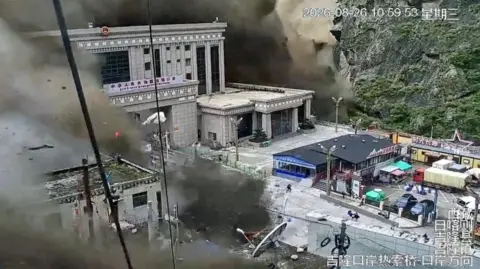
More than 100 people have been killed in Nepal and Tibet, and hundreds of tourists are missing, after a massive flash flood and mudslide
The missing tourists include more than 100 from India, 54 from the US, and 33 from the UK, as well as more than 100 from Nepal itself, according to Nepal’s tourist board. The area is popular with pilgrims and trekker.
Dozens of police officers and army prtxonnel are also missing, as well as power workers. My family was swept away in front of me, one woman tells us – she and her son survived by climbing to a rooftop
In Tibet, Chinese state media report three dead and 265 missing, CCTV from Tibet shows a wall of water and mud hitting buildings at a border crossing.
Authorities initially thought an earthquake may have triggered a landslide – the US Geological Survey now says the sesimic energy was instead generated by a landslide.
(BBC)

US golfer Gogel gets six-month ban for betting

UAE’s Asif Khan handed 15-month ban for using a banned substance

Nepal-Tibet floods: What happened, what caused them and who is missing?

Showers above 50 mm are likely in the Western, Sabaragamuwa and North-western provinces and in Kandy, Nuwara-Eliya, Galle and Matara districts

Patali alleges NPP conspiring to put off elections indefinitely

August 15 Super Dvora tragedy: Search continues for missing officer’s body

‘Dates have the highest sugar content to fight Coronavirus’

Sunday Island 27 December – Headlines

#SundayIsland 17th December – Headlines

Sunday Island – 28th March

Sunday Island Headlines – 21 March

Sunday Island – 21st February – Headlines
-

 News6 days ago
Country’s first woman Surveyor General appointed
-

 Business5 days ago
SriLankan Airlines makes ShakthiSAT Mission possible for talented Sri Lankan student
-

 Features6 days ago
Medical education in Sri Lanka: Then and now
-
 Latest News6 days ago
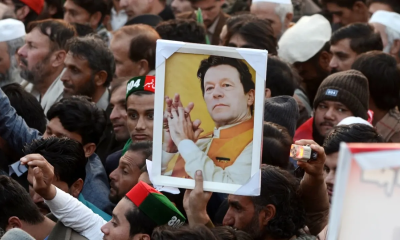
Imran Khan moved to private hospital amid deteriorating health
-

 Latest News6 days ago
Government has declared 21, 22 and 23 August 2026 as national days of mourning
-

 Features4 days ago
My secondary schooling after Royal Primary
-

 Latest News5 days ago
Tharanga edges out Chopra in 88m javelin battle
-

 News6 days ago
22A: Opp. demands all available SC judges hear petitions