
Editorial
Speaker’s claims: Probe needed


Wednesday 3rd April, 2024
Leader of the National Freedom Front and dissident SLPP MP Wimal Weerawansa yesterday demanded a parliamentary probe into Speaker Mahinda Yapa Abeywardena’s claim that some foreign powers had pressured him (Abeywardena) to take over the executive presidency following President Gotabaya Rajapaksa’s resignation at the height of Aragalaya in July 2022. Weerawansa also called for a two-day parliamentary debate on the Speaker’s claim to expose what he called evil forces that had undermined the country’s sovereignty. His request was not granted. The Speaker sought to obfuscate the issue by blaming the Aragalaya protesters for having threatened the country’s sovereignty; he said something to the effect that external interference was to be expected during political upheavals.
Weerawansa has rightly pointed out that the Speaker’s allegation is too serious to go uninvestigated. Interestingly, when Weerawansa launched a book on Aragalaya —‘Nine: The Hidden Story’—wherein he claimed US Ambassador Julie Chung had tried to make Speaker Abeywardena take over as the President at the climax of the Aragalaya on 09 July 2022, Chung bluntly dismissed the book as mere fiction.
The Speaker remained silent on Weerawansa’s claim until 21 March, 2024, when a motion of no confidence against him was defeated in Parliament. He however has not named names, but his statement that he came under foreign pressure to take over the presidency has vindicated Weerawansa’s claim that some external forces sought to make Abeywardena the President. One can connect the dots!
What was witnessed in Colombo on 09 July 2022 has been described in some quarters as the culmination of a well-planned destabilisation process aimed at shaking this country off the sphere of influence of one world power and realigning it with some others. If Parliament had fallen into the hands of violent protesters who went all out to march on it, the country would have been plunged into anarchy like Libya, and the external forces which, Speaker Abeywardena says, pressured him to take over as the President in violation of the Constitution, would have been able to install a puppet government consisting of persons of their choice. Thankfully, the military and the police effectively carried out the then Acting President Ranil Wickremesinghe’s order that the hordes be kept at bay.
The Speaker yesterday took pains to blame the uprising of 2022 solely on Sri Lankan protesters. But some Colombo-based foreign envoys overstepped their diplomatic limits to prevent the then President Gotabaya Rajapaksa from ordering use of force to disperse the Galle Face protesters. It has now been revealed that some defence bigwigs did not carry out beleaguered President Rajapaksa’s order that a group of pro-government goons be prevented from entering the Galle Face protest site on 09 May 2022. Attacks on the Aragalaya protesters on that day triggered a massive wave of retaliatory violence, which left one government MP dead and the properties of many ruling party politicians gutted. They sealed the fate of the Gotabaya administration. Would the high-ranking military and police officers have defied presidential orders in that manner without an assurance from someone more powerful than the President that they would not have to face the consequences of their defiance?
Gotabaya himself has claimed that his ouster was due to a conspiracy. The Speaker has told Parliament that he came under foreign pressure to take over the presidency, but he refused to do so because he did not want to violate the Constitution and such a course of action would have led to anarchy. Weerawansa has accused some foreign envoys of having rushed to the Speaker’s official residence and cranking up pressure on Abeywardena to be the President; he has named names. So, it defies comprehension why a thorough probe has not been conducted into those claims to ascertain whether external forces played any role in the 2022 uprising, which shook the country.
The Opposition must stop pussyfooting and pluck up the courage to press for an investigation into the Speaker’s claim in question and a parliamentary debate thereon. If it ignores the alleged attempt to coerce the Speaker into violating the Constitution and throwing the country into anarchy, how can the public depend on it to safeguard the country’s sovereignty and national security?

Thursday 9th July, 2026
The latest episode of prison violence has come to an end, after claiming 28 lives and leaving more than 100 others injured. But political battles are still raging over it. The government and the Opposition continue to clash; they traded allegations and insults in Parliament on Tuesday and Wednesday. The Opposition is all out to lay the blame for the prison violence squarely on the government. It is demanding the resignation of Minister of Justice and National Integration Harshana Nanayakkara.
The government has struck back, asking whether any Yahapalana politician resigned over the Easter Sunday terror attacks in 2019. Many of the SJB politicians were in that failed administration. That argument is however self-defeating in that the JVP was a partner of the dysfunctional Yahapalana government in all but name and defended it to the hilt in Parliament.
Moreover, there were devastating terror attacks on military and civilian targets during the Eelam war. A considerable number of military installations, including the Mullaitivu camp and the Elephant Pass base were overrun by the LTTE, which killed hundreds of military personnel, but no politician resigned. There have also been several major incidents of prison violence. As we pointed out yesterday, in 1983, 53 Tamil prisoners were massacred inside the Welikada Prison in two separate attacks. In 2012, about 27 inmates were killed during a riot in the same prison, following a search operation conducted by the STF for weapons, drugs and mobile phones. In 2020, violent clashes in the Mahara Prison left 11 inmates dead. But ministers in charge of prisons did not resign. So, it may be argued that neither the SJB nor the UNP nor the SLPP has any moral right to call for anyone’s resignation over the Negombo Prison riots.
Opposition politicians and their propagandists may go on shouting until they are blue in the face, but their efforts to see the back of Minister Nanayakkara will be in vain. Sri Lankan governments are notorious for shielding politicians and officials loyal to them, no matter what. The incumbent dispensation is no different. One may recall that it went to the extent of bringing two senior CID officers out of retirement, elevating them to high posts in the public security sector and entrusting them with the task of probing the Easter Sunday carnage, which they themselves failed to prevent despite repeated warnings, while they were at the helm of the CID in 2019. So, it is only wishful thinking that the government will ever ask Minister Nanayakkara to resign over the Negombo Prison killings.
Interestingly, an NPP MP’s attempt to distract Parliament and the public from the Negombo Prison violence by bashing the former rulers, boomeranged on the government. Deputy Minister Mahinda Jayasinghe displayed a picture in the House, claiming that it showed Namal Rajapaksa with notorious criminal Julampitiye Amare at a public event. His claim prompted Opposition MP Chamra Sampath Dassanayake to remind the government that it was the JVP that had enabled Mahinda Rajapaksa, accused of shielding the likes of Julampitiye Amare, to win the 2005 presidential election and paved the way for the rise of the Rajapaksa family in national politics.
Worryingly, more often than not, parliamentary debates descend into slanging matches. They cost the public an arm and a leg. A parliamentary sitting costs taxpayers about Rs. 32.2 million, according to research conducted by some civil society organisations. It behoves the government and the Opposition to stop wasting public funds, and use parliament time productively to discuss issues of national importance seriously, manage state funds frugally and make progressive laws.
As for prison violence, the focus of parliamentary debates must be on structural problems in Sri Lanka’s prison system, including overcrowding, delays in court proceedings, gang rivalries, drug peddling, inadequate facilities, corruption and difficulties in maintaining security in large custodial institutions, the causes of the latest prison riots, and what needs to be done to improve prison conditions and prevent violent clashes and human rights violations in prisons. Parliament, maintained at public expense, is not the place for verbal slugfests, which can be staged elsewhere, if at all.
Wednesday 8th July, 2026
Prison riots in Negombo have claimed 27 lives including those of seven officers and left more than 100 others injured. It is believed that a clash between a group of drug peddlers among inmates and those who opposed their illegal operations led to the deadly mayhem. A committee has been appointed to probe the violence.
The drug Mafia has flexed its muscles again. The government has embarked on an ambitious campaign to rid the country of narcotics, and rightly so. The ongoing nationwide drug bust deserves the fullest public cooperation. However, if the latest outbreak of prison violence is anything to go by, a special programme needs to be launched to root out the scourge of narcotics in prisons, where some corrupt officers are in league with drug dealers.
The mastermind behind the Negombo Prison riots has been identified. He is an associate of a powerful drug dealer, according to media reports. The netherworld of narcotics and crime has emerged so powerful that it can plunge the country’s prison system into utter chaos at will. Worse, in 2023, an underworld gang planned a commando-style operation to free a drug dealer, called Nadun Chinthaka alias Harak Kata, detained at the CID headquarters. The STF managed to scuttle their plan. We reported that the gang had enrolled some serving military personnel and a sniper for the attack to spring its leader free. Another drug leader had High Court Judge Sarath Ambepitiya and his MSD bodyguard Inspector Upali Ranasinghe gunned down in late 2004. An underworld gang attacked a prison bus in Kalutara, killing five of its rivals and two prison guards, in 2017. Successive governments have only made half-hearted attempts to neutralise powerful crime syndicates run by drug dealers.
It is puzzling why the prison authorities did not transfer all troublemakers responsible for Sunday’s clash in Negombo to other prisons, after bringing the situation under control. On Monday morning, they gave the all-clear. It was the calm before the storm; violence erupted again soon afterwards. There was a total intelligence failure. If the rioters had been sent to other prisons on Sunday itself, Monday’s violence could have been averted.
Sadly, incidents of prison violence lead to political clashes between the government and the Opposition. There have been several deadly riots in prisons during the past several decades. In 1983, about 50 Tamil prisoners were massacred inside the Welikada Prison in two separate attacks. In the same prison, 27 inmates were killed in 2012 during a riot that followed a search operation conducted by the STF for weapons, drugs and mobile phones. In 2020, violent clashes in the Mahara Prison left 11 inmates dead. All those incidents triggered political battles, with Opposition politicians flaying their ruling party counterparts for failure to ensure the safety of prisoners. If they had put their heads together and taken action to eliminate the root causes of prison unrest and violence, instead of fighting political battles, perhaps the Negombo prison riots would not have occurred.
There have been some half-hearted attempts at prison reforms under successive governments. But the structural problems in Sri Lanka’s prison system remain unresolved. They include overcrowding, delays in court proceedings, gang rivalries, drug peddling, inadequate facilities, corruption and difficulties in maintaining security in large custodial institutions. The Negombo prison is reported to have been experiencing a shortage of officers. These issues have to be resolved urgently as part of a multi-pronged strategy to make prisons safe. Rhetoric won’t do.
Following the Mahara prison violence in 2020, President Anura Kaumara Dissanayake, who was an Opposition firebrand at that time, went ballistic in Parliament, condemning the then SLPP government for its failure to protect prisoners. A video of his fiery speech is doing the rounds in the digital realm. It has become grist for the Opposition’s mill.
Opposition politicians are now doing what the JVP did in the past; they are tearing into the JVP-NPP government over the Negombo prison violence. But prisons will not be any less vulnerable to violence even if the holders of power change; those who are berating the current administration may find themselves in the dock one day if they form a government.
Tuesday 7th July, 2026
A major El Niño event is developing rapidly, and it is expected to intensify in the coming weeks. Some climatologists are of the view that the unfolding El Niño may not impact Sri Lanka to the extent of triggering a nationwide catastrophe. This is certainly good news, but the possibility of El Niño causing drought, reduced monsoon rainfall and agricultural losses in this country cannot be ruled out.
Meanwhile, France is reeling from a record-breaking European heatwave, which has claimed more than 2,000 lives and left people scrambling for cooling devices in shops. It has been placed under a red heat alert. This situation cannot be directly attributed to the current El Niño, which has only aggravated it. The current heatwave is mainly due to climate change, which has caused hot air to be trapped over Europe, according to experts.
There are media reports of global temperatures rising across all regions, but at different rates of warming. All major land areas across the globe are getting warmer, the worst affected being the Arctic region (covering parts of northern Canada, Greenland, Russia, Alaska, and northern Europe), with faster increases reported from Europe and Asia. There is no need for panic, but prudence demands the formulation of strategies urgently to meet possible outcomes.
El Niño is unpredictable, and anything is possible, the worst-case scenario being prolonged drought and the resultant drop in agricultural production. In Sri Lanka, reservoirs run dry even during short dry spells, causing severe water stress.
Sri Lanka is no stranger to heatwaves, albeit not of the same severity as the ones in Europe at present. However, recent studies indicate increasing frequency and intensity of heatwaves. There have been several such events during the past seven years or so in this country, with the Department of Meteorology and the government issuing warnings of increased risks of heat stroke, heat exhaustion, and dehydration, especially among outdoor workers, children and elders. It may be recalled that according to media reports based on research findings, between 2001 and 2013, about 23% of Sri Lankans were exposed to dangerous heatwave conditions.
Besides, urban centres, such as Colombo, are experiencing the so-called urban heat island effect due to buildings, pavements, etc., retaining heat. Sri Lanka should seriously consider adopting the Miyawaki method, a Japanese technique of creating dense micro-forests or ‘pocket forests’ in small urban spaces to improve biodiversity, capture carbon, reduce urban heat and improve air quality. London has reportedly adopted this method successfully. The question is why the city of Colombo, accredited as an international Wetland City by the Ramsar Convention of Wetlands, and its suburbs have not adopted the Miyawaki method.
As for Sri Lanka, two main El Niño and climate change mitigating factors are said to be its geographical location and its central mountain range, which helps maintain atmospheric moisture, reducing the likelihood of severe droughts experienced in some other countries affected by El Niño. Hence, the need to conserve the country’s forest cover, which is unfortunately shrinking.
For Sri Lanka as well as other countries, deforestation is no longer an environmental issue; it is a serious existential problem as well. Sri Lanka’s forest cover is believed to be about 29-30% of the total land area. The government has set an ambitious target of increasing it up to 32% of the land area. The ongoing reforestation initiatives deserve fullest public cooperation.
Nothing is said to be so certain as the unexpected in climatic events; forecasts about them could go wrong. Therefore, the need for Sri Lanka to remain alert and have contingency plans to mitigate their impact cannot be overstated.

Several spells of showers will occur in the Western and Sabaragamuwa provinces and in Galle, Matara, Kandy and Nuwara-Eliya districts

Prison officers urge Justice Minister to protect their colleague who opened fire

Negombo Prison riot: Ensuring protection of prisoners fundamental responsibility of the state – UN

Govt. considers banning or restricting social media for children under 16: PM

Brandix donates vital ECG machine to Mirigama Base Hospital Emergency Care Unit

High-scoring draw gives West Indies rare series win

‘Dates have the highest sugar content to fight Coronavirus’

Sunday Island 27 December – Headlines

#SundayIsland 17th December – Headlines

Sunday Island – 28th March

Sunday Island Headlines – 21 March

Sunday Island – 21st February – Headlines
-

 News4 days ago
Singapore-based Buddhist monk marks nearly four decades of humanitarian service
-
 News6 days ago
CIABOC to question Harak Kata on Rs. 200 mn bribery allegation
-

 News5 days ago
Freedom 250: US Embassy celebrates America’s 250th Independence Day through magic of American cinema
-
 News6 days ago
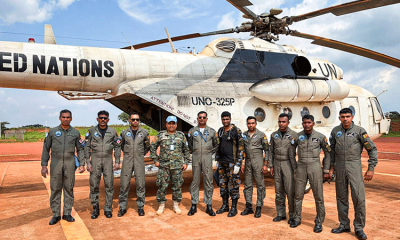
SLAF conducts successful rescue mission under UN command in Central African Republic
-

 News3 days ago
AI concerned over proposed SL military deployment in Haiti
-

 Business6 days ago
‘Dialog Air Fibre powers a new era of Ultra Fast Home WiFi’
-
 News6 days ago
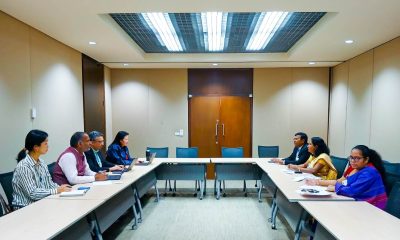
UNEP support pledged to strengthen Sri Lanka’s Environmental Priorities
-

 Features4 days ago
The NPP’s New Challenge: Balancing Easter Lawfare and Economic Welfare