
News
New trend among some SL parents not to have infants vaccinated


By Rathindra Kuruwita
There is a trend among some Sri Lankan parents not to have their infants vaccinated and this could lead to disastrous consequences, officials from National Programme for Tuberculosis Control and Chest Diseases (NPTCCD) says.
In certain developed nations, some parents start vaccinating their children only after a year or so after they were born and Sri Lankan parents who find out about this on the Internet, had also started delaying vaccinations, the official said.
“Children from developed nations in North America and Europe are not exposed to the same level of communicable diseases as we do due to climatic and other factors. However, things are different in tropical countries and developing nations. Children, until they reach five, have very low immunity. They develop resistance to diseases after contracting them. When it comes to more serious diseases like tuberculosis, the question to consider is that do we give the children a vaccine or take the risk of letting them develop immunity by contracting the disease,” Dr. Mizaya Cader, team lead of the Planning, Monitoring, and Evaluation Unit at the NPTCCD said.
Dr. Cader said that vaccination had been a main reason for Sri Lanka’s good health indicators and tuberculosis among Sri Lankan children was very low. Only about 215 children contracted tuberculosis in Sri Lanka per year, she said.
Dr. Cader said in comparable countries between 5 to 15 percent of tuberculosis patients were children, but the number was only three percent in Sri Lanka.
“Our successful vaccination drive may be the main reason for this low number,” she said.
In 2023, there were 9,538 reported cases of tuberculosis in Sri Lanka, and in 2022 only about 8,500. Dr. Cader said in many parts of the world the number of reported tuberculosis patients had increased.
She said that was due to distractions during the Covid-19 pandemic. The economic crisis which led to a drop in nutritional levels might also have led to a drop in people’s immunity. This might be leading to higher cases of tuberculosis. About 25 percent of tuberculosis patients we come across have a low Body mass index.”
Moreover, those with diabetes, kidney diseases, cancers, and others with conditions and behaviours that reduce immunity are also prone to tuberculosis, she said.
Director of the NPTCCD, Dr. Pramitha Shanthilatha Rathnayake said that in 2022 there had been only about 8,500 cases,. The reported number for 2023 was close to the numbers detected in 2015, she added.
Consultant Respiratory Physician Dr. Neranjan Dissanayake, said that it was extremely important for people to know that they have tuberculosis and seek treatment. A tuberculosis patient who does not seek treatment, could at least spread the diseases among 12 people a year, on average, he said.
“Even when you take meds, you can spread it to others for about six weeks from the day you start taking the medicines. As long as you don’t take medicine, you will keep on spreading the diseases to others. Also, without treatment, 70 percent of people with tuberculosis in the lungs will die within two years.”
Dr. Dissanayake said there were about four main drugs used to treat tuberculosis. During the first two months, a patient is given all four drugs. In some countries there are variants that are resistant to these drugs.
However, luckily there are only a very limited number of cases of multidrug-resistant tuberculosis here, Dr. Dissanayake added. “These drugs are mild and even pregnant women can take them.”



The Sri Lanka Railways Department has issued a special circular prohibiting officials and employees from using social media during duty hours and sharing sensitive information related to railway operations.
The move follows observations that certain railway officials had been sharing sensitive operational information on social media while on duty.
According to the circular, railway employees are prohibited from posting information relating to railway operations, internal decisions or official documents on social media from train control rooms, engine control rooms, workshops or any other railway premises.
The circular further stipulates that only the General Manager of Railways, the Railway Spokesperson and the Information Officer are authorised to provide official railway information to external parties or the media.

by Norman Palihawadane
An alleged associate of the drug network operated by underworld figure Badowita Asanka has been arrested by officers of the Walana Anti-Corruption Unit.
The suspect, identified as Lakmal, was arrested during a raid carried out following information received by Chief Inspector Indika Weerasinghe, the Officer-in-Charge of the unit.
The operation was conducted under the direct supervision of ASP Rohan Olugala, Director of the Walana Anti-Corruption Unit.
Preliminary investigations have revealed that the suspect allegedly worked as a distributor within Badowita Asanka’s drug network and handed over the daily proceeds from the operation to Asanka, police said.
More than 15 grammes of suspected crystal methamphetamine (‘ice’) were allegedly recovered from the suspect’s possession at the time of his arrest.The suspect is currently being detained for questioning at the Mount Lavinia Police Headquarters as further investigations continue.
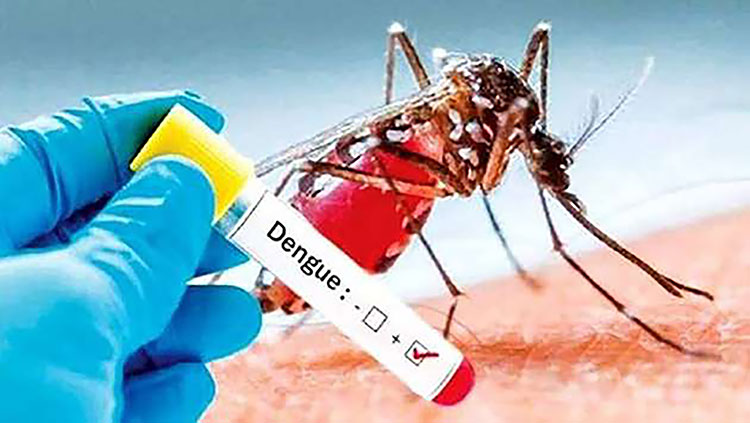
Sri Lanka has recorded 94,666 dengue cases and 72 deaths so far this year, according to the latest dengue surveillance data available as of midnight on August 26.Data released by the National Dengue Control Unit shows that 9,330 cases were reported in August, while July recorded the highest monthly caseload so far this year, with 29,962 cases.
June recorded 21,533 cases, followed by 8,590 in May, 5,651 in April, 6,013 in March, 5,721 in February and 7,866 in January.
The Western Province continues to account for more than half of the country’s dengue burden, with 50,098 cases, representing 52.92% of the national total.
The Southern Province recorded 13,811 cases (14.59%), followed by the Central Province with 8,602 (9.09%) and Sabaragamuwa Province with 7,770 (8.21%).
The North Western Province has reported 4,727 cases, while the Eastern, Uva, North Central and Northern provinces have recorded 3,938, 2,665, 1,687 and 1,368 cases respectively.
At district level, Gampaha remains the worst-affected, with 20,170 cases, accounting for 21.31% of the national total.
Colombo follows with 18,775 cases (19.83%), while Kandy has recorded 6,892 cases (7.28%), Matara 6,112 (6.46%), Kalutara 6,111 (6.46%), Galle 5,185 (5.48%) and Ratnapura 5,029 (5.31%).
Kegalle has reported 2,741 cases, followed by Kurunegala with 2,674, Hambantota with 2,514, Puttalam with 2,053, Batticaloa with 1,515 and Badulla with 1,483.
The surveillance report has also identified 76 high-risk Medical Officer of Health (MOH) areas during Week 33 of 2026. The report further provides data on the average number of dengue patients recorded at midnight, indicating the continued pressure on health facilities amid the ongoing outbreak.

Jaffna Teaching Hospital secures lifeline water supply via ADB-funded Thalaiyadi sea water desalination plant

The toxic legacy of two lakes

Sri Lanka opens up: A new season of direct connectivity

Social media taboo for railway employees during duty

Badowita Asanka associate arrested in anti-drug raid

Dengue far from over: 9330 new cases so far this month

‘Dates have the highest sugar content to fight Coronavirus’

Sunday Island 27 December – Headlines

#SundayIsland 17th December – Headlines

Sunday Island – 28th March

Sunday Island Headlines – 21 March

Sunday Island – 21st February – Headlines
-
 News7 days ago
Country’s first woman Surveyor General appointed
-

 Business6 days ago
SriLankan Airlines makes ShakthiSAT Mission possible for talented Sri Lankan student
-
 Latest News7 days ago
Imran Khan moved to private hospital amid deteriorating health
-

 Latest News7 days ago
Government has declared 21, 22 and 23 August 2026 as national days of mourning
-
 Features5 days ago
My secondary schooling after Royal Primary
-
 Features5 days ago
From the First to the 22nd: A short history of Amendment Politics and Reform Frustrations
-
 News7 days ago
22A: Opp. demands all available SC judges hear petitions
-

 Latest News6 days ago
Tharanga edges out Chopra in 88m javelin battle