
News
Moves to kick-start Rs.15bn mega pipeline project comes under fire

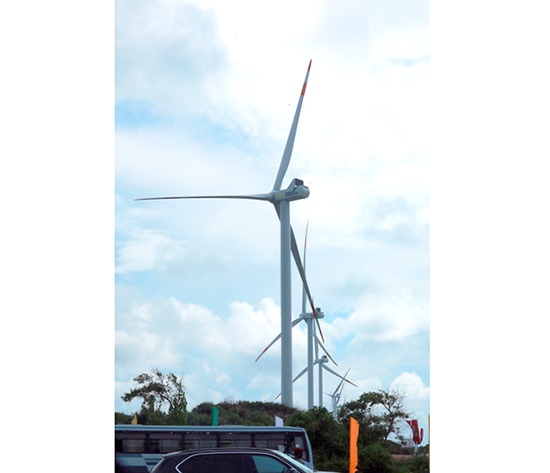
Despite anticipated drop in fuel consumption for thermal energy
bY SURESH PERERA
With three major Liquefied Natural Gas (LNG) projects now on the cards coupled with the commissioning of the Mannar wind power plant, questions are being raised over ongoing moves to forge ahead with plans to build a mega Rs.15 billion cross-country oil pipeline when the long-term demand for thermal power is expected to drop drastically.
The renewed interest within some quarters with political blessings to implement the proposed pipeline project at such stupendous cost has raised eyebrows as the monthly consumption of 45,000 metric tons of fuel to generate costly thermal energy will no longer be necessary with LNG and wind power supplementing the country’s demand for power, industry officials said.
At a time Sri Lanka is facing a grave economic crisis due to the Covid-19 pandemic, what is the urgent need for a cross-country pipeline when there will be far less fuel imports in the long term?, they asked.
With a proposed solar power project at Siyabalanduwa also in blueprint stage, constructing a high cost pipeline at this juncture is as insensible as “watering outdoor plants when it’s raining”, and ultimately result in the project being rendered redundant with billions of rupees going down the drain, they opined.
In addition, bids have already been called to build a new pipeline to facilitate the transfer of jet fuel from the Muthurajawala tank farm to Katunayake at substantial cost. Under the circumstances, what’s the viability of investing on another project when alternate energy sources will make thermal power generation irrelevant in the long run, industry players further queried.
Even if the cross-country pipeline project begins tomorrow, it will take another four years for its completion, whereas the LNG plants will be operational within three years. With a lifespan of 25 years on the pipeline, the country will not be able to recover even the cost of the multi-billion rupee project, they asserted.
Sri Lanka has already signed three major LNG deals with the governments of China, India and Japan. While the proposed combined plants are expected to add 1,400MW to installed capacity, the transnational agreements will play a key role in mitigating unreliability in hydro power supply while bolstering foreign capital inflows.
Sri Lanka’s fuel consumption per day is 5,000 metric tons, of which 1,500 metric tons are channeled to generate thermal power. While the Sapugaskanda facility has the capacity to refine 2,000 metric tons of crude oil per day, the balance 1,500 metric tons are imported as refined oil.
Lanka IOC directly imports refined oil, which is stored and distributed by Ceylon Petroleum Storage Terminals Limited (CPSTL).
A tanker load of 40,000 metric tons of fuel can be discharged within 24 hours. With the anticipated drop in fuel consumption for thermal energy after the proposed entry of LNG into the energy market, the number of tankers can be also reduced with a substantial cost saving, industry officials said.
The cross-country project was first proposed during 2013-14 but was shelved with the construction of the Muthurajawala oil tank farm, which was augmented by a new oil pipeline at the Sapugaskanda Oil Refinery by CPC (Ceylon Petroleum Corporation) engineers.
However, renewed interest on the project re-surfaced during the tenure of the previous UNP government with then Minister Kabir Hashim presenting to the Cabinet a bid by Langfang-based China Petroleum Pipeline Bureau to build the pipeline at a cost of Rs. 15 billion.
A Malaysian company, which quoted Rs. 7.5 billion for the proposed project was disqualified at the time as its tender documents were apparently “not in order”.
Under the new dispensation, the CPSTL sought the cancellation of the tender awarded to the Chinese company as the CPC engineering team reached the conclusion that they can undertake the job after a new feasibility study and related research were conducted to find alternatives as the estimated Rs. 15 billion cost factor was enormous.
The project could be completed internally within 30 months at a cost of Rs. 5 billion, which translates into a saving of Rs. 10 billion for the country. However, with multiple alternate sources of energy in the offing, it has been determined that it was unviable to implement such a mega project at tremendous cost when another new 18-inch diameter pipeline would suffice to meet the demand.
It doesn’t make sense to call for international tenders to build pipelines when local engineers are capable of achieving the feat, industry officials said. “Of course, there are no fat commissions rolling in when these jobs are handled by Sri Lankan professionals”.
In what industry players described as a “strange twist”, there are continuing overtures to push through the pipeline project in a new game plan to perhaps line the pockets of some officials as the task could be completed for one-third of the estimated cost by local engineers. “With Rs. 10 billion to throw, there will be many on the gravy train if the deal works out!”.
Meanwhile, S. D. J. Paregama, secretary of the Sri Lanka Nidahas Sewaka Sangamaya (Petroleum Branch) expressed concern over moves to revive the project, which, he said, was a waste of public funds at a time the country’s economy was in bad shape.
“After our union wrote to President Rajapaksa on the futility of implementing this costly pipeline project, he directed that it be halted immediately”, he said.
After a bout of silence, there are subtle moves now to push ahead with the project with the Chinese bidder, he claimed.
“As a trade union which supported the President at the last election, we expect him to take a firm stand to ensure that public funds are not squandered on projects that are white elephants”, he emphasized.




News
Sun directly overhead Galle, Angulugaha, Imaduwa, Telijjawila, Yatiyana and Tangalle about 12.08 noon today (07)


The sun is going to be directly over the latitudes of Sri Lanka from 28th of August to 07th of September due to its apparent southward relative motion.
The nearest places of Sri Lanka over which the sun is overhead today (07) are Galle, Angulugaha, Imaduwa, Telijjawila, Yatiyana and Tangalle about 12.08 noon.

By Norman Palihawadane
The CID recently found that former SLPP Deputy Minister Premalal Jayasekara, better known as ‘Choka Malli’, had left for Thailand when the Supreme Court imposed an overseas travel ban on him last Friday.
The CID discovered that Jayasekara had left Sri Lanka on August 31, while authorities were taking steps to enforce the travel restriction imposed by the Supreme Court. The Department has subsequently informed the Attorney General’s Department of the development.
The Supreme Court last Friday ordered Jayasekara, and two other men, to appear before court on October 21, and imposed a ban on their overseas travel.
The orders were made as the Supreme Court considered an appeal challenging the acquittal of the three men in connection with the 2015 murder of Shantha Dodangoda, also known as D.G. Sunil Perera.
The appeal was filed by Dodangoda’s wife against a decision of the Court of Appeal to acquit and release Jayasekara and the two other accused, who had previously been convicted and sentenced to death by the Ratnapura High Court.
Dodangoda was killed in a shooting in Kahawatta town, in the early hours of January 5, 2015, while a group of people were putting up decorations for an election rally in support of then common Opposition presidential candidate Maithripala Sirisena.
Two others, Karunadasa Weerasinghe and Mohamed Ilfan, were seriously injured in the shooting.
Following the incident, the Ratnapura High Court convicted Jayasekara, former Chairman of the Kahawatta Pradeshiya Sabha Wajira Darshana de Silva, and former Sabaragamuwa Provincial Council member Nilanta Jayakody, sentencing all three to death.
The Court of Appeal subsequently acquitted the three men and ordered their release.
The victim’s wife later challenged the acquittal before the Supreme Court.
The appeal was taken up before a Supreme Court bench, comprising Justice Preethi Padman Surasena and Justices Achala Wengappuli and Gihan Kulatunga.
During the proceedings, Deputy Solicitor General Janaka Bandara requested that the court impose overseas travel restrictions on Jayasekara and the other respondents.
The Supreme Court subsequently ordered all three to appear before the court on October 21 and imposed travel bans on them.
President’s Counsel Nalin Ladduwahetty, President’s Counsel U.R. de Silva and President’s Counsel Anuja Premaratne appeared for the respondents. President’s Counsel Saliya Peiris represented the aggrieved party.
Police sources said that the discovery that Jayasekara had already left for Thailand, on August 31, has raised concerns over the timing and enforcement of the travel ban.
Sources said that the CID had notified the Attorney General’s Department and was taking further action in relation to the development.
By Pradeep Prasanna Samarakoon
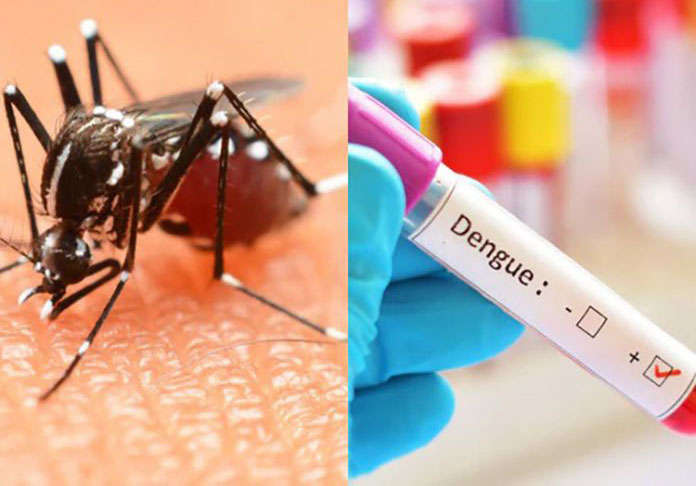
The number of deaths from dengue fever in Sri Lanka has risen to 73 this year, with 96,228 cases reported across the country so far, according to the Dengue Control Unit.
The latest figures indicate that dengue continues to pose a significant public health concern, with 737 new cases recorded during the first four days of September alone.
Dengue infections peaked in July, when 29,964 cases were reported, according to the latest data. June recorded the second-highest monthly total, with 21,533 cases, while 10,155 cases were reported in August.
Earlier in the year, 8,590 cases were recorded in May and 7,866 cases in January.The Western Province remains the worst-affected area, accounting for more than half of all dengue cases reported nationwide. A total of 50,851 cases have been recorded in the province, representing 52.84% of the country’s total.
The Southern Province has recorded 13,950 cases, followed by the Central Province with 8,818 cases and Sabaragamuwa Province with 7,925 cases.

Sun directly overhead Galle, Angulugaha, Imaduwa, Telijjawila, Yatiyana and Tangalle about 12.08 noon today (07)

Showers above 50 mm are likely at some places in the Uva and Eastern provinces.

Harshitha’s composed knock seals Sri Lanka’s semi-final berth

‘Choka Malli’ slips out of country before travel ban

Dengue death toll rises to 73

Ranil accuses govt. of undermining democracy

‘Dates have the highest sugar content to fight Coronavirus’

Sunday Island 27 December – Headlines

#SundayIsland 17th December – Headlines

Sunday Island – 28th March

Sunday Island Headlines – 21 March

Sunday Island – 21st February – Headlines
-

 News5 days ago
Denied of promotion to SC despite vacancies, justice Gurusinghe retires
-

 Latest News5 days ago
Grade 5 scholarship exam results released
-

 News5 days ago
22A: SC urged to suspend hearing, appoint full bench
-

 Midweek Review6 days ago
The local and global dynamics of Sri Lanka’s 22nd Amendment
-

 News5 days ago
Govt. seeks NATO assistance
-

 News3 days ago
Namal remanded until Sept. 18 over Airbus deal investigation
-

 News6 days ago
40 professional organisations and TU oppose proposed 22A
-

 Latest News1 day ago
Tharanga creates history with Diamond League crown in Brussels