
Business
Threads of Resilience: Is Sri Lanka’s apparel sector prepared to face Pathogen X?

 Chaya Dissanayake is a Research Assistant at the Institute of Policy Studies of Sri Lanka (IPS). She holds a B.Sc. (Hons) in Agriculture specialised in Agricultural Economics from the University of Jaffna and is currently reading for an MSc in Integrated Water Resource Management at the Postgraduate Institute of Agriculture, Peradeniya. Her research interests include agricultural policies and institutions; disaster risk management; poverty and inequality; SMEs; women and workforce.
By Chaya Dissanayake
Sri Lanka faces a high-risk situation with the looming threat of a potential future pandemic.
A recent IPS study reveals that the Sri Lankan apparel sector, particularly women workers, bore the brunt of the COVID-19 pandemic, with 24% of women not recalled for work during the pandemic’s initial phase.
Urgent streamlining of pandemic response policies for the sector is crucial to provide timely support and minimise losses in life and revenue.
The World Health Organization (WHO) is expressing concerns about the global community’s readiness for pathogen X, a highly contagious pathogen that could emerge in the future. Scientists predict a higher likelihood of its origin in tropical regions, placing Sri Lanka at considerable risk.
The COVID-19 pandemic severely impacted the livelihoods of millions of workers across Sri Lanka. The manufacturing sector, where workers are in very close proximity to one another, faced more challenging conditions than other sectors such as agriculture. Given the significance of the apparel industry in the manufacturing base and as a source of employment in Sri Lanka, this blog assesses the pandemic’s impact on female apparel workers and guides future policies to minismise the cost of similar episodes.
Disruptions to Livelihoods
At the onset of the COVID-19 pandemic, estimates from the Labour Force Survey 2020 data suggest that the apparel sector in Sri Lanka employed approximately 470,000 workers with 70% of them being women. The majority of these women are primarily in low-skilled positions, such as machine operators, line helpers and cutters. Approximately 33% of these female apparel workers are informal (for comparison only 13% of male apparel workers are informal). Focus group discussions revealed many apparel employees are internal migrants, living in shared rentals.
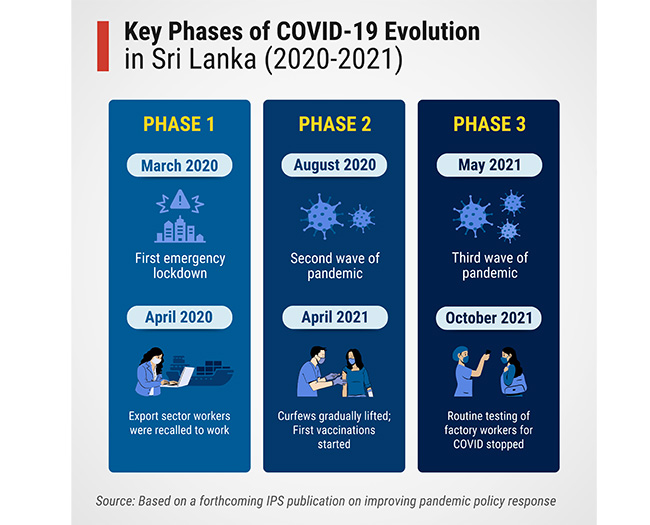
The pandemic response transitioned from an emergency response stage to a more organised response mitigating health and economic impacts over time (Infographic 1). The initial emergency response phase (March-June 2020) saw sudden lockdowns, income loss, and restricted access to healthcare. Apparel workers faced many challenges during this initial period due to the nature of their work and their living arrangements.
The situation was particularly dire for internal migrants in the apparel industry. Residing in overcrowded boarding houses, these workers struggled with implementing basic pandemic safety measures like physical distancing and quarantine. “Even though we were told to use separate washrooms, it was difficult to get those facilities in the boarding houses”; one female worker in Katunayake reminisced. Furthermore, the absence of systematic information to identify and provide social security benefits to individuals living outside their registered localities further exacerbated their vulnerability. According to the household survey to assess the impact of the COVID-19 pandemic carried out by the DCS, only 63% of all apparel workers received cash assistance provided by the government. In contrast, 71% of workers in the food processing industry and 68% of workers in the textile industry, in similar occupational categories, received emergency financial assistance. In discussions, female workers revealed that those from low-income families eligible for cash transfers missed out due to their residential status.
Abrupt job losses too led to severe financial consequences. Estimates based on the COVID-19 impact survey data suggest that, in the initial phase, 24% of women and 11% of men employed in the industry experienced job suspensions due to temporary factory closures. In contrast, the same statistic for all female workers in similar occupational categories across all sectors, was 11.3% while for male workers it was 12.8%. When the apparel factories restarted in May 2020, temporary workers, especially those who were part-time workers and line helpers, faced job suspensions without benefits as revealed in discussions. They were unable to find alternative employment and faced significant economic hardships.
Health and Social Challenges
Women workers during health crises face more pressure to allocate time for care work. The IPS study too observed that in the second phase of the pandemic, women apparel workers found it challenging to balance their work with the increased care responsibilities due to the frequent closure of schools and daycare facilities. Non-migrant workers received family and peer support, which migrant workers lacked.
Loss of livelihoods directly affected the nutrition and well-being of women despite the government’s relief measures including ration distribution. Again, estimates from the COVID-19 survey reveal the considerable impacts the initial lockdown had on apparel workers with regard to food security and employment (Infographic 2). Women were twice as likely to go without food or to quit the industry.
In addition to the economic shock, female workers faced greater challenges in accessing medical care in the first phase of the pandemic. In the apparel industry, the COVID-19 survey data show that 16.3% of women workers (twice that of male workers at 8.3%) had no or limited access to health services during the first phase. Many apparel workers rely on public transport, in its absence, accessing health services was difficult. Restricted mobility also affected the provision of maternal healthcare as midwives could no longer conduct home visits.
The absence of information on women apparel workers hindered effective responses. The IPS study interviews with key industry informants revealed that the Board of Investment’s attempt to identify and isolate at-risk individuals in export processing zones and the trade unions’ proposal for chemical sanitisation of shared worker accommodations failed due to the lack of a database on workers’ residential addresses for example.
Apparel workers also faced harrowing social stigma as ready-made garment factories were publicised as pandemic hotspots. “People in the village were afraid to help while quarantined because we worked in garment factories,” shared a woman who lived in a rented room in Katunayaka.
The export-oriented apparel industry in Sri Lanka adapted to the pandemic faster and maintained the employment level compared to other more domestic-oriented manufacturing industries. However, substantial health and economic impacts on women workers could be found, which need to be minimised in future pandemics to boost the resilience of the industry and the workforce.
The WHO stresses the importance of strengthening existing programmes with community-centered and evidence-based policy changes to counter the threat of pathogen X. One important concern is whether the policies would benefit all members of a community. As drawn from the IPS’ study observations, women faced more difficulties accessing health care, nutritional needs and necessities during the initial response. As the pandemic progressed, the widening gender gap became more pronounced due to women’s increased care work responsibilities.
Informed decision-making is critical for efficient pandemic containment, which necessitates quick access to information about vulnerable workers via centralized data. Given the large number of internal migrants in the workforce, improved information on workers will improve methods of delivering social benefits to them. For instance, providing safe living conditions to workers who live in congested housing, and making sure workers in low-income brackets receive aid in a future pandemic event could be made easier with such information. Another way to tackle the gaps revealed here is to involve more women in decision-making so that women-specific needs do not go unnoticed during emergency responses to crises.
Streamlining pandemic policy responses also includes expanding existing employment benefits programmes like EPF and ETF to cover abrupt unemployment due to crises, providing a financial buffer until re-entry into employment is feasible and reducing voluntary exits from the industry.
*This blog is based on an ongoing IPS study on improving pandemic policy response funded by the International Development Research Centre (IDRC).
Link to the original blog: https://www.ips.lk/talkingeconomics/2024/03/12/threads-of-resilience-is-sri-lankas-apparel-sector-prepared-to-face-pathogen-x/

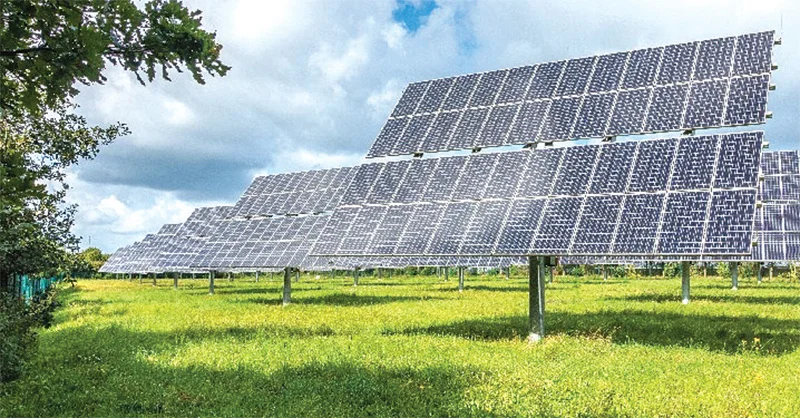
In a move that highlights Sri Lanka’s accelerating push toward a more resilient and renewable-powered electricity system, the National System Operator Private Limited (NSO) has called for international bids to modernise the country’s core grid management infrastructure.
The tender—issued under the Power System Strengthening and Renewable Energy Integration Project (PSSREIP)—is backed by the Asian Development Bank (ADB), reflecting continued multilateral confidence in Sri Lanka’s energy reform trajectory despite recent economic headwinds.
At the heart of the project is the integration of a Renewable Energy Management System (REMS) with a fully upgraded SCADA/EMS platform at the National System Control Centre. While technical in appearance, energy experts say the implications are far-reaching: this is the digital backbone required for managing a grid increasingly dominated by intermittent renewable sources.
“This is not just another infrastructure upgrade—it’s a systems transformation,” a senior power sector analyst said. “Without this layer of intelligence, scaling up solar and wind becomes operationally risky.”
Sri Lanka has in recent years expanded its renewable energy footprint, particularly in solar and wind. But the lack of advanced real-time forecasting and dispatch capabilities has often limited how much of that energy can be safely absorbed into the grid. The proposed REMS integration directly addresses that bottleneck.
From a financial perspective, the project also highlights the continued role of concessional development financing in de-risking large-scale energy investments. The ADB’s involvement ensures not only funding support but also procurement discipline through its Open Competitive Bidding (OCB) framework—seen by analysts as a safeguard for transparency and technical quality.
The tender sets a relatively high bar for bidders, requiring prior experience in similar large-scale contracts exceeding USD 6 million and a minimum average annual turnover of USD 16 million. This suggests the project is likely to attract major international engineering and energy technology firms, potentially opening the door for advanced grid solutions and knowledge transfer.
Beyond its technical scope, the initiative comes at a critical time for Sri Lanka’s energy economy. Rising generation costs, fuel import pressures, and the need for tariff stability have intensified the urgency for efficiency gains within the system. A smarter grid—capable of optimising dispatch and reducing losses—could ease some of these structural pressures.
Moreover, the project aligns with Sri Lanka’s broader climate commitments and long-term goal of increasing renewable energy penetration. Analysts note that without investments in grid intelligence and flexibility, renewable targets risk remaining aspirational rather than achievable.
The deadline for bid submissions is May 14, 2026, with implementation expected to span approximately 18 months from contract award.
If executed effectively, the NSO-led initiative could mark a decisive shift—from a conventional grid struggling with variability to a digitally enabled system capable of managing the complexities of a modern energy mix.
For policymakers, investors, and consumers alike, the message is clear: the transition to clean energy is no longer just about adding megawatts—it is about building the intelligence to manage them.
By Ifham Nizam

We wish to provide an update on the actions being taken following the recently identified incident.
In line with the Corporate Disclosure made on 23rd April 2026 and as indicated in our 6th April 2026 Corporate Disclosure, an independent forensic review focused specifically on the fraudulent transactions has been initiated and will be conducted by Deloitte Touche Tohmatsu India LLP, a globally recognized firm with expertise in forensic investigations. This process is being carried out in consultation with, and in line with recommendations from, the Director of Bank Supervision of the Central Bank of Sri Lanka.
The forensic review will examine the circumstances surrounding the fraudulent transactions, including any lapses in controls, oversight, and governance during the relevant period. Its findings, including any interim updates and the final report, will be submitted directly to the Central Bank of Sri Lanka.
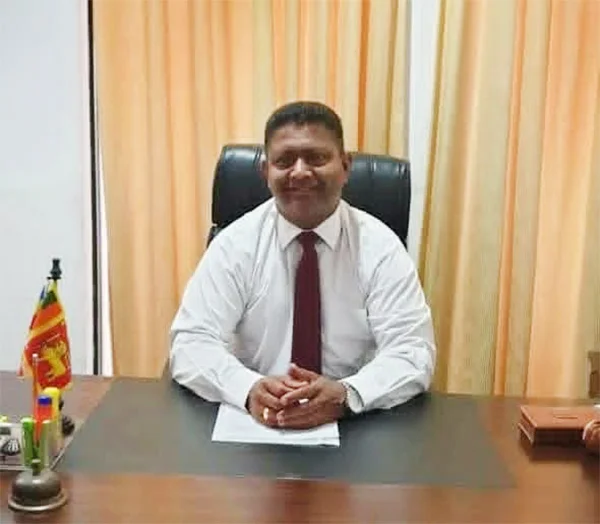
In a move aimed at reinforcing institutional stability and administrative efficiency, the Cabinet of Ministers has approved the permanent appointment of Iraj Chaminda Pathiraja as Controller General of Immigration and Emigration.
Pathiraja, a senior officer in the Special Grade of the Sri Lanka Administrative Service (SLAS), had been serving in the position in an acting capacity since May 2025. His confirmation to the top post signals continuity in leadership at a time when the country is seeking to strengthen border management and streamline migration processes.
The proposal for his appointment was submitted by Ananda Wijepala, Minister of Public Security and Parliamentary Affairs, and received Cabinet approval this week.
Government sources said the decision reflects confidence in Pathiraja’s administrative experience and his performance during his tenure as acting Controller General. His role is considered critical in overseeing Sri Lanka’s immigration framework, including visa issuance, border control operations, and emigration regulation.
The Department of Immigration and Emigration plays a key role in national security architecture, particularly amid evolving regional mobility trends and increasing demand for efficient public services. Officials noted that stable leadership is essential to ensure policy consistency and operational effectiveness.
Pathiraja’s appointment comes at a time when Sri Lanka is placing renewed emphasis on governance reforms within the public sector. Strengthening institutional capacity, improving service delivery, and enhancing transparency have been identified as key priorities.
Analysts say the confirmation of a permanent Controller General is expected to support ongoing efforts to modernize immigration systems, including digitalization initiatives and improved coordination with international counterparts.
The government has also underscored the importance of maintaining a balance between facilitating legitimate travel and safeguarding national interests, particularly in the context of global migration challenges.
By Ifham Nizam

Plane crashes near South Sudan’s Juba, killing all 14 on board

Gunmen kidnap 23 children from Nigerian orphanage

US press gala shooting suspect charged with attempting to kill Trump

Showers above 75 mm are likely at some places in the Western, Sabaragamuwa, Central, North-western, North-central and Southern provinces and in Mannar district

Hazlewood and Bhuvneshwar lead rout of Delhi Capitals

Govt. assures UN of readiness to introduce ‘vetting process’ for troops on overseas missions

‘Dates have the highest sugar content to fight Coronavirus’

Sunday Island 27 December – Headlines

#SundayIsland 17th December – Headlines

Sunday Island – 28th March

Sunday Island Headlines – 21 March

Sunday Island – 21st February – Headlines
-

 News5 days ago
Lanka faces crisis of conscience over fate of animals: Call for compassion, law reform, and ethical responsibility
-
 News4 days ago
Whistleblowers ask Treasury Chief to resign over theft of USD 2.5 mn
-

 News4 days ago
No cyber hack: Fintech expert exposes shocking legacy flaws that led to $2.5 million theft
-

 News1 day ago
BIA drug bust: 25 monks including three masterminds arrested
-

 Business2 days ago
Nestlé Lanka Announces Change in Leadership
-

 News1 day ago
Banks alert customers to phishing attacks
-

 News5 days ago
USD 2 mn bribe: CID ordered to arrest Shasheendra R, warrant issued against ex-SriLankan CEO’s wife
-

 News2 days ago
Hackers steal $3.2 Mn from Finance Ministry