
News
UNDP exhibition highlights women’s struggles amidst economic hardships and calls for gender equality action

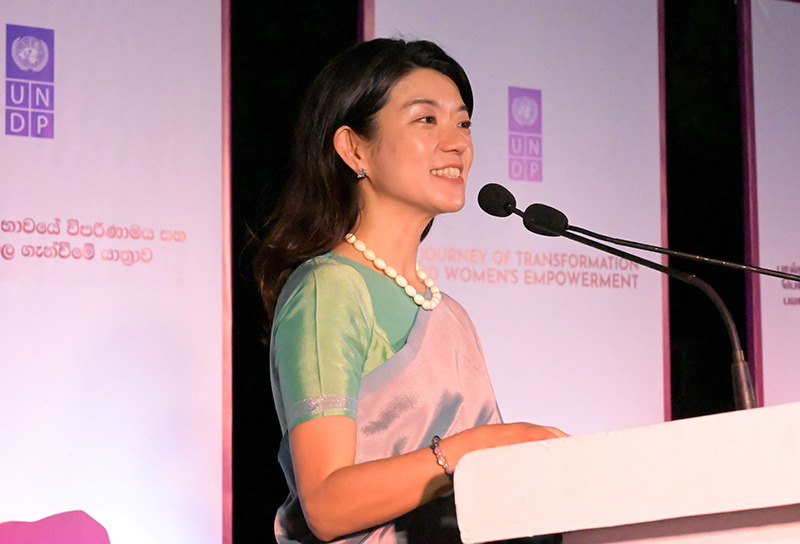
UNDP Resident Representative in Sri Lanka Azusa Kubota says that women in households have been at the forefront of taking the brunt of the hardships while trying their very best to protect the well-being of their families and communities, with fast-disappearing economic means.
She said so speaking at the Launch of UNDP’s Mobile Interactive Gender Exhibition‘A Journey of Transformation and Women’s Empowerment’ held from the 7th to 10th of March, 2024 at the National Museum, Colombo.
She said: Colombo is the 3rd destination for this exhibition. It first started in Kandy in November last year, followed by Kurunegala last week. We are thrilled to open the exhibition at this historic museum in the Nation’s Capital on the eve of International Women’s Day with the theme of ‘Invest in Women’. And we are deeply grateful for your presence to witness its opening.
We have come a long way as a global community, yet we know that gender bias persists, well into the 21st century.
No matter where women live, women are paid less, shoulder more unpaid housework, child and elderly care, and are wildly under-represented in leadership roles both in the public and private sectors. In 59 countries where women are now more educated than men, their income is still on average a staggering 39 per cent less. Women are better educated than ever before, including here in Sri Lanka, but this has not been enough to close the income gap.
Here in Sri Lanka, in the aftermath of a series of cascading crises, 31% of Sri Lanka’s population lives in poverty. Sri Lanka’s first Multidimensional Vulnerability Index (MVI), published last year by UNDP Sri Lanka and Oxford University, outlines that 55.7% of Sri Lankans are multidimensionally vulnerable.
Women in households have been at the forefront of taking the brunt of the hardships while trying their very best to protect the well-being of their families and communities, with fast-disappearing economic means.
Over and above the economic hardships, women continue to face violence. Even before the pandemic, the 2019 Women’s Wellbeing Survey, conducted by UNFPA and the government, revealed that in Sri Lanka, one in five ever-partnered women have experienced physical and/or sexual violence by an intimate partner in their lifetime. 1 in 4 have experienced physical and/or sexual violence since age 15 by a partner or non-partner.
It is not hard to imagine that the growing socio-economic pressures have resulted in increased incidents of violence against women, as witnessed globally during the COVID-19 pandemic.
Gender equality is the 5th Sustainable Development Goal, and its principle is the foundation for all 17 Goals. It is because inequality hurts, and a sustained development process is not possible by leaving half of the global population behind in decision-making processes. A recent UN study estimated that if we continue at the current pace, we will need another 300 years to achieve gender equality.
Then we must ask the question – what would it take to accelerate our efforts towards gender equality? Certainly, we do not have 300 years to wait around.
And in UNDP we believe that the solution lies in shifting our mental models. UNDP’s most recent Gender Social Norms Index (GSNI) 2023 quantifies biases against women, capturing people’s attitudes on women’s roles along four key dimensions: political, educational, economic and physical integrity. The report revealed that around 90 per cent of men and 87 per cent of women hold internal biases against women—roughly the same numbers as a decade ago. This means we are not progressing in changing our perceptions about gender roles.
The gender-based biases, which we carry into voting booths, board meetings, interview panels and beyond, are barriers to women achieving their full potential.
To bring about the necessary shifts in our biases, we wanted to tell stories of courage and inspiration led by women. There are role models whose stories challenge our biases. And they are often ordinary women you find in your family and communities.
In my travels across the country, I have witnessed first-hand heroines in action who are constantly trying their best to break these barriers. The stories of determination, resilience and kindness often remain unheard, yet serve as a reminder of the inherent core of what it means to be a woman leader in her own right.
After interacting with women across the country, I was firmly convinced of the importance of investing in women across Sri Lankan communities. And when we do that, the results will have an exponential impact because women invest in others – often the most vulnerable and marginalized members of the family and community.
While touring the exhibition, you will quickly see that achieving gender equality must go well beyond addressing the trends and symptoms that are visible.
We must go deep below the iceberg to understand the existing mental models and systems that give rise to what is visible and invest in women from all angles.
As evident from the spirit of the National Gender Equality and Women’s Empowerment Policy, attaining gender equality requires a broad-based approach and multistakeholder partnership. This is why UNDP has worked closely with all stakeholders across sectors, who share our collective vision for the betterment of the well-being of women in Sri Lanka and beyond.
These meaningful stories of transformation range from women’s contributions to food security, climate adaptation, community-led action and livelihoods. These efforts, supported by UNDP Sri Lanka in partnership with many of you in this room over the years, have been instrumental for us in achieving the Gold status of the Gender Equality Seal in UNDP.
The Gender Equality Seal is UNDP’s corporate standard for gender equality. UNDP Sri Lanka is proud to be one of the first countries in the Asia-Pacific region to receive the honour of a Gold seal for its commitment to Gender Equality and Women’s Empowerment. And we are determined to maintain the Gold Status in the years to come.
This requires a multi-dimensional approach that encompasses legal reforms, economic empowerment, access to education and healthcare, and the promotion of women’s leadership and participation in decision-making processes, to name a few. And all the work featured here, and other past, ongoing and future initiatives would not have been possible without support from many of our partners in this room, including the Government of Sri Lanka, civil society organizations, local government partners and development partners.





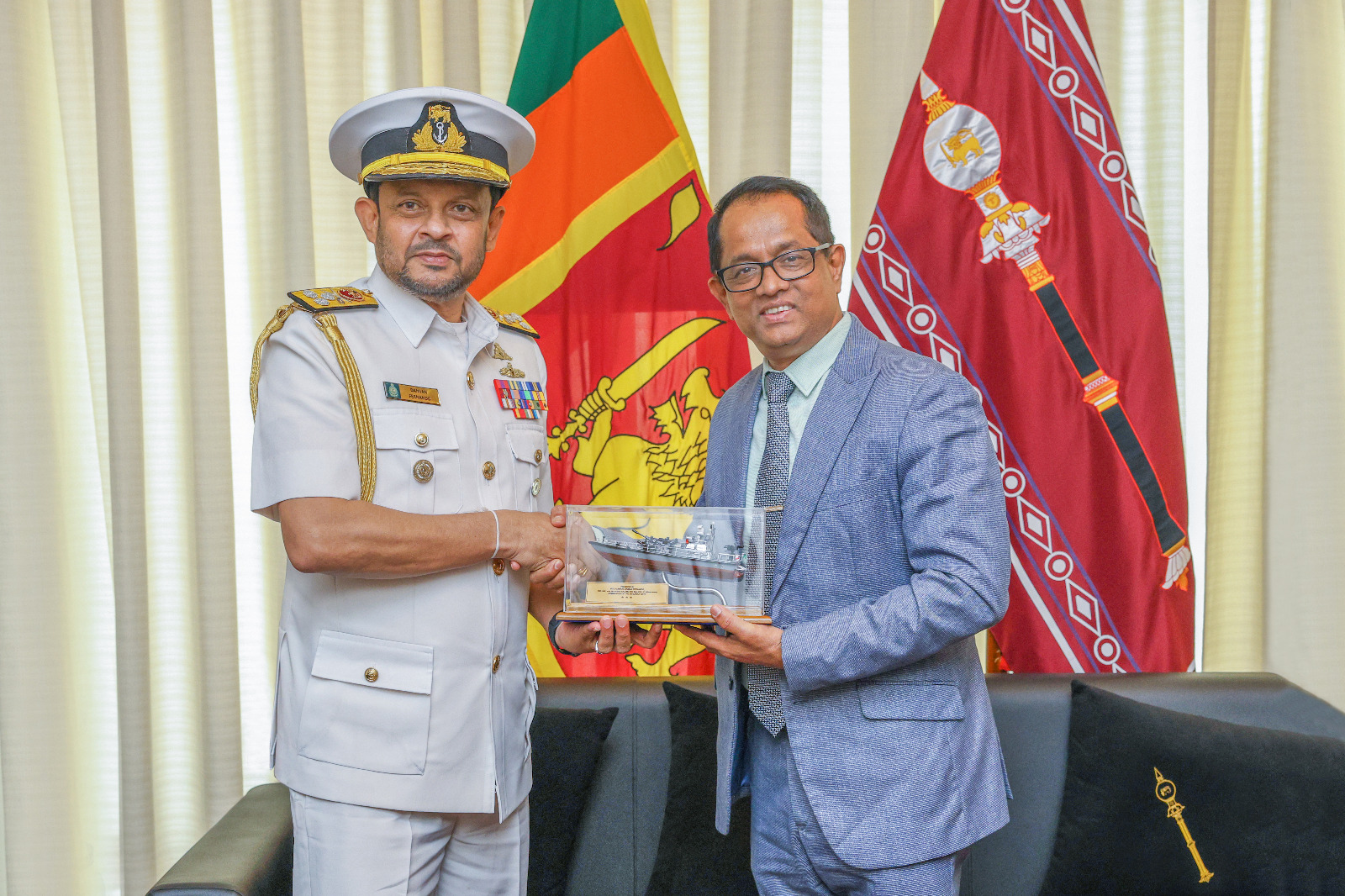
The Commander of the Navy, Vice Admiral Damian Fernando paid a courtesy call on the Speaker of the Parliament, Dr Jagath Wickramaratne at the Office of the Speaker, today (7 July
2026).
The meeting marked the Commander of the Navy’s first official interaction with the Speaker following his assumption of command of the Sri Lanka Navy. During the cordial discussion, they exchanged views on the Navy’s role in matters of national importance.
The formal meeting drew to a close with an exchange of mementoes, signifying the importance of the occasion.
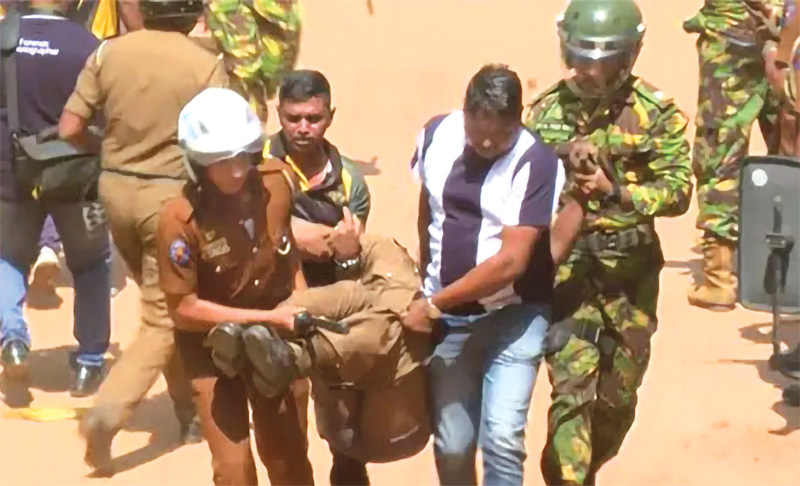
At least 26 people, including five prison officers and 20 inmates, have been confirmed dead following violent unrest at Negombo Prison, hospital sources said yesterday, as authorities struggled to restore full control over the facility.
According to unconfirmed reports the prison officers were killed by rioters yesterday morning, in retaliation, and weapons carried by those officers were grabbed by them.
Negombo General Hospital Director Consultant Dr. Pushpa Gamlath said nearly 100 injured persons had been admitted, following the clashes, and eight of the critically wounded had been transferred to the National Hospital, in Colombo, for further treatment.
The violence, which initially broke out on Sunday (5) between remand prisoners and convicted inmates, left two inmates dead and 38 others injured before being temporarily brought under control.
However, tensions flared again on Monday (6), with prison officials reporting renewed unrest inside the facility despite earlier assurances that the situation had stabilised.
Police said the initial confrontation was triggered by a dispute linked to the exposure of an alleged drug trafficking network, operating within the prison, and was reportedly orchestrated by a drug trafficker, identified as Suresh, who is said to have links to an underworld figure known as ‘Booru Moona’.
The violence rapidly escalated, with female inmates staging a protest on the Prison roof in support of those involved in the clashes, while relatives gathered outside demanding information on detainees. Police later facilitated visits for selected family members to hospitalised inmates.
The Negombo Prison, which houses around 1,800 remand and convicted inmates, descended into widespread disorder as rival groups clashed, with reports indicating that the violence later spread beyond the initial confrontation.
Authorities said rioting inmates had allegedly seized firearms during the renewed unrest on Monday, prompting heightened security measures.
The Sri Lanka Air Force deployed drones for aerial surveillance and a Bell 412 helicopter to monitor the situation, while additional military personnel were sent to reinforce security around the prison.
Prisons Department spokesperson A.C. Gajanayake said a special investigation team had been appointed, under the direction of the Commissioner General of Prisons, to probe the incident, while a separate police investigation is also underway.
Justice Minister Harshana Nanayakkara told The Island that he had called for a detailed report on the disturbances.
By Norman Palihawadane
News
Cleaner, cheaper electricity gathers momentum with rapid progress in 50 MW Mannar wind power project
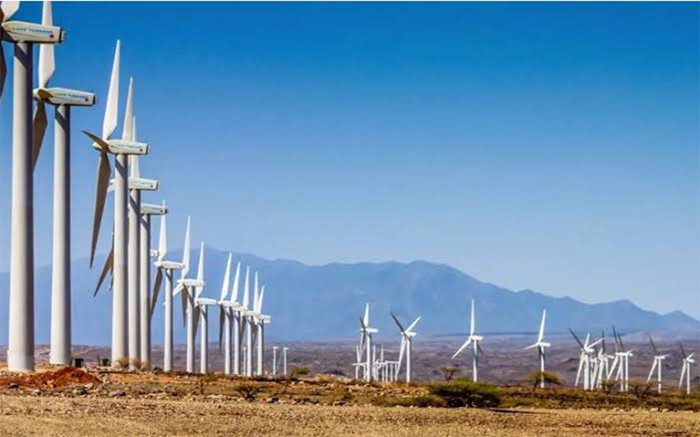
Sri Lanka’s drive towards cleaner and cheaper electricity gathered fresh momentum with the reported rapid progress in the 50 MW Mannar Wind Power Project, which is expected to produce the lowest-cost wind-generated electricity in the country’s history while saving billions of rupees in annual fuel imports.
The Ministry of Energy announced that the first wind turbine for the project had already arrived in the country, while the remaining turbine components have reached the Port of Trincomalee and are currently being unloaded, signalling a major milestone in the construction of one of the country’s key renewable energy ventures.
The project, inaugurated by President Anura Kumara Dissanayake, in January this year, is expected to become a cornerstone of the government’s strategy to transform Sri Lanka’s electricity sector by expanding renewable energy generation and reducing dependence on imported fossil fuels.
According to the Ministry, electricity generated by the Mannar wind farm will be purchased at USD 0.0465 (approximately Rs. 14.37) per unit, making it the lowest tariff ever secured for wind-generated electricity in Sri Lanka.
Energy experts say the competitive tariff demonstrates the growing economic viability of renewable energy and could help stabilise future electricity prices.
The Ministry also estimates that once the wind farm is connected to the national grid, Sri Lanka will save approximately Rs. 4.7 billion annually by reducing the import of fossil fuels required for thermal power generation, easing pressure on the country’s foreign exchange reserves.
The Mannar project is expected to support the government’s ambition of substantially increasing the contribution of renewable energy to the national electricity mix, by 2030, while helping Sri Lanka move towards its long-term goal of achieving net-zero carbon emissions by 2050.
Hayleys Fentons PLC, selected through an international competitive bidding process, is responsible for the installation and maintenance of the wind turbines.
The National System Operator (NSO), operating under the Ministry of Energy, will oversee the integration and management of electricity generated by the project within the national grid.
By Ifham Nizam

Commander of the Navy pays courtesy call on Speaker of the Parliament

Woman suspected of Monaco bomb attack found dead in Ukraine

Balogun reprieve in vain as Belgium beat USA to set up Spain quarterfinal

Trump confirms he asked Fifa to review Balogun ban

Late Spain goal eliminates Portugal, ends Ronaldo’s international career?

Nyamhuri and Ngarava stun Bangladesh by defending 141

‘Dates have the highest sugar content to fight Coronavirus’

Sunday Island 27 December – Headlines

#SundayIsland 17th December – Headlines

Sunday Island – 28th March

Sunday Island Headlines – 21 March

Sunday Island – 21st February – Headlines
-
 News3 days ago
Singapore-based Buddhist monk marks nearly four decades of humanitarian service
-

 News4 days ago
Freedom 250: US Embassy celebrates America’s 250th Independence Day through magic of American cinema
-
 News5 days ago
CIABOC to question Harak Kata on Rs. 200 mn bribery allegation
-
 News5 days ago
SLAF conducts successful rescue mission under UN command in Central African Republic
-
 Midweek Review7 days ago
H’tota port’s strategic status remains focal point of geopolitical scrutiny
-

 News2 days ago
AI concerned over proposed SL military deployment in Haiti
-
 News4 days ago
UNEP support pledged to strengthen Sri Lanka’s Environmental Priorities
-

 Features3 days ago
The NPP’s New Challenge: Balancing Easter Lawfare and Economic Welfare