
News
Online Safety Law of SL brought to notice of White House


The controversial Online Safety Law that entered Sri Lanka’s statute books in February which has erupted widespread national and international censorship and criticism brought to the attention and scrutiny of the White House when President Biden’s special assistant for Asian-American Affairs and Senior Liaison for the Asia-Pacific Region had a lengthy discourse with two Sri Lankan expatriates known to American lawmakers and socio-political activists as advocates for strengthening US-Sri Lanka relations, and most importantly, removing misunderstandings between the two nations.
Erika L. Moritsugu, a senior official in President Joe Biden’s White House staff handling Asian-American Affairs and Senior Liaison for Asia-Pacific Region, Sanje Sedera, Democratic Party activist in the State of Nevada who maintains continuous rapport and dialogue with U.S. lawmakers as well as the inaugural-Chair of the US-Sri Lanka Chamber of Commerce, and Daya Gamage, former US State Department Foreign Service National Political Specialist, met on February 28, in Las Vegas, Nevada, for a thought provoking dialogue connected to US-Sri Lanka relations and issues in the Indo-Pacific Region in which Sri Lanka is strategically located.
Ms. Moritsugu made a special trip to Las Vegas to have this dialogue with Mr. Sedera and Mr. Gamage while scheduling meetings with officials of the American Civil Liberties Union (ACLU) and Asian American Pacific Islanders (AAPI).
Besides involved in political and foreign affairs Mr. Sedera during the COVID-19 pandemic that hit Sri Lanka hard, liaised with US Congresswoman Dina Titus, co-chair of US-Sri Lanka Caucus and member of the US House Foreign Affairs Committee’s South Asia Sub-Committee, to drastically increase the US-contributed medication to Sri Lanka.
Besides engaged in enhancing relations between the two nations, and clearing misunderstandings, the highlight of the discourse with Ms. Erika Moritsugu was the recently enacted Sri Lanka’s Online Safety Law.
Sri Lanka Parliament in mid-January this year enacted regulations to regulate online content sparking criticism from human rights groups and the diplomatic community that the government was trying to crack down on dissent and strife freedom of speech.
Both Mr. Sedera and Mr. Gamage were well aware that the obnoxious features of the Online Safety Act were communicated and made known to the diplomatic officials of the U.S. Department of State through the department’s diplomatic representative Ambassador Julie Chung, nevertheless the real message about the obnoxious features of the legislation has not been well communicated to Washington policymakers.
Having had the discourse with Ms. Moritsugu, the features of the Online Safety Law have now reached White House ‘policy wonks’ who work closely with President Biden.
It was explained that the Act provides sweeping powers to the Online Safety Commission, appointed by Sri Lanka President, and that this panel could decide what constitutes a prohibited statement and issue, take down orders to internet service providers and social networks.
Accompanying Erika Moritsigu was Krystal Ka’ai, Executive Director of White House Initiative on Asian Americans and Pacific Islanders.
The discussions turned to US-Sri Lanka relations, and some of the misunderstandings and misconceptions Washington has on Sri Lanka’s social and demographic issues. Mr. Sedara and Mr. Gamage also reminded the White House official Sri Lanka’s failure to provide cogent information to clear some of the misunderstandings to help Washington to take productive foreign policy initiatives toward Sri Lanka.
It was brought to the notice of Ms. Erika Moritsigu that Daya Gamage and another retired Senior Foreign Service-Intelligence Officer of the US Department of State, Robert Boggs, are currently preparing a manuscript – Defending Democracy: Lessons in Strategic Diplomacy from US-Sri Lanka Relations – for international release examining roots of Sri Lanka’s revolts, reexamining the sources of both Sinhala and Tamil uprisings, and how U.S. strategic interests in Sri Lanka were thwarted due to Washington policymakers and lawmakers having less knowledge and misunderstanding of the intricate fabric of Sri Lankan society and her demography. Their book further discloses Sri Lankan authorities’ total failure to comprehend the same and provide cogent evidence and data to policymakers and lawmakers in Washington to provide them with cogent understanding to prevent formulating unfavorable foreign policy decisions on Sri Lanka.
The Biden White House senior official, Ms. Erika Moritsigu, paid attention to the disclosures, interpretations and analyses based on those that relate to US-Sri Lanka relations.


Latest News
Cabinet approves establishment of Activity-Based Learning Centers at Regional Level for Commerce Education

The importance of establishing learning centers at regional level has been identified in order to achieve multiple objectives, including the development of teachers, utilization as a hub for new technology and resource sharing, enhancement of vocational and higher education opportunities, efficient utilization of limited physical and human resources, integration of new technologies with subject-specific knowledge,
sharing of limited resources to ensure equitable access to education, and development of skills in line with regional potential, thereby contributing to the qualitative development of commerce education.
Accordingly, the project to establish 100 activity-based learning centers for the enhancement of commerce education has been included in the Public Investment Programme as a major investment project in general education, with an estimated total cost of Rs. 289 million, to be implemented during the period 2026–2028.
Having considered the proposal submitted by the Prime Minister, in her capacity as the Minister of Education, Higher Education and Vocational Education, Cabinet approval was granted to establish and operationalize 25 regional centres covering all 25 districts.
Latest News
M/s. Resources Development Consultants (Pvt) Ltd appointed to prepare Feasibility Study and detailed plans for the extension of the Kelani Valley Railway Line from Avissawella to Ratnapura
Approval was granted at the Cabinet Meeting held on 21-10-2025 to carry out a feasibility study and prepare detailed plans for the extension of the Kelani Valley Railway Line from Avissawella to Ratnapura.
The calling of expressions for this purpose has been conducted under the national Competitive Procurement Procedure, and 8 bidders have submitted their Expression of Interest in that respect.
Following the evaluation of technical proposals submitted by the short-listed bidders, and financial proposals of the 4 eligible institutions have been opened. Subsequent to the evaluation of the aforementioned financial proposals, the Consultant Procurement Committee has recommended awarding
the consultancy for the feasibility study and preparation of detailed plans for the extension of the Kelani Valley Railway Line from Avissawella to Ratnapura to M/s. Resources Development Consultants (Pvt) Ltd at a total cost of Rs. 356.22 million (exclusive of taxes).
Accordingly, the Cabinet of Ministers has approved the resolution furnished by the Minister of Transport, Highways and Urban Development to award the said procurement in line with the above recommendation.
Latest News
Import and Export (Control) Regulations No. 01 of 2026, issued under the Imports and Exports (Control) Act, No. 1 of 1969, to be submitted for concurrence of the Parliament
The Special Import Licence Regulations No. 01 of 2023, published in Extraordinary Gazette No. 2312/77 dated 01-01-2023, prohibit the importation of retreaded tires, including those used for aircraft.
However, the Ministry of Ports and Civil Aviation has made a request that an exemption be granted to permit the importation of retreaded aircraft tires classified under HS Code 4012.13 for Sri Lankan Airlines.
Taking into consideration essential operational and safety requirements, it has been decided to permit the importation of retreaded aircraft tires classified under HS Code 4012.13, subject to the recommendation of the Ministry of Ports and Civil Aviation, provided that such tires comply with the requirements specified by internationally recognized aviation authorities and are imported by Sri Lankan airline operators engaged in international air services under a duly executed supply agreement between the airline and a certified international supplier.
Accordingly, the Cabinet of Ministers has approved the resolution furnished by the President, in his capacity as the Minister of Finance, Planning and Economic Development, to submit the Import and Export (Control) Regulations No. 01 of 2026, published in Extraordinary Gazette No. 2481/02 dated 23-03-2026 under the provisions of the Imports and Exports (Control) Act, No. 1 of 1969, for the concurrence of the Parliament.

IRGC seizes two vessels in Strait of Hormuz amid US blockade

Cabinet approves establishment of Activity-Based Learning Centers at Regional Level for Commerce Education
M/s. Resources Development Consultants (Pvt) Ltd appointed to prepare Feasibility Study and detailed plans for the extension of the Kelani Valley Railway Line from Avissawella to Ratnapura
Import and Export (Control) Regulations No. 01 of 2026, issued under the Imports and Exports (Control) Act, No. 1 of 1969, to be submitted for concurrence of the Parliament

Cabinet nod to establish ‘Sri Lanka Industrial Transformation and Innovation Authority ‘
Iraj Chaminda Pathiraja appointed Controller General of Immigration and Emigration

‘Dates have the highest sugar content to fight Coronavirus’

Sunday Island 27 December – Headlines

#SundayIsland 17th December – Headlines

Sunday Island – 28th March

Sunday Island Headlines – 21 March

Sunday Island – 21st February – Headlines
-
 News2 days ago
Rs 13 bn NDB fraud: Int’l forensic audit ordered
-

 Business5 days ago
Harnessing nature’s wisdom: Experts highlight “Resist–Align” path to resilience
-

 News5 days ago
Gratiaen Trust announces longlist for the 33rd Annual Gratiaen Prize
-

 Opinion3 days ago
Shutting roof top solar panels – a crime
-

 News4 days ago
From Nuwara Eliya to Dubai: Isha Holdings markets Agri products abroad
-

 Latest News6 days ago
Singapore Zoo’s first Sri Lankan leopard cubs make their public debut
-
 News5 days ago
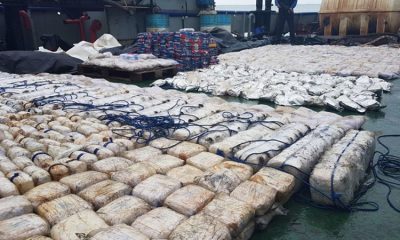
Heroin haul transported on 50-million-rupee contract
-

 News3 days ago
Church calls for Deputy Defence Minister’s removal, establishment of Independent Prosecutor’s Office