
Latest News
Kansas City shooting: One dead and 21 injured near Super Bowl parade


One person has died and 21 people were wounded in a shooting in Missouri at the end of the Kansas City Chiefs’ Super Bowl victory parade.
Officials said they treated eight victims who were in immediately life-threatening condition and seven others who had suffered injuries that could prove life-threatening. Nine children were among the wounded – all are expected to recover.
Police said they have arrested three suspects in connection to the shooting.
The shots were fired west of Union Station, the train station in downtown Kansas City, which was where the parade ended at around 14:00 local time (20:00 GMT) and thousands of fans had gathered to watch the festivities.
Local reports said Kansas City Chiefs players were still on a stage there when the first shots rang out. The gunfire caused the watching crowd, including the city’s mayor and his family members, to run for cover.
Kansas City Police Chief Stacey Graves said officers responded immediately after the gunshots broke out and detectives who were on the scene quickly opened an investigation. The Fire Department also sprang to action, administering aid to the injured.
More than 800 police officers were already on the scene to monitor the parade, officials said. The city’s fire department was also present to provide medical attention if needed.

At a news conference on Wednesday, Chief Graves said a total of 22 people were struck by gunfire – one of whom is dead – and three individuals were arrested.
A local radio station said one of its DJs, Lisa Lopez, was killed in the shooting. The surviving victims were transported to three local hospitals, officials said, with the immediately life-threatening cases taken to hospital within 10 minutes of the shooting. Nine children aged six to 15 with gunshot wounds are being treated at Children’s Mercy Hospital, chief nursing officer Stephanie Meyer said.
“The one word I would just use to describe what we saw and how they felt when they came to us was fear,” Ms Meyer added.
Local hospitals said they were also treating people who were not shot but who had suffered other injuries in the sudden stampede that followed the shooting.
City officials did not release the names of any of the victims. They also did not share any information about the suspects who were arrested, including what might have led to the shooting.
A law enforcement source told CBS News, the BBC’s US partner, that the shooting appeared to be the result of an argument that turned violent. The source said it was not terrorism related.
Police said they are investigating a motive and gathering physical as well as digital evidence. They asked for any witnesses or individuals with information to contact law enforcement.
The shooting broke out as the city was celebrating a second straight Super Bowl win by the Kansas City Chiefs. But this lesser-known American city was robbed of its exhilarating and unifying moment.
Kansas City’s mayor Quinton Lucas said he was inside the Union Station when he and others heard the sound of gunfire. He and members of his family started running.
“We went out today like everyone in Kansas City looking to have a celebration,” Mr Lucas said at Wednesday’s news conference.
“I was there with my wife, I was there with my mother. I never would’ve thought that we, along with Chiefs players, along with fans, hundreds of thousands of people, would be forced to run for our safety today.”In a statement, the Kansas City Chiefs organisation said it was “truly saddened” by Wednesday’s violence. It added that its players, coaches and staff – as well as their families – were accounted for and safe.
Travis Kelce, the star tight end of the team whose relationship with Taylor Swift became a cultural phenomenon, wrote on social media that he was “heartbroken over the tragedy that took place today.”
Marquez Valdes-Scantling, a wide receiver for the Chiefs, also took to social media after the tragedy. He said he wanted to get in touch with the young victims of the shooting.
“I want to make sure they’re doing ok,” Mr Valdes-Scantling said. “But would love to help them out any way I can and get them some stuff from the team to help with the recovery.”
The mayor emphasised that the city had security measures in place, and it should make the public think deeply about a path forward. Despite hundreds of law enforcement present, he said, this incident still occurred due to the presence of bad actors with guns.
In a statement, US president Joe Biden also reflected on the issue of gun violence in the country.
“Today’s events should move us, shock us, shame us into action,” he said, as he called for gun reform and a ban on assault rifles in the US.
(BBC)

Approval has been granted at the cabinet meeting held on 01-03-2023 for the National Curriculum Framework and the methodology for implementing the aforementioned framework, which was initiated by the National Institute of Education in 2019 under the education reform process.
However, considering the modules relevant to Grades 1, 6, and 10 that have been prepared by the National Institute of Education for the implementation of the new education reforms by the time the new government comes into power in 2024, it was planned to implement the new National Curriculum Framework only for Grades 1 and 6 in 2026, ensuring appropriate adjustments to the new government’s policies.
Further, it has also been planned to introduce vocational subjects from grade 10 onwards.
Accordingly, the concept paper required for ‘Transformational Change in Sri Lanka’s General Education’, which has been prepared to inform and make relevant parties aware of the proposed adjustments, has also been submitted to the Parliamentary Subcommittee on Education Reforms on 22-10-2025.
Subsequently, as decided at the Cabinet Meeting held on 13-01-2026, steps have been taken to postpone the implementation of education reforms for grade 6, which had been planned under the first phase of the comprehensive reform agenda for general
education, up to the year 2027, and only to implement new curriculum reforms for grade 1 in the year 2026.
Subsequently, the Ministry of Education, Higher Education, and Vocational Education has followed these steps.
• preparing a new concept paper with policy recommendations after reviewing the concept paper prepared related to bringing about transformational change in Sri Lanka’s general education
by the National Education Commission.
• Having reviewed the revised concept paper by the National Steering Committee established as per the cabinet decision dated 23-03-2026 and subcommittees established under 5 pillars
relevant to the education reforms-namely Curriculum Reform, Human Resource Development, Education Administrative Reforms & Infrastructure Development, Evaluation & Assessment, and Public Awareness & Promotion-and obtaining further observations and recommendations.
• Based on those observations and recommendations, further revising the National Curriculum Framework prepared by the National Institute of Education in 2023 and obtaining approval
from the Academic Affairs Board of the National Institute of Education.
• Obtaining approval from the Council of the National Institute of Education for the National Curriculum Framework approved by its Academic Affairs Board.
• Obtaining concurrence from the National Steering Committee for New Education Reforms on 2026-08-13 for the National Curriculum Framework approved by the Council of the National Institute of Education.
• Printing and preparing activity books and teacher guides for all 3 terms of Grade 1 and Grade 2 for the year 2027, so as to continue carrying forward the primary education reforms
commenced in the year 2026.
• Preparing Grade 6 modules for Terms I, II, and III, as well as teacher guides for all 3 terms.
• Master trainers have been trained by the National Institute of Education for all primary and secondary subjects, and all plans related to teacher training at the provincial level have been
prepared.
• Formulating the policy guidelines on school-based evaluation and assessment—prepared for practical implementation while managing available resources within the school system by the
Evaluation and Assessment Sub-Committee and obtaining the approval of the National Steering Committee.
Accordingly, the Cabinet of Ministers has approved the resolution furnished by the Hon. Prime Minister in her capacity as the Minister of Education, Higher Education, and Vocational Education to further implement the education reform process for grade 1, which has been initiated in the year 2026,
and to further initiate the education reform process for grade 2 and grade 6 in the year 2027, based on the concept paper prepared by the National Education Commission, the National Curriculum Framework approved by the National Steering Committee for New Education Reforms, and the School-Based
Evaluation and Assessment Guideline.
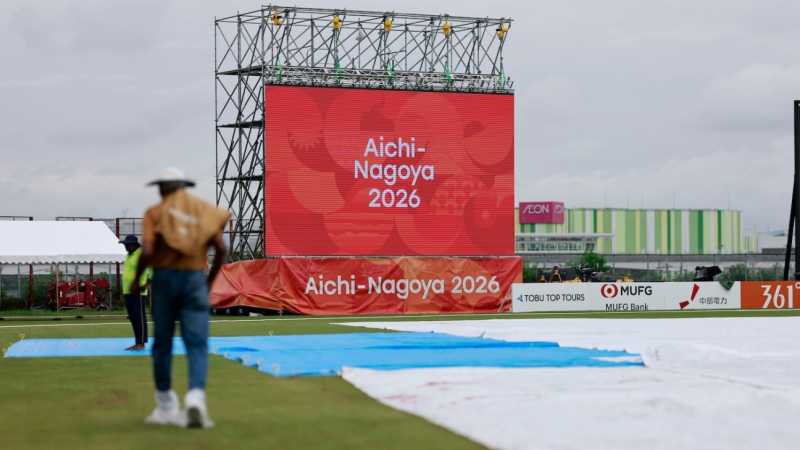
Sri Lanka will face India in the semi-finals of Asian Games men’s tournament after their quarter-final clash against Nepal was abandoned without a ball being bowled in Nisshin, Japan. The game was called off prior to the toss, with rain having begun hours prior to the scheduled 9am local start and not looking like abating.
Sri Lanka’s progression was assured by virtue of their higher seeding in terms of the ICC T20I rankings – Sri Lanka, alongside India, Pakistan and Bangladesh are the four seeded teams in the tournament. On Monday, India had qualified over Afghanistan after another washout, again by virtue of their higher. Similarly, Pakistan’s qualification was assured following a rain abandonment in their quarter-final against Hong Kong.
In the 2022 Asian Games, Sri Lanka had been eliminated at the quarter fial stages by Afghanistan. Another washout in the semis against, India though, will see the latter qualify for the final.
A few hours later, the fourth quarter-final between Bangladesh and Malaysia was also washed out. Bangladesh will now face Pakistan in the first semi-final on October 1, followed by India vs Sri Lanka later on the same day
(Cricinfo)
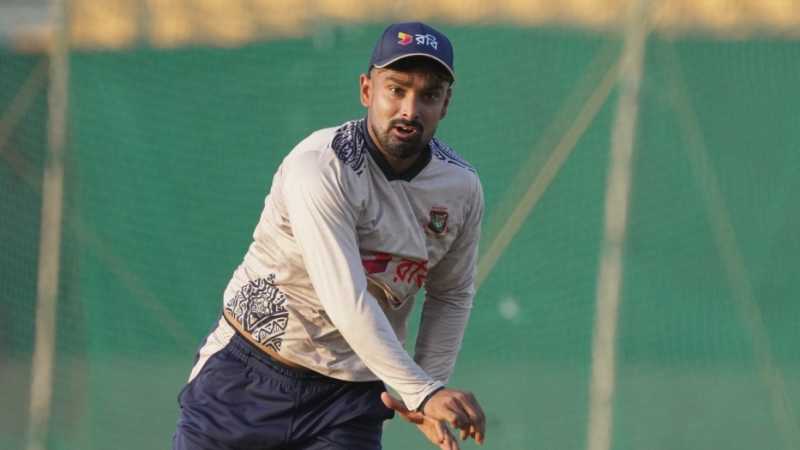
The Bangladesh vs Malaysia abandonment on Tuesday completed a quartet of rained off matches in the Asian Games men’s tournament. The match was called off two hours before the toss, with the teams told not to even turn up at the venue.
Bangladesh, by virtue of higher seeding, go through to the semi-finals where they will now face Pakistan on October 1. Earlier in the morning, the Sri Lanka vs Nepal fixture was also called off due to rain, with Sri Lanka advancing into the semi-finals where they will meet India.
There is, however, some good news, as the weather forecast in Nisshin is better for the semi-final and the medal match day, on October 1 and 3, respectively.
In the last edition (2023), Bangladesh had lost to India in the semi-final but won the third-place playoff against Pakistan to take home the bronze medal. They had won the bronze in 2014 as well and Bangladesh’s best finish was winning the gold medal in 2010, when they beat Afghanistan in the final.
(Cricinfo)

Cabinet nod to increase the number of new automated passenger clearance gates at the Bandaranayake International Airport to 12
Draft Bill for amending the Trust Ordinance
Implementing further relief programme to Public sffected by the Middle East conflict situation
Establishment of a Spectrum Management and Monitoring System and a Quality of Service and Quality of Experience System for the Telecommunications Regulatory Commission of Sri Lanka
Appointment of a Committee for the Restitution of Sri Lankan Cultural Heritage Held Abroad
Ten-Year National Action Plan on the Social Protection Sector (2026–2035)

‘Dates have the highest sugar content to fight Coronavirus’

Sunday Island 27 December – Headlines

#SundayIsland 17th December – Headlines

Sunday Island – 28th March

Sunday Island Headlines – 21 March

Sunday Island – 21st February – Headlines
-
 News7 days ago
Mastermind Naufer Moulavi among 15 found guilty
-
 Midweek Review7 days ago
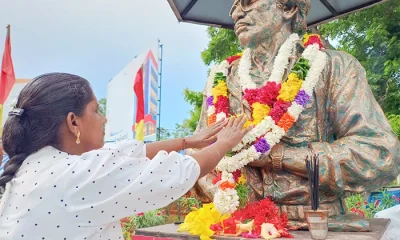
Thileepan’s fast unto death: An authentic narrative that many missed
-

 Latest News6 days ago
Showers above 100 mm are likely at some places in the Western, Sabaragamuwa, Central and North-western provinces and in Galle and Matara Districts
-

 Editorial7 days ago
Big Bad Bills
-
Editorial6 days ago
Crimes punished and unpunished
-

 Features5 days ago
Beyond traditional jobs: Why Sri Lanka needs to facilitate the gig economy
-
 News7 days ago
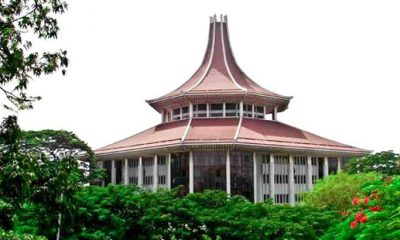
One clause in Anti-Corruption (Amendment) Bill requires referendu: SC
-

 News7 days ago
No referendum needed for passage of 22 A: SC