
News
SJB: Collapse of SMEs due to economic mismanagement and not Covid pandemic

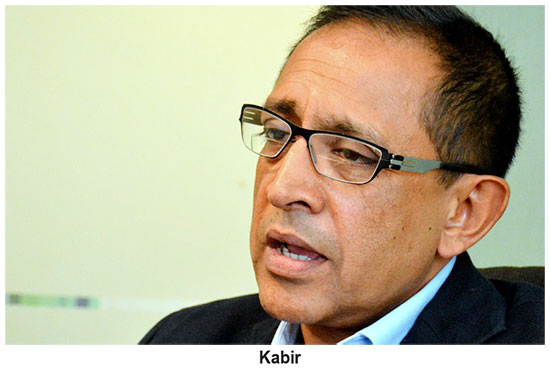
The collapse of Small and Medium Enterprises in Sri Lanka had been caused by economic mismanagement rather than the Covid-19 pandemic
Addressing the media at the Office of the Leader of the Opposition in Colombo yesterday, SJB MP Kabir Hashim said that some government ministers had cited the COVID pandemic as the reason for the collapse of SMEs in Sri Lanka.
“This is a lie. World economic experts predicted that the pandemic will have a negative impact on SMEs. Then the IMF offered assistance to SMEs in 86 countries around the world. We, too, could have availed of that assistance. The then Finance Minister Basil Rajapaksa was against obtaining the IMF help. If we had obtained the IMF assistance then, our SMEs would not have faced this crisis today,” Hashim said.
He said that the Department of Census and Statistics has reported that more than 20 percent of SMEs suffered closures between 2020 and 2023. “As at the end of 2018, there were 1.3 million SMEs in Sri Lanka and 20 percent of them ended their existence, meaning that we have lost more than 260,000 SMEs. The government cannot hide behind lies. We lost those SMEs because of the government’s economic mismanagement,” the MP said.
Hashim said that many countries including our neighbours such as Afghanistan, Pakistan and Bangladesh obtained IMF assistance rejected by Basil Rajapaksa. “We continuously called on the government to get IMF assistance. When we raised this issue in Parliament, Ajith Nivard Cabraal said that there was no need to beg from the IMF because Lanka was about to receive $ 10 billion. They misled Parliament and lied to people. Even after this crisis, they continue to lie. This government should take the responsibility for the collapse of SMEs,” Hashim said.





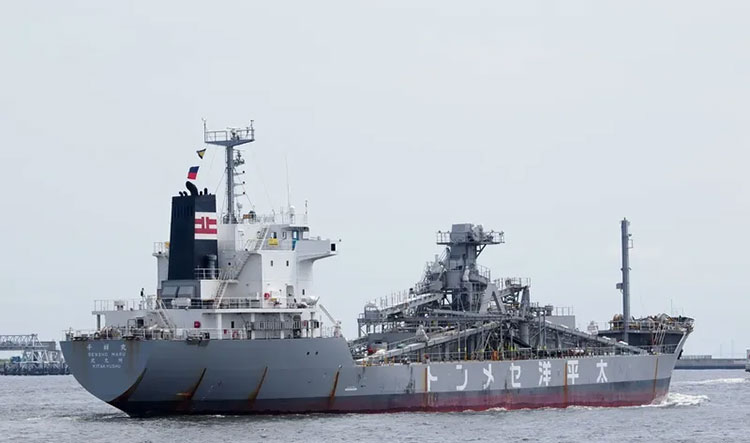
… bribe giver departs Colombo port
The Merchant Shipping Secretariat (MSS) is investigating a complaint received from the Captain of an Indonesian flagged vessel Sensho that he had to pay an official USD 5,000 bribe to facilitate what our sources called port state control inspection.
Sources said that the cement carrier arrived at the Colombo Port, on Friday, and departed after having passed the rigorous inspection. Responding to queries, sources said that after paying the bribe, the vessel’s Captain has lodged complaints with MSS and the Commission to Investigate Allegation of Bribery or Corruption (CIABOC).
In spite of the government’s high profile anti-corruption drive there seemed to be fresh cases, sources said, adding that MSS had received a comprehensive complaint. The vessel had departed Colombo for Jeddah, sources said.
“The issue at hand is whether there have been unreported cases of MSS personnel receiving bribes,” sources said, acknowledging that the Captain, instead of immediately bringing the demand for USD 5,000 bribe to the MSS, had paid it and departed Colombo. (SF)
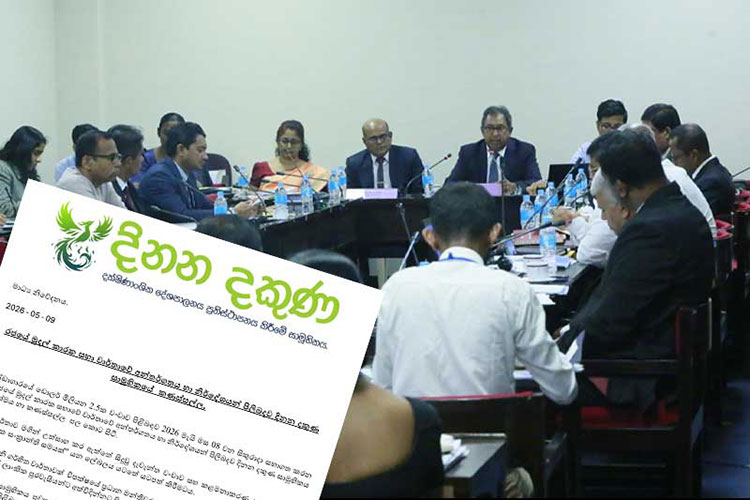
An opposition political group, styled as Dinana Dakuna, has accused the Committee of Public Finance (COPF) of protecting the masterminds behind the USD 2.5 mn theft from the Treasury.
Commenting on the recent COPF report on the theft, the group has alleged that the all-party parliamentary grouping made an attempt to shift the blame to the Central Bank as part of a cover-up. It has described the COPF report as a deliberate attempt to suppress the truth.
The group said that the COPF conveniently asserted that the theft took place due to the inexperience of officers concerned, thereby diverting the attention from those who perpetrated it.
An alleged attempt to portray the collapse of the administrative set-up that led to the USD 2.5 mn theft as a human resource problem, has also been questioned by Dinana Dakuna.
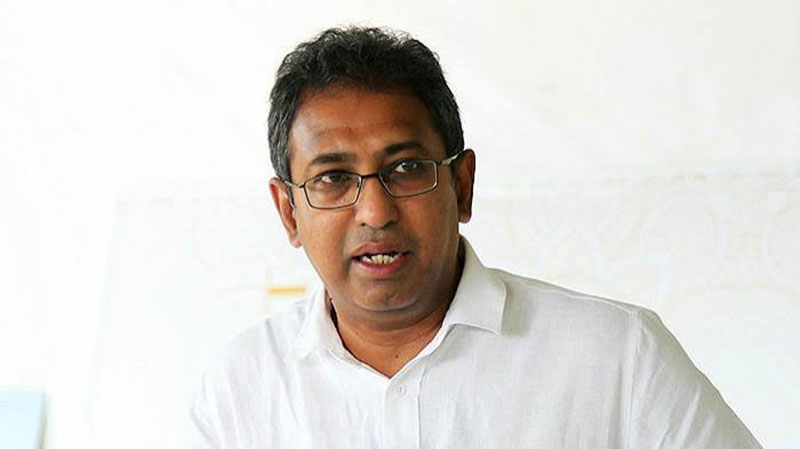
The country was losing so much revenue due to the controversial liquor bottle security sticker scam that if tangible measures were taken to stop the fraud, they could fund about eight projects on the scale of the Suwaseriya ambulance service, Chairman of the Committee on Public Finance (COPF) and Colombo District MP Dr. Harsha de Silva said on Saturday.
Addressing the media in Colombo, Dr. de Silva described the security sticker, introduced for alcoholic beverages, as a “major scam” and called on the government to act responsibly when the current tender is renewed in 2027.
The former State Minister said the security sticker system had originally been introduced with the legitimate objective of improving tax compliance and preventing excise duty evasion in the liquor industry. However, he alleged that the manner in which the programme is currently being implemented was resulting in significant losses to the State.
According to Dr. de Silva, the government pays an Indian company US$8 for the digital printing of every 1,000 security stickers, although the actual cost of printing the same quantity is only about 12 US cents.
“The money being lost through this scheme is sufficient to finance around eight Suwaseriya-type projects,” he said, highlighting, what he described as, the excessive cost burden borne by the State.
Dr. de Silva noted that the high taxes imposed on alcoholic beverages had created incentives for manufacturers, distributors and liquor outlet owners to evade taxes, making a security sticker mechanism a necessary regulatory tool.
He said the proposal to introduce security stickers was first put forward during the Yahapalana administration in 2016.
The tender process commenced in 2017, was concluded in 2018 and the system was eventually implemented in 2023. The COPF Chairman said his Committee had recently undertaken an extensive review of excise revenue and the operation of the security sticker programme.
During the inquiry, it emerged that the Excise Department still lacked a computerised system capable of recording and managing data, related to the stickers, despite their importance to government revenue collection.
Dr. de Silva further said that Excise Department officials, who appeared before the Committee on Public Finance, had maintained that no fraud was taking place in relation to the sticker programme.
However, he expressed concern over the subsequent seizure of a stock of security stickers, in Malabe, only days after those assurances had been given.
He questioned whether stickers recovered during raids were genuine labels, legally obtained from the authorised supplier, or counterfeit versions, printed illegally, arguing that either possibility pointed to serious shortcomings in a system intended to guarantee security and traceability.
Dr. de Silva also referred to media reports concerning the company awarded the security sticker tender and allegations of fraudulent activities linked to the firm in several other countries.
He urged authorities to ensure greater transparency and accountability in the management of the programme and to carefully scrutinise the tender process when it comes up for renewal next year.

Showers will occur in the Western, Sabaragamuwa and North-western provinces and in Kandy, Nuwara-Eliya, Galle and Matara districts

Merchant Shipping Secretariat probes bribery scandal

Theft of USD 2.5 mn: Dinana Dakuna claims COPF trying to protect mastermind

COPF chief slams security sticker scam

CAA urged to protect soap users

Man who resisted search shot and arrested

‘Dates have the highest sugar content to fight Coronavirus’

Sunday Island 27 December – Headlines

#SundayIsland 17th December – Headlines

Sunday Island – 28th March

Sunday Island Headlines – 21 March

Sunday Island – 21st February – Headlines
-
 Business1 day ago
‘Giving up was never an option’: The fisherman who fought back after losing millions in SL
-
 Features1 day ago
Two memorable excerpts from a former SLAF commander’s memoir
-
 Latest News2 days ago
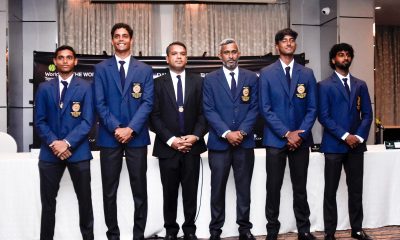
Davis cup Asia/Oceania Group IV 2026 to be held in Colombo from 20th to 25th July
-
 Features1 day ago
Erdoğan’s New Republic
-

 Life style1 day ago
Taste of the Swiss Alps comes to Colombo
-
 Features5 days ago
Dirty Money
-
 News2 days ago
Dengue outbreak gallops ahead: Infections surpasses 73,455, leaving 50 dead
-
 News2 days ago
Evidence recorded in money laundering case against Yoshitha Rajapaksa