
Latest News
President’s Fund to support Liver Transplant and Cochlear Implant Surgeries for children


President Ranil Wickremesinghe has directed financial assistance from the President’s Fund for liver transplant surgeries for young children at the Ragama Teaching Hospital and cochlear implant surgeries at the Sri Jayawardenepura General Hospital.
Acknowledging the substantial costs associated with pre and post-tests and treatments for liver transplant surgeries in children under 16 years old at the North Colombo General Hospital (Ragama Teaching Hospital), President Wickremesinghe has approved Rs. 1 million from the President’s Fund for each liver transplant surgery meeting common conditions. This financial support will be effective from January 1, 2024, aiming to ease the financial strain on families undergoing these critical medical procedures.
President Wickremesinghe’s directive underscores the government’s commitment to providing essential medical care for children in need, particularly those facing life-threatening conditions requiring specialized surgeries. By utilizing the President’s Fund to support these surgeries, the government aims to ensure that financial constraints do not hinder access to vital healthcare services for young patients, thereby safeguarding their health and future well-being.
Medical tests have revealed that over 200 children in Sri Lanka require cochlear implant surgery, a procedure crucial for their auditory development. While in developed countries, such surgeries are promptly performed at birth upon identification of the need, in Sri Lanka, not all eligible children undergo this procedure. It’s emphasized by medical experts that such operations should ideally occur within two years from birth for optimal brain development, yet the cost is a significant barrier, estimated at over Rs 5 million. Currently, this surgery is limited to a few government hospitals, leading to waiting lists for affected children.
The cochlear implant surgery is conducted at the Sri Jayawardenepura General Hospital, with the implant device valued at approximately Rs. 3-4 million. Although the Ministry of Health provides the device to the hospital free of charge, patients are required to cover the surgery costs, which amount to Rs. 600,000. This financial burden underscores the need for additional support mechanisms to ensure access to essential healthcare services for children in need of cochlear implant surgery. To address this issue, the Ministry of Health has sourced the necessary cochlear implant devices, while the surgery costs, amounting to Rs. 600,000, will be covered by the President’s Fund. Consequently, the government will fully shoulder the expenses associated with these surgeries, which are conducted at the Sri Jayawardenepura General Hospital.
The decision to forgo cochlear implant surgeries for these children not only impacts society negatively but also strains the healthcare system. Despite the considerable financial investment required for such procedures, it must be recognized that providing financial aid from the President’s Fund for these surgeries on young children is an investment in the nation’s future. Consequently, President Ranil Wickremesinghe has authorized financial assistance from the President’s Fund, effective January 1, 2024, with a maximum amount of Rs. 600,000 for cochlear transplant surgeries conducted on children at the Sri Jayawardenepura General Hospital.








The Italian Naval Vessel ‘ITS Giuseppe Garibaldi’ departed the Port of Colombo today, 12 September 2026, after completing a replenishment stop for logistics and services.
During the ship’s stay, the Commanding Officer of ITS Giuseppe Garibaldi, Captain Marco GUERRIERO, called on the Commander Western Naval Area, Rear Admiral Harsha De Silva, at the Western Naval Command Headquarters.
Members of the visiting crew also toured several tourist attractions across the Colombo area during their port call.

Sri Lanka survived an all-time all-round display from Fatima Sana to triumph over a spirited Pakistan and seal a second-straight Asia Cup final berth against India.
Sana, a rare Player of the Match from the losing side, struck 47 off 36 to drag Pakistan to 130 for 5, and then finished with figures of 4 for 38 – inclusive of two double-wicket overs – but Sri Lanka’s all-round excellence eventually overcame Sana’s bloody mindedness.
In their chase, Sri Lanka were reduced to 5 for 2, and then 33 for 4, but a match-defining partnership of 67 off 59 between Harshitha Samarawickrema (36 off 31) and Kavisha Dilhari (33 off 33) turned the tide in Sri Lanka’s favours.
Sana’s second double-wicket intervention saw the backs of both Samarawickrama and Dilhari, but Sri Lanka’s batting depth came to the fore as Nilakshi Silva and Kaushini Nuthyangana saw the game off with eight balls to spare.
As Sri Lanka’s players celebrated on the sidelines as Nilakshika ramped Sana for one final, definitive boundary, the Pakistan skipper was on her haunches, tears streaming down her face. It’s not been an uncommon sight with Sana, but it was yet another example of just how much of herself she had put into the game – just that in this instance, it was simply not enough.
Run-scoring hasn’t been easy in Dubai this Asia Cup, with spinners in particular thriving. And that narrative was not about to change as Sri Lanka put Pakistan into bat – even as the data suggested the team batting first had won nine of the previous 13 games at the venue.
It proved to be the right call as the tournament’s unlikely leading wicket-taker, Chamari Athapaththu, struck early once more, getting Shawaal Zulfiqar and Ayesha Zafar in each of her first two overs. Left-arm spinner Sugandika Kumari meanwhile had removed Muneeba Ali in her first over as well. Seventeen-year-old left-arm spinner Chamudi Prabodha continued the pattern when she completely did an advancing Sadaf Shamas in the flight to have her stumped in the 10th over.
At the halfway point of the innings, Sri Lanka’s plan was going just as envisioned. Pakistan were reeling on 52 for 4 and they would need a minor miracle to post a respectable, if not challenging, target.
The calls for Sana to bat higher up the order seem to grow with every passing day, and when you watch innings like the one she produced on Friday it’s not hard to see why.
For her first six deliveries, she sought to get her eye in – even in a semifinal where her side had nearly lost half the batting – and played out six dot deliveries. With most other players, you might assume this would build pressure. But Sana is made of sterner stuff, a ball of self-belief and willpower.
The seventh ball she faced, she drilled four down through, hard to Chamudi’s left – the youngster perhaps saved some pain by not getting a hand on it. On her 10th she swept Dilhari for four, and then on her 11th she skipped out and launched a maximum over square leg.
And just like that Sana was on her way, and the momentum was shifting.
When Gull Feroza fell at the end of the 16th over, it wasn’t ideal. Feroza had clawed her way to a 32-ball 21, but with the death overs approaching Sana would have been hoping for Feroza to finally unleash. Sana however adjusted her plans and made the most of what was on offer; after a quiet 16th over, she managed a boundary in two of the final three overs, while Tuba Hasan also chipped in with a valuable 12 off 10 to push Pakistan to 130 for 5 with 78 runs coming off the final 10 overs.
An above waist-high no-ball, a first six of her career for Kaushini Nuthyangana, the equation suddenly down to 5 needed off 11. It was cruel irony that that moment had occurred off Sana’s bowling, because up until then she had been the almost solitary barrier between Sri Lanka and a second successive Asia Cup final.
She had removed two of Sri Lanka’s top three – including Athapaththu – in her first spell, and then returned late in the chase to get rid of the set pair of Samarawickrama and Dilhari. But in between Sri Lanka had done just about enough to get across the line in a hard-fought semi-final.
Losing four wickets inside the opening 10 overs is never ideal, and there would have been a time when Sri Lanka would have folded quite easily in such a scenario. But this Sri Lanka side is one with a growing belief that there will always be someone to step up.
Samarawickrama had been the one against Bangladesh, and here she was there again – this time flanked by the always involved Dilhari. With the required rate reaching about eight an over midway through the chase, the pair took to heart the words offered by coach Jamie Siddons during the drinks break and came out with a plan.
With boundaries in front of square not forthcoming, the pair looked behind. Two quick boundaries got the ball rolling, and the indefatigable pair also ran hard between the wickets.
It was a low target, and in that sense only a few good overs were required to keep the rate within touching distance, but Pakistan were bowling well. Sri Lanka however proved once again that they have the wherewithal to weather tough in-game situations and shift pressure back on to their opponents – a skill that will likely come very handy against India on Sunday.
Scores:
Sri Lanka Women 134 for 6 in 18.4 overs (Imesha Dulani 24, Harshitha Samarawickrama 36, Kavisha Dilhari 33, Nilakshika Silva 18*, Kaushini Nuthyangana 10*; Sadia Iqbal 1-21, Fatima Sana 4-38, Umm-e-Hani 1-19) beat Pakistan Women 130 for 5 in 20 overs (Shawal Zulfiqar 24, Gull Feroza 21, Fatima Sana 47*, Tuba Hassan 12*; Sugandika Kumari 1-20, Chamari Athapaththu 2-24, Chamudi Praboda 2-25) by four wickets
[Cricinfo]

Memorial services will be held today to mark the 25th anniversary of the 9/11 attacks in the United States.
On 11 September 2001, 2,977 people were killed when hijackers crashed two planes into the Twin Towers of the World Trade Center in New York.
Another hijacked plane hit the Pentagon near Washington DC. A fourth crashed in a field in Pennsylvania after passengers fought back.
[BBC]

ITS Giuseppe Garibaldi’ departs Colombo

Green Climate Fund (GCF) Regional Dialogue for East and South Asia will be held from 14 to 17 September 2026 at Cinnamon Life at City of Dreams Hotel, Colombo

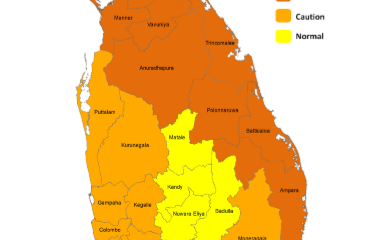
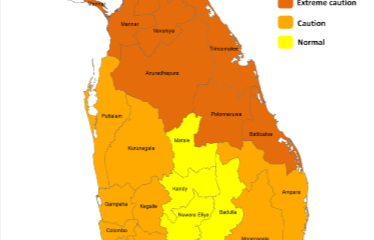
Showers will occur in the Western, North-western and Sabaragamuwa provinces and in Kandy, Nuwara-Eliya, Galle and Matara districts

Prof. Pieris says Buddha Dhamma recognised as source of law under Constitution

GR leaves FCID after making statement over MiG deal

Dengue cases top 97,000 in 2026

‘Dates have the highest sugar content to fight Coronavirus’

Sunday Island 27 December – Headlines

#SundayIsland 17th December – Headlines

Sunday Island – 28th March

Sunday Island Headlines – 21 March

Sunday Island – 21st February – Headlines
-

 Sports2 days ago
DDS set to lose Test captaincy
-

 Latest News7 days ago
Tharanga creates history with Diamond League crown in Brussels
-

 Features6 days ago
After the parade: What a traffic OIC’s walk-out tells us
-

 News7 days ago
Dispute which triggered listed company director being detained at BIA resolved
-

 Editorial6 days ago
Arrests as theatre
-
 News5 days ago
Thailand shuts door on undesirables from Sri Lanka
-

 Latest News6 days ago
Harshitha’s composed knock seals Sri Lanka’s semi-final berth
-

 News6 days ago
‘Choka Malli’ slips out of country before travel ban