
News
China shows flexibility on Sri Lanka FTA after temporary halt: Chief Negotiator

By SHIHAR ANEEZ
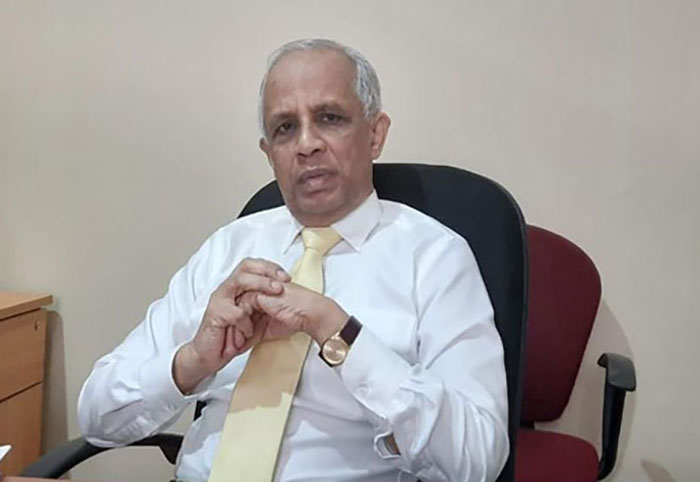
ECONOMYNEXT –China has shown some flexibility in its stance over the Free Trade Agreement (FTA) with Sri Lanka after the island nation briefly halted the negotiations following seven rounds of talks due to disagreement on tariff list, level of liberalization, and a review process, Colombo’s Chief Negotiator K J Weerasinghe said.
Sri Lanka is proceeding with multiple free trade agreements including with China, five years after talks with Beijing on the FTA were suspended following concerns over upper hand by China.
Both countries have started virtual negotiations for the first time since 2018
“Now China has shown some flexibility from the earlier position it took in 2018. That is why the negotiations are moving forward,” Weerasinghe told reporters in Colombo at a media briefing on Tuesday.
“We had a comprehensive virtual meeting with China. Now China has proposed us to send some new proposals. Now I am drafting some new proposals following the virtual meeting we had. Once those proposals are sent, they will resume negotiations.”
Sri Lanka is caught in a geopolitical proxy cold war between China and India with the backing of the United States, analysts say.That cold war has led Sri Lanka to be extremely cautious in dealing with both Asian powers and even to forego some investment opportunities.
However, the economic crisis and sovereign debt default have compelled the island nation to look into all available avenues to ensure more foreign inflows to move away from the crisis.Sri Lanka had to temporarily stop FTA talks with China under the previous government because Beijing disagreed with Colombo’s three requests.
“We wanted a list of products, about 500 tariff lines go to zero on the day the agreement comes into force. Then there was no element of reciprocity. But now China also says they want to reciprocate,” Weerasinghe said.







Latest News
Sun directly overhead Kalpitiya, Talawa, Sinharagama, Galkadawala, Nachchaduwa, Padikaramaduwa, Gomarankalla and Verugal about 12.10 noon today (01)


The sun is going to be directly over the latitudes of Sri Lanka from 28th of August to 07th of September due to its apparent southward relative motion.
The nearest places of Sri Lanka over which the sun is overhead today (01) are Kalpitiya, Talawa, Sinharagama, Galkadawala,
Nachchaduwa, Padikaramaduwa, Gomarankalla and Verugal about 12.10 noon.

… stresses need for action if claims were proved false
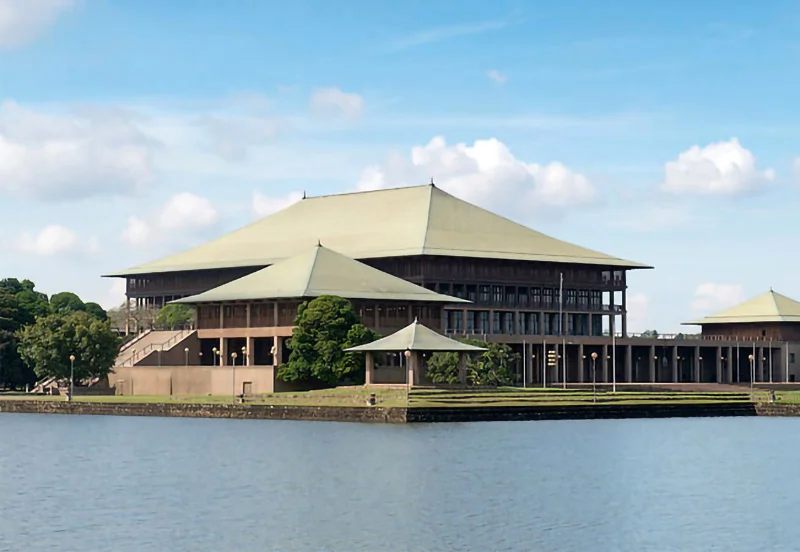
Samagi Jana Balawegaya (SJB) MP Dayasiri Jayasekera has sought a clarification from Speaker Dr. Jagath Wickremaratne regarding several allegations against Chief Justice Preethi Padman Surasena, in Parliament, recently.
In a letter dated 31 August, Jayasekera has asked the Speaker whether he received any documentary evidence from MPs in support of the allegations at issue. The SJB MP has also inquired about the steps taken by the Speaker regarding the allegations and whether the issue had been taken up with the relevant agencies authorised to probe the assets of the CJ and members of his family.
MP Jayasekera confirmed that he had raised the issue with the Speaker, following the accusations relating to the high profile X-Press Pearl case, which received significant public attention in the recent past.
The Kurunegala District MP has also asked the Speaker whether the latter contemplated taking action in case the allegations were proved false to ensure that the dignity of the Chief Justice and the judiciary was safeguarded.
Among the issues raised by MP Jayasekera are the acquisition of valuable property in Colombo by the CJ’s son, the circumstances in which he was able to procure the property, as well as accusations regarding the CJ’s birth certificate, marriage certificate and birth certificates of his children.
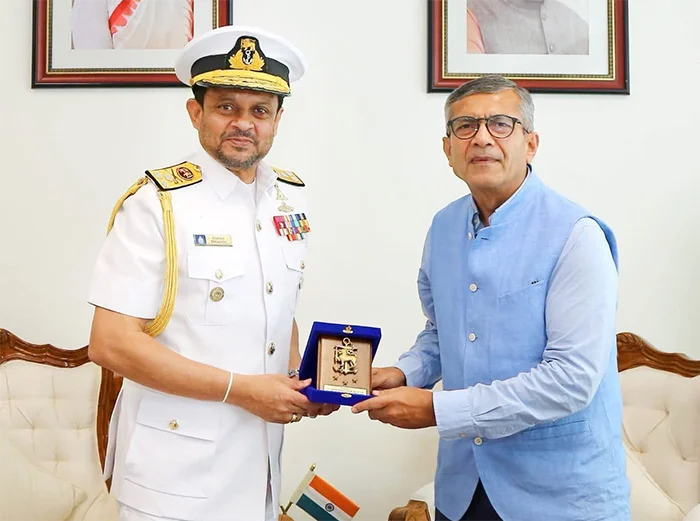
Navy Chief Vice Admiral Damian Fernando held a series of strategic-level discussions with senior Indian defence and military officials during a three-day official visit to New Delhi. He returned on Sunday (30).
Navy Headquarters said that the two sides discussed ways to further strengthen maritime security cooperation between the two Navies in support of security in the Indian Ocean region. They also exchanged views on expanding training opportunities and capacity-building programmes, as well as other areas of bilateral importance.
During his visit to New Delhi, Vice Admiral Fernando also held official discussions with India’s Chief of Defence Staff, General N.S. Raja Subramani, Defence Secretary Rajesh Kumar Singh and Vice Chief of the Air Staff, Air Marshal Ashutosh Dixit and defence industry representatives. Discussions at these meetings focused on bilateral defence cooperation, joint training programmes, and opportunities to enhance air and maritime cooperation in the Indian Ocean Region.
As part of efforts to further expand cooperation in naval training and professional development, Vice Admiral Fernando also met Vice Admiral Sameer Saxena, Flag Officer Commanding-in-Chief of India’s Southern Naval Command, at its headquarters in Kochi, Kerala. The two sides discussed existing naval training exchange programmes and opportunities for introducing and expanding further training initiatives. The meeting followed the Commander of the Sri Lanka Navy’s visit to INS Dronacharya, the Indian Navy’s training establishment where he previously completed the Long Gunnery and Missile Course.

Nahida, Marufa help Bangladesh brush aside Indonesia

Showers will occur in the Western, Sabaragamuwa, Southern and Uva provinces and in Kandy and Nuwara-Eliya districts

Sun directly overhead Kalpitiya, Talawa, Sinharagama, Galkadawala, Nachchaduwa, Padikaramaduwa, Gomarankalla and Verugal about 12.10 noon today (01)

SJB asks what Speaker intended to do about allegations against CJ

Navy Chief attends strategic-level discussions in Delhi

ICRS: Sustained and collective efforts critical to address issue of missing persons

‘Dates have the highest sugar content to fight Coronavirus’

Sunday Island 27 December – Headlines

#SundayIsland 17th December – Headlines

Sunday Island – 28th March

Sunday Island Headlines – 21 March

Sunday Island – 21st February – Headlines
-

 News4 days ago
Eight politicians in drug kingpin probe
-

 Features2 days ago
“Wrap Me Up in My Blazer”— A Gentlemanly Bradby Reminiscence
-
 Business4 days ago
Sri Lanka opens up: A new season of direct connectivity
-

 Features4 days ago
Redefining ageing in Sri Lanka
-
 Features6 days ago
Insights from Chieftains of Uva: Genealogy of two Kandyan Families – Part II
-
 Latest News5 days ago
Nepal-Tibet floods: What happened, what caused them and who is missing?
-

 Editorial6 days ago
Warning of power cuts: El Niño and corruption
-

 Features6 days ago
Export diversification: Missing the wood for the trees – Part I