
News
Online Safety Act: Gevindu flays govt. for ignoring Standing Orders when passing laws


By Saman Indrajith
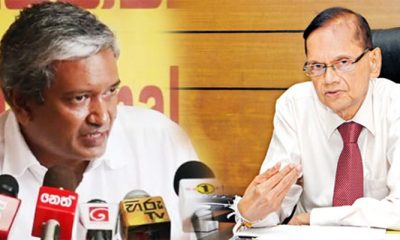
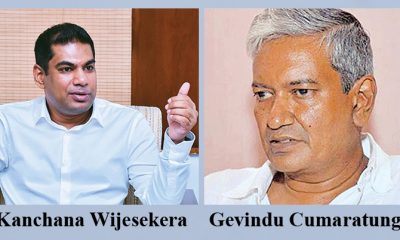
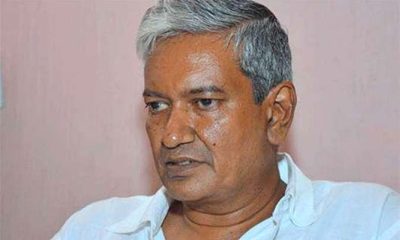
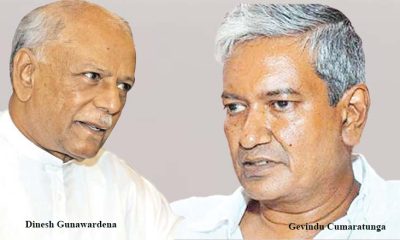
SLPP dissident MP Gevindu Cumaratunga yesterday told Parliament that the Online Safety Bill (OSB) had been rushed through Parliament with no heed for the Standing Orders pertaining to passing new legislations.
The MP said so after government MP Jayantha Weerasinghe raised a privilege issue alleging that his privileges as an MP had been breached by a Sinhala newspaper report that said the Opposition was seeking to delay the placing of the Speaker’s signature on the Online Safety Bill. MP Weerasinghe stated that according to the newspaper report the Bill had been passed without all amendments recommended by the Supreme Court was wrong and demanded action against the reporter and publisher of the newspaper.
MP Cumaratunga said that it was wrong to state that government MPs’ privileges had been infringed by the newspaper report. “We do not see a breach of parliamentary privileges in this newspaper story. It is right and we believe that it is the duty of the media to inform the public when the Bills in this House are passed without giving regard to the procedure outlined in Standing Orders. It is now public knowledge that not all amendments recommended by the Supreme Court were included in the Bill.
The draft bill tabled in this Parliament contained 56 clauses. After that, a large number of petitioners challenged the Bill’s constitutionality before the Supreme Court. Soon afterwards, even before the hearing commenced, the government through the Attorney General informed the court that they would amend 31 out of 56 clauses. The question is whether the Attorney General had submitted the first draft of the Bill, knowing that there contained 31 clauses against the Constitution.”
“As per Page 47 of the Standing Orders, when an MP raises a point of order during the Committee Stage, the Chair should take that point into consideration and the functions of the House cannot proceed without the Chair giving his opinion on the point that has been raised. There was no respect for the Standing Orders on that day. As MPs, we believe that this House should be guided by the Standing Orders.










COPF final report on USD 2.5 mn cyber fraud recommends action against all responsible
The US$2.5 million loss incurred during Sri Lanka’s foreign debt repayment to Australia was a clear case of a cybercrime and theft, Committee on Public Finance (COPF) Chairman Dr. Harsha de Silva told Parliament yesterday.
Presenting the COPF final report on the cyber fraud, Dr. de Silva said the incident amounted to a serious financial crime and called for a comprehensive investigation, by law enforcement authorities, to identify and prosecute all those responsible.
The report revealed serious governance, procedural and operational failures that enabled the fraudulent transfer of public funds, while recommending sweeping reforms to strengthen cybersecurity, financial controls and public debt management systems.
According to the report, officials of the Treasury and the Central Bank bore responsibility for governance lapses that contributed to the failures. It also highlighted the fact that the Ministry of Finance was operating an outdated Microsoft Exchange Server after security support had ended, while basic safeguards, such as multi-factor authentication, had not been implemented.
The COPF said suspicious payment instructions linked to debt repayments involving India, the United Kingdom, Germany and Belgium had also been detected, preventing further losses. However, the US$ 2.5 million fraud materialised only in the repayment transaction involving Australia.
The report has noted that officials had failed to verify lender email domains, relied on unverified email communications and lacked adequate internal controls, allowing the fraud to continue for months.
Although the investigation uncovered system-wide weaknesses across several institutions, only four mid-level Finance Ministry officials had been suspended so far, the report said.
The COPF has recommended a special audit of the foreign debt repayment process, strengthened cybersecurity measures across state institutions, updated financial regulations and improvements to public debt management systems.
by Saman Indrajith
News
Opposition signs no-confidence motion against Justice Minister for dereliction of duty over Negombo Prison deaths
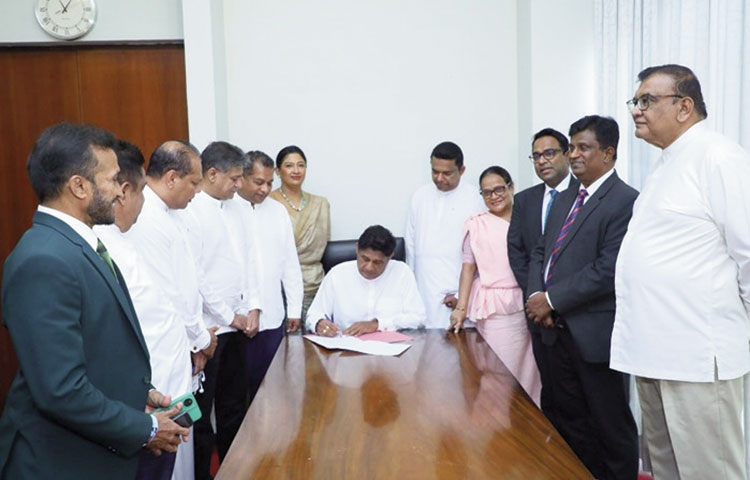
Opposition Leader Sajith Premadasa, together with Opposition MPs, yesterday signed a No-Confidence Motion (NCM) in Parliament against Justice Minister Harshana Nanayakkara.The move comes in response to the unrest at the Negombo Prison, where both prison officers and inmates were killed.
Opposition members said the Minister had failed to fulfill his responsibility and accountability regarding their safety.According to the Opposition group, the NCM seeks to hold the Minister directly accountable for lapses in ensuring protection within the prison system.

The Attorney General yesterday informed the Supreme Court that the government has decided to review the legality of agreements entered into by the previous administration to hand over the country’s electronic visa issuance operations to private companies.
Additional Solicitor General Viveka Siriwardena, appearing for the Attorney General, made the submission when the Supreme Court took up the fundamental rights petitions filed by former MPs President’s Counsel M.A. Sumanthiran, Patali Champika Ranawaka, and Rauff Hakeem, challenging the previous Cabinet’s decision to outsource the e-visa system.
The petitions were heard before a three-judge bench, comprising Chief Justice Preethi Padman Surasena and Justices Achala Wengappuli and Arjuna Obeyesekere.
The Additional Solicitor General informed court that the current Cabinet had appointed a subcommittee to examine the legality of the agreements with the private companies and requested time to report on its findings, stating that the review was still underway.
President’s Counsel Sumanthiran, appearing as one of the petitioners, told the court that although the present government had indicated its intention to cancel the transaction, the petitioners wished to proceed with the case.
He noted that members of the current Cabinet had been named as respondents in the petitions.The Supreme Court directed the petitioners to issue notice on the members of the current Cabinet, named as respondents, and fixed September 29 for further proceedings.

History takes centre stage as Mandhana, Harmanpreet fifties steer India

Spain leave it late to book semifinal date with France

Showers will occur in the Sabaragamuwa, Western and North-western provinces and in Galle, Matara, Kandy and Nuwara-Eliya districts

US$ 2.5 mn cyber heist exposes system failures

Opposition signs no-confidence motion against Justice Minister for dereliction of duty over Negombo Prison deaths

AG informs SC of e-visa agreement review

‘Dates have the highest sugar content to fight Coronavirus’

Sunday Island 27 December – Headlines

#SundayIsland 17th December – Headlines

Sunday Island – 28th March

Sunday Island Headlines – 21 March

Sunday Island – 21st February – Headlines
-

 News7 days ago
Singapore-based Buddhist monk marks nearly four decades of humanitarian service
-
 News2 days ago
Herath warns prospective migrant workers not to get fleeced by racketeers
-

 News6 days ago
AI concerned over proposed SL military deployment in Haiti
-

 Midweek Review4 days ago
Unexpected focus on ‘pieces of tin’ worn by military men
-

 Latest News5 days ago
Nyamhuri and Ngarava stun Bangladesh by defending 141
-

 News3 days ago
Negombo Prison riot: Ensuring protection of prisoners fundamental responsibility of the state – UN
-

 Features7 days ago
The NPP’s New Challenge: Balancing Easter Lawfare and Economic Welfare
-
 Foreign News2 days ago
Tensions erupt in Indian state after 11-year-old raped and murdered