
Latest News
Ravindra 240 and Jamieson’s burst make it New Zealand’s day


Coming into the Mount Maunganui Test, Rachin Ravindra had never batted in the top six in Test cricket and had all of 73 runs in six innings at 14.60. In just one innings here, the left-hander has more than tripled his numbers on both counts. Given the all-important No. 4 slot, Ravindra cashed in scoring a sparkling 240 to help New Zealand extend their dominance over South Africa on day two of the first Test.
South Africa captain and debutant Neil Brand finished with figures of 6 for 119, but Ravindra’s double on the back of Kane Williamson’s 118 helped New Zealand amass 511 in their first innings. Kyle Jamieson struck twice as South Africa ended the second day 80 for 4 still trailing the hosts by a massive 431 runs.
Resuming their day on 258 for 2, New Zealand lost Williamson early, but Ravindra continued from where he left on day one. With the second new ball just six overs old, South Africa surprisingly did not go with Tshepo Moreki first up on the second day, instead starting with allrounder Ruan de Swardt and Dane Paterson.
Paterson got the wobble seam going his way and induced an edge off Ravindra’s blade with just his second ball but there was no third slip in place to take the catch. Williamson got his first boundary of the day with a thick edge past gully but failed to carry on. Looking to unsettle de Swardt’s consistent wicket-to-wicket lines, he eyed an uncharacteristic cross-batted hoick, but all he could manage was a top edge that ballooned straight up with Moreki taking the catch at mid-on. That ended a 232-run association between Williamson and Ravindra off 472 balls.
Having been padded up for ages, Mitchell immediately got going with a full-blooded lofted drive past mid-on. Moreki didn’t have the same kind of nip that he found on day one and was pulled stylishly by Ravindra through midwicket. Duanne Olivier was handed similar treatment before two delicious straight drives helped Ravindra breach the 150 mark in Tests for the first time.
Having played circumspect cricket for about four sessions, New Zealand notched up a gear after lunch. Ravindra got his second session underway with a delightful drive past mid-off off de Swardt while Mitchell pulled Dane Paterson with disdain through square leg.
Mitchell lofted de Swardt for a straight six but fell soon after courtesy of a stunning caught and bowled by Neil Brand. Mitchell pummeled a tossed-up length ball back but Brand stuck out both hands to his left and plucked out a quite spectacular take much to the shock of Mitchell.
Tom Blundell came in and struck a four but soon mistimed a heave to short midwicket who took a low catch. Meanwhile, it was a nervous wait for Ravindra on 199. With Blundell falling and Glenn Phillips not able to hand him back the strike, the youngster had to endure close to 20 minutes on the score and go through a drinks break as well.
Ravindra finally reached the milestone by cutting a short-of-a-length ball towards cover as he removed his helmet to soak up the applause. With the double-hundred checked, Ravindra and Phillips decided to go into overdrive adding a 82-run stand off just 71 balls for the sixth wicket.
Ravindra notched up the highest score by a New Zealand batter for his maiden Test century when he went past Matthew Sinclair’s 214 but fell minutes before tea cleaned up by Brand for 240. South Africa struck four times in the session, but New Zealand had added 145 runs in 27 overs going at over five an over.
New Zealand came looking for some quick runs in the final session and Matt Henry provided that by smashing one four and three sixes in his nine-ball 27. Brand, however, picked the last three wickets first going through Mitchell Santner’s defences and then taking out Henry and Tim Southee in one over to become the first South African spinner to bag a six-for on Test debut.
In reply, the South African openers, Brand and Edward Moore, both on debut, held their own for nine overs and a bit. Moore got going with a fierce cut off Southee through point before repeating the shot for a similar result. Brand was more solid in defense getting right behind the line of the ball.
Jamieson, however, came on and changed the face of the match. He first sent back Brand with a fuller delivery that threatened to come back in but held its line. Brand, unsure whether to play or leave the delivery fathered a tiny edge to the wicketkeeper. Two balls later debutant Raymond van Tonder was trapped right in front of the stumps by a Jamieson inswinger. Henry then got rid of Moore with a snorter that he could only glove to Conway who rushed in from cover-point to dive and complete a stunning catch as South Africa slipped to 30 for 3 after 15 overs.
David Bedingham and Zubayr Hamza, however, took the attack to the opposition. Hamza first struck Henry for two successive fours before Bedingham cracked Southee for three fours in the next over. Bedingham was dropped by Henry at deep backward square leg but barring that looked largely untroubled. The duo added 44 off 53 balls for the fourth wicket before Hamza was castled by Santner.
At the end of play on the second day, Bedingham had reached 29 off 39 balls with five fours to his name and had Keegan Peterson for company on 2.
Brief scores:
South Africa 80 for 4 in 28 overs (David Bedingham 29*, Edward Moore 23, Zubayr Hamza 22; Kyle Jamieson 2-21) trail New Zealand 511 in 144 overs (Tom Latham 20, Rachin Ravindra 240, Kane Williamson 118, Daryl Mitchell 34, Glenn Phullips 39, Matt Henry 27; Neil Brand 6-119, Ruan de Swardt 2-61) by 431 runs





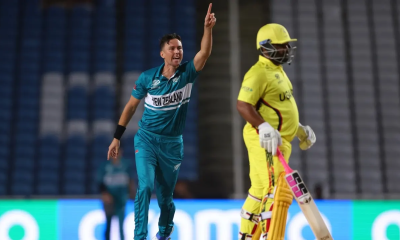

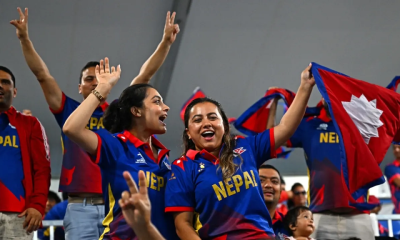


The Rose Bowl, which has been awarded to the winner of ODI series between the women’s teams of Australia and New Zealand since 1985, has now been expanded to include T20Is as well.
New Zealand’s three match T20I tour of Australia, which begins on Sunday at the North Sydney Oval, will be the first T20I edition of the Rose Bowl. The teams will get to face off again for the trophy in March 2027 when they meet again for three ODIs, also in Australia.
For Rose Bowl series that include matches in both white-ball formats, the trophy will go to the team with the most wins overall. In case of a drawn series, the current holder will retain the trophy.
“The Rose Bowl is a prestigious trophy that holds a lot of meaning to current and past players, and it’s a series we’ve always taken a lot of pride in competing in,”Catherine Campbell, NZC’s chief cricket operations officer and a former New Zealand player, said. “With so much T20I cricket now being played, this is a brilliant opportunity to keep the Rose Bowl relevant and to build on the history between us and our Australian rivals.”
New Zealand captain Melie Kerr was excited by the broadening of opportunities to compete for the Rose Bowl.
“We’re all aware of what the Rose Bowl represents and the importance it holds in the White Ferns whakapapa [genealogy],” said Kerr. “Great players and teams have fought for it over the years and we’d love the opportunity to claim our own piece of that history.”
Australia have held the Rose Bowl continuously since wresting it back from New Zealand in 2000. Since that 3-0 win, Australia have won 18 times with one series – in 2008-09 – shared 2-2. Overall, Australia have won 26 of the 31 ODI series played for the Rose Bowl, with New Zealand winning three times and three series drawn.
North Sydney will host all three T20Is of the upcoming Rose Bowl series, on October 18, 20 and 22.
[Cricinfo]
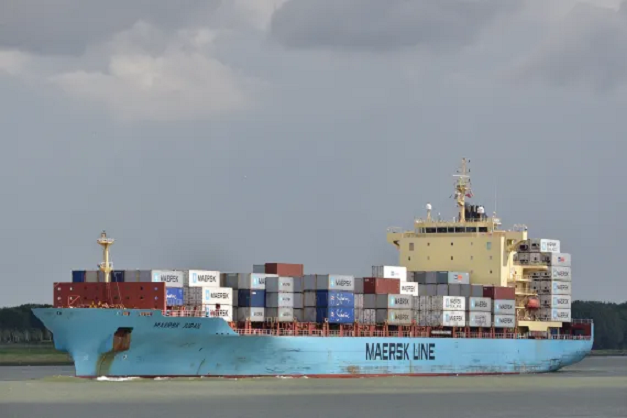
US President Donald Trump claims the US Navy’s “effective” blockade has stopped all Iranian ships from crossing the Strait of Hormuz.
Iran’s Islamic Revolutionary Guard Corps (IRGC) navy says a supertanker carrying more than two million barrels of crude oil has struck a sea mine while attempting to cross the Strait of Hormuz through an “unauthorised” route.
The collision caused a huge explosion and a major fire on board the vessel, the IRGC said in a statement reported by semi-official Tasnim news agency.
It alleged that the tanker had turned off all tracking and radar systems, attempting to pass through the strait using deception and with US military support.
‘The Strait of Hormuz is closed’, the IRGC navy warned, adding that vessels violating Iranian regulations would face severe consequences for relying on US backing.
[Aljazeera]
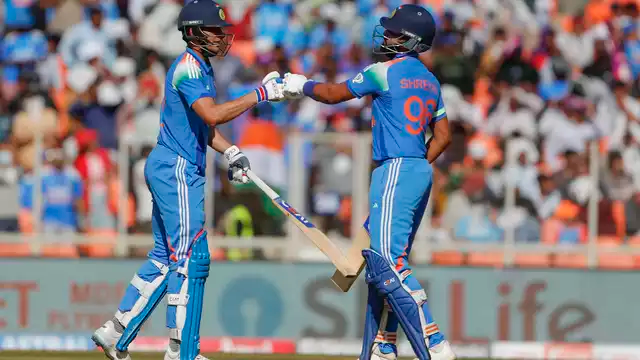
Squad for the first three ODIs: Shubman Gill [C], Rohit Sharma, Virat Kohli, Shreyas Iyer [VC], KL Rahul [WK], Nitish Kumar Reddy, Axar Patel, Naman Dhir, Anshul Kamboj, Gurnoor Brar, Ruturaj Gaikwad, Arshdeep Singh, Ishan Kishan [WK], Mohammed Siraj, Prasidh Krishna*, Kuldeep Yadav
Squad for fourth and fifth ODIs: Shreyas Iyer [C], Rohit Sharma, Virat Kohli, Tilak Varma, Ishan Kishan [WK, VC], Nitish Kumar Reddy, Axar Patel, Naman Dhir, Auqib Nabi, Gurnoor Brar, Ruturaj Gaikwad, Arshdeep Singh, Kumar Kushagra [WK], Mohammed Siraj, Yash Thakur, Kuldeep Yadav
[Cricbuzz]

Rose Bowl expanded to include Australia vs New Zealand T20Is

Trump claims US Navy blockade stops Iranian ships in Hormuz

Showers above 75 mm are likely at some places in the Western, Sabaragamuwa, Central and North-central provinces and in Trincomalee and Mullaitivu districts

Cut power bills by 3-5%, don’t hike them, consumers demand

Asgiri Mahanayake calls for immediate release of Gnanasara Thera

Lanka Air Force joins multinational exercise in India

‘Dates have the highest sugar content to fight Coronavirus’

Sunday Island 27 December – Headlines

#SundayIsland 17th December – Headlines

Sunday Island – 28th March

Sunday Island Headlines – 21 March

Sunday Island – 21st February – Headlines
-

 News6 days ago
Sri Lanka escalates anti-graft drive with Shiranthi’s jailing
-

 Latest News5 days ago
Farhan and Sadaqat help Pakistan seal series in style
-

 News6 days ago
Iranian ships stranded, Lanka fears US sanctions
-

 Latest News4 days ago
Nissanka’s return headlines Sri Lanka’s Test squad against Pakistan
-

 Features5 days ago
Intake 16: 45 years of duty and honour
-
 News5 days ago
Malwathu Chapter issues statement on talks with President over Gnanasara Thera’s robes
-
 News5 days ago
CP alleges NPP has taken the blame for illegal US sanctions on Iranian vessels
-
 News6 days ago
Navi Pillay’s Lankan affairs in focus as she wins 2026 Nobel Peace Prize