
Editorial
Some thoughts on Independence

When we saw an incoming email from a regular correspondent to the newspapers titled “Why not sing the National Anthem in the Thai language” in our inbox a couple of days ago, we naturally thought the writer had his tongue in his cheek. He was reacting to a news story in this paper last Sunday that the president had directed his Media Division to prepare the Independence Commemoration Souvenir in the Thai language in addition to Sinhala, Tamil and English to honour the visiting Thai premier. This was not actually the case. The letter writer was advocating a digital souvenir as an economy measure. He had incidentally suggested – seriously and not sarcastically – singing the anthem in Thai.
Be that as it may, given the country’s current travail with everything possible going wrong everywhere, many older people are heard to say “we might have been better off had we remained a British colony.” In that context it would be useful to reflect today, our 76th anniversary of Independence from British rule, some of the pros and cons of having been under the imperial yoke.
It would be foolish to regard the totality of British colonial rule over this island to have been of absolutely no benefit to us. Negatives undoubtedly abound, notably the notorious Waste Lands Ordinance No. 1 of 1897 declaring all uncultivated lands as state lands under this law. This resulted in the unjust deprivation of the country’s peasantry of commonly held grazing and forest land serving as rainwater catchments.
The sale for a song of such land to British investors to open first coffee and then tea plantations impoverished the Kandyan peasantry and deprived the whole country of the natural catchment of the forested hill country that fed our rivers, regulated the climate and much more. Then there was the brutal suppression of the Uva-Wellassa rebellion of 1817-18 and the scorched earth policy that followed and events that occurred in 1915 etc. There was also the administration of the country in a language most of its people did not understand and the ultimate horror of people being tried for their lives in such a language.
But on the plus side of the ledger was, as in India, uniting the whole country previously divided into several kingdoms, the legacy of the English language and the modernization of the economy with roads, railways, ports, hydro-power and urban infrastructure not forgetting the enforcement of law and order. Colonialism, as everywhere, was exploitative but not without at least some fringe benefits for colonized territories. This was more true of the British than the other colonial powers.
The period between 1931 and 1947 leading up to Independence when the country was governed by two State Councils under British overlordhip saw the opening of the dry zone which arguably was bigger than the Mahaweli Development project that came later. We had universal franchise in 1931 with women getting the right to vote only three years after females had won that right in the United Kingdom.
At the time of Independence, then Ceylon was a jewel in the crown of the British Empire and ours was arguably one of the strongest economies, other than Japan’s, in Asia. It is very well known that Singapore’s Lee Kuan Yew once held then Ceylon as a model for his country to emulate. That was then, but where are we now after 76 years of self-rule?
The blame for much of our failures must be squarely laid at the feet of the various post-Independence governments who have ruled us since we were freed of the colonial yoke. The Soulbury Constitution the British left us served us well for 26 years. But our political class with their lack of wisdom threw out the baby with the bathwater. The clause protecting minority rights ended with the 1972 constitution which accorded primacy to Buddhism, the religion of the majority. Sinhala Only was Mr. Bandaranaike’s battle cry but as Tarzie Vitachchi, one of our best known newspapermen so pungently put it, the prime minister later tried to add “but Tamil also” to that slogan!
As Prof. KM de Silva, one of our best known contemporary historians has noted, the 1972 constitution ought to have been a proper manifestation of the people’s sovereignty. But it was written with minimum public participation. As he pointed out, by promulgating the new constitution, the then ruling coalition elected by a landslide in 1970 gave itself a term up to 1977, two years beyond the five years to which it was elected in 1977.
But the J.R. Jayewardene government, elected in 1977 with an unprecedented five sixths parliamentary majority did better, doing away with the next election “with the consent of the people” obtained via what was widely regarded as a heavily rigged referendum. This enabled the then incumbent parliament to remain in office for a further term without an election. But as KM de Silva has said, the system we have been left with “may be described as a centralized democracy in which the most dominant element is the political executive which in comparison with the former constitution has fewer built-in checks on the abuse of political power.”
The various missteps since Independence led to a near 30-year civil war, a bankrupt country with an obscenely bloated public service and a military that is the world’s 14th largest. Jobs for the boys (and girls) of politicians has resulted in our public service being over five times as big as it needs be. Our youth is quitting the country in their thousands as they see no future here as we prepare for yet another election with little prospect of the widely desired system change.










Saturday 18th July, 2026
US President Donald Trump has accused China of interfering in the 2020 US presidential election and alleged “shocking vulnerabilities” in American voting systems. Speaking from the White House on Thursday, he repeated unsubstantiated claims about voter fraud and foreign meddling in the 2020 election, which he lost.
Trump claimed he had declassified hundreds of intelligence files which supported his claim that Beijing tried to sway the election in his rival, Joe Biden’s favour. However, the US intelligence agencies have concluded that China did not interfere in the 2020 election. One may recall that there were allegations of Russian interference in the 2016 US presidential election, which Trump won. After securing the presidency, Trump insisted that those allegations were false, politically motivated and an attempt to delegitimise his victory.
Trump’s allegation against China has come three months ahead of crucial US midterm elections, where the Republicans are expected to suffer a setback. Trump is doing everything in his power to prevent a situation that will make his position as a lame-duck President even weaker. So, it is only natural that he is concocting conspiracy theories and resorting to hard power projections, such as using military force, and economic coercion to influence other nations, in a bid to shore up the crumbling image of his government. However, it is doubtful whether his tactics will pay off.
Meanwhile, US Vice President JD Vance has accused a section of the Israeli government of trying to sway US public opinion against a peace deal to end the Iran war. He said so in an interview with a podcaster on Wednesday. Defending a deal that the US reached last month to end the war with Iran, Vance said, “I know beyond a shadow of a doubt that there have been people within the Israeli government who are trying to, like, actually shift us away from that policy because they want to continue the military campaign,” according to media reports. Vance’s allegation followed a Time magazine story that a former Trump campaigner had been hired to influence US views of Israel and the Iran war. Vance’s allegation is damning; he has called the Israeli efforts “very discreet, extremely well-funded campaign to try to derail the negotiation and try to derail the deal”.
That Israel does not want the US to enter into a peace deal with Iran is obvious. It wants the US to go on attacking Iran until there is a regime change in Tehran. Israeli Prime Minister Benjamin Netanyahu makes no bones about the fact that he was not well-disposed towards the interim peace deal signed between the US and Iran. The resumption of hostilities must have gladdened his heart as well as those of all other hawks in Washington and Tel Aviv.
There is no way Israel can prevent the US from signing a peace agreement with Iran if President Trump so desires strongly. What has stood in the way of efforts to end the Iran war is Trump’s intransigence. Iran is not without blame, but the US is to be blamed more for the resumption of war. Trump knows he cannot go on attacking Iran indefinitely for economic and strategic reasons. The US weapons stockpiles have to be replenished, and the economic cost of war is escalating. The war has also driven oil prices and the cost of living high in the US, much to the consternation of the US public, the majority of whom are against the ongoing war, which they think Israel manoeuvred the Trump administration into. Trump only made a virtue of necessity when he agreed to a ceasefire, but wanted to end the war on his own terms; he failed because Iran did not give in to US pressure.
As for the aforesaid ‘conspiracies’ Trump is in a position to order a thorough probe into the alleged Chinese interference in the 2020 US election and get to the bottom of it, and instead of blaming Israel, Vance can ask his boss, Trump, to stop attacking Iran.

Friday 17th July, 2026
Israeli Prime Minister Benjamin Netanyahu must be on cloud nine. The US is now doing exactly what he wanted it to do; it is attacking Iran without Israeli involvement. Israeli officials have told the media that they do not expect Israel to become directly involved in the new phase of fighting though the Israel Defence Forces remain on alert should the conflict expand. This can be considered another dream come true for Netanyahu, who said after the first round of US-Israeli airstrikes which killed Iranian Supreme Leader Ayatollah Ali Khamenei that he had been dreaming of attacking Iran for 40 years.
What is unfolding in West Asia is an asymmetric conflict where the US firepower is far superior to that of Iran, which is resisting Trump’s “Epic Fury”. Tehran’s resilience is remarkable. The US cannot go on carrying out airstrikes indefinitely. Only a ground war will determine a clear winner.
Trump has threatened a ground assault in Iran, but he has the war powers resolution passed by the Congress recently to contend with. A ground operation won’t be a walk in the park. Deploying ground troops is a high-risk gamble that did not pay off for the US in Vietnam and Afghanistan. A steady flow of body bags from a foreign theatre of war that lacks popular support at home has the potential to unsettle any government.
Weapons stockpiles are not unlimited for any nation however mighty and wealthy it may be. The ongoing conflict has depleted the weapons inventories of both sides to it. However, it can be considered a matter of greater concern to the US than Iran in that Washington has to fire a large number of missiles at multiple targets in Iran as part of its strategy to keep Tehran under pressure. Michael O’Hanlon, who leads the Brookings Institution’s foreign policy research, has been quoted by the media as saying that the US weapons stockpiles are doubtlessly lower than Washington would prefer.
The Center for Strategic and International Studies, a Washington-based think tank, has reportedly said that by the time full-scale fighting between the US and Iran stopped in April, the Pentagon had fired at least half of its THAAD ballistic missile interceptors, nearly half of its Patriot air defence interceptors, and around 30% of its Tomahawk land-attack missiles. This revelation runs counter to President Trump’s boastful claim that the US has a never-ending supply of missiles. Besides, in March, Trump said that his officials had met the heads of US arms manufacturing companies and they had promised to increase production.
Military analysts are of the view that it could take between one to four years for the US to replenish its vital munitions stockpiles and restore them to the pre-Iran war levels, according to an Al Jazeera report. Speculation is rife in international defence circles that if the depletion of the US weapons stockpiles continues at this rate, Washington may find it difficult to face a military conflict elsewhere.
Global oil prices are rising again due to the closure of the Hormuz Strait. A US naval blockade will be of little use. The global economy will be the biggest loser. Oil supply disruptions will take a heavy toll on the US economy as well. The first phase of the Iran war sent the US fuel prices up, and the closure of the Hormuz chokepoint will make the situation far worse. Trump is fighting a war that a vast majority of Americans are opposed to, according to opinion survey results. US farmers have been complaining of production cost escalations due to the knock-on economic effects of the West Asia conflict, according to media reports. US midterm elections are due in a few months and the Republicans are not doing well on the political front.
The White House will have to justify the colossal amounts of funds being spent on the current war. The financial cost of the conflict is still being calculated, but according to some estimates the direct military cost ranges from about USD 40 billion to more than USD 100 billion, with equipment losses, base repairs and weapons replenishment being taken into account. The cost continues to escalate. These politico-economic factors will also have a bearing on Trump’s military campaign.


Thursday 16th July, 2026
Occasions are not rare when absurd twists and turns in Sri Lanka’s legal system remind us of Mr. Bumble, the famous Dickensian character, who declared, “The law is an ass”. The police arrest criminals, after months of meticulous planning, risking their life and limb, but the latter obtain bail, go into hiding, either here or overseas, and continue to run their illegal operations. The police have to launch fresh operations to arrest the criminals on the run.
The police have sought information about Mohommad Najim Mohommad Imran alias Kanjipani Imran, who is wanted under an INTERPOL Red Notice. He is running his criminal operations from overseas, according to a report published in this newspaper yesterday. It defies comprehension why he was released on bail in 2021 though it was patently clear that he would flee the country.
Quoting the police, our news item has said intelligence reports point to links between Imran and international terrorist organisations as well as major mafia syndicates, which enable him to use transnational networks and technology to manage drug trafficking and other criminal operations.
Much is being spoken these days about the need to strengthen public confidence in the judiciary. There is no gainsaying that everything possible must be done to preserve the integrity and dignity of the judiciary. Worryingly, some issues crop up, making one wonder whether a section of the law enforcement authorities and some members of the legal fraternity bend the law to safeguard the interests of wealthy underworld figures at the expense of the judicial process and public security.
The police and the state prosecutor take great pains to prevent some suspects, especially the political opponents of governments in power, from obtaining bail. They invoke all laws and come out with various arguments to have such suspects held on remand for extended periods. Instances abound where their investigations get underway in earnest only after suspects are arrested and remanded for weeks, if not months, while ruling party politicians conduct social media trials, as it were, and declare the suspects guilty, with no heed for the presumption of innocence or the fact that public speculation is prohibited when cases are sub judice.
When Imran was arrested in Dubai and extradited in 2019, it was widely thought that he would have his work cut out to secure bail because Sri Lanka police and their UAE counterparts had worked tirelessly for months to arrest him and Makandure Madush, known as Sri Lanka’s Napoleon of Crime, and bring them here. Madush was shot dead while in custody, and the then government claimed that he had been caught in the crossfire between police and an underworld gang while being taken to a place where a haul of narcotics was believed to have been buried. It is doubtful whether the discerning public bought into that claim.
The news of Imran being released on bail raised many an eyebrow. We said in an editorial comment dated 02 January 2023 that having secured bail he would flee the country and carry out his illegal operation from overseas as other criminals did.
However, Imran is not the only criminal to have jumped bail and fled the country. Janith Madushanka de Silva alias Podi Lasi, a dangerous underworld character, fled to India after being released on bail in 2024. He even claimed that his life was in danger and asked for police protection. It was obvious that he would flee the country, and he did so soon afterwards. One may recall that in 2020, while being detained at the Boossa high-security prison, he and two other criminals, known as Kosgoda Tharaka and Pitigala Keuma, threatened to kill the then President Gotabaya Rajapaksa, Defence Secretary General Kamal Gunaratne and several senior prison officers. Podi Lasi bragged that their private armies were capable of striking anywhere at will. He was arrested in India and brought back in 2026. Thus, criminals are caught, released and caught again. Now, the police are trying to arrest Imran.
Only a thorough probe into the circumstances that led to the release of Imran on bail will reveal how he managed to manipulate the legal process and flee the country.

MIWAYZ redefines Sri Lankan urban mobility with landmark launch

Iran accuses US of striking critical infrastructure as war intensifies

President meets with Department of Prisons Officials

Prioritize Vocational Education in future Education Planning – President

Davis cup Asia/Oceania Group IV 2026 to be held in Colombo from 20th to 25th July

Navy brings fisherman in distress off Pothuvil, ashore

‘Dates have the highest sugar content to fight Coronavirus’

Sunday Island 27 December – Headlines

#SundayIsland 17th December – Headlines

Sunday Island – 28th March

Sunday Island Headlines – 21 March

Sunday Island – 21st February – Headlines
-
 Features7 days ago
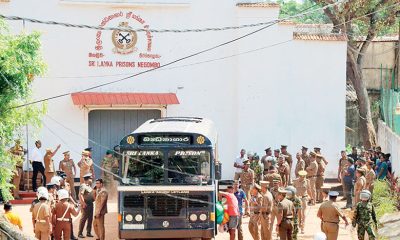
Prison riots and politics: NPP’s biggest challenge and Sri Lanka’s biggest opportunity
-
 Features4 days ago
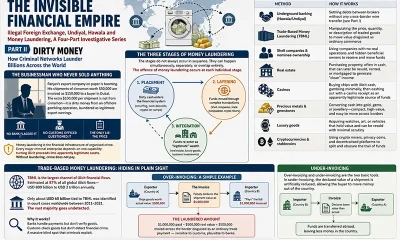
Dirty Money
-

 Sports7 days ago
The banker who rescued Sri Lankan cricket
-

 Editorial7 days ago
Much ado about crime: Fish or cut bait
-
 Features7 days ago
More on Saudi Arabia: ARAMCO and beyond
-

 News2 days ago
Money laundering case against Yoshitha, fixed for pre-trial conference
-

 News20 hours ago
Dengue outbreak gallops ahead: Infections surpasses 73,455, leaving 50 dead
-
 News20 hours ago
Evidence recorded in money laundering case against Yoshitha Rajapaksa