
News
Oscar Pistorius released on parole 11 years after killing Reeva Steenkamp

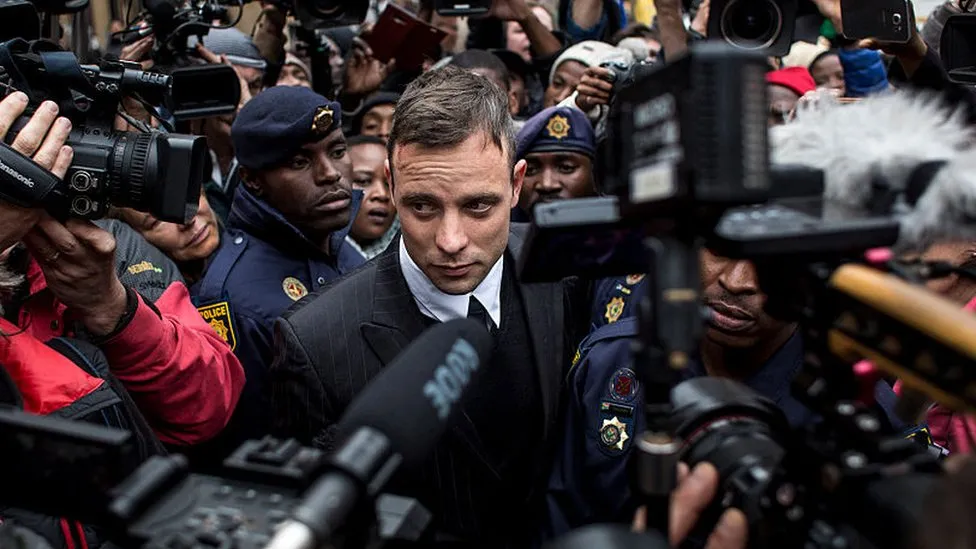
Paralympian Oscar Pistorius has been freed on parole from a South African jail, nearly 11 years after murdering his girlfriend Reeva Steenkamp.
Officials confirmed Pistorius was “at home” on Friday morning, having served half of his more than 13-year sentence.
Ms Steenkamp’s mother said she accepted the decision to release the former athlete – but added her family was the one “serving a life sentence”.
Pistorius, now 37, shot Ms Steenkamp multiple times in 2013 through a door. The double amputee later claimed he had mistaken her for a burglar.
Pistorius was eventually convicted of murder in 2015 after an appeal court overturned an earlier verdict of culpable homicide.
Parole conditions
Under South African law, all offenders are entitled to be considered for parole, meaning early release under certain conditions, once they have served half their total sentence, which for Pistorius was finally set at 13 years and five months.
Until his sentence expires in 2029, he will live under strict rules – confining him to the home for certain hours of the day, as well as banning him from drinking alcohol. He is also not permitted to speak to the media.
In addition, Pistorius will be required to have therapy to help deal with issues around gender-based violence and anger.
He is believed to have gone to live at the home of his uncle Arnold Pistorius in an upmarket suburb of the capital, Pretoria.
While in prison, Pistorius drove a tractor in the grounds, worked in the library and cleaned inmates’ cells, according to legal documents cited by South African journalist Karyn Maughan.
Social workers and psychologists also wrote positive reports about him, she told the BBC’s Newsday programme.

June Steenkamp said in a statement that the family had “always known that parole is part of the South African legal system” and had “always said that the law must take its course”. Mrs Steenkamp said she welcomed the conditions imposed by the parole board, which “affirmed Barry and my belief in the South African justice system,” referring to her late husband.
But, she asked: “Has there been justice for Reeva? Has Oscar served enough time? There can never be justice if your loved one is never coming back, and no amount of time served will bring Reeva back. We, who remain behind, are the ones serving a life sentence.”
She added: “My only desire is that I will be allowed to live my last years in peace with my focus remaining on the Reeva Rebecca Steenkamp Foundation, to continue Reeva’s legacy.”
Pistorius first went to prison in October 2014, shortly after his initial conviction. There was a period between 2015 and 2016 when he was released under house arrest before his conviction was changed and sentenced lengthened.
Pistorius’s lower legs were amputated when he was less than a year old. He subsequently relied on prosthetics and became a world-renowned athlete known as the “blade runner”. He had a successful career on the track, first at the Paralympics, winning multiple golds, and then cementing his reputation after competing against non-disabled athletes at the London Olympics in 2012. The murder of Ms Steenkamp just six months later, and the subsequent trials, dominated headlines around the world.
South Africa’s department of correctional services said that despite his high public profile, the former star will be treated like anyone else on parole.
Ms Steenkamp, who was 29 when she died, was a law graduate and successful model who also worked as a TV presenter and appeared in a reality show called Tropika Island of Treasure. She had planned to start a law firm to help abused women after graduating.
Ms Steenkamp was three months into her relationship with Pistorius when he fired four shots with a pistol through the door of a toilet cubicle at his house in Pretoria in the early hours of 14 February 2013. She died almost instantly.
The state charged Pistorius with murder but he was convicted in 2014 of the lesser offence of culpable homicide, or manslaughter.
The following year, judges at the Supreme Court of Appeal changed his conviction to murder, saying that his version of events was inconsistent and improbable and that he had “fired without having a rational or genuine fear that his life was in danger”.
The trials of Oscar Pistorius
- August 2012: Competes in London Olympics and Paralympics, where he won a gold medal
- February 2013: Shoots dead his girlfriend Reeva Steenkamp
- March 2014: Trial begins
- September 2014: Judge finds Pistorius guilty of culpable homicide
- October 2014: Begins five-year sentence
- October 2015: Transferred to house arrest
- December 2015: Appeal court changes verdict to murder
- July 2016: Returns to prison after being sentenced to six years for murder
- November 2017: Appeal court increases sentence to 13 years and five months
- June 2022: Meets Ms Steenkamp’s father, Barry, as part of a restorative justice programme
- November 2023: Parole board agrees Pistorius should be released
- January 2024: Freed from prison under parole conditions
(BBC)



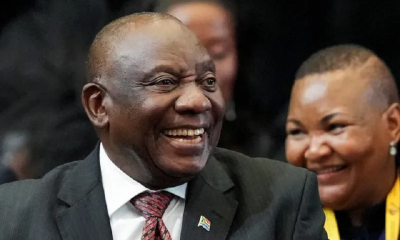









Former President Mahinda Rajapaksa has arrived to appear before the Commission to Investigate Allegations of Bribery or Corruption (CIABOC) this morning (12) to provide a statement regarding the alleged SriLankan Airlines Airbus deal.
News
Death of infant at Trinco District General Hospital: Suspended docs were at private hospital performing operation: Govt.

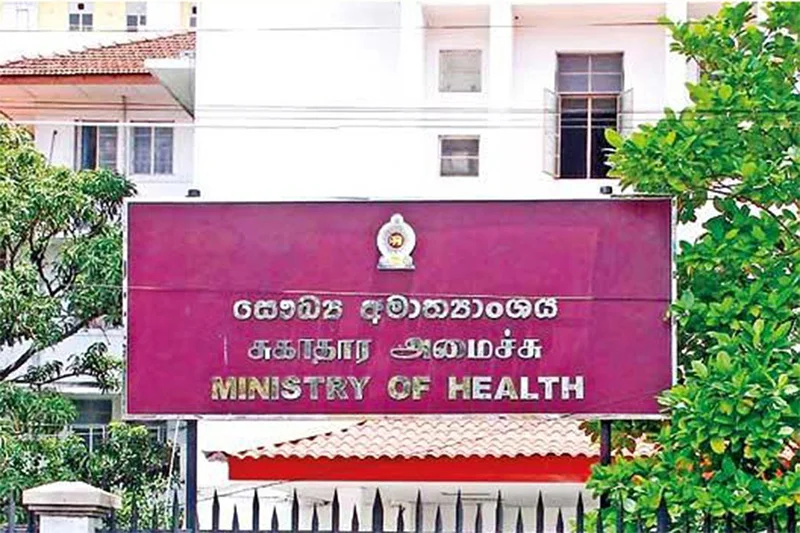
GMOA denies allegation, calls for independent probe by a panel of experts
The Health Ministry is considering whether criminal liability should be apportioned to two doctors, suspended over the death of an infant at the Trincomalee District General Hospital during a GMOA strike last month, official sources said.
Health Minister Dr. Nalinda Jayatissa said further investigations were underway to determine whether the doctors involved had committed any criminal offence in connection with the incident.
GMOA President Dr. Prabath Sugathadasa told The Island that his association had asked the Health MInistry to conduct an impartial investigation. Emphasising the need to include experts in the inquiry team, Dr. Sugathadasa said that the death at the Trincomalee hospital had not happened due to the doctors’ strike.
The GMOA always maintained emergency services during trade union action therefore the Trincomalee death couldn’t be blamed on the Association, he said.
The infant died on 09 April while members of the Government Medical Officers’ Association (GMOA) were on strike.
Following a preliminary investigation, the Ministry of Health suspended the services of the hospital’s obstetrics and gynaecology specialist and a senior medical officer.
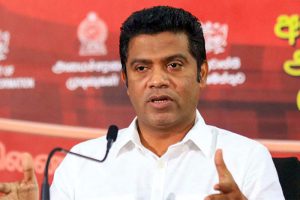 Health Ministry sources said the suspension order had been issued last Friday by the Health Ministry Secretary after investigators uncovered what were described as serious lapses and negligence linked to the death of the newborn during childbirth.
According to investigators, a newborn in distress had been reported from the maternity ward at around 8.45 a.m. on 09 April. Although a resident midwife had alerted the relevant medical personnel, proper medical attention had allegedly not been provided.
The inquiry found that the mother’s suffering had been prolonged and complications had been allowed to develop without a timely intervention. Investigators also noted that adequate care had not been provided even after the patient had been admitted to the ward.
Preliminary findings further revealed that the doctor concerned had failed to participate in the delivery procedure, thereby losing a critical opportunity to prevent complications.
The investigation also found that despite the mother having fever and chills, necessary medical intervention had allegedly not been carried out.
Health Ministry sources said the inquiry had uncovered several irregularities in the discharge of duties, some of which had reportedly been highlighted previously in an official communication issued by the Ministry Secretary.
The Ministry confirmed that disciplinary action had been initiated against the doctors following the findings of the preliminary investigation.
Sources identified one of the suspended doctors as a specialist attached to the Trincomalee District General Hospital who also serves as the President of the GMOA branch at the hospital.
According to Health Ministry the two doctors, under investigation, had been attending to a caesarian operation at a private hospital, in Trincomalee, though they falsely claimed they were on strike.
The government yesterday (11) unveiled sweeping amendments to National Environmental Act No. 47 of 1980. It had been last amended in 2002. Authorities described the latest amendments as one of the country’s most significant environmental legal reforms aimed at protecting ecosystems and ensuring sustainable development.
The proposed amendments were announced during a media briefing held at the Department of Government Information under the patronage of Dr. Dammika Patabendi and Deputy Environment Minister Anton Jayakody.
Also present were Secretary to the Ministry of Environment K.R. Uduwawala, Environment Ministry Advisor Dr. Ravindra Kariyawasam, and Director General of the Central Environmental Authority Kapila Rajapaksha.
Speaking at the briefing, Minister Patabendi said the amendments were designed to breathe new life into environmental governance while aligning with the government’s policy vision of “A Sustainable Biosphere – A Green Life.”
“The environmental challenges confronting Sri Lanka today are far more complex than they were when this law was introduced in 1980,” Minister Patabendi said. “Therefore, we need a stronger and more modern legal framework capable of protecting ecosystems, ensuring environmental justice and safeguarding natural resources for future generations.”
The amended Bill, prepared with the participation of environmentalists, academics and other experts, has already been tabled in Parliament and is expected to be debated shortly.
One of the key features of the revised legislation is the legal strengthening of environmental responsibilities vested in local government authorities.
Under the new provisions, the Central Environmental Authority will have enhanced powers to take legal action against local authorities that fail to comply with environmental regulations and directives.
The legislation also empowers magistrates to impose substantial fines on institutions that ignore court orders aimed at rectifying environmental violations.
Minister Patabendi stressed that environmental protection could no longer remain secondary to economic development.
“Sustainable development must be based on scientific principles,” he said. “Development that destroys ecosystems is not development. Environmental conservation and economic progress must go hand in hand.”
The amendments further tighten controls over industries operating under Environmental Protection Licences (EPLs).
Authorities said industries that violate EPL conditions or fail to prevent serious industrial hazards could face suspension or cancellation of licences. The law also introduces provisions enabling temporary closure orders against industries operating in violation of environmental standards.
A major addition to the revised Act is the introduction of dedicated legal provisions governing hazardous waste and chemical management.
Under the new framework, the Environment Minister will have powers to enforce stricter regulations under the supervision of technical expert committees.
The Bill also criminalises the submission of false information in Environmental Impact Assessments (EIA/IEE) and unauthorised alterations to approved development projects.
In another significant move, Strategic Environmental Assessments (SEA) will become mandatory in state policymaking, a measure authorities say will place scientific analysis at the centre of national development planning.
Minister Patabendi described the reforms as essential for ensuring long-term environmental security in the face of climate change and ecological degradation.
“We are introducing laws not only for the present generation but for the generations yet to come,” he said. “Protecting wetlands, forests, water resources and biodiversity is now an urgent national responsibility.”
The amended legislation also introduces the globally recognised concept of Extended Producer Responsibility (EPR), which places responsibility on manufacturers for managing the full life cycle of their products, including post-consumer waste.
Environmentalists have long argued that Sri Lanka requires stronger legal mechanisms to address mounting waste management challenges, especially plastic pollution and hazardous waste disposal.
The revised Act additionally introduces a specialised legal framework for wetland conservation, reflecting growing concerns over the rapid degradation of sensitive ecosystems across the island.
Sri Lanka, recognised as one of the world’s biodiversity hotspots, possesses rich ecosystems ranging from tropical rainforests and mangroves to wetlands and dry-zone forests.
Environmental experts say the proposed reforms could significantly strengthen conservation efforts if effectively implemented.
Minister Patabendi said the government hoped the new legal framework would help secure a greener and more sustainable future for the country.
“Our responsibility is to leave behind a living environment that future generations can inherit with pride,” he said.
By Ifham Nizam

Former President Mahinda Rajapaksa has arrived at the Bribery Commission

US in closely-guarded talks to open new bases in Greenland

Trump says Iran ceasefire is on ‘massive life support’

Draw on the cards, but Mominul and Shanto extend Bangladesh’s lead

Miller, Axar and Ashutosh keep Delhi Capital’s IPL alive

Showers above 100 mm are likely at some places in the Western, Sabaragamuwa, Southern, North-western and Northern provinces and in Trincomalee district.

‘Dates have the highest sugar content to fight Coronavirus’

Sunday Island 27 December – Headlines

#SundayIsland 17th December – Headlines

Sunday Island – 28th March

Sunday Island Headlines – 21 March

Sunday Island – 21st February – Headlines
-

 News5 days ago
MIT expert warns of catastrophic consequences of USD 2.5 mn Treasury heist
-

 News2 days ago
Lanka Port City officials to meet investors in Dubai
-

 Editorial5 days ago
Clean Sri Lanka and dirty politics
-

 Editorial4 days ago
The Vijay factor
-
 News3 days ago
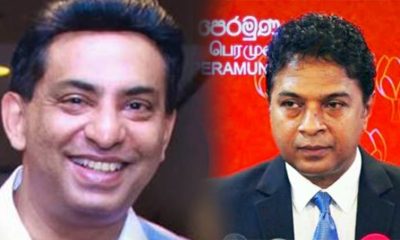
SLPP expresses concern over death of former SriLankan CEO
-

 News6 days ago
Development Officer bids Rs. 48 mn for CPC’s V8 at auction
-
 News3 days ago
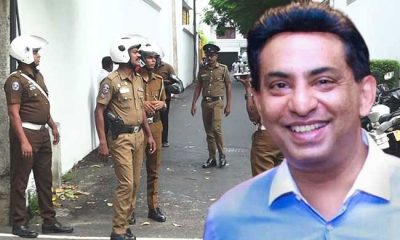
Police inform Fort Magistrate’s Court of finding ex-CEO of SriLankan dead under suspicious circumstances
-
 Opinion6 days ago
Postmortem reports and the pursuit of justice