
Opinion
Deshabandu Alec Robertson, Buddhist scholar, preacher and much more

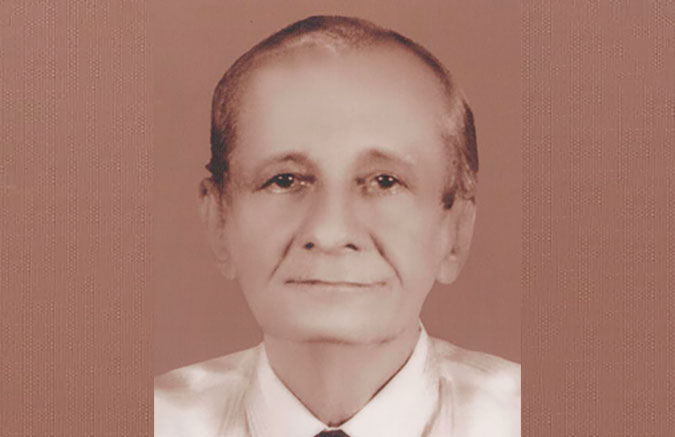
21st death anniversary
by Prof Kolitha H. Sellahewa
I consider it an honor and privilege to write an article of appreciation in commemorating the 21st death anniversary of Deshabandu Alec Robertson falling on December 31, 2023.
Alec Robertson was a high caliber Buddhist scholar whose demise has left a void in our society which is still palpable despite the passage of over two decades of his passing on Dec, 31, 2002 at the age of 74 years. This loss is felt alike among ordinary folk as well as Buddhist scholars amidst whom he shone like a beacon given his intellect and the profound knowledge of the Buddha dharma.
If I were to take you back in history it is interesting to note that he was born to a Catholic Burgher family. And one might wonder how Alec Roberson became a Buddhist scholar of international repute after an upbringing in such a background.
Fate seems to have driven him towards his destiny. In his early formative years his father was living in Dodanduwa and he usually accompanied his father whenever he made an occasional visit to the famous Dodanduwa island hermitage which was in close proximity to his father’s place of work. This was the reclusive abode of two German scholarly monks Gnanathiloka and Gnanaponika Maha Theros. Such encounters though rare, seems to have made an impact in the mind of young Alec. His thirst for the Dhamma was thus awakened.
His father was a free thinker and had an interested in comparative religion. And he had many books at home including books on Buddhism which young Alec read avidly, and he embraced Buddhism while still in his teens, and this was through conviction grounded on a sharp intellect.
It is said that opportunities arise for those treading towards a goal though it is only rarely that we make use of such opportunities. But Alec Robertson was different. He made every effort to put into good use all such occasions. And these opportunities did unfolded in abundance when he was living and working in Colombo.
His quest to learn the Buddha dhamma opened very vividly in front of him with his association with several scholarly erudite monks of yore like, Venerable Palane Vajiragnana, Narada, Piyadassi, Kassapa and Soma theros, all of whom were incumbent monks of Vajirarama temple: which is reputed to have trained so many scholars of Buddhism who were very competent in disseminating the Dhamma across the length and breadth of this country and the entire world. Most of them were monks and Alec Robertson was one of the select few among the laity.
It is around this period that Alec Robertson met late Prof Gunapala Malalasekera who was a scholar of Pali.
Given all these opportunities, of seeking guidance from erudite scholarly monks, mastering the Pali language, his own inherent capabilities and an unwavering effort Alec Robertson relentlessly pursued to master the Buddha Dhamma and acquire a deep understanding of all the three pitakas in its pristine purity.
He did not have degrees in Buddhism nor did he follow any post graduate courses in Buddhist universities. He resorted to study the Suttas in depth, and was, essentially a self-made Buddhist scholar; par excellence.
Alec Robertson was also endowed with a very good memory and a knack of clear presentation. These rare attributes, complemented with a profound knowledge of the Dhamma which he practiced and experienced made him a highly sought after speaker in a wide array of Buddhist fora. He had that charisma and a personality that drew crowds whenever and where ever he delivered a talk.
These talks were not confined to the affluent few in the city of Colombo, he ventured to do so with his mastery of both the Sinhala and English languages in the outstations as well, often using public transport in his young days to reach these distant venues. Such was his deep commitment to propagate the Dhamma.
Those who were privileged to listen to his talks still remember him for the eloquence and clarity of presentation, and not merely the depth of knowledge. His vibrancy captured the audience. How he answered any question that was raised was a sheer delight to watch, as the answers were prompt, precise, simple and relevant to clarify any doubt in the listener’s mind without an iota of ambiguity. The discussions that followed a talk delivered by him; or anyone else in a forum that he chaired was an absolute revelation. He in fact encouraged questions and discussions. All these reflected Alec Robertson’s strong memory and ability to extract and apply appropriately from an enormous resource pool of knowledge. It is perhaps his Wisdom and not merely knowledge that enabled the execution of such feats with seemingly effortless ease.
On a personal note, I remember how initially as a schoolboy and subsequently as a medical student I listened to his talks at Maitriya Hall during the Saturday talks conducted under the auspice of the Servants of the Buddha. And he in fact, commenced participating in these meetings of the Servants of the Buddha while attending school and became its assistant secretary at the tender age of 21 years. He was then its secretary, and eventually took the Servants of the Buddha to lofty heights by beng its president for 30 consecutive years without any interruption. The Society itself has been in existence for 102 years.
My father was very impressed with Alec Robertson and made it a point to come to Maitriya hall whenever he spoke. I too along with my siblings had to accompany our parents more on compulsion rather than any strong desire to learn the dhamma as our interests as youth were on the mundane. But once I entered the Maitriya hall and Alec Robertson started his talks I was listening to his free flow of words virtually riveted to my seat, and that, was simply awesome. And his sharp, crisp voice continues to resonate within me.
Many years later, now as a doctor I followed my father’s footsteps and made it a point to follow these talks of the Servants of the Buddha at Maitriya hall whenever time permitted. On one such occasion Alec Robertson approached me and realizing that I was a doctor wanted me to be interviewed by him in one of the regular Buddhist forum programs he was conducting at the Sri Lanka Broadcasting Corporation (SLBC) of which, he was initially a director and later chairman.
I found that request very intriguing and was wondering what a novice like me could talk with a doyen of Buddhism in a Buddhist forum of the SLBC which was more or less exclusive to Buddhist scholars which I was not, nowhere near, very far from that. But that encounter made me clearly see the personality and magnetism of a truly great human being. His seemingly very casual and gentle persuasion was yet so powerful, that I could not say no and I did end up stepping for the first time in my life to a studio at the SLBC.
And, there was Alec Robertson; and the way he chaired that forum was simply amazing. He made me feel so relaxed and I found myself talking with effortless ease sharing my experiences based on the questions raised and I never realized the time passing by. At the end of it Alec was thoroughly impressed in the way I spoke even though my knowledge of the Dhamma was miniscule, and as the chairman, he was so clever that he compensated brilliantly for any lack of my knowledge.
Alec Robertson’s commitment to disseminate his knowledge and experience of the Dhamma was not confined to his talks he published extensively. Very useful articles were written in Buddhist journals both locally and internationally and a plethora of articles to newspapers. One such feat was to contribute an article in English to the Annual Buddhist Journal “Vesak Sirisara” every year over a period of two decades without any interruption.
So let us remember this great son of Sri Lanka, Deshabandu Alec Robertson, who was elevated to Parliament by President Premadasa, as a scholar of Buddhism and an eloquent, erudite presenter who had so much of wisdom and foresight with a deep commitment to alleviate the suffering of mankind by propagating the teachings of the Buddha in a simple and practical way aligned to the simple contented life style he led himself. He is no longer with us but the legacy he has left behind will remain for a very long time to come.
And I believe that the greatest tribute we could do in commemorating his 21st death anniversary is to make every effort to transform this catastrophically unstable society the world over to a stable peaceful society by using the simple modalities of Non-Violence and Truth which are achievable by adhering to the “pancha sila” which is the very quintessence of the solution Alec Robertson had detailed so eloquently. And its implementation both at individual and collective levels should transcend all man made barriers which are nebulous and discriminative.
May he realize the supreme bliss of nibbana with the least delay?
“Sabbe saththa bawanthu sukithatha”



by Gomi Senadhira
Sri Lanka’s former ambassador to the United States Mahinda Samarasinghe is back in Sri Lanka lobbying for speedier finalisation of a new tariff deal with the United States. According to news reports, delivering the keynote address at the Sri Lanka Institute of Directors’ Annual Meeting last week, he stated, “I have recommended very strongly to the government that we need to conclude the agreement so that we can lock in the very favourable tariff rate that Sri Lanka has got up to now“.
I do not understand why the former ambassador is urging the government to expedite the finalisation of a new tariff deal or what is “the very favourable tariff rate” he refers to in his speech. However, given the ongoing terrible tariff turbulence in the United States and the fragile economic situation in Sri Lanka, I believe, this is not the right time to rush into finalising any trade agreement with the United States. I am also of the opinion that at this juncture Sri Lanka should maintain strategic patience and explore all available options.
Lessons from the countries that rushed for trade deals
To better comprehend this, let’s look at experiences of the countries that rushed to conclude tariff deals with the United States after President Donald Trump declared his “reciprocal tariffs” under the International Emergency Economic Powers Act (IEEPA) in April 2025. As Samarasinghe stated in his keynote, “The bottom line on all these negotiations was that every country that finally agreed to sign the agreement had to give either complete duty-free access for American exports into those markets, or near complete duty-free access.” In exchange for these tariff concessions and other market access commitments these countries managed to get the newly introduced country specific “reciprocal tariffs” reduced.
However, in February 2026, the Supreme Court of the United States (SCOTUS) struck down these “reciprocal tariffs” under the IEEPA. With that, the market access gains these countries received in exchange for complete duty-free access for American exports into their markets evaporated under U.S. domestic law. By moving too fast to conclude bilateral tariff agreements with the United States these countries are now bound to strict obligations whereas the benefits they bargained from the U.S. administration are not worth the paper those were written on.
Sri Lanka’s experience
In April 2025, President Trump declared his “reciprocal tariffs” and labelled Sri Lanka as the worst offender, imposing one of the highest additional duties at 44%. Since then, Ambassador Samarasinghe and other negotiators have managed to negotiate this down to 20%. I do not know what the deal was through which Sri Lanka managed to reduce the 44% tariff to 20% or what we gave in return for this “concession.” However, what we received in return has absolutely no value after the decision by the SCOTUS.
Current state of US tariffs
After the decision by SCOTUS, the U.S. administration introduced a temporary 10% additional tariff on all countries for 150 days. At the end of that period, this 10% tariff was replaced by a new “forced labor tariff ” of 10% to 12.5% on all trading partners under Section 301 of U.S. trade law. Twenty-five U.S. states and several small businesses have already filed lawsuits against these tariffs in U.S. courts. This new “forced labour tariff ” on Sri Lanka was first fixed at 12.5%. Later, after President Anura Kumara Dissanayake issued a gazette notice prohibiting the importation of goods produced using forced labour, it was reduced to 10%. That means Sri Lanka has already made a substantial commitment to receive this “tariff concession,” and I presume our negotiators understand the implications of this commitment.
Make haste slowly
After President Trump imposed 44% “reciprocal tariffs” on Sri Lanka, through an article published in The Island on 25th April 2026 (), I urged the government to engage immediately with the US administration on these tariffs. However, I also emphasised that the best way to move forward was to make haste slowly.
Two millennia ago, Augustus Caesar, the first emperor of Rome, frequently used the phrase, “make haste slowly”, because he detested rashness and haste in his military commanders. It was the recurring guiding maxim that he emphasised throughout his 40-year imperial rule. After 2000 years, this classical oxymoron remains a definitive golden rule for professional trade negotiators. More importantly it is the exact blueprint required when navigating turbulence in trade negotiations with the Trump administration.
The endgame – The most dangerous moment in trade negotiation
Samarasinghe has also stated the agreement is 90% complete. Any experienced trade negotiator should know that the final 10% contains high-stakes provisions and is the most dangerous moment in a trade negotiation. A single misplaced comma or ambiguous product description in a tariff schedule can cost millions through unintended loopholes. Rushing this last stretch to secure a deal can permanently expose Sri Lanka to sudden shifts in American trade policy, heavy compliance costs, or strict enforcement under Section 301 regarding supply-chain labour standards. Hence, this is the time for strategic patience.
(The writer can be reached at senadhiragomi@gmail.com)
Upon reading the article titled “Prof. Pieris says Buddha Dhamma recognized as source of law under Constitution” (Island, September 12, 2026), the classical Sinhala idiom “Yanne Koheda? Malle Pol” immediately comes to mind. The expression, translating literally to answering “I have coconuts in my bag” when asked “Where are you going?”, underscores a complete disconnect in logic. Because it is uncertain whether the article accurately represents the professor’s precise words, the following critique addresses the contents of the report rather than the speaker himself.
The central premise of the report concerns a statement delivered by the Chief Justice regarding a petition filed against the 22nd Amendment to the Constitution. According to the report, the Chief Justice’s observation that the determination would be made strictly on the basis of established law rather than Buddhist teachings was characterised as a “cavalier dismissal” of the Buddha Dhamma. This assertion carries a host of unexamined assumptions. Had the writer specified precisely which tenets of the Buddha Dhamma were violated, a direct legal or philosophical evaluation could take place. However, no specific Buddhist tenet or law was identified as having been transgressed, and for good reason: no such statutory legal framework exists within the Buddha’s teachings.
To understand the flaw in this argument, one must examine the constitutional context alongside the canonical meaning of the terms involved. Article 9 of the 1978 Constitution of Sri Lanka mandates that the Republic shall give Buddhism the foremost place and that it shall be the duty of the State to protect and foster the Buddha Sasana, while guaranteeing the fundamental rights of all religions under Articles 10 and 14(1)(e).
While “Buddhism” and “Buddha Dhamma” are frequently used as interchangeable terms in casual dialogue, they represent distinct concepts. “Buddhism” is an umbrella term coined by 19th-century Western scholars to classify the global institutionalised religion, incorporating its diverse sects, cultural traditions, rituals, and socio-political histories. Conversely, Sasana is the ancient term designating the structural framework established by the Buddha to preserve and transmit his teachings, comprising the monastic order (Sangha) and its supporting institutions.
In classical Theravada commentarial literature, the Sasana operates as a functional three-tiered structure. It encompasses Pariyatti Sasana, the preservation and study of sacred texts; Paṭipatti Sasana, the practical execution of the doctrine through ethical conduct and meditation; and Paṭivedha Sasana, the direct experiential realization of ultimate truth, or enlightenment. This structural breakdown raises fundamental questions about state capacity. While a state can readily support Pariyatti Sasana through academic institutions, textual preservation, and educational funding, it cannot legislate or enforce Paṭipatti or Paṭivedha. Practical engagement and spiritual realisation are inherently internal, first-person experiences. Expecting the state to codify or guarantee enlightenment is a conceptual impossibility.
Furthermore, the Buddha Dhamma refers specifically to the unconditioned truths of existence and the teachings imparted to realize them, including the Four Noble Truths, the Eightfold Path, and Dependent Origination. As the late Venerable Professor Kotagama Wachissara Thera observed, there is no rigid ideologue or “ism” in the core Dhamma. The teachings do not constitute a system of divine commandments or a legal statute enforced through reward and punishment. Rather, Buddhist ethics function as self-directed guidelines for psychological clarity and moral inquiry. Even the Vinaya Pitaka, which contains explicit rules of conduct, functions as an internal monastic code rather than a civil or criminal law intended for the laity.
Throughout the Pali Canon, guidance regarding governance focuses on the moral character of leadership and the social duties of statecraft rather than rigid legal codification. In discourses such as the Cakkavatti Sihanada Sutta (DN 26), the Buddha observes that social instability and crime cannot be eliminated solely through punitive measures, emphasising instead that states must provide economic opportunities, fair wages, and resource distribution to maintain societal balance. Crucially, in the Maha Parinibbana Sutta (DN 16), the Buddha explicitly highlights the importance of respecting established laws and traditions rather than enacting arbitrary regulations.
The natural laws articulated in the Dhamma, such as the law of cause and effect or the three characteristics of existence, govern all phenomena universally, regardless of legal statutes or personal belief. They are not human laws to be applied or suspended by a court of law. Therefore, characterizing the Chief Justice’s adherence to constitutional jurisprudence over religious doctrine as a “cavalier dismissal” lacks logical and textual foundation. Framing the judiciary’s adherence to legal precedent as an attack on the Dhamma distracts from fundamental constitutional principles and risks misguiding the public for political ends.
Geewananda
Gunawardana,
Ph.D.

by Usvatte
My friend, Sena Thoradeniya, has summoned up energy to raise two questions about my observations in your newspaper on 14 September, 2026. They both referred to comments I made about President Dissanayake and Prime Minister Amarasuriya.
I observed that President Dissanayake, having graduated in physics at Kelaniya, would be familiar with elementary calculus: differentiation and integration. It is a misapprehension to believe that one needs any knowledge of theoretical physics to be familiar with elementary calculus. Nor is it necessary that one needs to have published research for the same purpose. Those were the first lessons in calculus that our Mathematics Master and Principal, Mr. D. A. Devendra taught five of us in the first term 1952 at Hikkaduva Central School. Of the five, two still live and recall those lessons vividly. Dissanayake would surely have learnt them at his school in Anuradhapura. At Kelaniya his teachers probably included Dr. H. Somadasa, two years my junior at Hikkaduva, with a Ph.D. in number theory at Aberytswyth, Wales and Professor (physics) Charles Dahanayke, a renowned teacher of physics and my neighbour in Colombo. Dissanayake is unlikely to have been admitted to Physics at Kelaniya unless he had scored well in mathematics and physics with other subjects. Those elements of calculus have been learnt by millions of young men (and later women) since Isaac Newton and Gottfried Leibnitz. That Dissanayake from a school in Anuradhapura scored high enough to gain admission to Kelaniya to study physics is commendation enough for his intellectual capacity.
All of us know, some personally, the barriers to learning in places like Anuradhapura and Kuliyapitiya, compared to the facilities in Colombo, Galle. Jaffna and Kandy. I used that information to press the point that he was, in learning, entirely different from his predecessors and present competitors. One does not need to research in theoretical physics to know something as simple as the first lesson in calculus. Dirac made his momentous discovery sometime in the 1930s and by 1950 it must have been solidly in the teaching material in schools and universities. Dissanayake graduated in 1995 and, at least, must have heard of Dirac and the ‘God Particle’.
Paul Dirac was a legendary figure among graduate students when I was at Cambridge. He had written the shortest Fellowship and Ph.D. theses. He had had an interesting relationship with his father who was a French speaking Swiss and had insisted that he speaks French at table. Amrtya Sen, who was in 1965 a young Fellow of Trinity College and a teacher in the Economics and Politics Faculty at that time, had also written very short theses and not several volumes as many do.
I read about Higgs Boson in a wonderful book Inward Bound written by physicist Abraham Pais and, in The Science Times (Tuesdays) edited by Gina Kolata of the New York Times, and occasionally in Nature and other popular writings.
I was on the editorial board of Samskrti for some time. Amaradasa Virasinghe and Gananath Obeysekera had started that literary review in 1953 when I was in school and many of us read it avidly. Together with Susil Sirivardana, we decided to expand the scope of the journal to include social studies and science, which effort Sena knew well. The probable readership had increased manifold. In order to help prospective writers to pick up themes to write on, we held a popular lecture, one Saturday a month. I invited Dr. Harini Amarasuriya, then teaching at the Open University, Nawala, to speak to us on the scope and nature of sociology. She made a short fine introduction. That is where I learnt of August Compte. She was invited to a Seminar in Britain on the sociology of education, where I had strayed into from 1971. I did not read her paper, although she had promised to let me have it. I had good reason to respect her scholarship. It would be shocking had she not read Le`vy-Strauss. Many besides anthropologists read Le`vy-Strauss.
Sena stressed the obvious when he said that in public speeches made by these two politicians, there was no evidence of their expertise in physics and sociology. It would have been completely out of place to speak about elementary particles to a crowd in Beruvala or Anuradhapura. But one’s education, in subtle ways, informs the material and the ways that the material is presented in public speeches. Simply listen to Members of Parliament speak and you can guess roughly the level of education each had achieved: grade 2 in primary school or Quondam Professor of Law at Oxford.
I am sorry that Sena identified ‘an exaggerated parade of claims and sheer implausible boasts’ in what I wrote. It is entirely plausible, indeed certain, that an undergraduate in the Department of Physics in any university would be familiar with differentiation and integration.
An unprejudiced reading of my text will demonstrate that it contained no such claims and boasts. Mine was a pretty simple statement of the nature of differences between the present lot in government and the lots that were in power earlier. I related those differences to help understand the line up for and against the 22nd Amendment to the Constitution. and not to build false images of any politician, man or woman. I am too old to set out, even in the formidable company of Sena, on the ‘long march’ to Mao.

Muhammad Shahzad smashes fastest first-class hundred by a Pakistani batter

Gul, Kharote spin Afghanistan to victory over Japan in Asian Games opener

Showerss above 100 mm are likely at some places in the Western, Sabaragamuwa, Central and North-western provinces and in Galle and Matara Districts

Mirabai Chanu wins Asian Games silver as Ri breaks weightlifting record

Trump greets China’s Xi Jinping on arrival for three-day US

BASL calls for conscience vote on 22nd Amendment

‘Dates have the highest sugar content to fight Coronavirus’

Sunday Island 27 December – Headlines

#SundayIsland 17th December – Headlines

Sunday Island – 28th March

Sunday Island Headlines – 21 March

Sunday Island – 21st February – Headlines
-

 News6 days ago
Shanakiyan urges urgent action over reported death sentence for Lankan in Saudi Arabia
-

 News7 days ago
Bid for Basil’s extradition nears final stage: Police
-

 News5 days ago
Namal Rajapaksa Buddhist gambit fails, bail denied
-

 Features5 days ago
Why the spelling Sri Lankan names in English vary
-

 Features5 days ago
Three bands, a new identity: Sri Lankan wolf snake recognised as distinct species
-
 Business5 days ago
SLIIT holds largest-ever convocation
-
 News5 days ago
Govt monitors reported Saudi death sentence – Foreign Ministry
-

 News5 days ago
Vehicle prices drop by up to Rs. 1 mn, says importers’ body