
News
CBK lambastes politicians for playing ethnic card for expediency


Former President Chandrika Bandaranaiake has alleged that a section of the politicians continued to play the ethnic card for political gain.
“The majority of people don’t want to have another conflict. But politicians can’t resist using the ethnic card,” Mrs. Kumaratunga told a gathering of clergy at an international conference organized by Religions for Peace International, in partnership with the Sri Lanka Council of Religions for Peace (SLCRP), recently.
The former President insisted that the Sri Lankan people were not racist but they are provoked by politicians. She said public opinion had turned favourable for a political solution from 23% to 68% during her presidency in a matter of two years due to a combination of leadership and education for the younger generations.
The High-Level Forum on Increased Advocacy, Community Engagement and Learning on Positive Behaviour Outcomes for Children, Families and Communities was chaired by Associate Secretary General of Religions for Peace International, Deepika Singh. She explained how Religions for Peace had been guided by a vision of a world where faith communities cooperate effectively for peace since its formation in 1970. Working alongside religious leaders and their institutions and communities, and in partnership with other sectors of society, the organisation addresses critical challenges, ranging from violent conflict to gender inequality from environmental degradation to assaults on freedom of thought, conscience, and religion or belief and is today present in over 95 countries.
Secretary General of Religions for Peace Asia Rev. Dr. Yoshinori Shinohara said they had convened the meeting in Sri Lanka to strengthen the Sri Lanka branch of Religions for Peace for increased collaboration and common action with the government and other stakeholders under the Faith and Positive Change for Children, Families and Communities (FPCC) initiative.
The activities and methodologies under this initiative was spelled out by Jimmy Obuya, FPCC Global Coordinator, Religions for Peace International and Prof. Pablito Baybado, Jr., FPCC Regional Coordinator, Religions for Peace Asia.
After being welcomed by Ven. Senior Prof. Medawachchiye Dhammajothi, Secretary, Sri Lankan Council of Religions for Peace and Christobel Saverimuttu, Treasurer of SLCRP, a panel discussion took place in which four religious leaders, representing the four main religions, were speakers. Ven. Dr. Madampagama Assaji Thera, Head of the Interfaith Section, International Buddhist Confederation, spoke on the recent breakthrough in dialogue between members of the Buddhist clergy and Tamil Diaspora.
This was followed by brief interventions by Swami Gunatitananda Saraswati, Head of Chinmaya Mission, Ash Sheikh Arkam Nooramith Moulavi, General Secretary, All Ceylon Jamiyathul Ullama, and Rev. Fr Rohan Silva, Executive Director, Centre for Society & Religion.
A highlight of the event was the presentation by Janithu Hettiarachchi and reading of the draft statement by Nethaaya Perera on behalf of the Youth Wing of the Sri Lanka Council of Religions for Peace (SLCRP). The statement called for “Promoting and protecting child rights, wellbeing and development through continued collaboration among faith communities and other stakeholders including the Government of Sri Lanka, UNICEF and other Faith-based Organisations working for children.”


By Chaminda Silva
Police yesterday warned that loudspeakers, amplifiers and other sound equipment used in a manner that causes public disturbance could be taken into police custody if users disregard Supreme Court directives and police instructions.
In a special notice, police have said legal action could also be taken against those responsible under Section 261 of the Penal Code for causing a public nuisance.
Police said excessive noise had increasingly become a health and psychological concern, particularly for infants, schoolchildren, elderly people and patients.
The notice referred to Supreme Court Order No. 38/2005, under which police have the authority to take action when the use of sound equipment causes inconvenience or disturbance to the public or nearby residents.
Police said permission should generally not be granted for the use of loudspeakers between 10 pm and 6 am, although exceptions may be made for religious activities and special occasions, subject to legal requirements.
Where permits are issued, users must strictly adhere to the dates, times and other conditions specified.
Depending on the conditions of the permit, loudspeakers may be allowed until 10 pm from Monday to Thursday, until 1 am on Fridays and Saturdays, and until 12.30 am on Sundays.
Police stressed that these hours do not constitute an automatic entitlement and that loudspeakers must not be used in a manner that causes disturbance outside the premises, even when permission has been granted.
Police said officers would monitor permitted events to ensure compliance with permit conditions.
Where a complaint is received, police will inspect the location and, if the noise is found to constitute a public nuisance, instruct those responsible to stop the activity.
Failure to comply could result in legal action, including the seizure of the sound equipment, police warned.
Members of the public affected by excessive or unlawful noise have been asked to contact the nearest police station or call the emergency hotlines 118 or 119.
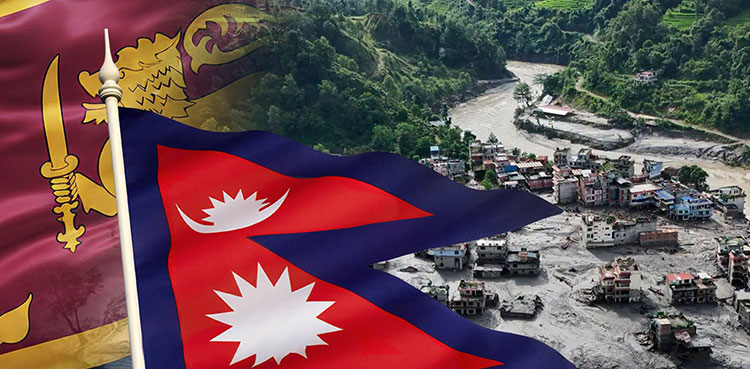
Sri Lanka was set to deploy disaster relief teams to flood-hit Nepal in the coming days, Deputy Minister of Defence, retired Major General Aruna Jayasekara, said.
He said the government had decided to send teams, comprising members of the Sri Lankan security forces, to assist relief operations in areas affected by the floods.
Speaking to the media in Anuradhapura, Jayasekara said arrangements were also underway to provide US$1 million in financial assistance to Nepal, on behalf of the Sri Lankan Government.
The Defence Ministry, in coordination with the National Disaster Management Relief Centre, is currently assessing Nepal’s requirements and determining the composition and deployment of the relief teams, he said.
By Hemantha Randunu
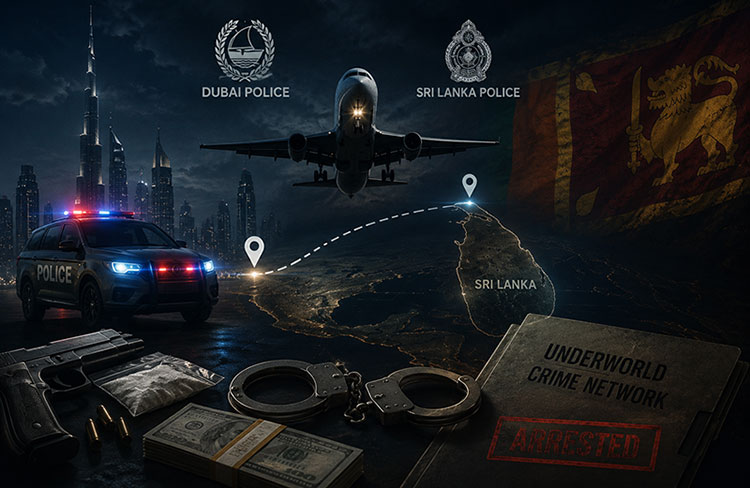
Nine Sri Lankan underworld figures, including notorious drug trafficker Gamange Saranga Pradeep alias Welle Saranga, who were arrested in Dubai during a joint operation involving Dubai Police and Sri Lankan law enforcement authorities, are expected to be brought back to Sri Lanka within the next few weeks, a senior police officer said.
The arrests were made after officers of the Central Criminal Investigation Bureau and the CID provided Dubai Police with information on the suspects and their alleged criminal activities.
Welle Saranga is wanted in Sri Lanka in connection with several serious offences, including alleged murders, large-scale drug trafficking, weapons smuggling and extortion, police said.
A team, headed by Central Criminal Investigation Bureau Director SSP Kamal Ariyawansa, had travelled to Dubai to assist local authorities in an operation targeting underworld figure Lalith Kannangara. During the operation, Sri Lankan officers also shared information on Welle Saranga with Dubai Police.
Following several weeks of investigations, Dubai Police arrested Welle Saranga and eight other Sri Lankan suspects who were staying at a luxury hotel in Dubai.
Police said cocaine, heroin and other narcotics were found in the suspects’ possession at the time of their arrest.
According to police, Welle Saranga had been operating large-scale drug trafficking networks, while residing in luxury hotels in Dubai. He is also alleged to have worked with drug traffickers in Iran, Afghanistan and Pakistan to arrange the shipment of narcotics to Sri Lanka aboard fishing trawlers.
Police further allege that he had arranged for a boat carrying narcotics and a consignment of modern firearms, including Mini Uzi-type weapons, to be sent to Sri Lanka. The vessel was later intercepted by the Sri Lanka Navy.
Welle Saranga is also wanted over the alleged shooting to death Ivoni Sudharshani Fernando in Modara, reportedly arising from a drug-related dispute. He has also been accused of directing several other killings in Modara, Mattakkuliya, Kotahena and surrounding areas, police said.
In 2022, he was arrested by Sri Lankan police while allegedly in possession of a Russian-made automatic firearm and live ammunition.
Police have also accused him of being involved in an attack in Mattakkuliya following a drug-related dispute, during which six houses and six three-wheelers were allegedly damaged and several people seriously injured.
Meanwhile, discussions have begun between Sri Lankan authorities and Dubai Police to expedite the repatriation of Welle Saranga and the other eight suspects, the senior police officer said.

Police warn of action over noise pollution

Lanka pledges $1 Mn aid, relief teams for Nepal

Welle Saranga among nine Lankan underworld figures to be brought back from Dubai

ADB-funded Thalaiyadi plant serves as blueprint for vulnerable dry zones in Sri Lanka

Protecting Sri Lanka’s natural heritage: The leadership we need for next 75 years

Empty pockets, belt-tightening

‘Dates have the highest sugar content to fight Coronavirus’

Sunday Island 27 December – Headlines

#SundayIsland 17th December – Headlines

Sunday Island – 28th March

Sunday Island Headlines – 21 March

Sunday Island – 21st February – Headlines
-

 News6 days ago
Missing doctor’s body found in Mahiyanganaya
-
 News6 days ago
Australia declines to release Finance Secy Suriyapperuma’s citizenship details
-

 News3 days ago
Eight politicians in drug kingpin probe
-
 News6 days ago
22A: BASL suggests CJ recuse himself from hearing petitions
-

 Business3 days ago
Sri Lanka opens up: A new season of direct connectivity
-
 Features5 days ago
Insights from Chieftains of Uva: Genealogy of two Kandyan Families – Part II
-

 Features1 day ago
“Wrap Me Up in My Blazer”— A Gentlemanly Bradby Reminiscence
-

 Features3 days ago
Redefining ageing in Sri Lanka