
Foreign News
Pakistan’s Imran Khan gets bail in state secrets case ahead of key election


Pakistan’s former Prime Minister Imran Khan has been granted bail in a case alleging he leaked state secrets, but he remains in jail on other charges ahead of the general election due in February.
The Supreme Court on Friday granted Khan bail in the case, but it was not clear how he could be released while serving a three-year sentence for corruption and facing other charges.
Khan – detained since August – alleges the powerful military is colluding with dynastic parties that have long dominated Pakistan to crush his political party and prevent him from standing for office.
The 71-year-old has been pummelled by a barrage of legal cases since being removed from office in April 2022 after falling out with the top brass, and has twice been jailed.
“The case has completely collapsed, and Imran Khan and Shah Mahmood Qureshi have finally been granted bail,” lawyer Salman Safdar told reporters outside court, referring to Khan’s former foreign minister who is being held in the same case.
Prosecutors allege the two leaders mishandled a diplomatic cable, known as cypher, sent by Pakistan’s ambassador to the United States. Both have repeatedly denied the charge, saying the cable was proof of conspiracy by the Pakistani military and the US government to topple his government in 2022 after he visited Moscow just before Russia’s invasion of Ukraine.
Washington and Pakistan’s military have denied the accusations.
A private trial in the cypher case took place inside jail until a legal challenge forced the court to restart open proceedings, with observers and media present.
On Friday, the Supreme Court in its short order said “there are not reasonable grounds for believing” that an offence under the colonial-era Official Secrets Act, which carries a possible 14-year prison term or death sentence, was committed by Khan.
“There are sufficient grounds for further inquiry into their guilt of said offence, which is to be finally decided by the learned trial court,” the top court said.
Khan’s Pakistan Tehreek-e-Insaf (PTI) party said he remains incarcerated over numerous separate corruption cases, with scant chance he will leave prison to contest elections due February 8.
“The prospect of him obtaining relief in the near future appears to be very slim,” party lawyer Khalid Yousaf Chaudry told AFP news agency.
The fate of politicians in Pakistan has historically ridden on their relationship to the military establishment, which has directly ruled the country on several occasions.
Pakistan is scheduled to hold its general election on February 8, 2024.
Khan was disqualified by the Election Commission of Pakistan (ECP) in August for five years following his conviction in a case related to illegal purchase and sale of foreign gifts he received as prime minister.
Khan approached the Islamabad High Court to set aside his disqualification. However, on Thursday, the high court rejected his plea, blocking his way to contest the upcoming election.
The former cricket star-turned-politician’s legal team is now expected to file an appeal in the Supreme Court to allow Khan to contest the election.
(Aljazeera)







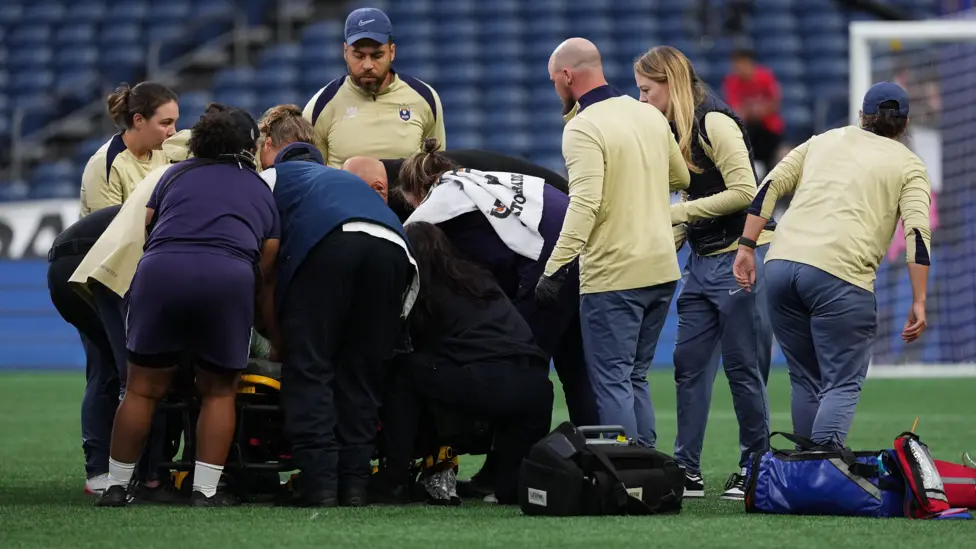
United States women’s national team player Savannah DeMelo is suing a hospital and two doctors after she suffered a cardiac arrest on the pitch last year.
Midfielder DeMelo, who has seven senior caps for the USA, has filed a lawsuit against University of Louisville Health (UofL Health) for negligence.
The 28-year-old, who plays for Racing Louisville, collapsed in the first half of a National Women’s Soccer League (NWSL) match on 14 September 2025.
According to documents seen by BBC Sport, the case was filed on Tuesday morning with Jefferson Circuit Court in Kentucky, where her club is based – a year and a day after her on-field collapse.
DeMelo’s filing claims UofL Health and two doctors, Dr Sarabjeet Suri and Dr Jennifer Daily, “failed to act as a reasonably prudent and competent medical practice, and such negligence was a substantial factor in causing DeMelo to suffer severe physical injuries, including, but not limited to, her cardiac arrest”.
Dr Daily, according to her online UofL biography, is Racing Louisville’s chief medical officer. The lawsuit states DeMelo was under the care of Dr Daily from January 2024 to July 2026.
It states that in March 2025, Dr Daily referred DeMelo to Dr Suri for “evaluation and treatment” after she had been complaining of chest pain, dizziness and shortness of air; Dr Suri obtained a history, performed a physical examination and ordered diagnostic tests.
Nearly six months later, DeMelo suffered the cardiac arrest.
“She was subsequently diagnosed and treated for ventricular tachycardia [an abnormal heart rhythm],” the suit states.
DeMelo, who has spent her entire professional career with Racing Louisville, has not played since her collapse.
In a post to her instagram page on Tuesday, De Melo – who was picked in the USA squad for the 2023 Women’s World Cup and started their first two games – marked the anniversary of the incident.
“A year ago today, while playing soccer, I collapsed due to an undiagnosed cardiac arrhythmia, that caused me to go into cardiac arrest,” she wrote.
“I respect and appreciate the privacy everyone has met me with while going through everything I have this year. I’ll never be able to fully put into words how emotionally hard this year has been. There has been a lot of uncertainty and emotions intertwined with it all.”
[BBC]

The Philippine Coast Guard says it has recovered 41 bodies from the wreckage of a ferry that caught fire this week, bringing the total death toll to 76.
More than 130 people were on board the MV June Aster when the blaze erupted on Wednesday as it neared its destination at the tourist hotspot of Coron, after departing from Manila.
The coast guard said on Saturday the number of survivors remained 43, with many receiving treatment in hospital, but 13 people remain unaccounted for.
Recovery of bodies had been hampered due to toxic fumes and lingering heat, which meant authorities were unable to board until Friday.
Geronimo Tuvilla, an official for the Philippine Coast Guard, said the priority was identifying victims and determining the cause of the blaze.
Kristine Ablana, a tourism official in Coron, said relatives were being asked to help identify family members through personal items and DNA testing.
“Once someone is able to verify that this photo or these belongings are indeed those of their relative, they will be asked to provide a DNA sample,” she said.
Coast Guard spokesperson Commodore Noemie Cayabyab said the fire began in a cargo hold before spreading.
She said survivors had described hearing a loud explosion, “the appearance of smoke and then fire. It spread very quickly”. She added that those who had made it off the ship did not have time to put on lifejackets.
A survivor who was hauled to safety on a rescue boat told the BBC he had heard frantic cries onboard when the fire erupted, and was trampled by panicked people as he tried to escape.
The ferry, built in 2002, held valid safety certificates and passed an enforcement inspection in March, but investigators are looking into potential manifest discrepancies, cargo loading integrity, and crew emergency response protocols, the Palawan Daily reported.
The vessel was carrying 117 passengers and 17 crew members.
Atienza Interisland Ferries, the vessel’s operator, has pledged full co-operation with the inquiry.
[BBC]
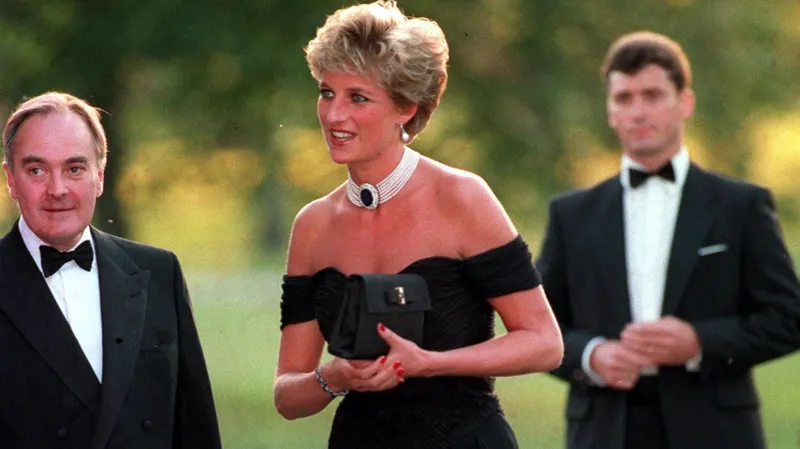
A dress worn by Princess Diana to a party in London hours after a documentary was televised in which the then-Prince Charles admitted to committing adultery during their marriage is going up for auction.
Her dramatic arrival at the Serpentine Gallery in 1994 in a custom-made black silk evening dress by designer Christina Stambolian became an iconic pop-culture moment.
The media dubbed her outfit the “revenge dress”.
Auction house Sotheby’s expects the dress to sell for up to £220,000 ($300,000) when it goes under the hammer on 9 December.
A press release from Sotheby’s said it is the first time the dress has been offered at auction since 1997, when the late princess sold 79 of her dresses to raise money for charities.
Morgane Halimi, Sotheby’s Global Head of Handbags and Fashion, said in a statement that Princess Diana “understood instinctively” that fashion can be a language in its own right.
“On her own terms, Princess Diana turned the dress into one of the most powerful messages she ever made, during one of the most scrutinised and emotionally charged episodes of her life,” Halimi said.
“She walked into a moment in which so much of her story was being told for her and, through what she chose to wear, reclaimed the narrative for herself.”

According to Sotheby’s, Anna Harvey, her stylist at the time, said Diana “wanted to look a million dollars”.
The princess made a last-minute wardrobe change for the fundraising dinner and chose the strapless evening dress by the Greek designer Christina Stambolian – which she accessorised with a royal jewel, a black clutch and black heels.
The vintage Jaguar XJ40 car that Diana arrived in at the event was sold at auction earlier this year for £66,250.
The revenge dress is expected to fetch a considerably higher price.
If it does, it will not be the first time an item from the princess’s wardrobe has sold for a significant sum.
Princess Diana’s sweater featuring a black sheep among rows of white ones was sold for £920,000 at an auction by Sotheby’s in New York in 2023.
[BBC]

Niroshan Dickwella in Sri Lanka’s T20I squad for the first time since 2021

ICC’s agenda for 2027-31: more T20Is, fewer bilateral ODIs

CIF, the world’s favorite multi-surface cleaning brand, arrives in Sri Lanka

A Joint Regional Initiative to Ensure the Digital Safety of Children

PM meets with IMF delegation

Ms. P. M. Jayadeera (Engineer) appointed Director General of Irrigation

‘Dates have the highest sugar content to fight Coronavirus’

Sunday Island 27 December – Headlines

#SundayIsland 17th December – Headlines

Sunday Island – 28th March

Sunday Island Headlines – 21 March

Sunday Island – 21st February – Headlines
-

 News7 days ago
US embassy won’t comment on IGP’s probe into joint drug raid
-

 News5 days ago
Shanakiyan urges urgent action over reported death sentence for Lankan in Saudi Arabia
-

 News6 days ago
Bid for Basil’s extradition nears final stage: Police
-

 News4 days ago
Namal Rajapaksa Buddhist gambit fails, bail denied
-

 Business7 days ago
All-new Bolero MaXX unveiled in Sri Lanka
-
 Opinion7 days ago
A journalist who wrote across the divide
-
 Features4 days ago
Why the spelling Sri Lankan names in English vary
-

 Features4 days ago
Three bands, a new identity: Sri Lankan wolf snake recognised as distinct species