
Sports
Dinsara shines as Sebs record scintillating win over Maliyadeva


Under 19 Cricket
by Reemus Fernando
Vimath Dinsara hogged the limelight with a century and an unbeaten 49 runs to lead St. Sebastian’s to seven wickets victory over Maliyadeva as the home team chased down a target of 94 runs in just 14 overs in the Under 19 Division I Two Day tournament Tier ‘A’ match at Moratuwa on Tuesday.
After skipper Manuja Chanthuka led the way with a four wicket haul to restrict the visitors to 147 runs in the second innings, the Sebs were left with a target of 94 runs to chase.
Dinsara who was the top scorer with 140 runs in the first inning, produced yet another top performance, an unbeaten 49 inclusive of three fours and three sixes. His knock came in 30 balls as he joined Chanthuka for an unfinished fourth wicket stand of 67 runs to seal the victory with seven overs to spare.
In the morning session, Dinsara added 80 runs to his overnight score as the Sebs’ last four batsmen accumulated 128 runs on day two.
Chanthuka and Malintha Silva collected match bags of six wickets each for the home team, while Thaveesha Balasooriya picked up five wickets for Maliyadeva.
The victory helps St. Sebastian’s take the top spot in the points table of the Tier ‘A’ tournament.
Meanwhile, the Tier ‘A’ match between S. Thomas’ and St. Servatius’ ended in a no decision after the home team reached 231 for seven wickets in reply to visitors’ 311 for seven wickets declared.
In a traditional match Zahira posted 311 runs for the loss of four wickets against Maris Stella as Roshan Careem scored an unbeaten century. Careem put on an unfinished stand of 162 runs for the fourth wicket with Mohamed Ijas who was not out on 84 runs.
Match Results
St. Sebastian’s beat Maliyadeva at Moratuwa
Scores:
Maliyadewa
200 all out in 61.4 overs (Gayana Weerasinghe 88, Vinuka Galappaththi 46n.o., Thaveesha Balasooriya 24; Manuja Chanthuka 2/40, Malintha Silva 3/50, Nadeesh Fernando 2/25) and 147 all out in 47.3 overs (Pansilu Ranasinghe 41, Dimantha Nisanka 23, Vinuka Galappaththi 28; Malintha Silva 3/22, Manuja Chanthuka 4/60, Navod Fernando 3/21)
St. Sebastian’s
126 for 6overnight 254 all out in 76 overs (Ushen Silva 21, Vimath Dinsara 140, Janaka Silva 23, Manuja Chanthuka 22, Malintha Silva 27; Gayana Weerasinghe 3/62, Thaveesha Balasooriya 5/56) and 94 for 3 wickets in 13.1 overs (Ryan Dissanayake 17, Vimath Dinsara 49n.o., Manuja Chanthuka 16n.o.; Gayana Weerasinghe 3/56)
St. Servatius’, S. Thomas’ ends in no decision at Mount Lavinia
Scores:
St. Servatius’
311 for 7overnight decl. in 83 overs (Risira Kithmura 21, Diniru Abeywickramasinghe 141, Raveen Kavintha 41, Chamarindu Nethsara 40, Viran Chamuditha 41n.o.; Abheeth Paranawidana 3/79, Ashen Perera 2/37)
S. Thomas’
231 for 7 in 77.5 overs (Thisen Eheliyagoda 62, Nathan Caldera 51n.o., Akash Fernando 47; Chalana Indusha 4/55)
Careem dazzles for Zahira at Negombo
Scores:
Zahira
311 for 4 in 73 overs (Thabith Rizficar 50, Umar Imran 37, Roshan Careem 109n.o., Mohamed Ijaz 84n.o.; Ramith Bandara 2/65)




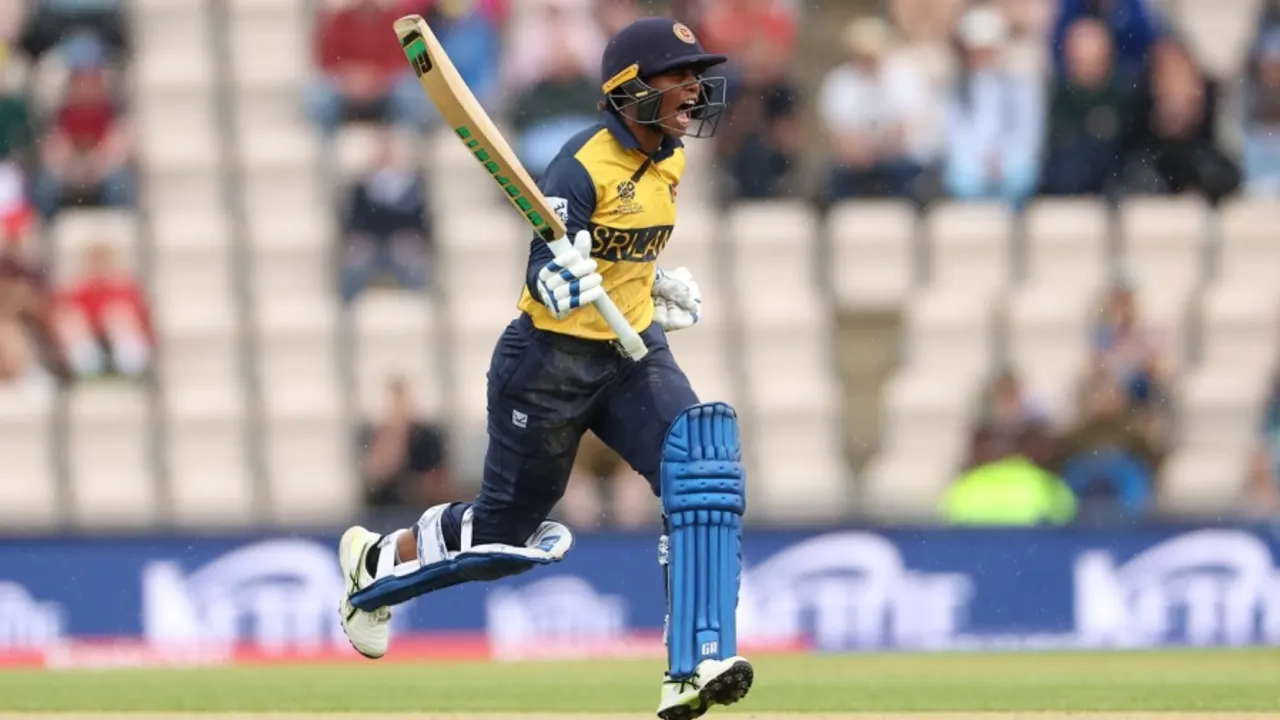
An outstanding fifth-wicket stand and an even better sixth-wicket partnership electrified a Sri Lanka chase and propelled them to a tight final-over win against New Zealand. Nilakshika Silva was the primary architect. Having arrived at the crease at 55 for 4, with the required rate soon climbing above nine, she produced her finest international innings – a perfectly-paced 54 not out off 37 that saw Sri Lanka to victory with two balls and five wickets to spare.
Nilakshika had serious support in the two partnerships she was involved in. Kavisha Dilhari joined her for a 50-run stand that repaired the innings, though New Zealand were still firm favourites when they were parted with 45 still needed off 30 deliveries. Kaushini Nuthyangana, who had already had a good game behind the stumps, then hit a nerveless 24 not out off 14, outpacing even Nilakshika during a stand that yielded 48 runs off 28 deliveries.
New Zealand were scuttled by their own poor catching again. Had Bree Illing held a sitter at short fine leg in the 10th over, Nilakshika would have been out for only 1, and New Zealand would have claimed five wickets in five overs. Their ground fielding also fell away during the last few overs, when Sri Lanka’s batters were beginning to reverse pressure effectively.
Their batting had also been reined in by a tight Sri Lankan bowling effort, in which the spinners imposed themselves. Sophie Devine and Melie Kerr hit 45 each, but 150 for 6 always seemed a little light on a Southampton surface that was a little slow, but remained largely good for batting.
The loss means New Zealand have lost their two opening matches, and must now treat games against England, Scotland, and Ireland as must-wins. Sri Lanka, meanwhile, are on the points table following their opening defeat at the hands of England. They will now prepare for the match against West Indies on Sunday. A victory there will set them up beautifully for a semi-finals push.
Nilakshika resurrects Sri Lanka
When Nilakshika arrived, Sri Lanka were down to their last three recognised batters, with 95 runs to get off 57 deliveries. It was clear she was timing the ball nicely from the outset, but she repeatedly had trouble piercing the infield and did not find her first boundary until the 13th ball she faced. Thankfully for Sri Lanka, Dilhari was buoyant through the early phase of this partnership, never allowing the required rate to climb too far out of reach.
After the 12th over, however, Nilakshika began to find the open spaces. There were fours through wide mid on and extra cover, and then a six over the head of Devine at deep midwicket, who could have pouched that catch had she stood closer to the rope.
A running mix-up, which perhaps was Nilakshika’s fault, cost Dilhari her wicket. But that only seemed to solidify the resolve within Nilakshika to see the chase through. She was magnificent through the last five overs, finding vital boundaries just as the pressure was mounting, while finding singles in between. With 28 runs needed off the last two overs, it was Nilakshika’s two boundaries off Melie in the 18th that swung the match more decisively in Sri Lanka’s favour. One was a bent-kneed square drive through cover point when Melie had hung the ball out wide. One was a sweep she blasted past Jess Kerr at fine leg.
Nuthyangana shines behind the stumps and with bat
Nuthyangana produced both Sri Lanka’s first piece of brilliance in this game, as well as their last. Her low catch to dismiss Isabella Gaze off the bowling of slinger Mithali Amodhya set the tone for a spirited Sri Lanka fielding performance. She would go on to claim two further catches – running hard towards fine leg to get under one high chance, plus an easier take to dismiss Brooke Halliday, though she did instigate the review that overturned the not out decision.
It will be for her batting that she will be remembered in this game, however. She’d had a high score of 19 not out in 10 T20I innings before this, but played a near-flawless finishing hand alongside Silva. Her first two boundaries came through wide long on, but crucially, she also found the singles and twos in between these bigger blows. With two required off three balls, she spanked one through square leg to spark beaming smiles and joyful celebrations in the Sri Lanka dugout.
Devine and Kerr hold NZ together
In the absence of Suzie Bates, Devine and Kerr were easily New Zealand’s most experienced batters, and they hit 45 apiece to keep the New Zealand innings above water. Kerr enjoyed a 49-run stand with Georgia Plimmer, though both batters failed to find frequent boundaries in the powerplay. Devine later led New Zealand through the middle overs, as Sri Lanka’s spinners found breakthroughs, striking at 150.
NZ’s four in four
New Zealand’s best passage in the game came between overs five and nine in Sri Lanka’s innings, in which they claimed four wickets for 10 runs. Offspinner Nensi Patel struck twice through this spell, eventually finishing with New Zealand’s best figures of 2 for 23. Bree Illing took the important wicket of Chamari Athapaththu, who made 27. The other wicket came from an excellent direct hit run out from Melie Kerr.
SCORES:
Sri Lanka Women 153 for 5 in 19.4 overs (Vishmi Guneratne 17, Chamari Athapaththu 27, Kavisha Dilhari 17, Nilakshika Silva 54*, Kaushini Nuthyangana 24*; Bree Illing 1-33, Nensi Patel 2-23) beat New Zealand Women 150 for 6 (Georgia Plimmer 18, Sophie Devine 45, Melie Kerr 45, Maddy Green 18*; Mithali Ayodya 1-24, Sugandika Kumari 1-28, Chamari Athapaththu 1-21, Nimasha Meepage 1-26, Kavisha Dilhari 2-35) by five wickets
[Cricinfo]

Rumesh Tharanga will head to the Doha Diamond League as the athlete to beat following a commanding victory at the Ostrava Golden Spike on Tuesday.
Fresh from his recent record-breaking exploits, Tharanga once again stamped his authority on the world stage, dominating the competition with three throws beyond the 85-metre mark. Remarkably, any one of those efforts would have been enough to secure victory.
The 23-year-old produced his best throw of 86.57 metres in the third round to claim top honours ahead of two-time world champion Anderson Peters, who finished second with a best effort of 84.27 metres.
Tharanga’s consistency throughout the competition underlined his status as one of the world’s leading javelin throwers. His latest triumph further strengthens his credentials ahead of the Doha Diamond League, where he is expected to be among the favourites alongside World champion Keshorn Walcott, two-time world champion Anderson Peters and world bronze medallist Curtis Thompson.
Tuesday’s victory continues a remarkable season for the former Peterite, who has emerged as a genuine contender on the international circuit with a string of world-class performances. [RF]

Chanuth Jayasinghaarachchi and Bihandu Hansana produced the most influential individual performances of the day as they guided their respective teams to convincing victories in the Under-17 Division I cricket tournament.
At Anuradhapura, Chanuth Jayasinghaarachchi led Dharmaraja College’s batting effort with a top score of 84 runs as they posted a formidable 282 all out against Sri Rahula College Katugastota. Supported by Mandil Gunawardhana (44), Deneth Abeyrathna (34) and Imash Galapitiya’s unbeaten 31, Chanuth’s innings laid the foundation for a dominant display. Dharmaraja’s bowlers then completed a comprehensive victory by dismissing Sri Rahula for 138, with Hiruka Ekanayake claiming 3 for 15.
Meanwhile, at Godagamuwa, Bihandu Hansana produced the bowling performance of the day, claiming an outstanding six wickets for 42 runs in his 10 overs to dismantle Sri Dharmaloka Kelaniya for 143. His remarkable spell overshadowed Chanul Nethsitha’s 47 and put St. Anthony’s Wattala firmly in control. The chase was completed comfortably as Sadeesha Kavinda blasted an unbeaten 38 off just 14 balls, including three fours and four sixes, steering St. Anthony’s to 145 for 5 in 28.3 overs.
At Henegama, Wesley rattled Henegama Central for 31 runs to record a 127 run win.
Wesley beat Henegama Central at Henegama
Scores:
Wesley 158 all out in 44.5 overs (Shamma Fernando 46, Chanuka Vidharshana 49, Thimira Senarathna 24; Sehas Damsiha 3/28, Danuna Shanilka 2/37, Janidu Imesha 4/32)
Henegama 31 all out in 23 overs (Charana Malimbada 2/11, Rehan Perera 4/11, Adhyaan Zian 2/02)
St. Peter’s beat Tissa Central at Kalutara
Scores:
Tissa Central 85 all out in 29.5 overs
(Sadew Wijesooriya 22; Mickhaeel Faleel2/26, Diyon Alwis 3/21, Lesan Perera 3/06)
St. Peter’s 87 for 6 in 24.4 overs (Hirun Noyah 22, Sashidu Silva 19, Diyon Alwis 20n.o.; Tharuka de Silva 2/10, Shenal Geenula 2/23)
Jaffna Hindu beat St. Thomas’ at Matale
Scores:
Jaffna Hindu 257 all out in 49.5 overs
(Balamuralitharan Anish 66, Nesaroopan Nerujan 77, Sivalogesan Sivakajeesan 50)
St. Thomas’ Matale 126 all out in 39.6 overs
Dharmaraja beat Sri Rahula at Anuradhapura
Scores:
Dharmaraja 282 all out in 44.5 overs (Chanuth Jayasinghaarachchi 84, Mandil Gunawardhana 44, Deneth Abeyrathna 34, Imash Galapitiya 31n.o.)
Sri Rahula 138 al out in 36.3 overs (Hiruka Ekanayake 3/15)
St. Anthony’s beat Sri Dharmaloka at Godagamuwa
Scores:
Sri Dharmaloka Kelaniya143 all out in 34.5 overs
(Chanul Nethsitha 47; Bihandu Hansana 6/42)
St. Anthony’s Wattala 145 for 5 in 28.3 overs
(Karindra Kujana 25, Sadeesha Kavinda 38n.o.)
(RF)

Nilakshika, Nuthyangana stun New Zealand to seal famous win for Sri Lanka

Showers will occur in the Western, Sabaragamuwa and North-western provinces and in Galle, Matara, Kandy and Nuwara-Eliya districts.

Tharanga heads to Doha as athlete to beat after Ostrava victory

Complaint of custodial deaths and torture submitted to UN

India provides military stores worth USD 5.5 mn to SL

India promotes INR-LKR settlement mechanism

‘Dates have the highest sugar content to fight Coronavirus’

Sunday Island 27 December – Headlines

#SundayIsland 17th December – Headlines

Sunday Island – 28th March

Sunday Island Headlines – 21 March

Sunday Island – 21st February – Headlines
-

 News5 days ago
CIABOC summons Yoshitha over his participation in British Navy training programme
-

 Sports2 days ago
Tharanga set for high-profile javelin clash in Ostrava
-

 News5 days ago
Justice Minister responds to social media claims he represented Easter Sunday ringleader
-

 News4 days ago
Commonwealth lawyers urge Lanka to uphold rule of law
-

 Features3 days ago
Politics of protected species
-

 News2 days ago
Theft of USD 2.5 mn from Treasury: CoPF accused of complicity in NPP cover-up
-

 News1 day ago
Beijing Capital Airlines to resume flights to Colombo signalling boost to tourism
-

 Features3 days ago
Of Whales and Submarines: Sri Lanka’s Security Dilemma