
Latest News
Suryakumar, spinners deliver comfortable series-levelling win

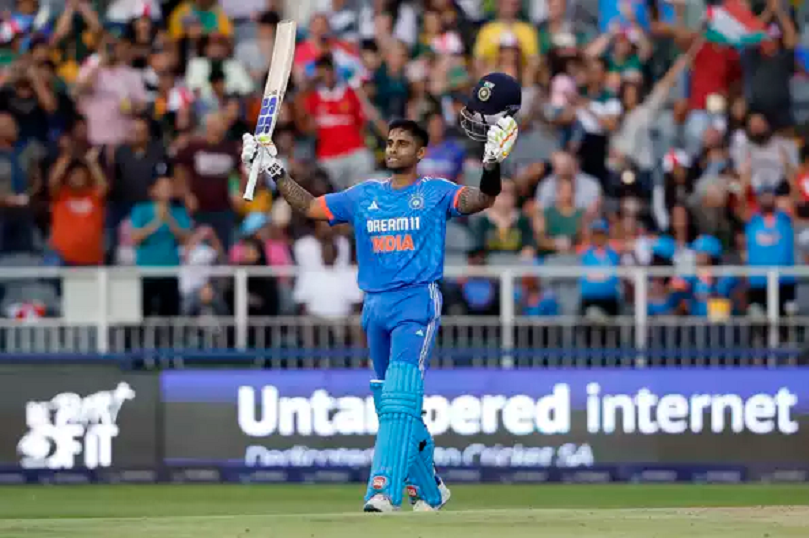
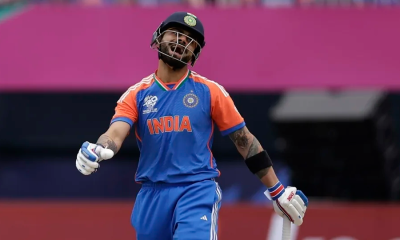
A captain’s knock from Suryakumar Yadav and a clinical bowling performance saw India hammer South Africa by 106 runs in the third T20I against South Africa at the Wanderers, Johannesburg on Thursday (December 14). The result meant that the T20I series ended at 1-1 after the opening game was washed out due to incessant rain. The contrasting conditions of the day-night game were on display as India piled on the runs during the sunny evening and once the lights took effect, there was enough movement for the new ball bowlers apart from the turn that the spinners extracted. Regular wickets meant that South Africa were never in the chase.
Given how different the conditions turned out to be across the two innings, you’d have expected the South Africa captain to have a bat first, given the batting friendly conditions on offer. However, having chased well in the last game, you couldn’t have faulted the decision. As they say, hindsight always look good.
Yashasvi Jaiswal and Shubman Gill got the visitors off to a flier with a flurry of boundaries in the first two overs. Debutant Nandre Burger started on an erratic note while Markram’s decision to share the new ball didn’t begin well either. India had gotten the perfect start to the innings in terms of momentum.
In his first game of the series, Keshav Maharaj made an instant impression. He got Shubman Gill LBW although the batter was unlucky with ball tracking showing it to be missing leg stump. Strangely, Gill who is trigger-happy when it comes to taking reviews, didn’t opt for one. Tilak Varma fell the very next ball as his attempts to go downtown only resulted in a miscue to mid-off. If India had landed the opening punch, South Africa had truly given an apt riposte.
India were in need of a partnership to turn things around. Jaiswal and Suryakumar provided just that. Jaiswal continued to bat with high-intent and found the boundaries while his captain took a backseat after an initial flurry. However, once he got his eye in, Suryakumar was also back to his menacing best as he plundered the bowling at will. The 13th over of the innings, bowled by Andile Phehlukwayo, went for a whopping 23 runs and it was the kind of momentum the Indian skipper was seeking to hit top gear.
The back end of India’s innings was solely about their skipper’s decimation of the bowling attack in his trademark fashion. Jaiswal fell in the bid to up the ante but that only spurred his partner to go harder. With the temptingly short square boundaries at the Wanderers, Suryakumar peppered them at will and in the process, brought up a record-equalling fourth century in T20Is. As is the case with any notable innings that he produces, this too was an exhibition of jaw-dropping strokeplay and powerhitting.
After 18 overs, India were 186/3 with Suryakumar going berserk and Rinku Singh well-set. A score in excess of 210 looked on the cards if not 215 but a flurry of wickets ensued as India eventually just limped past the 200-run mark. Burger redeemed himself a fraction with a terrific penultimate over while Lizaad Williams also backed it up with a streetsmart 20th over. Both bowlers were also helped by some outstanding ground-fielding with the catches of Suryakumar and Rinku being potential maximums on most days at this ground. India had put a solid score on the board but South Africa managed to end on a high.
Under lights, the Wanderers pitch looked a different demon from the one when India were batting. Mohammed Siraj got the ball to hoop around and bowled a maiden to start the innings, leaving Reeza Hendricks all at sea. Mukesh Kumar also started well with the movement on offer keeping both the pacers in the game.
Perhaps, it was the pressure of a big chase and the inability to start briskly, but both openers were guilty of gifting their wickets away. Breetzke went for a loose cut with no room on offer and dragged it onto the stumps while Hendricks took on Siraj’s arm with a quick single to mid-on, only to be found short with a direct hit. South Africa needed a solid platform to launch their chase but instead got a shaky beginning.
The one thing that was constant in both innings was the turn on offer for the spinners. It wasn’t extravagant but the variable bounce made it a tough ask, especially for South Africa’s batters who were tied down by Ravindra Jadeja’s accuracy and Kuldeep Yadav’s guile. Wickets fell regularly and within no time, the game was a no contest. The wrist spinner eventually helped himself to a five-wicket haul as South Africa’s batters imploded in sensational fashion. David Miller hit a few big shots but such was the nature of the implosion that there was little he could have done to take the game deep.
Brief scores:
India 201/7 in 20 overs (Suryakumar Yadav 100, Yashasvi Jaiswal 60; Keshav Maharaj 2-26) beat South Africa 95 in 13.5 overs (David Miller 35; Kuldeep Yadav 5-17, Ravindra Jadeja 2-25) by 106 runs









President Anura Kumara Dissanayake today (20) paid his last respects to the remains of Most Venerable Kappetiyagoda Siri Wimala Thera, Anunayake of the Sri Lanka Ramanna Maha Nikaya and Chief Incumbent of the Rajopawanaramaya Temple in Gatambe, Kandy, who passed away.
The President visited the Rajopawanaramaya Temple in Gatambe, Kandy, where the remains of the Thera are lying, and paid his last respects. He subsequently expressed his deepest condolences to the Maha Sangha and the temple’s Dayaka Sabha, who are mourning the passing of the Thera.
Central Province Governor and Consultant Physician Dr Harsha Suranga Fernando, Kandy District Secretary Indika Udawatta and several others were present.
President’s Media Division (PMD)

India opener Shafali Verma has received an official reprimand and a demerit point for breaching Level 1 of the ICC Code of Conduct during the second T20I against Zimbabwe on Sunday.
Shafali, an ICC release said, breached Article 2.2 of the ICC Code of Conduct for Players and Player Support Personnel, which relates to “abuse of cricket equipment or clothing, ground equipment or fixtures and fittings during an International Match.”
It was Shafali’s first offence in a 24-month period.
The incident occurred in the 12th over of Zimbabwe’s innings when Shafali threw the ball into the ground in frustration after dropping a chance at mid-off offered by Chipo Mugeri-Tiripano off Sree Charani.
Shafali admitted the offence and accepted the sanction proposed by match referee GS Lakshmi, which meant there was no need for a formal hearing.
Level 1 breaches carry a minimum penalty of an official reprimand, a maximum penalty of 50% of a player’s match fee, and one or two demerit points.
India currently lead the three-match series 2-0 with the third game to be played on Tuesday evening. The T20Is will be followed by three ODIs in Vadodara from October 23.
(Cricinfo)

A total of 146 players will be competing for 27 available slots in the WPL 2027 mini auction on October 28 in Kochi. Of these, England batter Sophia Dunkley and Australia captain Sophie Molineux are the only two players who have listed themselves at the maximum base price of INR 50 lakh.
The auction pool has 119 Indian players, including 22 capped and 97 uncapped players, with 20 slots available for Indian players. The overseas pool has 27 players – 14 capped and 13 uncapped – including six from Associate teams, with seven slots available.
G Kamalini (released by Mumbai Indians), Kiran Navigre (released by U P Warriorz), Heather Graham and Jess Jonassen have registered at the second-highest base price of INR 40 lakh, while a total of 30 players have registered at INR 30 lakh.
Among the notable absentees are West Indies allrounder Deandra Dottin, who was released by UPW, and Australia legspinner Alana King, who was released by Delhi Capitals. Lizelle Lee, who was DC’s highest run-scorer last season, has also not listed herself after being released by the franchise.
What the teams look like going into the auction
Only two English players – Dunkley and Kira Chathli (INR 10 lakh) – have registered for the auction, with several others, including Danni Wyatt-Hodge, Alice Capsey, Dani Gibson, Lauren Filer and Linsey Smith opting to skip the WPL next year.
Cricinfo has learned that England are likely to play three T20Is in Sri Lanka in early February, which will clash with the final week of the WPL. While the ECB is likely to allow players to stay in India to complete the tournament, most players have instead chosen to prioritise their international commitments ahead of the Champions Trophy later that month.
The relatively low salaries on offer at the WPL are also understood to be a factor in many English players deciding not to register, with most internationals earning significantly more to play in the Hundred (up to £190,000 last year) than the highest permitted base price in the WPL of INR 50 lakh (£40,000 approx).
Molineux was part of the Royal Challengers Bengaluru [RCB] title-winning squad in 2024, and had bagged 12 wickets in ten games at an economy rate of 7.31. She was retained by RCB for the 2025 season but a knee injury ruled her out of the season. Dunkley, meanwhile, played for Gujarat Giants [GT] in 2023 before opting not to register for the 2024 season. She went unsold in the 2025 auction.
Among the premier internationals who have listed themselves for INR 30 lakh are Australia allrounder Grace Harris (released by RCB), Sri Lanka captain Chamari Athapaththu, South Africa left-arm spinner Nonkululeko Mlaba and South Africa allrounder Chloe Tryon.
UPW, who released nine players, will go into the auction with the biggest purse of INR 3.75 crore.
[Cricinfo]

Import and Export (Control) Regulations No. 08 of 2026
Draft Bill of the Public Private Partnership Enterprises Act to be gazzetted
Amendment of the Ayurvedha Act No. 31 of 1961

Cabinet nod to amend the Sri Lanka Development Administration Institute Act No. 9 of 1982
Establishment of the National Higher Performance Centre
State patronage for the cremation ceremony of the late deputy prelate (Anu Nayaka Thero) of the Sri Laka Ramangya Maha Nikaya, Gatambe Rajopawanramadhipatha, Siri Chandawimala Wanshalankara, Chandrakeerthi Sri Amarawansha, Sadhdharmawageeshwara, Shasanashobhanna Most Venerable Keppetiyagoda Siriwimalabhidhana Thero

‘Dates have the highest sugar content to fight Coronavirus’

Sunday Island 27 December – Headlines

#SundayIsland 17th December – Headlines

Sunday Island – 28th March

Sunday Island Headlines – 21 March

Sunday Island – 21st February – Headlines
-

 Features3 days ago
Kotahena:A Small Enclave, An Extraordinary Legacy
-

 News7 days ago
Sri Lanka, India caught in US-Iran ship crisis
-
 News4 days ago
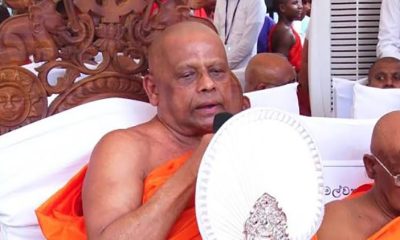
Asgiri Mahanayake calls for immediate release of Gnanasara Thera
-

 News3 days ago
Record 1,600 students take Russian Classical Ballet examination in Sri Lanka
-
 News6 days ago
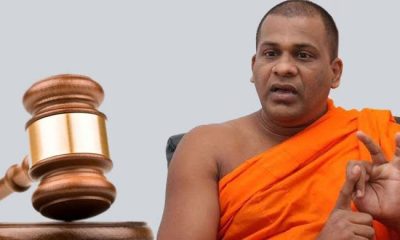
AC President recuses himself from hearing prison attire case pertaining to Gnanasara Thera
-
 News5 days ago
Naval officer testifies Yoshitha received Rs. 5.15 mn in salaries during SLN service
-

 Latest News7 days ago
Heavy showers above 100 mm are likely at some places in the Western, Sabaragamuwa, Southern, Central, and North-western provinces and in Anuradhapura district.
-

 News3 days ago
Karannagoda pushed for £24,536 for Yoshitha’s UK training, Court told