
Life style
New National Trust – Sri Lanka publication Jaffna Heritage


This publication completes the National Trust- Sri Lanka series on the North and East with publications on Mannar, Batticaloa and Island of Islands in response to many requests from the public. The orange-red cover reminds of Jaffna’s chaya root heritage as well as its distinctive font. It is however not just another coffee table book with beautiful images although the opening pages with Devaka Seneviratne’s stunning photography suggests it is so. This book celebrates Jaffna as a multicultural city, a “meeting point of cultures and languages” where the old “grid city” is almost lost in the urban sprawl.
Here is gathered a collection of articles from experts, mostly academics from the University of Jaffna together with several contributions from overseas , stretching from the west coast of the US to Europe and Australia, making it quite difficulty for the editorial team of Sarala Fernando, Stefan D’Silva and Dr Malik Fernando to hold the project together over the three years of gestation.
The substantive chapters are divided into two parts, first, the archaeology, architecture, art, culture, religion, philosophy, sociology, the diaspora, entrepreneurship and tourism and second, the biodiversity covering water, freshwater fishes, mangroves, marine resources, fisheries, palmyra, mango, birds, ponds and homegardens.
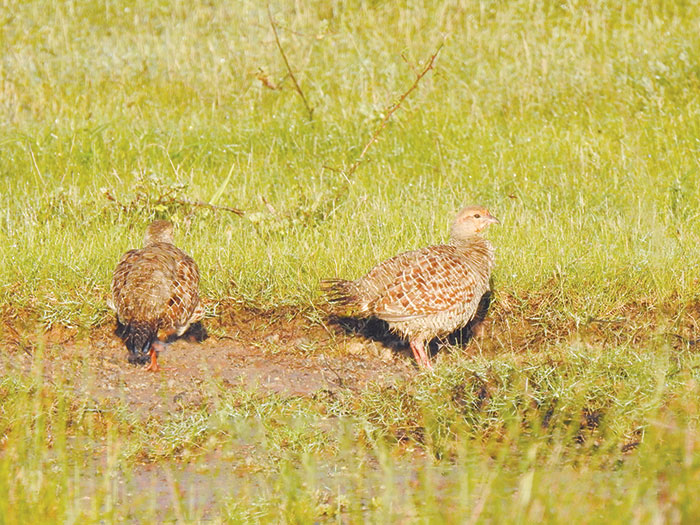
Gray Francolin Photo S. Wijayamohan
Each of the authors had been was left free to chose their own style of writing and some provided their accompanying photographs with the end result that the publication serves as a free flowing reference book despite some loss of conformity. The editors came with no preconceived objectives and their wish was simply to add to existing knowledge and stimulate more interest and publications on Jaffna.
A starting point was the acknowledgement that since ancient times, Jaffna has been connected to the outside world. This is illustrated by the opening section on Glimpses of History displaying the earliest maps including one rare version from 1587, as well as various archaeological sites, inscriptions, flags and paintings. Jaffna’s strategic location at the intersection of the ancient trans-oceanic routes enabled linguistic, cultural and trade links with south India through its string of seaports before 400 years of European colonial rule linked Jaffna with European cultures. Yet the Sri Lankan Tamils would boast of “a distinctive culture of their own which originated and flourished in Sri Lanka.” Professor Pushparatnam’s opening article on numismatics as related to Murukan worship in Sri Lanka suggests a bridge of connection between the North and South of the island.
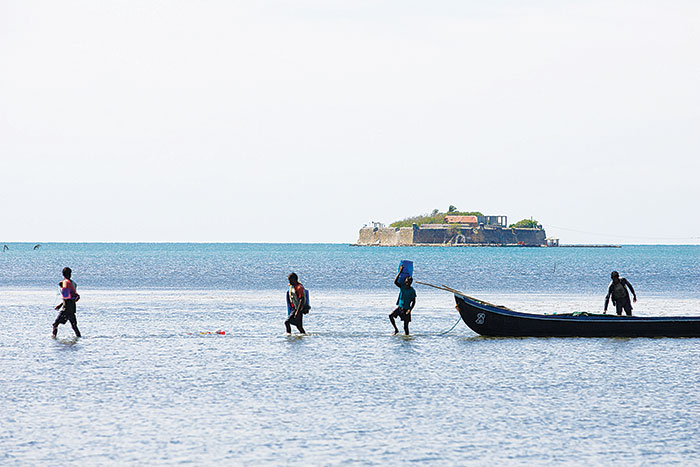
Fishermen with Fort Hammenheil in background Photo Devaka Seneviratne
The people of Jaffna find reflection in several articles, from migrating communities to the clash between tradition and modernity and the drive today for entrepreneurship and digital business. Although traditional house design in Jaffna guarded the privacy of women members of the family, today they are seen to be empowered, free to show their long tresses and ride bicycles without hindrance, unlike elsewhere in the region.
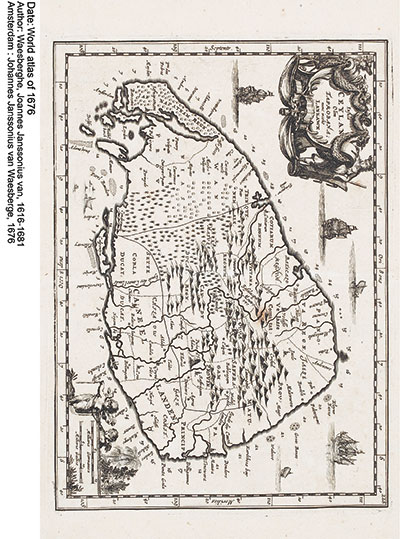
World Atlas 1676
For the diaspora which left during the years of conflict, Jaffna is an “ïmagined space” a place of natural beauty and warm sunshine where the palmyra and home gardens beckon those who have gone to take refuge in cold far-off lands and dream of return. For many, the Nallur Kovil and its annual festival performs the role of intermediary, bringing together thousands of celebrants from overseas and around Sri Lanka, probably the most important event in Jaffna today. Yet unlike elsewhere in the island, here strict regulation is maintained, punctuality observed and the pooja offering still costs only one rupee.
The second part of Jaffna Heritage focuses on the biodiversity and natural assets from fresh water fishes to mangroves, marine creatures and agricultural products like palmyra, banana and mango.
It is the heart of the book which pleads for the protection of Jaffna’s unique biodiversity in this era of rapid development ignoring the challenges of global climate change. Jaffna’s geography with singular characteristics, comprising both the mainland peninsula, 22 coastal islands, five coastal stretches and four lagoons offer critical habitats for many species of fauna and flora. The National Trust’s earlier publication Island of Islands describes how many of these islands have their own special history and natural heritage and have played a role since ancient times when local kingdoms and ports were part of a thriving network of Indian Ocean trade and cultural exchanges.
A central theme that runs through the book is a question – how will this proud heritage meet the challenges of the strong influences from our Big Neighbour across the water and from Colombo in the
South, and will cooperation or conflict prevail?
Authors: Jekhan Aruliah, Arumugam Kandiah, Gehan de Silva Wijeyeratne, Somasiri Devendra, Sarala Fernando, Raji
Gnaneswaran, Kristina Renee Hodelin, Asiff Hussein, Nahmagal Krishnapillai, R. Mayooranathan, P. Pushparatnam,
Pathmanathan Raghavan with Gayathri Pathmanathan, Arunthathy Ranganathan with Suhanya Aravinthon, Thulasitha
William Shanthakumar, Piratheepa Sivakumar, Hiranya Sudasinghe, Sanathanan Thamotherampillai, Mahendran Thiruvarangan,
S. Wijeyamohan with S. Jayasingam and G. Mikunthan.
Editorial Team: Sarala Fernando, Stefan D’Silva (photography),Dr Malik Fernando (Scientific Consultant)
Principal Photographers: Stefan D’Silva, Devaka Seneviratne, Studio Times, Luxshmanan Nadaraja, Steve Persighetti.
Available at National Trust office tel:2682730 and leading bookstores.

As the world celebrates the 100th birthday of Sir David Attenborough, tributes continue to pour in from scientists, conservationists, filmmakers, and millions of admirers whose lives were shaped by the legendary natural historian’s work.
But among the many messages shared this week, one deeply personal reflection from renowned Sri Lankan-born scientist Dr. Ruchira Somaweera has captured the true essence of the man behind the iconic voice.
“We all have people we look up to and hope to be like one day,” Dr. Somaweera wrote in a moving tribute marking Attenborough’s centenary. “For me, one of those people has always been Sir David Attenborough.”
The story dates back to 2013, when a BBC documentary crew visited to explore Dr. Somaweera’s pioneering work on freshwater crocodiles for a potential wildlife series. Although his research ultimately did not make it into the final production, the encounter led to something far more meaningful.
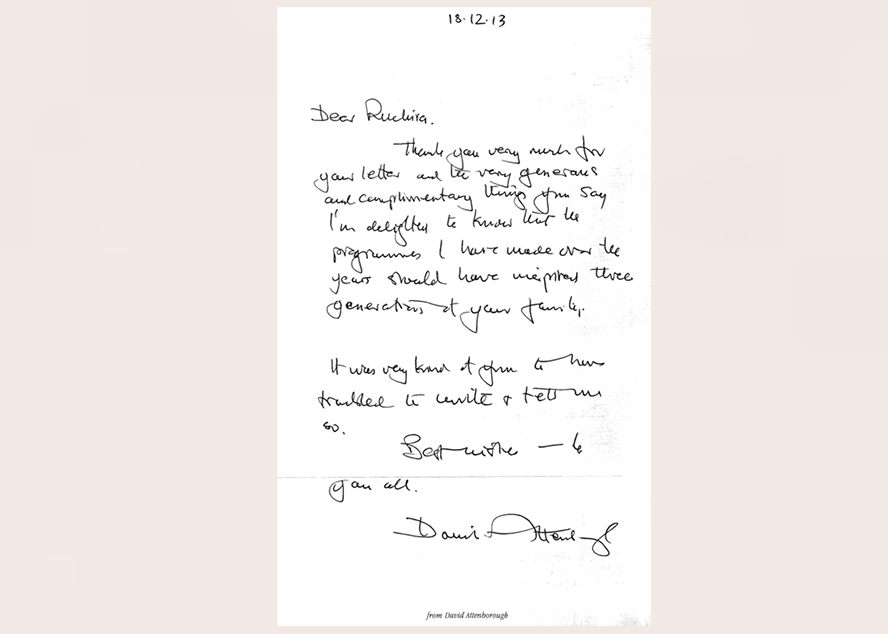
Through members of the crew, Dr. Somaweera sent Attenborough a card expressing gratitude for the profound influence he had on three generations of his family.
“What I never expected,” he recalled, “was to receive a handwritten letter from him just two weeks later, thanking me for the kind words.”
For Dr. Somaweera, the gesture revealed something extraordinary about Attenborough — not merely the global icon known to billions, but a deeply gracious and humble human being who still took time to personally respond to admirers, despite decades of worldwide fame.
“It said so much about the man behind the legend,” he reflected.
That quiet act of kindness perhaps explains why Attenborough’s influence extends far beyond television screens. Across nearly eight decades, he has become not only the world’s most recognisable natural history broadcaster, but also one of the most trusted voices in science communication and conservation advocacy.
From Life on Earth to Planet Earth, Blue Planet and countless other landmark productions, Attenborough transformed the way humanity sees the natural world.
He brought remote rainforests, coral reefs, deserts, mountains, and deep oceans into living rooms around the globe, inspiring generations to care about ecosystems they might never physically encounter.
Few communicators have bridged science and emotion with such extraordinary power.
For Sri Lankan scientists and conservationists, Attenborough’s impact has been especially profound. Many grew up watching his documentaries, developing an early fascination with wildlife through his storytelling.
Dr. Somaweera’s own career reflects that inspiration. Widely respected for his work on crocodilians, reptiles, and conservation biology, he has become an internationally recognised scientist whose research has contributed significantly to understanding freshwater ecosystems and reptile conservation.
Yet even accomplished scientists, it seems, can remain awestruck by the people who first ignited their curiosity.
The timing of Dr. Somaweera’s tribute also resonates strongly, following recent screenings of Attenborough’s powerful documentary Ocean, including an exclusive showing hosted by Spa Ceylon at SCOPE Cinema.
In the film, Attenborough reflects on humanity’s relationship with the sea with a sense of urgency sharpened by a lifetime of observation.
“After living for nearly 100 years on this planet,” he says, “I now understand the most important place on Earth is not on land, but at sea.”
The documentary explores the astonishing biodiversity of oceans while warning against destructive practices, such as industrial bottom trawling, climate change, and marine habitat destruction. But even amid alarming realities, Attenborough continues to offer hope grounded in science and collective action.
That enduring optimism may be one reason why his influence spans generations.
“Happy 100th birthday to a true giant of science communication, storytelling and conservation advocacy,” Dr. Somaweera wrote in his tribute. “The impact you have had on the world, and on countless young minds, is immeasurable.”
Indeed, for millions around the world, Attenborough’s voice became synonymous with wonder itself.
He taught humanity that the planet is not merely scenery, but a living system of intricate relationships — forests breathing for oceans, coral reefs feeding fisheries, plankton generating oxygen, predators maintaining balance, and every species playing a role in the fragile architecture of life.
At 100, Sir David Attenborough remains more than a broadcaster.
He is a witness to a changing planet. A storyteller for the natural world. And for many scientists like Dr. Ruchira Somaweera, a lifelong inspiration whose greatest legacy may lie not only in the documentaries he created, but in the curiosity, compassion, and responsibility he awakened in others.
By Ifham Nizam
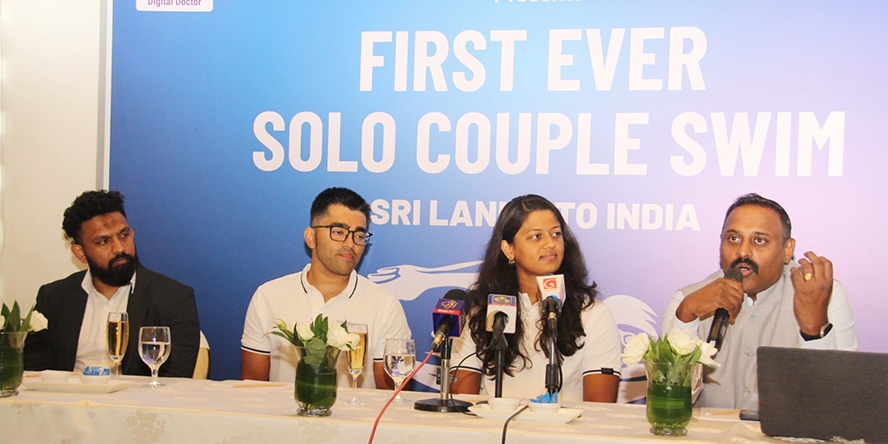
The first Lanka-India swim by a couple
Bengali couple,Vrushali Prasade and Danish Abdi, created history by undertaking the first ever Sri Lanka-India Ocean Water Swim, reflecting not only athlete excellence and endurance but also the deep rooted cultural and historical connection between India and Sri Lanka.
Sharing their thoughts, before the event, Vrushali Prasade and Danish Abdi expressed enthusiasm about their challenges. “We are excited to take this unique expedition and are proud to align it with a message of health and wellness. This expedition stands as a powerful symbol of unity.
The first even Sri Lanka-India Ocean Water Swim, presented by Manipal Hospitals, is not just another event, it is a bold endurance crossing of geography, grit and shared history between Sri Lanka and India.
This message was unfolded at a press conference held at the Kingsbury Hotel, before the event, by the officials of the giant Manipal Hospitals. The spotlight, however, firmly rested on the two swimmers, a couple, who brought this vision to life.
Vrushali Prasade and her husband Danish Abdi, in their 30s from Bengal are working in the IT industry. They learnt swimming only about four years ago, after first taking to waters during a holiday in the Maldives. The Island met them before their historic attempt.
Poised yet quietly determined, the swimmers embodied the spirit of the challenges ahead, At the press conference they spoke on true discipline, preparations and mental strength required to take on such a historic crossing.
Manipal Hospitals, India’s largest Pan Multi Speciality Hospital, are the main sponsors , symbolically connecting the two nations, India and Sri Lanka, through sport, healthcare and shared ambition.
The couple had previously swam the Indian Ocean as part of the rally but the recent Indian Ocean swim is their first solo couple effort and the longest. They were assisted by multiple boats, alongside paramedics and coast guards.
The Chief Operating Officer, Manipal Health Enterprise Karthik Rajagopal said this historic swim reflects not only athlete excellence and endurance, but also the deep rooted cultural and historical connection between the two countries, The swimmers Vrushali and Danish Abdi said, before the event: ” Swimming is for all ages whether you are a kid or a matured person, it is never too late to start for any age group. When asked about their challenges of undertaking such a historic feat, they said. “The Palk Strait is no gentle stretch of water, its currents are unpredictable, its tides restless . Unlike the the controlled calm of a swimming pool, the sea offers no guarantee, one moment they may bring a steady rhythm, the next, a surge that breaks it entirely. But we are excited to take on this unique expedition and proud to resonate the message of health and wellness to the world’
Fatigue, inevitably becomes a companion and also long hours in open water test not just muscle strength but mental resilience. Jellyfish often drift with currents making the calm swim into a painful endurance test.
“With limited visibility, we can suddenly brush against tentacles, turning a steady rhythm into a moment of sharp pain. In the vast unpredictability of the ocean, we have to chose whatever the sea offers.”
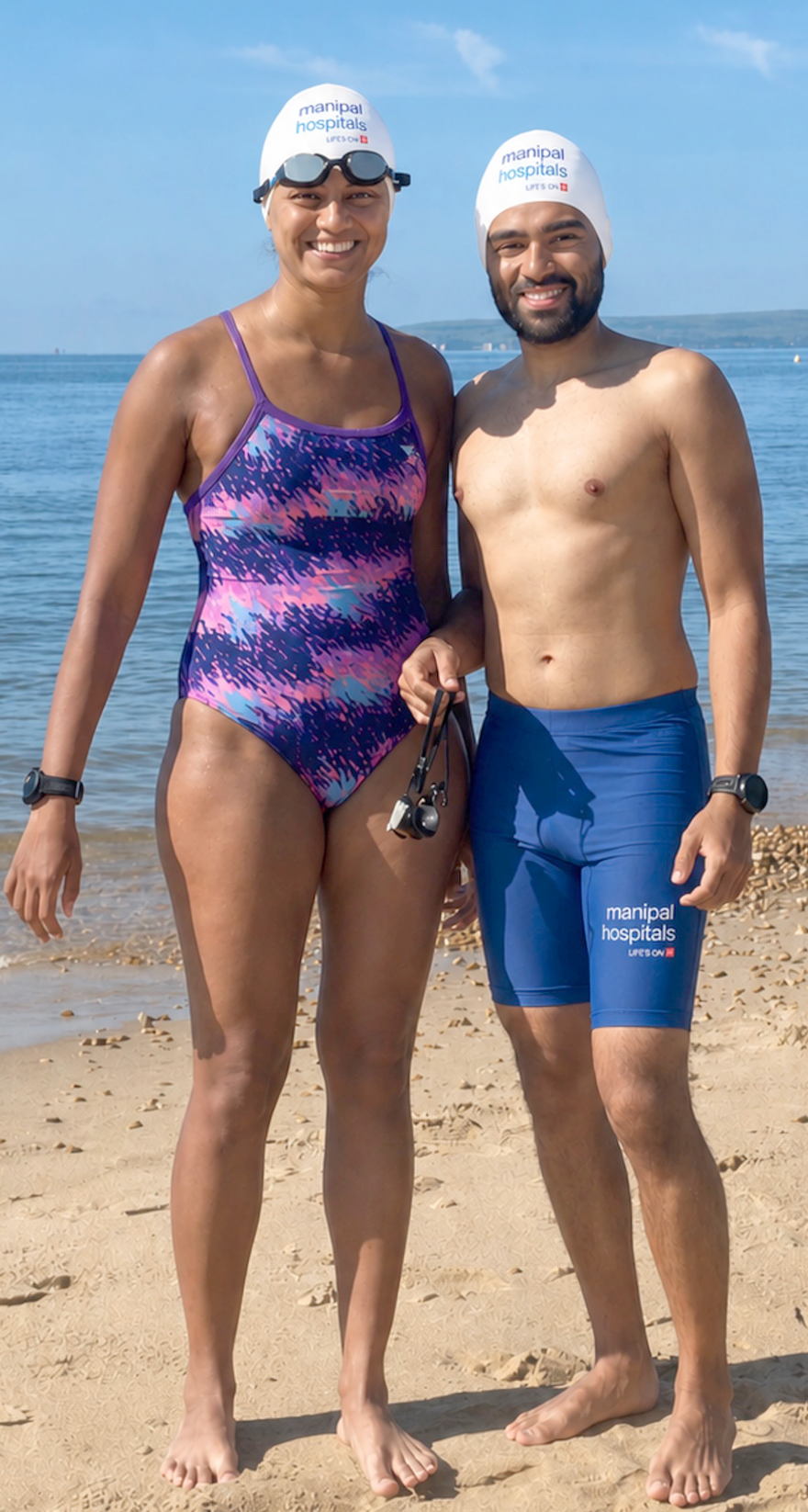
Vrushali Prasade and Danish Abdi: The young Bengali couple who conquered the ocean
They also said the route across the Palk Strait is deceptively complex. Though relatively shallow, those waters are known for shifting currents, strong tidal pulls and unpredictable winds. We cannot rely on a straight path, we move guided by pilots on escort boats who constantly adjust the direction based on the sea conditions. Then we have the unpredictability of the sea itself. Floating debris, sudden weather shifts and there is no wall to hold onto, no pause button only the rhythm of our stroke and breath. Vrushali and Danish expressed enthusiasm about these challenges . We are very excited to overcome all these challenges.’
‘Our decision, however, to take on the challenging stretch across the Palk strait is rooted in more than a personal achievement, said the couple. They spoke of the partnership aspect of the swim calling it both their biggest strength and unique challenge.
Behind the drama of the sea and the determination of the swimmers, lies a quieter crucial force,the medical backbone. As title sponsor, Manipal Hospitals was not merely lending its name to this event. They actively shaped the safety framework that make such a ambitious feat possible.
Manipal Hospitals is the largest Pan India Speciality Hospital network by bed capacity, boasting over 12,300. It is known for its expert medical expertise multi speciality care and commitment to patient centric care and also well connected to Sri Lanka’s medical and patient community especially for spine and oncology services.
Medical teams were stationed on escort boats equipped to respond instantly to issues ranging from hydration and hypothermia to jellyfish stings or muscle cramps. All in all the hospital’s participation underscores a broader message, promoting health, endurance sports and cross border collaboration.
In the end what the couple did places them in the same conversation as some of the world’s most daring open water swimmers, those who have conquered icy channels relentless tides and vast strong winds.
As the couple moved through the waters of the Palk Strait, their journey becomes a powerful metaphor for the relationship between Sri Lanka and India, two neighbours bound by history, culture and shared oceans. It is a quiet but powerful gesture of goodwill, reminding that while seas may separate lands, they can also bring them together.
By Zanita Careem
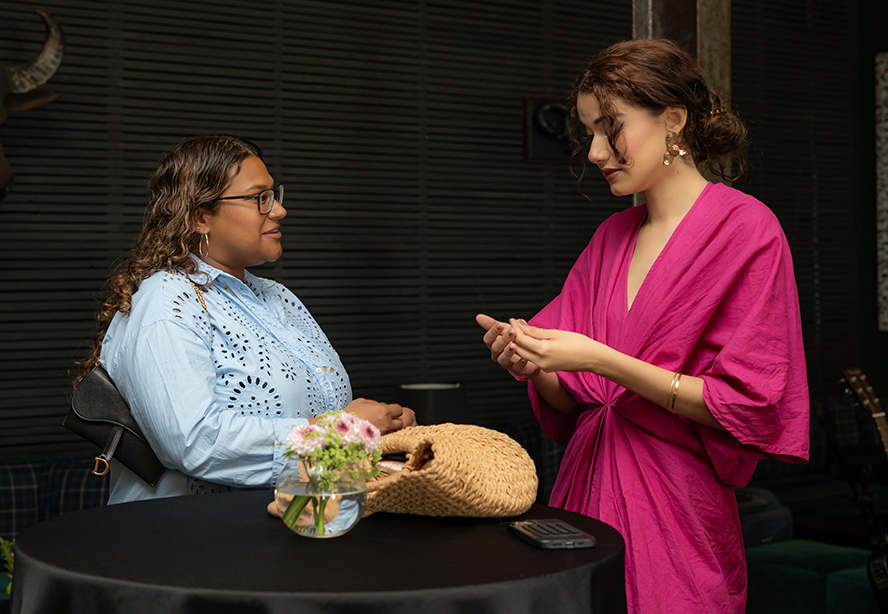
Limited-Time Saturday Brunch at 1864 Limited Edition
The spirit of leisurely weekend dining came alive recently as La Sérénité Saturday Brunch unfolded in elegant style at 1864 Limited Edition at the iconic Galle Face Hotel.Set against the timeless charm of Colombo’s most historic seaside hotel. guests were treated to an indulgent culinary afternoon where sophistication, flavour and oceanfront glamour blended seamlessly.
The heritage charm of Galle Face Hotel, with its polished floors, high ceilings and whisper of history, created a backdrop that is both grand and intimate.Within this setting the brunch emerges not just as a culinary offering but as a carefully orchestrated experience. At the heart of this orchestration was the vision of the General Manager Suresh Abbas. A veteran in the hotel industry, under his leadership, the culinary team delivered a menu for selected invitees, a menu that balanced European finess with contemporary flair .
From gourmet seafood and international delicacies to locally inspired creations and decadent desserts, the spread offered a luxurious journey for discerning brunch lovers.
The GM’s influence is most visible in the intangible details, The curated menu, personalised service and elegant ambience all echoed the hotel’s dedication to offering memorable gastronic experience.The brunch remained international in character while still grounded in place.
La Sérénité, a thoughtfully conceived brunch experience, at 1864 Limited Edition, brings together a sense of calm, continuity, and culinary storytelling within one of the city’s most enduring landmarks.
Set against the pace of a restless world, La Sérénité is designed as a quiet counterpoint, an invitation to pause, to gather, and to ease into the weekend with intention. Since 1864, Galle Face Hotel has existed within this paradox, offering a sense of stillness and reassurance even as the world around it has continually evolved. This brunch extends that legacy, creating a space where time softens, conversation flows unhurriedly, and presence takes precedence.
At its core, La Sérénité is not only about the experience of slowing down, but also about the stories we return to through food. The menu is conceived as a subtle journey through culinary history, drawing from moments across continents and generations, where dishes have been shaped by instinct, refinement, and time.
There is a quiet familiarity in this approach. Classics are not reimagined for novelty, but carefully refined, preserving their essence while elevating their form. The experience moves between contrast and balance, simplicity and indulgence, tradition and gentle reinterpretation. In doing so, it offers something both recognised and rediscovered.
In this way, La Sérénité becomes more than a brunch. It is a curated timeline of taste, an experience that brings together memory, familiarity, and thoughtful refinement within a setting that invites calm.
Presented as a limited-time experience, La Sérénité commenced on 2nd May and takes place every Saturday at 1864 Limited Edition.
-
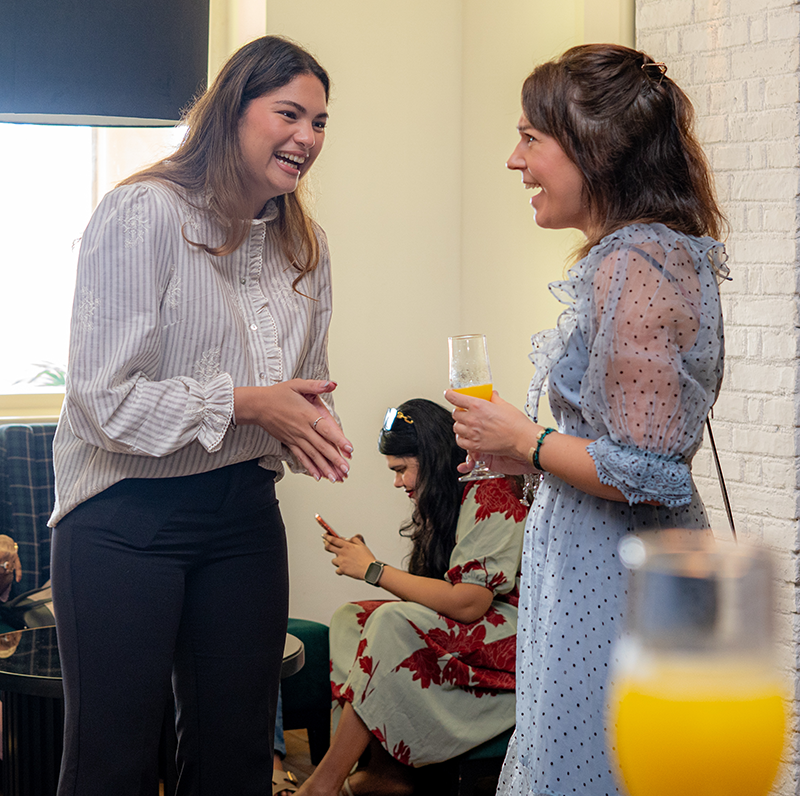
- Sheana Gardiner – where guests become part of the experience
-
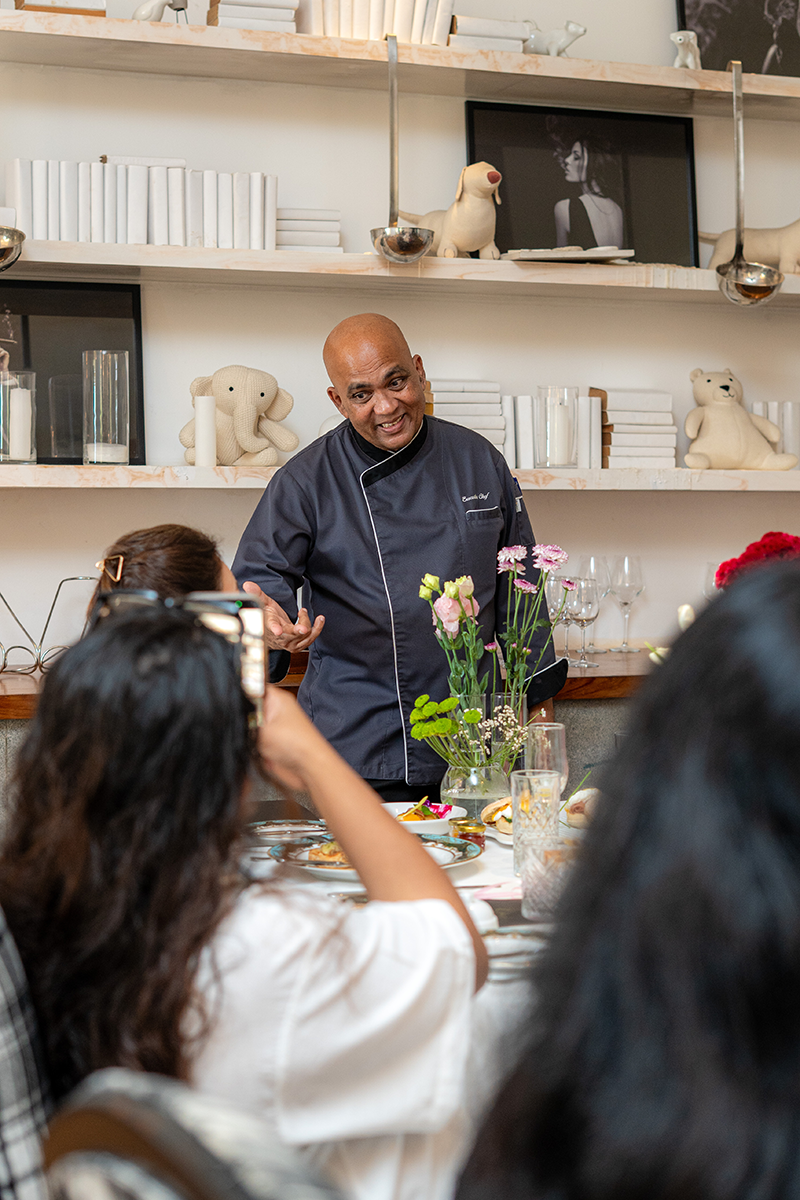
- Chef curating best menu
-
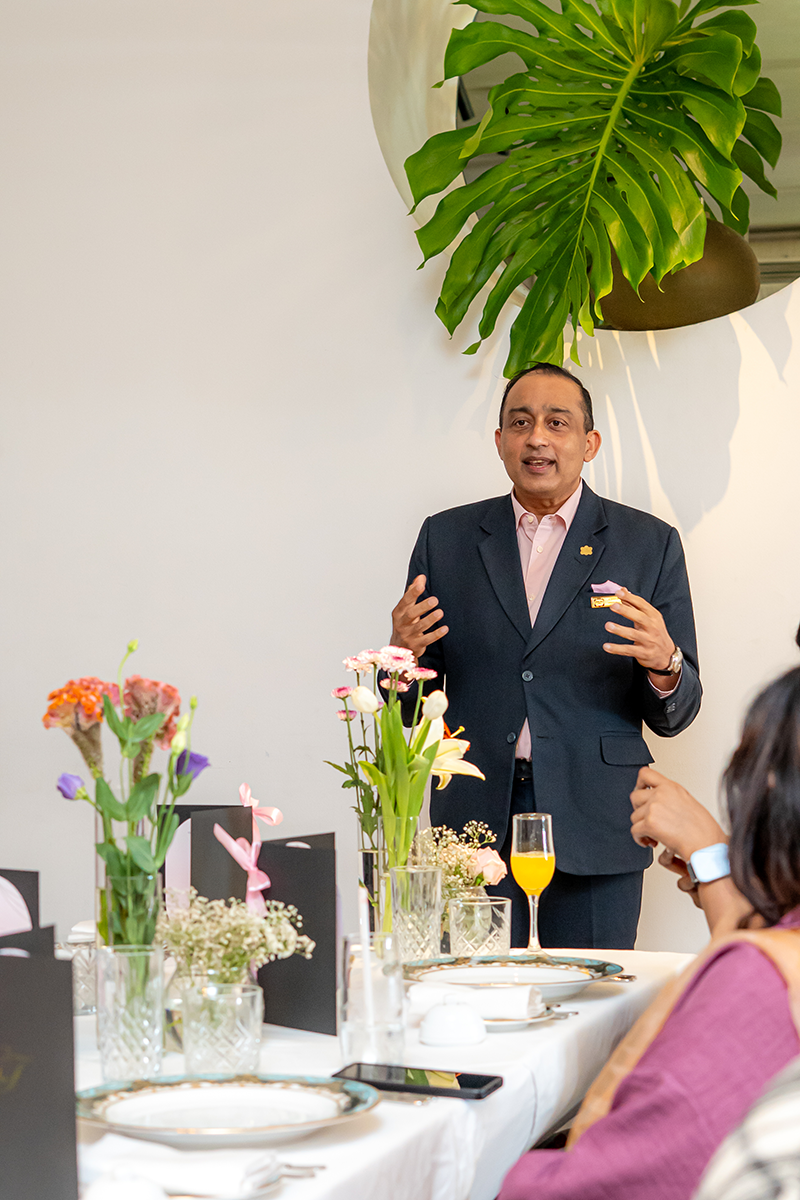
- GM’s vision in every detail
-
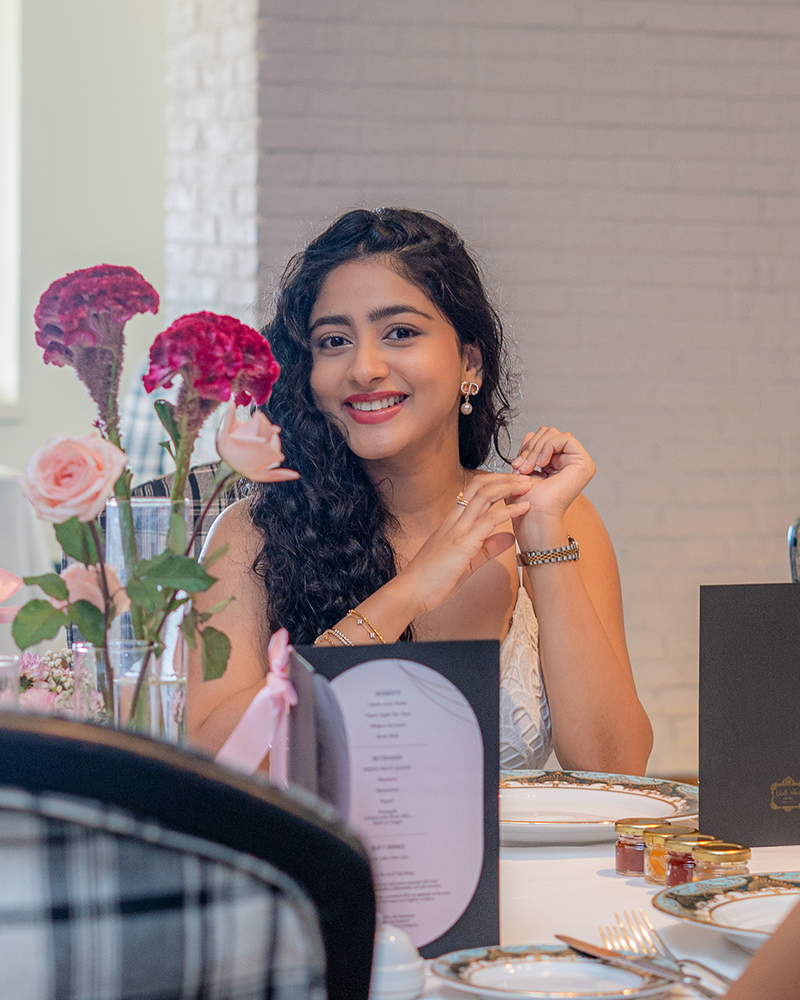
- Young invitee embracing timeless hospitality
-
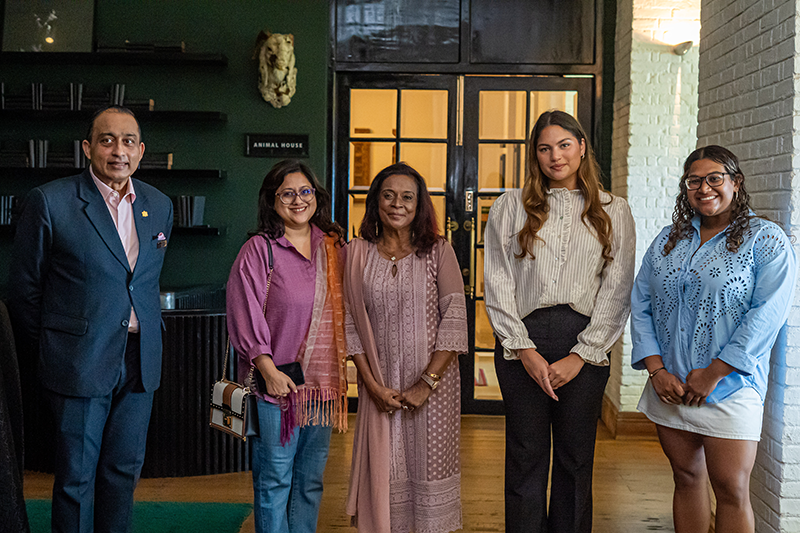
- Smiles, conversations, and exquisite plates … La Serenite brings people together

Philippine VP Sara Duterte impeached for a second time

US and French nationals test positive for hantavirus after leaving ship

Thailand’s divisive ex-PM is out of jail, but is the Thaksin era over?

Andy Flower fined for ‘use of an audible obscenity’ during Mumbai Indians clash

Royal Challengers Bengaluru eliminate Mumbai Indians and go top after tense finish

Car bomb attack and ambush in northwest Pakistan kill at least 21 police

‘Dates have the highest sugar content to fight Coronavirus’

Sunday Island 27 December – Headlines

#SundayIsland 17th December – Headlines

Sunday Island – 28th March

Sunday Island Headlines – 21 March

Sunday Island – 21st February – Headlines
-

 News5 days ago
MIT expert warns of catastrophic consequences of USD 2.5 mn Treasury heist
-
 News7 days ago
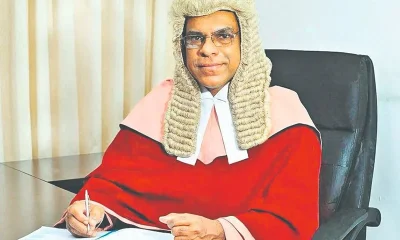
CJ urged to inquire into AKD’s remarks on May 25 court verdict
-

 News2 days ago
Lanka Port City officials to meet investors in Dubai
-

 Editorial5 days ago
Clean Sri Lanka and dirty politics
-

 Opinion7 days ago
Security, perception, and trust: Sri Lanka’s delicate balancing act
-

 Editorial4 days ago
The Vijay factor
-

 News3 days ago
SLPP expresses concern over death of former SriLankan CEO
-

 News6 days ago
Development Officer bids Rs. 48 mn for CPC’s V8 at auction