
News
New legislation for comprehensive regulation of microfinance institutions in Sri Lanka – Minister Wijayadasa Rajapakse


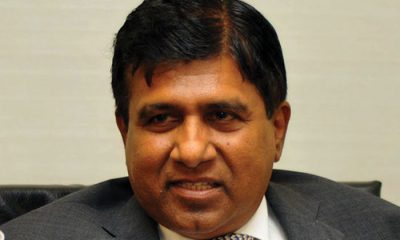
Minister of Justice, Prison Affairs and Constitutional Reform, Wijayadasa Rajapakse, unveiled plans to introduce a new legislative framework aimed at regulating microfinance institutions operating within the country.
Expressing deep concern regarding the unregulated status of certain microfinance entities, Minister Rajapakse emphasized the necessity for decisive measures. He underscored the intention to establish an independent regulatory institution, distinct from the Central Bank, dedicated to the oversight and effective regulation of microfinance entities.
Minister Rajapakse made these remarks on Monday (04) during a Press Briefing at the President’s Media Centre (PMC), under the under the theme ‘Collective path to a stable Country’.
The Minister further commented that the Ministry of Justice presently oversees the operation of 21 institutions, encompassing a diverse range of subjects, including law enforcement and law reform. With more than 1.1 million cases pending within the courts in the country, concerted efforts have been undertaken in recent times to mitigate delays in case adjudication. Substantial measures have been implemented to address the backlog and streamline the judicial process, with a particular focus on the establishment and operation of conciliation boards aimed at facilitating the expeditious resolution of select cases.
The Minister further stated that globally recognized expedited methods for resolving criminal cases stand in contrast to our nation’s outdate legal framework, resulting in prolonged durations for case resolutions. This delay in criminal proceedings represents a substantial issue, jeopardizing the administration of justice and leaving all parties involved without timely recourse.
To address this challenge, a draft law aimed at expediting the resolution of criminal cases is currently under development and is slated for submission to Parliament in January. In advanced jurisdictions, there is a paradigm shift towards non-custodial measures for individuals involved in minor offenses. Recognizing that incarceration, in many instances, is not the most suitable recourse, the new legal framework being proposed aims to explore alternatives. Notably, some individuals find themselves incarcerated due to societal oversights, and the proposed legislation acknowledges this by providing avenues for release on bail conditions. This approach aims to strike a balance between societal concerns and individual liberties, fostering a more nuanced and equitable criminal justice system.
The Office of Missing Persons currently manages a caseload of approximately 14,000 complaints. When assuming duties of this Ministry, only 62 complaints had been investigated. Presently, we have successfully concluded investigations for 4,795 complaints, reflecting a substantial improvement in case resolution. It is noteworthy that all outstanding complaints lodged with the Office of Missing Persons are slated for resolution by the coming year.
Furthermore, to fortify and enhance the efficiency of the judicial process, a comprehensive set of eight new bills is set to be submitted to Parliament.
Efforts are underway to establish a reconciliation society within each village, where government officials and politicians do not play a direct role. The activities of these societal initiatives, referred to as reconciliation societies, are guided by the preferences of elders and religious leaders within the respective villages. The responsibilities encompass the independent execution of tasks such as infrastructure development, including road construction and provision of electricity, rendering political involvement unnecessary.
The villagers take charge of organizing religious festivals, sports events and cultural celebrations, fostering a sense of community ownership and participation. The overarching vision is to seamlessly integrate each Grama Seva Division into a unified network, operating independently from external interference. The reconciliation society is entrusted with safeguarding the welfare and interests of the village, thereby ensuring the preservation and well-being of the community.
Presently, widespread discourse revolves around the state of the country’s economy, which has been adversely affected by various factors. The extensive toll on lives and property incurred during Prabhakaran’s war and the destructive actions of the JVP, including the burning of buses, transformers and over 25 courts, have significantly impacted the economic landscape. The repercussions of these incidents continue to reverberate, influencing the nation’s economic trajectory.
One pressing issue contributing to economic challenges is the unregulated proliferation of microfinance institutions, perceived as a substantial concern in the country. The absence of legal frameworks and regulatory oversight, coupled with the lack of registration with the Central Bank, has created an environment where individuals find it challenging to secure loans through conventional financial institutions due to their stringent rules. Consequently, many turn to microfinance institutions, exacerbating the existing economic predicament.
To address this concern, there is a pressing need to establish a dedicated regulatory body, separate from the Central Bank, to oversee and govern microfinance institutions. Efforts are underway to introduce comprehensive laws aimed at regulating these entities and mitigating the potential adverse effects they pose to the country’s economic stability. The goal is to instate a regulatory framework that ensures responsible and accountable practices within the microfinance sector, thereby contributing to the overall economic well-being of the nation.
(PMD)





Latest News
Landslide Early Warnings issued to the Districts of Badulla, Kalutara, Kandy, Kegalle, Kurunegala, Matale and Monaragala

The National Building Research Organisation (NBRO) has issued landslide early warnings to the districts of Badulla, Kalutara, Kandy, Kegalle, Kurunegala, Matale and Monaragala effective untill 2100hrs on 12th May 2026.
Accordingly,
Level II landslide early warnings have been issued to the divisional secretaries division and surrounding areas of Passara in the Badulla district.
Level I landslide early warnings have been issued to the divisional secretaries divisions and surrounding areas of Bandarawela in the Badulla district, Walallawita in the Kalutara district, Pasbage Korale, Akurana, Gangawata Korale, Panvila, Yatinuwara, Ganga Ihala Korale, Doluwa and Udapalatha in the Kandy district, Mawanella, Bulathkohupitiya, Yatiyanthota, Aranayaka, Kegalle and Rambukkana in the Kegalle district, Rideegama in the Kurunegala district, Rattota, Naula and Ambanganga Korale in the Matale district and Badalkumbura and Wellawaya in the Monaragala district.
News
Showers about 100 mm are likely at some places in the Western, Sabaragamuwa, Central, Uva, Southern, North-western, Northern and North-central provinces and in Trincomalee district.

WEATHER FORECAST FOR 11 MAY 2026
Issued at 05.30 a.m. on 11 May 2026 by the Department of Meteorology
The low-level atmospheric disturbance in the vicinity of Sri Lanka is likely to develop into a low-pressure area around the next 36 hours. Therefore, the prevailing showery conditions over the island are expected to continue during the next few days.
Showers or thundershowers will occur at times in most parts of the island and Cloudy skies are expected, under the influence of the aforementioned system. Heavy showers about 100 mm are likely at some places in the Western, Sabaragamuwa, Central, Uva, Southern, North-western, Northern and North-central provinces and in Trincomalee district.
The general public is kindly requested to take adequate precautions to minimize damage caused by temporary localized strong winds and lightning during thundershowers.

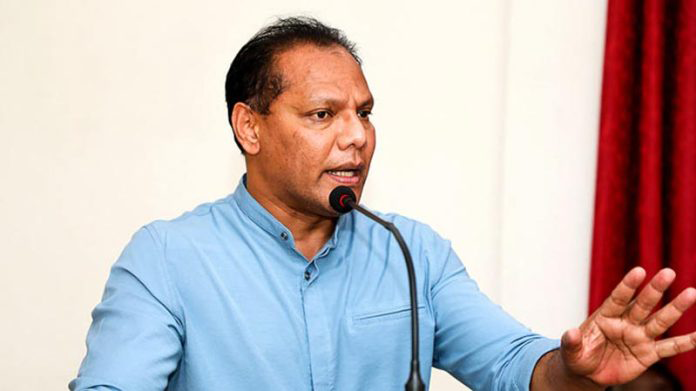
SJB MP Dayasiri Jayasekera has sought the intervention of the Inter-Parliamentary Union (IPU) to pressure the JVP-NPP government to respect the rights of the Opposition.
MP Jayasekera told The Island that they wouldn’t allow the NPP to suppress the truth regarding the theft of Treasury funds amounting to USD 2.5 million. He accused Speaker Dr. Jagath Wickremaratne of depriving the Opposition of its legitimate rights, at the behest of the government.
Jayasekera said that the Speaker’s conduct regarding the action taken against Deputy Secretary General of Parliament Chaminda Kularatne, too, had been brought to the notice of IPU and other international associations.
The text of MP Jayasekera’s letter to the Secretary general of IPU: “I respectfully submit this petition seeking the attention and intervention of the Inter-Parliamentary Union concerning a matter affecting parliamentary accountability, the rights of elected representatives, and the proper functioning of constitutional oversight within the Parliament of Sri Lanka.
On 06 May 2026, I Dayasiri Jayasekara MP submitted a formal request to the Hon. Speaker of Parliament seeking permission, under the Parliament (Powers and Privileges) Act No. 21 of 1953 and Standing Order 29(1), to raise a question of privilege regarding alleged constitutional and parliamentary violations by Mr. Harshana Suriyapperuma, Secretary to the Treasury of Sri Lanka.
The proposed privilege motion raised matters including:
1. Alleged violations of Articles 148, 149, and 150 of the Constitution of Sri Lanka concerning parliamentary control over public finance;
2. Alleged failure to report to Parliament concerning a controversial and unlawful transfer of approximately USD 2.5 million from the Treasury;
3. Alleged non-compliance with parliamentary committee procedures under the Standing Orders of Parliament;
4. Questions relating to constitutional eligibility under Article 91(1)(d)(xiii) of the Constitution concerning dual citizenship and qualification to sit and vote in Parliament;
5. A request that the matter be referred to the Parliamentary Ethics and Privileges Committee established under Standing Order 118.
Despite the seriousness of the constitutional and parliamentary issues raised, the Hon. Speaker declined permission for the privilege issue to be raised in Parliament.
It is respectfully submitted that this refusal has the effect of:
• Preventing an elected Member of Parliament from exercising his parliamentary oversight function;
• Restricting parliamentary scrutiny over matters involving public finance and constitutional accountability;
• Undermining the privileges of Members of Parliament to raise matters of urgent public importance;
• Limiting institutional transparency concerning allegations involving senior state officials.
The right of parliamentarians to raise questions of privilege and matters relating to constitutional governance is an essential component of parliamentary democracy and legislative independence. The refusal to permit even the presentation or preliminary consideration of such a matter raises serious concerns regarding parliamentary accountability mechanisms in Sri Lanka.
Accordingly, I respectfully request that the Inter-Parliamentary Union:
1.Take cognizance of this matter as one affecting the rights and functions of Members of Parliament;
2.Seek clarification from the relevant parliamentary authorities in Sri Lanka regarding the grounds upon which the privilege motion was disallowed;
3.Consider whether the refusal is compatible with internationally recognised principles of parliamentary democracy, accountability, and freedom of parliamentary speech;
4. Encourage the Parliament of Sri Lanka to ensure fair and transparent procedures governing parliamentary privilege motions and constitutional oversight.
I further request that this communication be placed before the appropriate committee or mechanism within the IPU dealing with the rights and duties of parliamentarians.”

Landslide Early Warnings issued to the Districts of Badulla, Kalutara, Kandy, Kegalle, Kurunegala, Matale and Monaragala

Philippine VP Sara Duterte impeached for a second time

US and French nationals test positive for hantavirus after leaving ship

Thailand’s divisive ex-PM is out of jail, but is the Thaksin era over?

Andy Flower fined for ‘use of an audible obscenity’ during Mumbai Indians clash

Royal Challengers Bengaluru eliminate Mumbai Indians and go top after tense finish

‘Dates have the highest sugar content to fight Coronavirus’

Sunday Island 27 December – Headlines

#SundayIsland 17th December – Headlines

Sunday Island – 28th March

Sunday Island Headlines – 21 March

Sunday Island – 21st February – Headlines
-

 News5 days ago
MIT expert warns of catastrophic consequences of USD 2.5 mn Treasury heist
-
 News7 days ago
CJ urged to inquire into AKD’s remarks on May 25 court verdict
-

 News2 days ago
Lanka Port City officials to meet investors in Dubai
-

 Editorial5 days ago
Clean Sri Lanka and dirty politics
-
 Opinion7 days ago
Security, perception, and trust: Sri Lanka’s delicate balancing act
-

 Editorial4 days ago
The Vijay factor
-
 News3 days ago
SLPP expresses concern over death of former SriLankan CEO
-

 News6 days ago
Development Officer bids Rs. 48 mn for CPC’s V8 at auction