
Business
Dialog Axiata Surpasses 200,000 Users on Sri Lanka’s largest 5G Trial Network


Dialog Axiata PLC, the first telecommunications service provider in the South Asian region to demonstrate 5G capabilities in 2018, has enabled over 200K Sri Lankans to experience the power of 5G on Dialog’s 5G Trial network.
Customers connecting to Dialog’s 5G trial network can get the opportunity to experience the extraordinary potential of 5G technology, along with download and upload speeds of up to 1Gbps. Further, Dialog Roaming customers can take advantage of 5G roaming services, with over 100 operators in more than 50 destinations now offering seamless 5G connectivity, including the latest addition, India. Dialog’s 5G trial network, recognised as Sri Lanka’s largest 5G trial network, spans over 70 locations across the country, including Colombo and several key cities, as listed on www.dialog.lk/5g. To mark this momentous occasion, Dialog is presenting its customers with compatible 5G devices a monthly 5GB free data allocation, allowing them to explore the limitless possibilities of 5G on Dialog’s network.
This announcement follows a range of 5G milestones and firsts in South Asia and Sri Lanka, including the first-ever trial of the Voice over 5G (VoNR) service on a Standalone 5G trial network in Sri Lanka, enabling 5G for Apple iPhone Users for the first time in Sri Lanka, the deployment of the region’s first 5G trial network, the first 5G Standalone (5G SA) network trial, and the first standards-based 5G fixed-wireless pilot transmission in December 2018. Dialog remains committed to pioneering technological advancements in the nation and the region in line with its brand promise of delivering ‘The Future. Today.
At the forefront of innovation, Dialog has transformed the communication landscape in Sri Lanka with state-of-the-art technologies, ushering in a wave of seamless connectivity. The Dialog 5G network, boasting speeds up to 1Gbps, spans over 70 locations, offering Apple and Android users 5GB free data monthly. Moreover, eSIM technology, compatible with iOS and Android, facilitates dual sim functionality, global travel adaptability, and stand-alone connectivity for smartwatches and fitness trackers.
The pioneering One Number service integrates eSIMs with Apple Watch Cellular models, enabling calls and internet access without an iPhone nearby. VoWiFi enhances call quality for capable devices, seamlessly switching between Wi-Fi and 4G VoLTE. Further, Dialog’s extensive VoLTE network ensures instant call setup, HD voice quality, and uninterrupted data browsing during calls. Customers can visit www.dialog.lk/5g to stay updated as Dialog expands its 5G trial network to more locations.








Business
Indian export delegation engages with Sri Lankan businesses and SMEs at Ceylon Chamber B2B session

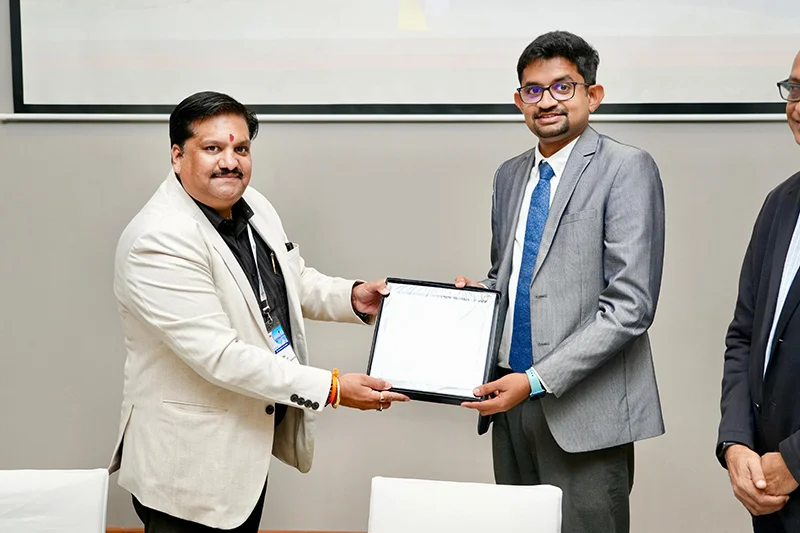
The Ceylon Chamber of Commerce hosted a Business-to-Business (B2B) and networking session for a 31-member business delegation from the Federation of Indian Export Organisations (FIEO), India’s apex export promotion organisation, during its visit to Sri Lanka from 8–10 July 2026.
The delegation comprised small and medium enterprises from sectors including pharmaceuticals, engineering goods, apparel and textiles, food and agricultural products, and infrastructure. The session was organised by the Ceylon Chamber in collaboration with the Indo Lanka Chamber of Commerce and Industry (ILCCI), established under the Ceylon Chamber’s network to promote business engagement between Sri Lanka and India.
The engagement provided a platform for participating Indian and Sri Lankan companies to connect directly, exchange market insights, and explore potential opportunities for trade, partnerships, and business collaboration across multiple sectors. Discussions focused on identifying areas of mutual interest, including sourcing opportunities, market expansion, and potential commercial linkages.
The participation of Indian SMEs from diverse industries highlighted the growing interest among exporters to explore Sri Lanka as a market and regional business partner. For Sri Lankan companies, including SMEs, the engagement provided an opportunity to connect directly with Indian businesses and identify potential avenues for expanding trade relationships.
The Ceylon Chamber, through its network and market access initiatives, continues to support businesses by creating opportunities for direct engagement with international counterparts, helping companies identify new markets, partners, and commercial possibilities.
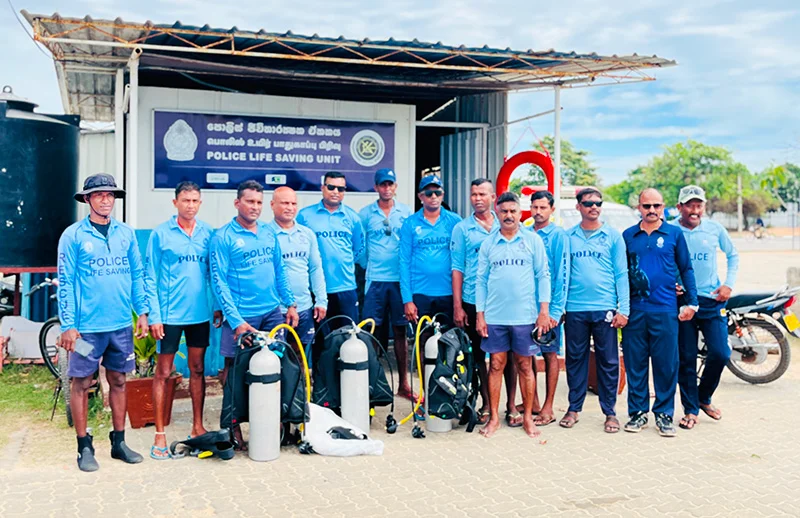
A massive underwater cleanup operation to mark World Ocean Day has removed nearly 2.4 tonnes of marine debris from the seabed of Trincomalee’s Dutch Bay, highlighting both the growing threat of marine pollution and the power of collective action in safeguarding Sri Lanka’s rich coastal ecosystems.
The National Underwater Cleanup Initiative, organised by Clean Ocean Force in partnership with the Marine Environment Protection Authority (MEPA), NDB Bank, and the Earthlanka Youth Network, brought together six professional dive centres, the Sri Lanka Police Life Saving Unit – Trincomalee Dive Team, and scores of volunteer divers in one of the country’s largest coordinated underwater conservation efforts.
The cleanup, held recently, saw teams carrying out multiple dives throughout the day to retrieve a wide range of waste that had accumulated beneath the surface. Divers recovered plastic waste, rubber gloves, discarded clothing, fishing-related debris and other mixed refuse scattered across the seabed.
Organisers said the underwater environment had suffered considerable damage following Cyclone Ditwa, with large volumes of debris deposited across Dutch Bay, posing serious threats to marine life, coral habitats and the wider coastal ecosystem.
The initiative mobilised divers from Scuba Diving Sri Lanka, Kalpitiya Diving Centre, the Sri Lanka Police Life Saving Unit – Trincomalee Dive Team, Pigeon Island Diving Centre, Sri Lanka Diving Tours, Weligama Bay Dive Centre, Blue Deep Diving Centre, and Blue Water Diving Centre.
Working shoulder to shoulder with volunteer divers and marine conservationists, the Sri Lanka Police Life Saving Unit – Trincomalee Dive Team played a pivotal role in ensuring the success of the operation. Their professionalism, underwater rescue expertise and commitment to environmental stewardship significantly strengthened the large-scale cleanup effort, enabling teams to safely recover nearly 2.4 tonnes of marine debris from the seabed.
Chairman and Co-founder of Clean Ocean Force, Jerome Fernando, said the real condition of the oceans often remained hidden beneath the surface.
“The true health of our oceans lies beneath the surface. Every kilogram of waste removed from the seabed helps protect marine biodiversity and preserve our oceans for future generations. This initiative highlights the power of collaboration, and we thank all partners and volunteers who contributed to this effort. Together, we can create a cleaner and healthier ocean for Sri Lanka, he said.
Sudarsha De Silva, a long-standing participant in the programme, said the Trincomalee cleanup had now become a significant annual conservation event.
“This unique initiative is taking place for the third consecutive year in Trincomalee. Under the leadership of Clean Ocean Force, we have proudly participated over the past three years to celebrate World Ocean Day. We sincerely thank Clean Ocean Force for initiating this annual programme, he said.
By Ifham Nizam
Business
LOLC Al-Falaah launches Sri Lanka’s first structured Tawarruq-based personal finance solution

Further strengthening its position as Sri Lanka’s leading alternate financial services provider, LOLC Al-Falaah has introduced “Al-Falaah Tawarruq for Personal Finance,” the country’s first structured Tawarruq-based Islamic liquidity solution. The launch marks a significant milestone in the evolution of Sri Lanka’s Islamic finance landscape, offering customers a practical and ethically grounded avenue to access liquidity.
Developed in response to the growing demand for alternate financial solutions, Al-Falaah’s Tawarruq for personal finance provides a structured, transparent, and accessible mechanism for customers to obtain liquidity while remaining aligned with Islamic economic principles. The solution is designed to support a wide range of financial needs, including education, healthcare, business expansion, personal commitments, and other essential expenditures.
Tawarruq is a globally recognised concept that enables customers to access liquidity through a series of asset-based transactions. Under this arrangement, a commodity is purchased on deferred payment through a Murabaha (cost-plus-profit sale) agreement and subsequently sold to a third party on a spot cash basis, generating liquidity in a manner compliant with Murabaha principles.
LOLC Al-Falaah acts as the appointed agent throughout the transaction process, facilitating the purchase, sale, and resale of commodities on behalf of the customer. This ensures a seamless, transparent, and efficient experience while maintaining strict adherence to underlying product principles.
The introduction of this pioneering solution comes at a time when customers are increasingly seeking financial products that combine flexibility, transparency, and ethical responsibility. By formalising and institutionalising the Tawarruq structure within Sri Lanka’s financial sector, LOLC Al-Falaah is expanding access to faith-based financial solutions while elevating industry standards.
Commenting on the launch, Shiraz Refai, Head of Alternate Financial Services at LOLC Al-Falaah, stated, “At LOLC Al-Falaah, our commitment is to provide customer-centric and future-ready solutions that empower individuals and businesses to achieve their aspirations with confidence. The introduction of Sri Lanka’s first structured Tawarruq liquidity solution represents an important step in expanding access to ethical finance while reinforcing trust in alternate financial services. Designed with transparency, convenience, and compliance at its core, this solution offers customers a practical pathway to meet their evolving financial needs.”
Sharing his views, Ash Shaikh Shafique A. Jakhura, representing the Scholar Supervisory Board, stated, “Al-Falaah Tawarruq for Personal Finance solution reflects the ability of Islamic finance to address contemporary financial requirements while remaining firmly rooted in its foundational principles. Developed with a strong emphasis on transparency, fairness, and authenticity, the solution provides a contractual framework that responds effectively to real-world liquidity needs. It also demonstrates the adaptability of Islamic finance in delivering relevant and impactful solutions within today’s dynamic financial environment.”

Trump meets Iraq PM at White House, promises ‘a lot of deals’

A few showers may occur in the Western, Sabaragamuwa and North-western provinces and in Kandy, Nuwara-Eliya, Galle and Matara districts

Negombo Prison riot: No convicts among 21 inmates killed

2026: 128 elephants killed in first four-and-a-half months

Sigiriya Jungles marks 10 years with community medical camp

Protests continue in Valikamam North demanding military-held land

‘Dates have the highest sugar content to fight Coronavirus’

Sunday Island 27 December – Headlines

#SundayIsland 17th December – Headlines

Sunday Island – 28th March

Sunday Island Headlines – 21 March

Sunday Island – 21st February – Headlines
-

 News5 days ago
Herath warns prospective migrant workers not to get fleeced by racketeers
-

 Features3 days ago
Prison riots and politics: NPP’s biggest challenge and Sri Lanka’s biggest opportunity
-

 Editorial4 days ago
What’s the world coming to?
-
 Foreign News5 days ago
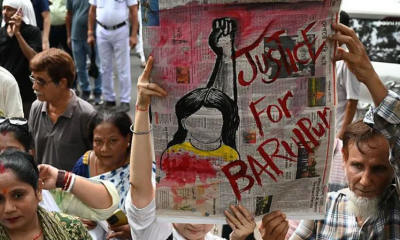
Tensions erupt in Indian state after 11-year-old raped and murdered
-

 Features5 days ago
Devanesan Annan – in Memoriam
-

 News6 days ago
Negombo Prison riot: Ensuring protection of prisoners fundamental responsibility of the state – UN
-
Editorial5 days ago
Punishment in hellholes
-

 News6 days ago
Representatives of the Organization of Professional Associations (OPA) of Sri Lanka meet the Prime Minister