
Features
Errant politicians, voodoo economists and the verdict of learned judges


by Chandre Dharmawardana
chandre.dharma@yahoo.ca
The Supreme Court has ruled (with one dissenting against four assenting voices) on 14th November 2023 that three members of the Rajapaksa family, including two former Presidents and a coterie of their close officials were responsible for the country’s worst economic crisis that ended in bankruptcy.
The petition by civil society activists and NGOs named the current President, Ranil Wickremesinghe as the 1st respondent, while the respondent no. 32A was Gotabhaya Rajapaksa of Pangiriwatte Rd, Mirihana.
Ajith Cabraal, P. B. Jayasundara and other mandarins with murky reputations were found guilty, while academics and economists like Prof. Lakshman learnt that those who lie with the hounds are condemned to contract their fleas.
We consider two aspects of the petition in the following.
· It was claimed that the petitioners were not challenging the policy of the government in these proceedings, but they were challenging the “illegal, arbitrary, unreasonable or capricious executive and or administrative actions and or inactions”, … arising from arbitrary and/or capricious decisions, by the executive and/or administrative branches of the Government. It is contended that the respondents breached the ‘public trust’ reposed in them.
· Petitioners claimed that a series of capricious decisions taken by these politicians and their officials, including the decisions to revise taxes, artificially control the exchange rate, failure to contain the depletion of reserves, failure to promptly seek assistance from the International Monetary Fund (IMF), and the failure to optimally adjust interest rates were the main causes for this economic collapse.
When the learned judges concluded that these ministers and their mandarins were pursuing “illegal, arbitrary, unreasonable or capricious executive and or administrative actions and or inactions”, this can only resonate positively with the vast majority of Sri Lankans, as they themselves would have already come to that conclusion through their everyday experience.
However, it is the duty of the opposition to have highlighted these matters in Parliament, and exposed them through political, civil and judicial action. When Nanayakkara, Weerawansa and Gammanpila split off from the Rajapaksa-dominated cabinet in protest over signing of midnight deals and other shenanigans, they unwittingly triggered a process that was in sync with the Farmers’ Protests against the arbitrary banning of fertilisers, lack of gasoline and cooking fuel. So, it is surprising that the petitioners did not name as respondents some of the lethargic leaders of the opposition parties, and MPs who do not even attend parliament.
It is equally surprising that the petitioners did not indict the well-known architects of “Toxin-Free Lanka” who had paved the way for the collapse of the agriculture sector with the 2015 ban on glyphosate (weed killer) by the Sirisena administration, with the ban extended to all agrochemicals by Gotabhaya in 2021. The Aragalaya had in fact indicted all 225 MPs and demanded their demise.
The second aspect of the petition, covering economic strategies in regard to taxation, exchange rates, reserve funds, and the IMF constitute an epistemological conundrum since at least the time of Hammurabi.
While there was a “classical period” when people believed that economics can be made into a reliable science where predictions are possible, today we understand that economic systems are complex systems which may be fully deterministic and computable, but beyond prediction. Henri Poincare showed, towards the end of the 19th century that even perfectly well-defined simple systems subject to many interactions (even just three agents) were beyond prediction even though fully determined. This insight, known to mathematicians and physicists was finally applied to economic systems by von Neumann and others in the context of chaos theory, in the latter half of the 20th century.
If we are to go with the observations of the Nobel Laureate von Hayek (see his Nobel-prize address), or the mathematician von Mises, economic prediction is a bit like predicting the outcome of a football match or a game of cricket. Even if we had all the details of the players, the state of the grounds, coaches etc., the outcome is technically unpredictable although a good educated guess may be possible.
So, even with a vast array of the very best computers, and with the cream of economists at his beck and call, Allen Greenspan, then head of the US Federal Reserve bank had to admit that their team did not foresee the 2008 Economic collapse of Western economies. In fact, just a week prior to the collapse, Greenspan had given a clean bill of health to the US economy. Arguably, the Fed’s easy money policy of the early 2000s ultimately led to the 2007-2008 economic crisis, largely regarded as the worst financial downturn since the Great Depression. However, no one has petitioned against Greenspan. (See Fig. 01)

Just as the economic collapse in the US in 2008 may have roots going back to a decade, even the economic collapse of Sri Lanka must be viewed within a time frame longer than the period chosen by the petitioners in their submission to the supreme court.
In Figure 1 we show the evolution of Sri Lanka’s reserve coverage from 1950 to 2020. It is clear that the country was in the red already from 2010, and already too close to call since 1998. The sharp kink in 2008, coinciding with the Western economic collapse under Greenspan was followed by a period in Sri Lanka where the country’s reserve coverage went from bad to worse.
Availability of energy is the key factor determining economic and social evolution – a fact mostly ignored by social theorists who focus on chimeras like the class struggle, globalization or “industrialisation”. Industrialisation needs energy. A small country like Sri Lanka, importing fuel and even foodstuffs that it can grow in the country is captive to global fluctuations in trade that are beyond its control. Sri Lanka has to, and it can, generate most of its energy needs (see: Partitioning water between agriculture and hydro-power to maximise Sri Lanka’s clean energy output, Island 12-08-21). It can also achieve self-sufficiency in food.
This “home-grown” solution itself cannot be achieved to modern levels of sophistication without external inputs. Hence, Sri Lanka must also promote and invite foreign capital and investments. The country has been in the red since at least 2010. The Colombo Port City (CPC) project that was to infuse a large amount of forex into the country via the Chinese Belt Road initiative was converted into a disaster by Sri Lanka’s leaders bent on undermining the good works of each other.
It was during this “in the red” period (March 2011) that the CPC project was initiated under Mahinda Rajapaksa, with Xi Jinping himself visiting Sri Lanka, with a 15-billion-dollar budget. In addition, extensive investment complementing the Chinese-funded Hambantota harbour was envisaged. The international ambience was such that Western companies were investing in Chinese projects. There were immense prospects of a much-needed forex inflow into the country. The Western Province, the most dynamic regional entity in the country would have seen an immense efflorescence, synergizing the other neighbouring provinces if the full CPC had gone according to plan. Indonesia has successfully followed such a whole-hog “Chinese-Belt-Road” policy even though it has to face the full brunt of the China-US Pacific region’s power-play.
Unfortunately, the Yahapalanaya government of 2015 abruptly stopped the CPC as well as developments in the Hambantota port. Self-styled environmentalists claimed dire consequences from the CPC, although they have not garnered supporting environmental data even to date. Any confidence that investors would have had in coming to Sri Lanka evaporated with the capricious and politically short-sighted actions of the Yahapalanaya government, even though some of its leaders was committed to an extreme Ayan-Randian pro-trade policy.
Although the CPC and the Hambantota project were resumed, after paying large amounts of compensation in forex, and under terms less favourable to Sri Lanka, foreign-investor confidence remained shattered. Interestingly, it was during this period that Sri Lanka took upon itself large international sovereign-bond (ISB) loans. Meanwhile, President Sirisena initiated a 52-day coup that further shattered investor confidence. The ISB loans became critical factors in debilitating the yet-to-come Gotabhaya government with its inept finance ministers who believed that wheeler-dealing would always work. (See Fig. 02)

The reserve coverage continued to fall under the Yahapalanaya, as seen in Fig. 1. The purchase of ISGs continued without care, as seen in Figure. 2. Although the New York Times had invented the hypothesis of a “Chinese debt trap”, it is clear that the ISGs were the biggest debt burden of the Island nation. If civil society activists had gone before the supreme court and indicted the then President (Sirisena), and the then Prime Minister (Ranil Wickremasinghe) for their capricious and arbitrary actions, what would have been the verdict?
Decisions to “print money”, raise or lower taxes, and other tricks belong to the grey area of voodoo economics. A banker can “create money” by a mere book entry and lend it to an investor. The banker is betting on the future being rosy and recovering the money with interest! A central banker may lower taxes betting that it will help promote business and hence reap more tax revenue in the future. But what if this expected rosy future fails to arrive? What if an epidemic arrives, as actually happened in 2019?
Can a small nation entirely in the hands of wildly fluctuating global trade go gambling when its reserve holdings are themselves in the red? A country like the USA can get away with “just printing money” and such Voodoo economics; its currency is under-pinned in myriad ways including being the “petro-dollar”. Unfortunately, the Sri Lankan government threw caution to the winds and set sail on Voodoo economics. The Learned judges have rightly recognized this in their verdict.
The petitioners had indicted the respondents for not going to the IMF soon enough. However, as far as the present writer could ascertain, there was no national consensus of any sort in going to the IMF. The parliamentary debates show that no political leader, either in the government or in the opposition, clearly and unequivocally proposed that Sri Lanka should forth-with seek IMF assistance. Instead, we see much brave and resounding sovereignty statements where the IMF is presented (with good reason) as the mother of disaster capitalism and the harbinger of fire-sales of the assets of the country.
The degree of success obtained by the Wickremasinghe government in obtaining aid from the IMF is unlikely to have been achieved by the Rajapaksa regime that had no effective friends in Washington, Paris or Tokyo, while being hounded by the UN Huma-Rights secretariate under pressure from the US, Canada and UK with their large diasporas hostile to the Rajapaksas.
The regime had deeply angered its friendly Muslim Nations by its refusal of burials to Muslims who died of Covid. The unsubstantiated fear-mongering against burials was done by the very academics and medics who had pushed organic agriculture, claiming that agrochemicals are toxins fed to Sri Lankans since the 1970s. Not surprisingly, the Rajapaksa regime had to beg bilateral emergency help form Sri Lanka’s neighbours.
Availability of energy is the key to development. The first step in “saving Sri Lanka” is to achieve energy sovereignty using (a) its vast extent of aquatic bodies that can be used for floating solar installations while also conserving water; (b) cultivating fast-growing non-edible oil-producing plants like Castor for use as diesel and other fuels, and developing bio- and wind energy; (c) boosting Sri Lanka’s very low investment in higher education and research sharply; (d) following evidence-based science advise and rejecting eco-extremism and occult pseudoscience .
As energy becomes available, the corresponding Forex savings can be used for industrial and technical developments, with emphasis on agricultural, mineral and microbial techniques rather than highly capital-intensive technologies. Fast electric trains should take priority over highways for cars. The constitution has to be changed so that the public is not forced to select MPs from the same lists of corrupt candidates fielded by the leading parties. This Gordian knot of stale candidates can be broken by using the model of sortition to choose at least half the MPs, as discussed elsewhere.








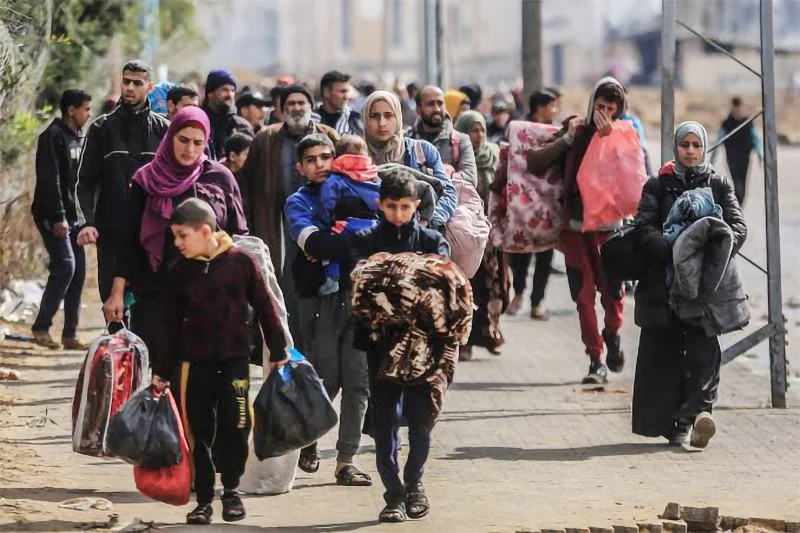
 Despite some sections of the Trump administration persisting with the view that the possibility could not be entirely ruled out of there being a diplomatic solution to the current US-Iran hostilities in West Asia, the skeptic could not be blamed for thinking otherwise. The intensity, scale and frequency of the tit-for-tat strikes by the antagonists over the past few days against selected military targets and civilian infrastructure in particular in West Asia make the adoption of this stance excusable.
The continuing hostilities render the mentioning of the MOU signed between the warring parties in mid-June a laughable matter. While it could very well be that the foes are wishing privately for a cessation of hostilities before long, what seems to be uppermost on their minds right now is to negotiate with each other from a position of strength. This strategy compels them to incapacitate each other militarily to the extent possible, lest they have to concede too much to each other during negotiations. Hence the stepped-up hostilities.
However, even on the question of there being a negotiated political settlement in the West Asian theatre in the longer term, the skeptic could come to be seen as scoring over the optimist. Developments on the ground account for this.
At the time of writing Israel’s Netanyahu government is going ahead in fairly care-free fashion with the establishment of more Jewish settlements in the Gaza and the West Bank, and it’s all happening under the apparently complacent gaze of the US. In fact, some quarters estimate that Israel is in control of some 65% of the Gaza Strip. Ethnic cleansing, that is, is being drastically stepped-up.
Accordingly, in terms of the power relations of West Asia, the world is almost back to the status quo of the late forties of the last century when the state of Israel was established and the Palestinians were reduced to a microscopic minority in the land they came to inhabit. Therefore, even the impartial observer would be compelled to ask: ‘Will a negotiated peace be ever possible in the Middle East?’
The humanist in the observer would prefer to answer this question in the affirmative and it is indeed the ideal stance to adopt considering the staggering human and material costs of the conflict. But the way ahead to peace could be expected to be highly hazardous and arduous. Among other odds, it would also prove an uphill endeavour to win minds and hearts.
The US’ Trump administration would need to be counted out in this pursuit. This is on account of the fact that it has been far too wayward in its management of West Asian affairs in particular over the past couple of years. Given its unpredictable character it is a matter for conjecture whether it could be counted on to live up to its commitments.
Moreover, Israel could be expected to ‘go it alone’ in the Middle East regardless of whether US help is coming or otherwise. It has indicated as much in recent times and Israel could be doubted on this score only at the doubter’s peril. Because time and again Israel has demonstrated that it could steadfastly defend its interests even single-handedly in the Middle East. History bears this out.
However, a durable alliance with the US would stand Israel in good stead. On the matter of military and intelligence assistance, for example, the US’s help proved invaluable for Israel in the past and going forward this is bound to be so as well. Moreover, it is unlikely that the Trump administration would give up on Israel, considering that a strong Israel is crucial for the furtherance of the US’ strategic and economic interests in West Asia.
But whether the above factors would have a considerable bearing on the question of working out a durable solution to the West Asian tangle is an entirely different matter. Israel, as in the case of the Palestinian enclaves, is acutely security conscious and would need to satisfy itself fully that it could live in a security environment that would guarantee its complete safety, going forward.
The Middle East is badly in need of another peace effort on the lines of the Oslo Accords of the mid-nineties that brought the key actors together and helped hammer out a solution that addressed some of their notable concerns. To be sure, that process did not prove to be the ideal answer to the tangle, but it yielded some respite to the region and drove home that one-time sworn foes could indeed negotiate with a degree of success. The West Bank authority, although falling short of fulfilling some key Palestinian aspirations, is testimony that a degree of success is possible if the intent is right.
Given the current realities of West Asia, peace-making is bound to be an uphill challenge. The violence faced in recent times by the Palestinian community, in particular, has been nothing less than mind-numbing. Merciless has been the violence visited on them by the Israeli side. In such circumstances, durable peace in the region could smack of an idealist’s dream.
Nevertheless, there needs to be urgently, a meeting of minds over the divides. The US would need to be counted out as an honest broker in bringing the sides together but the rest of the West would do well to step up to the challenge.
In this exercise the onus would be on the world’s democracies to take the initiative and doggedly stay the course. An acceptable combination would be the EU and the UN. Given their credentials, the main sides in West Asia ought to find them the least controversial.
Even if the relevant institutional and political arrangements could be shored up to take a reconciliation process forward, winning hearts and minds for the peace drive would prove a grueling challenge. Over the past few years in particular tens of thousands of hearts and minds on both sides of the divide have been bruised badly in the runaway murderous violence that has come to define the Middle East.
These badly scarred personalities would need to experience healing without much delay. It is therefore a multi-faceted challenge that is at hand. Since wide-ranging expertise would be needed in the healing process, people’s participation in peace-making, ranging over the divides, would need to be made a durable reality. It will be a time for enthroning humanity and ensuring the rejection of all forms of violence and coercion.
 For many Sri Lankans, Thailand is the go-to holiday — beaches, temples, food, and that famous warm hospitality.
In fact, I’ve been to Amazing Thailand 24 times myself, and was honoured with the Friends of Thailand International Media Award by the Tourism Authority of Thailand for promoting Thai tourism.
The good news I have for you today is that you don’t even need a passport to get a taste of Amazing Thailand.
The Royal Thai Embassy, in Colombo, is bringing a vibrant slice of Thailand, to the city of Colombo, with Thai Festival 2026 — a cultural experience like never before.
Whether you are an avid enthusiast of Thai culture, a total novice, or simply just interested in exploring foreign cultures, Thai Festival 2026 is going to be the perfect opportunity for you to get more than just a glimpse into one of the most celebrated cultural heritages in South East Asia. And ENTRANCE IS FREE.
The festival will be held on the 1st and 2nd of August, 2026, at Siam Nivasa, 43, C.W.W. Kannangara Mawatha, Colombo 7, and the East Parking Area, of the Colombo Municipal Council, from 11:00am to 5:00pm.
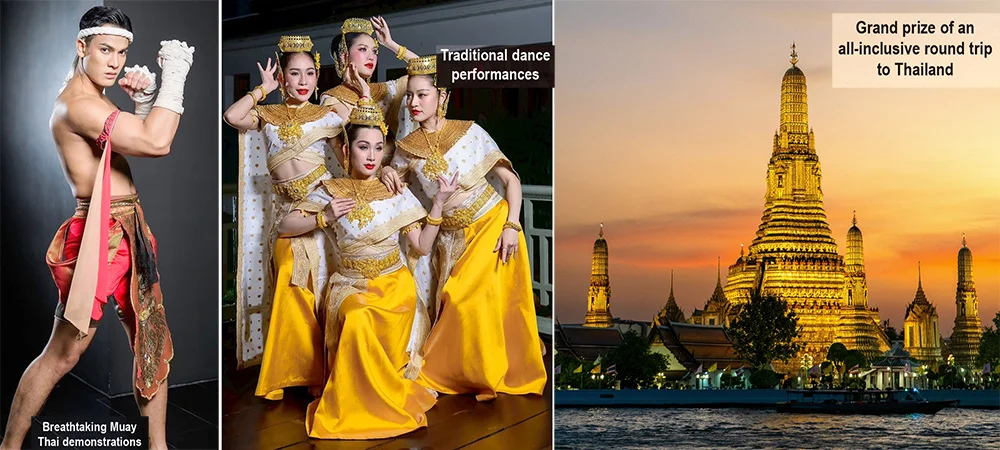
Both days will be full of live entertainment, and dispersed throughout with Thai cultural displays, including exhilarating traditional dance performances and breathtaking Muay Thai demonstrations.
Exploring art and craft specific to Thailand, tasting irresistible authentic Thai cuisine, and playing arcade games, are just a few more fun-filled events available for visitors at the festival premises.
An array of Thai products will also be available for purchase.
While at the festival, you will find Sri Lankan Alumni from Thai universities sharing their experiences with you and willing to answer any questions you might have, related to studying abroad in Thailand.
You can also register for the Muay Thai workshop that will be happening on the 7th and 8th of August, 2026, in Colombo.

Irresistible authentic Thai cuisine
Visitors can also stand a chance to win traditional Thai souvenirs, get exclusive photo opportunities, and, the big one — to enter the raffle draw, at the end of each day, for the grand prize of an all-inclusive round trip to Thailand.
Be sure to avail yourself of this exceptional opportunity and add a cultural spin to your weekend.
To keep up with the latest updates on Thai Festival 2026, head over to the Thai Festival official social media pages.
The Royal Thai Embassy in Colombo official webpage:
https://colombo.thaiembassy.org
Official social media:
Facebook: @RTEColombo
Instagram: @thaiembassysrilanka
Thai Festival official social media:
Facebook: Thai Festival in Colombo
Instagram: @thaifestival_colombo
TikTok: @thaifestival.incolombo
 Hair fall, in this heat, can be so frustrating, and noticing a thin patch is even more worrying. The good news is … yes, with a little care and kitchen ingredients, you can nourish your scalp and support healthy regrowth.
Try these four easy home remedies … even our grandmothers trusted:
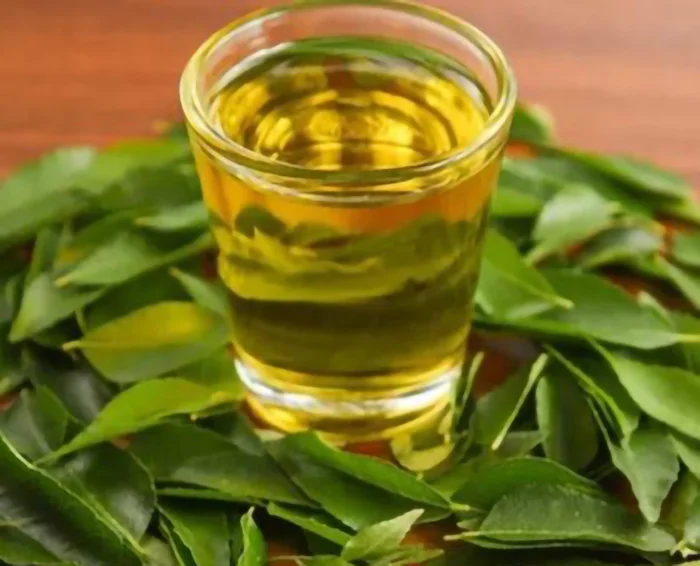
* Coconut Oil and Curry Leaves Tonic:
Warm 04 tablespoons of coconut oil, with a handful of curry leaves, till the leaves turn black. Cool, strain, and massage into scalp 02-03 times a week. Leave for 01 hour, or overnight.
Why:
Coconut oil deeply nourishes, while curry leaves help strengthen roots and add shine.
* Onion Juice for Spot Treatment:
With cotton, dab the juice of 01 small onion, directly on the thin/bald patches. Leave for 20-30 minutes, and then wash with a mild shampoo. Use twice a week.
Why:
Rich in sulfur, onion juice helps boost blood circulation to the scalp.
* Aloe Vera and Castor Oil Mask:
Mix 02 tablespoons of fresh aloe vera gel and 01 tablespoon castor oil and apply to the scalp, focusing on thinning areas. Leave for 45 minutes, and then rinse with cool water.
Why:
Aloe vera soothes the scalp, while castor oil coats hair to make it look thicker.
* Fenugreek and Curd Strengthening Pack:
You will need 02 tablespoons fenugreek seeds, soaked overnight, and 02 tablespoons plain curd.
Grind to a paste, apply to scalp for 30 minutes, and then wash.
Why:
Fenugreek strengthens strands and reduces breakage.
Extra Tips for Healthy Hair:
Avoid tight hairstyles that pull on the scalp.
Eat iron and protein rich foods: greens, dhal, eggs, fish.
Use lukewarm water, not hot.
Be gentle when brushing and drying.
Manage stress — it plays a big role in hair fall.
Important: If bald patches are growing, or there is itching/redness, please consult a dermatologist.
Home remedies support hair health, but a doctor can find the exact cause.
Remember, healthy hair starts with a healthy, happy you.

Dambulla Sixers hand Galle Gallants first defeat in LPL 2026

Jaffna Kings beat Colombo Kaps by five runs

Showers will occur in the Western and North-western provinces and Galle, Batticaloa, Ampara and Monaragala districts

United Opposition moves to halt interference with judicial independence

PM labels seven Presidential Houses white elephants ; govt. to make them commercially viable

Gen. Sallay’s writ application against arrest: PC questions validity of Moulana’s statement

‘Dates have the highest sugar content to fight Coronavirus’

Sunday Island 27 December – Headlines

#SundayIsland 17th December – Headlines

Sunday Island – 28th March

Sunday Island Headlines – 21 March

Sunday Island – 21st February – Headlines
-
 Features4 days ago
Two memorable excerpts from a former SLAF commander’s memoir
-
 Business4 days ago
‘Giving up was never an option’: The fisherman who fought back after losing millions in SL
-

 Latest News5 days ago
Davis cup Asia/Oceania Group IV 2026 to be held in Colombo from 20th to 25th July
-
 Features4 days ago
Erdoğan’s New Republic
-

 Life style4 days ago
Taste of the Swiss Alps comes to Colombo
-
 News5 days ago
Evidence recorded in money laundering case against Yoshitha Rajapaksa
-
 News5 days ago
Dengue outbreak gallops ahead: Infections surpasses 73,455, leaving 50 dead
-
 Midweek Review1 day ago
Three high-profile alleged suicides shaping key investigations