
News
As micro, small and medium enterprises bear brunt of COVID and economic crisis more than million workers go abroad

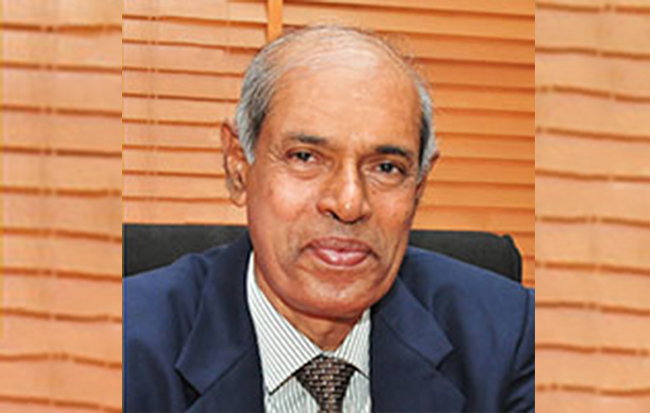
The unofficial number of Lankan workers migrating for jobs abroad may by now be more than a million, Prof. Sunil Chandrasiri, senior professor of economics at the University of Colombo and one of the authors of International Labour Organization’s report on ”Impact of multiple economic crises on Sri Lanka’s micro, small and medium enterprises” which was published recently.
“The Government estimates that roughly 73,000 jobs were lost. But the actual loss of jobs is likely several times higher. A total of 311,000 Sri Lankans left the country for foreign employment in 2022, according to official figures registered with the Foreign Employment Bureau. Moreover, 874,955 passports were issued that year suggesting that the unofficial number of workers migrating out of the country may by now be more than a million. The crises exacerbated long-felt skills deficits while doubling the poverty rate; and a quarter of all Sri Lankans are likely to remain poor over the next few years,” he said.
The COVID-19 pandemic severely or very severely impacted the business operations of nearly 80 percent of Sri Lankan micro, small and medium enterprises (MSMEs), while the economic crisis of 2022 impacted 89 percent of them, he said.
According to Prof. Chandrasiri his study looked at 521 MSMEs that had survived the twin crises and 50 MSMEs that did not survive them. The surveys and interviews were conducted between January and March 2023 in 10 districts, he said.
He added that micro, small and medium scale enterprises employ about 75 percent of the country’s workers.
“About 21 percent employed in micro scale enterprises have lost their jobs in the last few years due to the economic crisis and Covid. 23 percent and 22 percent of employees of small and medium scale enterprises have lost their jobs respectively,” he said.
Skilled workers, unskilled workers as well as those at executive levels, too, have lost jobs, Prof. Chandrasiri said.
Nearly half of all the surviving firms found it difficult to retain or hire people because they could not pay enough to cover the rising living costs. “Most entrepreneurs claim that they are not able to pay a salary that matches the cost of living. A lot of people have migrated,” he said.
There is also migration within the country, he said. A large number of workers from the villages, working in towns, have returned home voluntarily because they can’t sustain themselves in the towns. The cost of living is lower in the villages and these workers try to find work near their homes, he said.
“On the other hand small and medium entrepreneurs claim that electricity and water bills, as well as loan repayments, are about 80 percent of their expenditure. They are also troubled by taxes that have increased the cost of their products. The end user can’t afford the prices of goods and services and thus have dramatically reduced consumption,” he said.
By subsector, the impact of the multiple crises was severe on MSMEs in the tourism, manufacturing, construction, transport and storage, wholesale and retail trade and other services. At the national level, these sub sectors account for more than 55 percent of GDP.
Continuing low employee morale and low productivity are likely to hamper recovery. The crises left in their wake high levels of indebtedness, which will impede the continued survival and growth of MSMEs. About 42 percent of the surviving MSME proprietors reported that they were at risk of failure within a year, he said.
Given below are highlights from the study: “The surviving MSMEs displayed more adaptive behaviours, such as using digital technologies for business operations (38 percent), sourcing from new suppliers (38 percent), introducing flexible work practices (39 percent), adjusting the product or service mix to the labour that was available (39 percent), using online sales and social media to market products (32 percent) and rescheduling bank loans (36 percent).
“In contrast, proprietors of MSMEs that had closed reported more passive behaviours, such as laying off workers (39 percent), reducing working hours (38 percent), borrowing money from other sources (43 percent) and liquidating assets (46 percent). Relatively more non-surviving firms reduced workers’ salaries (at 30 percent of enterprises) than the surviving MSMEs (at 20 percent).
“In terms of dynamic capabilities, the surviving MSMEs responded proactively to the uncertain and changing business environment in the country. For example, 83 percent of them cut costs and eliminated waste; 71 percent improved customer services; 60 percent identified new customers; and 58 percent improved employee safety and welfare facilities.
“Many surviving MSMEs resorted to digitalization in their adaptive behaviour, but the digital strategies they adopted were at the low end of the digitalization scale, such as using social media platforms mainly for information search.
“Resilience emerged as an entrepreneurial skill that enabled enterprises to adapt and grow stronger in the face of challenges.
“The study identified entrepreneurial orientation, technological adaptation, factor substitution, minimizing waste and searching for new markets as the primary resilience factors. Different actors in the MSME ecosystem should include these topics in training programmes for training providers, policymakers and private and nongovernmental organizations.
“The overwhelming majority of MSMEs did not receive any support from institutions dedicated to supporting MSME development and instead struggled or closed on their own.
“Although the COVID-19 stimulus packages offered by the Sri Lankan Government to affected individuals and MSMEs was much smaller than what was offered in other countries in the region, these, too, seemed to have bypassed most of the MSMEs. Political affiliation and influence appear to have had a hand in who was able to access the support.
Financial institutions also dedicated to supporting MSMEs seemed to have offered little financial support to them by restructuring loans, etc. during the economic crisis, even though they posted substantial profits while the economy contracted.”







Latest News
Flood warning issued to the Divisional Secretariat Divisions of Ganga Ihala Korale, Udapalatha, Doluwa, Udunuwara, Yatinuwara, Gangawata Korale, Harispattuwa, and Pathadumbara


Due to heavy rainfall received in the upper catchment areas of the Mahaweli River over the past few hours, there is a risk of minor flooding in the low-lying areas surrounding the Mahaweli River within the Divisional Secretariat Divisions of Ganga Ihala Korale, Udapalatha, Doluwa, Udunuwara, Yatinuwara, Gangawata Korale, Harispattuwa, and Pathadumbara.Residents living in the above mentioned areas and motorists using roads passing through these areas are urged to exercise extreme caution and remain highly vigilant regarding the prevailing situation.
Furthermore, residents living in close proximity to the Mahaweli River in these areas are advised to remain highly alert to the situation and take all necessary precautions to protect themselves from any potential flooding.The relevant disaster management authorities are requested to take all necessary measures in response to this situation.

The National Building Research Organisation [NBRO] has issued landslide Red Alerts to the districts of Kandy, Kegalle and Nuwara Eliya effective from 14:00 hrs on 20.09.2026 To 14:00 hrs on 21.09.2026
Accordingly,
LEVEL III [RED] Land Slide early warnings have been issued to the Divisional Secretaries Divisions and surrounding areas of Pasbage Korale in the Kandy district, Dehiowita, Aranayake, Deraniyagala, Mawanella and Yatiyanthota in the Kegalle district and Kothmale West, Kotmale East, Ambagamuwa and Norwood in the Nuwara Eliya district
LEVEL II [AMBER] Land Slide early warnings have been issued to the Divisional Secretaries Divisions and surrounding areas of Padukka in the Colombo district, Nagoda, Thawalama and Neluwa in the Galle district, Bulathsinhala, Palindanuwara, Walallawita and Agalawatta in the Kalutara district, Ganga Ihala Korale in the Kandy district, Bulathkohupitiya and Kegalle in the Kegalle district, Akuressa and Pitabeddara in the Matara district, Thalawakele in the Nuwara Eliya district and Pelmadulla, Ratnapura, Ayagama, Kuruwita and Ratnapura in the Ratnapura district.
LEVEL I [YELLOW] Land Slide early warnings have been issued to the Divisional Secretaries Divisions and surrounding areas of Seethawaka in the Colombo district, Niyagama and Baddegama in the Galle district, Mirigama in the Gampaha district, Ingiriya in the Kalutara district, Udapalatha and Yatinuwara in the Kandy district, Galigamuwa, Warakapola and Ruwanwella in the Kegalle district, Kotapola, Pasgoda and Athuraliya in the Matara district, and Eheliyagoda, Kalawana and Elapatha in the Ratnapura district.
News
Development projects can deliver results to the people more quickly when the political authority and the public service work together towards a common goal – PM
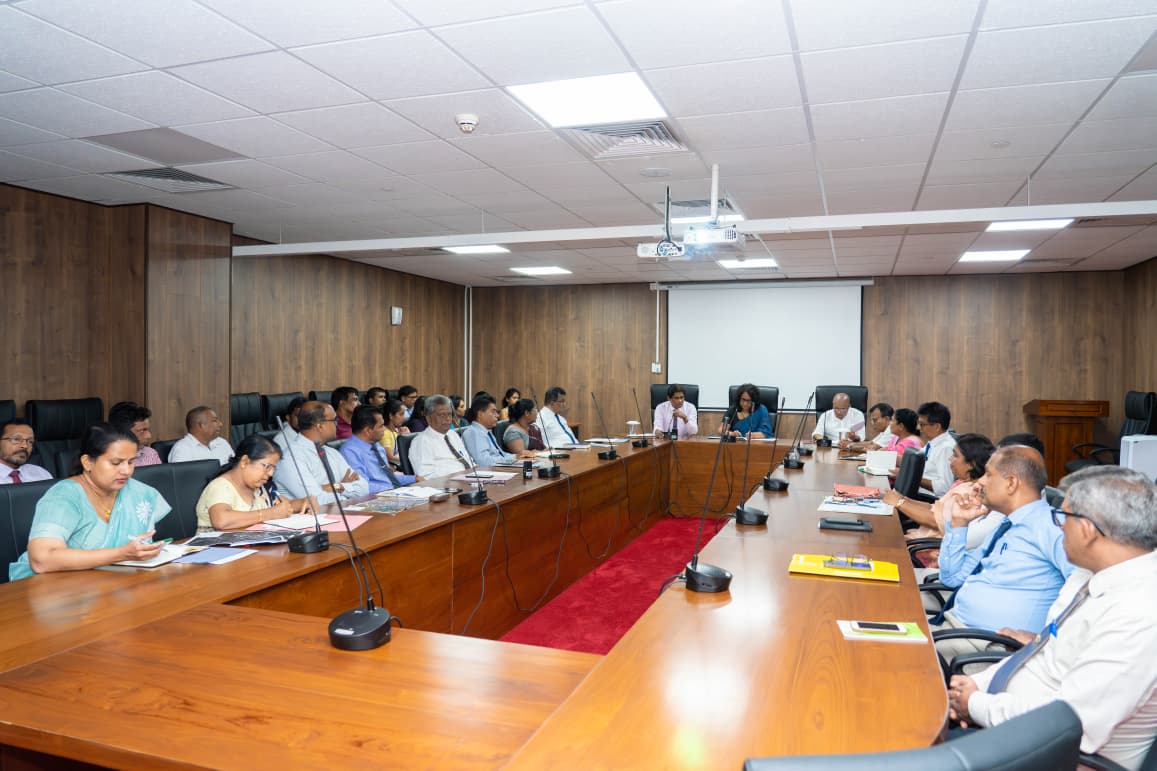
Prime Minister Dr. Harini Amarasuriya stated that development projects can deliver results to the people more quickly when the political authority and the public service work together towards a common, people-oriented objective.
The Prime Minister made these remarks while participating in a discussion held on Friday [September 18] at the Western Province Council Auditorium to review the progress of the development project to rehabilitate Rathmalana Kandawala Road and the drainage system on either side of the road, within the Dehiwala–Mount Lavinia Municipal Council limits in the Colombo District.
The project, which commenced on September 10, 2026, is scheduled to be completed before June 30, 2027. Implemented by the Provincial Road Development Authority (PRDA), the project includes the construction of a bridge at a cost of Rs. 64 million, the rehabilitation of the drainage system at a cost of Rs. 930 million, and the rehabilitation of the road at a cost of Rs. 115 million.
The Prime Minister also paid special attention to the progress of the responsibilities assigned to the Western Province Council, the Irrigation Department and the Ratmalana Divisional Secretariat in accordance with decisions taken at the previous committee meeting. Attention was also given to the current status of the plans being carried out by the Sri Lanka Land Development Corporation (SLLRDC), as well as the construction and maintenance activities being undertaken by the Provincial Road Development Authority (PRDA).
Commending the expedite and commendable progress of the project, the Prime Minister particularly appreciated the commitment demonstrated by officials of the relevant government institutions to work in close coordination with one another and in collaboration with the political authority.
The Prime Minister also emphasised the importance of taking measures well in advance to control flooding and minimise its impact on Colombo and several other districts in view of the rainy weather that may affect the Western Province during the latter part of this year.
The meeting was attended by the Chairman of the Colombo District Coordinating Committee and Member of Parliament Lakshman Nipuna Arachchi, Chairperson of the Ratmalana Divisional Coordinating Committee and Member of Parliament Samanmalee Gunasinghe, Chairman of the Roads Sub-Committee of the Colombo District Coordinating Committee Dewananda Suraweera, Mayor of the Dehiwala–Mount Lavinia Municipal Council Parakum Shantha, Chief Secretary of the Western Province K.G. Pradeep Pushpakumara, along with a number of government officials.
[Prime Minister’s Media Division]

Flood warning issued to the Divisional Secretariat Divisions of Ganga Ihala Korale, Udapalatha, Doluwa, Udunuwara, Yatinuwara, Gangawata Korale, Harispattuwa, and Pathadumbara

Landslide Red Alerts issued to the districts of Kandy, Kegalle and Nuwara Eliya

Shafali dazzles with 49-ball unbeaten 100 and India march into Asian Games final

Development projects can deliver results to the people more quickly when the political authority and the public service work together towards a common goal – PM

Landslide Early Warnings issued to the Districts of Colombo, Galle, Kalutara, Kandy, Kegalle, Matara, Nuwara Eliya and Ratnapura

Chamari Athapaththu’s unbeaten 83 leads Sri Lanka into final

‘Dates have the highest sugar content to fight Coronavirus’

Sunday Island 27 December – Headlines

#SundayIsland 17th December – Headlines

Sunday Island – 28th March

Sunday Island Headlines – 21 March

Sunday Island – 21st February – Headlines
-

 Opinion7 days ago
From Galkissa (Mount Lavinia) to Tambuttegama
-

 News4 days ago
US embassy won’t comment on IGP’s probe into joint drug raid
-

 Features6 days ago
The emptying university: why are academics leaving?
-

 Features7 days ago
Sri Lanka’s university crisis: Brain drain and union action demand urgent reform
-

 News3 days ago
Bid for Basil’s extradition nears final stage: Police
-

 Business4 days ago
All-new Bolero MaXX unveiled in Sri Lanka
-

 Opinion7 days ago
Ashraff: From the SLMC towards the National Unity Alliance
-

 Editorial7 days ago
Muscle flexing, astroturfing and dog-and-pony shows