
Latest News
South Africa overcome Pakistan jinx in edge-of-the-seat thriller


The World Cup finally got its high-octane thriller as South Africa narrowly edged past Pakistan by one wicket in a riveting encounter in Chennai on Friday (October 27). Chasing a slightly under-par target of 271, South Africa were cruising at one point with Aiden Markram and David Miller guiding them towards a comfortable win. However, they imploded dramatically from 205/4 to find themselves at 260/9 with 27 deliveries remaining. Keshav Maharaj and Tabraiz Shamsi held their nerve to get the Proteas over the line in a nail-biting finale. This is the first time that South Africa have beaten Pakistan in a World Cup match (ODI/T20I) in seven attempts since 1999.
The run chase started off in rollicking fashion as Iftikhar Ahmed sent the very first delivery of the innings for five wides, an absolute shocker down the leg-side that Mohammad Rizwan could do nothing about. An 11-run over to start was far from ideal for Pakistan and it got worse when the next over, Shaheen Afridi’s first, went for 19 including four boundaries from Quinton de Kock. It was the kind of fast start that South Africa would have wanted but Pakistan soon gained control with the wickets of the openers inside the first Powerplay. It was the short ball ploy that did the trick as Afridi removed de Kock before Mohammed Wasim Jr sent Temba Bavuma packing.
Markram was into his work straightaway, finding instant timing on a surface where most batters struggled to get their tempo right. Rassie van der Dussen gave him support for a while before the former fell to spin for the sixth time in as many games. A head injury early on to Shadab Khan while fielding meant that Pakistan were forced to bring on Usama Mir as the concussion substitute. It proved to be a beneficial move as Mir removed van der Dussen in his very first over to bring Pakistan back into the game. The continued short ball ploy then yielded a massive breakthrough as Heinrich Klaasen holed out to third man. At 136/4, the game was right in the balance before Markram and Miller combined for a crucial 70-run stand.
Brief scores:
Pakistan 270 in 46.4 overs (Saud Shakeel 52, Babar Azam 50, Mohaamad Rizwan 31, Ifthikhar Ahmed 21, Shadab Khan 43, Mohaamad Nawaz 24; Tabraiz Shamsi 4-60, Marco Jansen 3-43, Gerald Coetzee 2-42) lost to South Africa 271/9 in 47.2 overs ( Temba Bavuma 28, Rossi van der Dussen 21, Aiden Markram 91, David Miller 29, Marco Jansen 20; Shaheen Afridi 3-45, Haris Rauf 2-62, Mohammad Wasim 2-50, Usama Mir 2-45) by one wicket
(Cricbuzz)









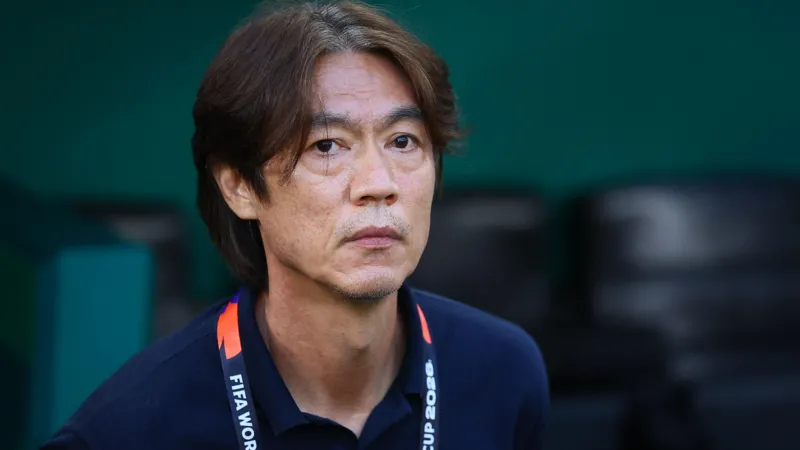
Hong Myung-bo has resigned as head coach of South Korea’s men’s national football team after they failed to advance to the World Cup knockout stage.
The team had hoped they could still qualify for the next round of the tournament as one of the best third-placed teams, but that hope was quashed on Saturday.
The early exit has prompted widespread criticism at home, with President Lee Jae Myung calling for an investigation into reasons behind the team’s disappointing performance.
Hong apologised to fans on Sunday and said the responsibility “rests entirely with me as head coach”.
Ranked 32nd in FIFA’s men’s rankings and led by star player Son Heung-min, South Korea recorded two losses and one win at the World Cup, finishing behind Mexico and South Africa, who are ranked 15th and 60th respectively.
Criticism had mounted quickly after the team’s last match with South Africa on Thursday, which South Korea lost 1-0.
The defeat left them third in Group A. It still gave them hope to qualify for the next round under a new rule introduced with this tournament’s expansion from 32 to 48 teams, which allows the eight best third-placed teams in the group stage to progress to the knockout round. But on Saturday, they were knocked out because of the other teams’ final scores.
Fans blame Hong, who has been coaching the team for the past two years. On Monday, the national team’s official fan club Red Devils issued a statement calling on Hong to “kneel before the entire nation and leave the football world forever”.
Announcing his resignation at a news conference in Mexico on Sunday, Hong said that “we didn’t deliver the results that our fans expected”.
“Even though I am leaving the national team, I am not abandoning Korean football altogether,” Hong said. “I will cheer for the national team from the bottom of my heart and hope that the team will be trusted and loved by the people once again.”
The announcement came after President Lee said that he felt “not just confusion but utter bewilderment at the unexpected outcome”.
In a post on X, Lee said that the early exit of the team “appears to be a failure of organisation and personnel”.
“When favouritism and cronyism take precedence over competence in selecting a commander, the result is as predictable as fire burning paper,” he said.
Hong’s appointment to the head coach post was controversial from the start. The former defender was a hero of South Korea’s 2002 World Cup success, having captained the team to a historic semi-final finish. But when he led the team as a coach in 2014, they failed to advance beyond the group stage – or win a single match.
When Hong was appointed to the same job again in 2024, it was met with harsh uproar. Many football fans criticised the appointment as football association’s old guards giving the top job to their friend, as the KFA passed on a few foreign-born candidates who had undergone a rigorous vetting process.
On Sunday, Hong said that “accepting the job was not an easy choice”. “I cannot say every decision has been the right one, but I can tell you that I have made every decision with Korean football in mind,” he added.
South Korea police say that they are watching for security threats at Incheon Airport and other locations after a death threat was made online against Hong on his return to Korea over the weekend, local media reported.
[BBC]
Latest News
“May this sacred Poson Festival illuminate every heart with compassion, loving-kindness and wisdom”- President
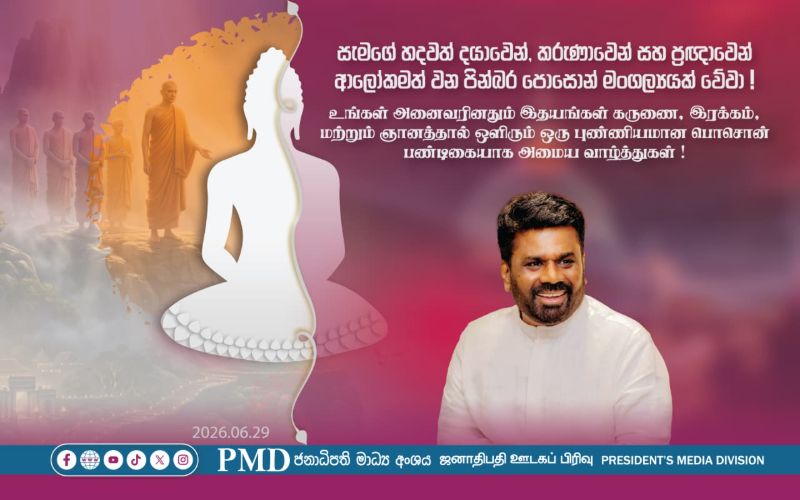
Presiden Anura Kumara Dissnayake in his Poson Day message wished that this sacred festival illuminate every heart with compassion, loving-kindness and wisdom
The President’s Poson Day message:
“The arrival of Arahat Mahinda Thera marked the beginning of Sri Lanka’s emergence as a centre of Theravada Buddhist philosophy and tradition. That momentous event, which gave rise to both a spiritual awakening and a far-reaching social transformation, extended far beyond its religious significance and laid the foundation for a more advanced cultural, social and political order throughout the country.
Buddhism not only established a strong foundation for the nation to flourish but also brought about a transformation in education. By turning temples into centres of learning and monastic education, it fulfilled a vital social role as a hub of knowledge, fostering a profound spiritual renaissance among the people. Moreover, it inspired remarkable developments in architecture, painting, irrigation engineering, building design, wood carving and other artistic traditions, elevating our nation to a position of distinction and pride before the world.
As the present-day heirs to such a glorious and noble heritage, we all bear an inescapable responsibility to revive the values and moral principles that are gradually fading from society and to work together towards building a civilised State. In this endeavour, we are already engaged in the struggle to restore civility across all spheres of public life, including Parliament and State institutions.
No nation can achieve genuine progress without an ethical foundation. The Cūḷa Hatthi Padôpama Sutta, expounded by Arahat Mahinda Thera, underscores the importance of gradual training and disciplined development. By re-establishing on Sri Lankan soil the proud legacy of the civilised society that came with Buddhism, let us join hands with unwavering determination to build a modern and enlightened State founded upon the ethical, social and environmental values that our nation so urgently requires.
I therefore invite all citizens to unite in this noble endeavour with strength and conviction.
May this sacred Poson Festival illuminate every heart with compassion, loving-kindness and wisdom”.
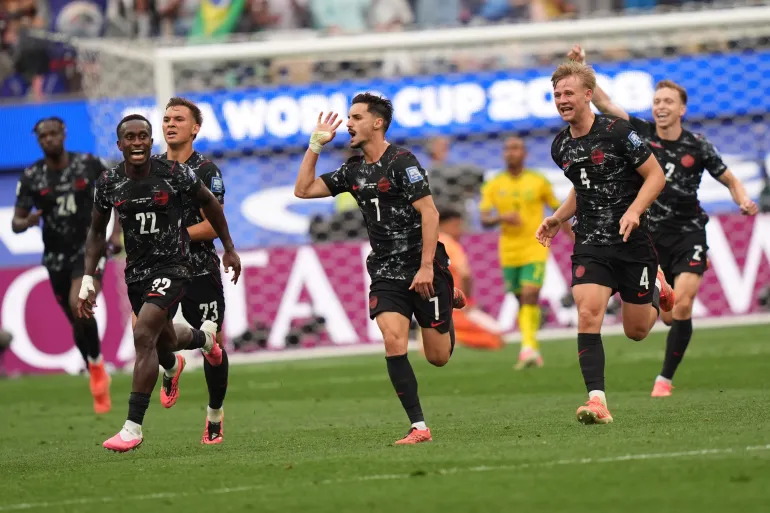
Canada beat South Africa 1-0 thanks to a stoppage-time strike by Stephen Eustaquio from distance to reach the FIFA World Cup last 16 for the first time in their history.
Eustaquio received the ball on the edge of the South Africa penalty area and hammered it past diving goalkeeper Ronwen Williams in a thrilling conclusion to the first knockout-round match of the tournament on Sunday.
South Africa, who had seemed content to play for extra time and a possible penalty shootout, made a few furious but unsuccessful attempts to level before the final whistle as the sun broke through the clouds at Los Angeles Stadium.
Canada will next face either the Netherlands or Morocco on July 4 in Houston for a place in the quarterfinals.
“It’s about the two years we’ve been together,” Canada coach Jesse Marsch told the team in a huddle after the final whistle.
“Think about how we talked about sticking to the plan – you guys showing your character. You guys are Canadian heroes here.”
Chances were scarce in a cagey first half, with little to separate the sides, who were both playing in the knockout rounds for the first time.
Canada’s best opening came just before half-time when a corner sparked a scramble in the South Africa box. Moise Bombito sent a header goal-wards, which was cleared off the line by Aubrey Modiba, before Tajon Buchanan’s close-range effort struck Williams in the chest.
Moments later, Richie Laryea went down in the area, prompting Canadian appeals for a penalty, but the decision not to award a spot kick stood after a VAR review, prompting loud boos from Canada’s red-clad army of supporters dominating the stands.
Marsch continued to protest as the teams left the field at half-time, with Bombito appearing to urge him away from the referee.
Frustration for Canada only grew early in the second half, as South Africa appeared in no rush to press the issue.
Canada had another chance just before the second-half hydration break, when Tani Oluwaseyi’s shot hit the keeper, and Jonathan David was unable to head the ricochet home, thanks to an excellent defensive effort by Mbekezeli Mbokazi to clear the ball.
Eustaquio dedicated the win to “all Canadians” when he spoke to reporters after the match.
“I think it was an amazing goal. When I shot, I thought everyone shot with me. Everyone added a little power to it when it went into the back of the net.
” It started when we came out of group stage. Belief is a big part of it. We will now get either Netherlands or Morocco. Anything can happen. If we keep working like we are doing, we might even win it.”
[Aljazeera]

South Korea football coach quits as president calls for probe into World Cup loss

Europe’s heatwave linked to 1,300 deaths, WHO says, as Germany hits record 41.7C

Padikkal fifty, Sudeera five-for before India A, Sri Lanka A settle for draw

“May this sacred Poson Festival illuminate every heart with compassion, loving-kindness and wisdom”- President

Canada score late to beat South Africa and reach last 16 at World Cup 2026

Tector and Moondra headline Ireland’s historic series sweep against India

‘Dates have the highest sugar content to fight Coronavirus’

Sunday Island 27 December – Headlines

#SundayIsland 17th December – Headlines

Sunday Island – 28th March

Sunday Island Headlines – 21 March

Sunday Island – 21st February – Headlines
-

 News13 hours ago
LAWASIA warns against ad hoc initiative to increase judges’ retirement ages
-
 Opinion7 days ago
Ranasinghe Premadasa: The man who would not take ‘No’ for an answer
-
 News2 days ago
Another 1,132 Sri Lankan Personnel to be deployed for United Nations Peacekeeping Missions
-

 Opinion6 days ago
Sri Lanka’s national security: Justice, reconciliation, and forward-looking vigilance
-

 News6 days ago
US Assistant Secretary of State for South and Central Asian Affairs meets President
-

 News4 days ago
Kelaniya emerges as highest ranked Lankan uni in Times Higher Education Sustainability Impact Ratings
-
 Opinion5 days ago
A triumph for Pakistan’s skilled diplomacy at Iran-US talks
-

 Features2 days ago
People’s Bank expands digital banking network with 125th cheque deposit kiosk