
Opinion
The Role of Domestic Aviation in Sri Lankan Tourism


This is a report by the Organization of Professional Associations. Resource personnel on Panel were Capt. Amal Wahid, General Manager, Air Senok/Senok Aviation (Pvt) Ltd., Capt. Lasantha Dahanayake, Director Flight Operations, Saffron Aviation (Pvt) Ltd, parent company of Cinnamon Air Asitha Ranaweera, Accountable Manager and Deputy Chief Executive FITS (Pvt) Ltd (Friends In The Sky), Kasun Abeynayaka, Senior Lecturer/Assistant Director Industry Engagement, Events, Travel and Tourism, William Angliss Institute@SLIIT. Moderator was Capt. G.A. Fernando, Member, Executive Council of Organisation of Professional Associations (OPA) & Member, Association of Airline Pilots
Resource personnel on Panel:
1. Capt. Amal Wahid, General Manager, Air Senok/Senok Aviation (Pvt) Ltd
2. Capt. Lasantha Dahanayake, Director Flight Operations, Saffron Aviation (Pvt) Ltd, parent company of Cinnamon Air
3. Asitha Ranaweera, Accountable Manager and Deputy Chief Executive FITS (Pvt) Ltd (Friends In The Sky)
4. Kasun Abeynayaka, Senior Lecturer/Assistant Director Industry Engagement, Events, Travel and Tourism, William Angliss Institute @ SLIIT
Moderator:
Capt. G.A. Fernando, Member, Executive Council of Organisation of Professional Associations (OPA) & Member, Association of Airline Pilots
(Continued from yesterday (09)
From a Sri Lankan tourism point of view, the years between 2010 and 2020 could be called the ‘Golden Era’. In the year 2018 there were 2.3 million foreign tourists visiting Sri Lanka. In fact, Sri Lankan Tourism was the 3rd largest contributor to the national economy. Our Tourism Industry is now competing with Singapore and Maldives.
Sri Lanka now has five international airports. However, less than 10% of them have been utilised by tourists using domestic air transportation. In contrast, Maldives started seaplane operations in 1990 and is now flourishing with participation of three operators, with access to all tourist resorts.
‘Luxury tourism’ has to be looked at in terms of the five C’s: Cuisine, Culture, Community, Content and Customisation. Domestic aviation will fall into the category defining Content, which is currently lacking. Furthermore a five-year concept (the five A’s) is being considered for tourism in Sri Lanka, namely: Accessibility, Amenities, Attractively, Accommodation and Authenticity. Domestic airlines should facilitate Accessibility. The industrial leader in domestic aviation is Cinnamon Air, catering to a niche market rather than the mass market.
Last month there were 33,000 tourists and up to 20th June there were 61,000, led mainly by travellers from India. This was very encouraging.
The Challenges
In 2010 an International Civil Aviation Organisation (ICAO) audit was imminent. Without much thought given to the applicability to domestic aviation, the Aviation Act Number 14 of 2010 was hastily introduced. This resulted in over-regulation of simple operations that increased the fixed costs due to employment of number of additional post-holders, not unlike practice in a complex operation. That situation exists because there are no professionally qualified personnel to handle domestic aviation at CAASL.
The domestic aircraft are kept grounded for long periods because of no Aircraft on Ground (AOG) process to import spare parts as soon as possible. Domestic security procedures are not streamlined and coordinated with the National Intelligence Bureau (NIB), Airport and Aviation Services Sri Lanka (AASL), and Sri Lanka Air Force (SLAF). After the Easter Sunday terrorist attacks of 2019, additional security measures such as physical ‘frisking’ have been introduced, to the displeasure and annoyance of tourists.
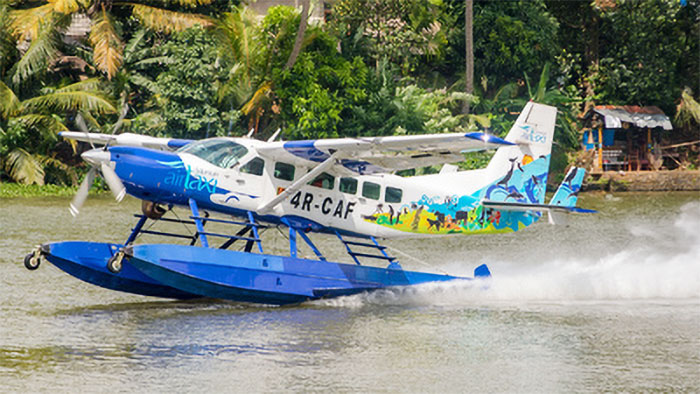
Cessna 208 Caravan amphibian seaplane of Cinnamon Air, 4R-CAF
In addition all, domestic flight movements are restricted by the SLAF. Approvals are required from far too many organisations. It was suggested that there should only be a maximum of two organisations facilitating the operations, with all approvals addressed via a single regulatory body.
Additionally, today there is no dedicated domestic terminal for operators at Colombo-BIA, a situation that creates confusion for passengers. The cost of establishing Cinnamon Air’s own terminal at BIA will undoubtedly be passed on to the company’s passengers, driving ticket prices higher.
Navigation aids at Ratmalana International Airport (RIA) are not sufficient. After the crash in 2015 of a SLAF Antonov An-32 transport due to bad visibility at Hokandara which is on the final approach to RIA, the SLAF requested CAASL to provide a usable navigational radio aid, but to no avail yet.
In the Sri Lanka Civil Aviation Policy 2017 there is a clause which authorises the use of ‘Cabotage’ rights. Wikipedia defines cabotage rights as “the right of a company from one country to trade in another country. In aviation, it is the right to operate within the domestic borders of another country.”
Most countries do not permit aviation cabotage, and there are strict sanctions against it, for reasons of economic protectionism, national security, or public safety. It was therefore declared that cabotage rights should be handled with grave concern, and should be discussed further at a higher levels.
There was a recent development in FitsAir (Friends in the Sky) when the company lost 50% of its employee cadre (pilots, engineers, mechanics, flight dispatchers and cabin crew), as many migrated to greener pastures. In the near future, to prevent operations coming to an almost standstill FitsAir may have to hire expatriates to replace the lost knowledge and experience which cannot be rebuilt overnight.
With reference to spares, FitsAir ran an ATR 72 operation in Indonesia. In contrast to Sri Lankan operations, they had only a minimum stock of spares on the rack. The other spares were ordered as and when required, with Indonesian Customs clearing and delivering them in a timely manner, usually within 24 hours. That was the guarantee in place. In a comparative Sri Lankan scenario, it would have taken many months to obtain the same spare parts, resulting in the aircraft remaining grounded in the interim while losing money for its owner/operator.
At present, a tourist wishing to transfer from an international flight to a domestic flight or vice versa at BIA, is not facilitated with a seamless, coordinated process by Customs, Immigration, Quarantine (CIQ), and the Airport and Aviation Security (AASL) Security. Instead, he/she must walk a long way in the process that is unacceptable, especially to ‘high end’ tourists. There is no satisfactory place in the BIA terminal for a tourist to wait. In short there seems to be a major communication problem, for which tourists should not be penalised. Domestic aviation is an expensive yet important exercise in the interest of an attractive and hassle-free tourist experience. Yet domestic airline brand-names and the availability of those airlines’ services within Sri Lanka are not mentioned in websites on Sri Lankan tourism, although other stake-holders are acknowledged.
It was felt that tourism marketing was carried out haphazardly, and selling was unplanned. For example, Singapore has 49,000 MICE (Meetings, Incentives, Conference and Exhibition) tourism venues, while Sri Lanka sadly has fewer than ten. Sri Lanka needs to actively capture that market, but so far has done nothing of the sort. Every organisation is living in its own bubble and not working as a team.
The wedding market, catering especially to visitors from the Indian subcontinent, is another potentially high foreign exchange earner in which domestic aviation can actively participate.
Overall, there is a lack of awareness by all concerned, including the regulator, who should come at least halfway out of his corner.
What can be done about it?

ATR 72-200 of FitsAir, 4R-EXN
There was also a suggestion that domestic aviation should come under the umbrella of the Tourism Development Authority. At the moment the rapport maintained with the Tourism Authority is not encouraging.
It was suggested that, as in India, a Viability Fund and Connectivity Fund (to safeguard operator and customer alike) should be established. It was declared as doable and a good way of jump-starting the domestic aviation industry.
Possible Solutions as contained in the Executive Summary
· Third level airlines could be established to train and develop personnel for the international, regional and domestic aviation industries.
· Air travel facilities available should be publicised abroad through our embassies/high commissions.
· Domestic aviation must be subsidised by the government, perhaps using the Tourism Development Fund. This Tourism Development Levy (TDL) should include a component for aviation or domestic aviation strategies, which is a lengthy process which takes time to begin functioning.
· 16 domestic airports available.
· CAASL must liberalise and not use international standards (SARP’s) rigidly on domestic services (alternative means of compliance could achieve equal or better safety standards).
· The Government must not encourage subsidised airlines to distort the fair prices of domestic air travel. For instance the SLAF-operated Helitours model.
· Encourage private investment.
· Realistic CAASL security oversight (to facilitate and not to obstruct).
· Always ‘Safety First’.
· Available national industrial experts to be utilised.
· Healthy competition to be established in a level playing field.
· Domestic air service orientated and fully integrated with road and rail as suggested by the Aviation Policy of 2017.
Note:
A Viability Fund to safeguard the operator assuming that the flight was operating full every time all the time. For example, if an eight-seat aircraft was flying with only four passengers, then the other four seats would be subsidised by the fund.
A Connectivity Fund to cap the ticket fare to a more affordable value to popularise the flight.
Both funds to operate for a limited time, e.g. three or five years.
Finally, it was suggested that to move forward, domestic aviation should work closely with SLAITO (Sri Lanka Association for Inbound Tourist Operators) which has a seat in almost all the Tourist Development Forums.

by By Kasun Kariyawasam
and Shiran Illanperuma
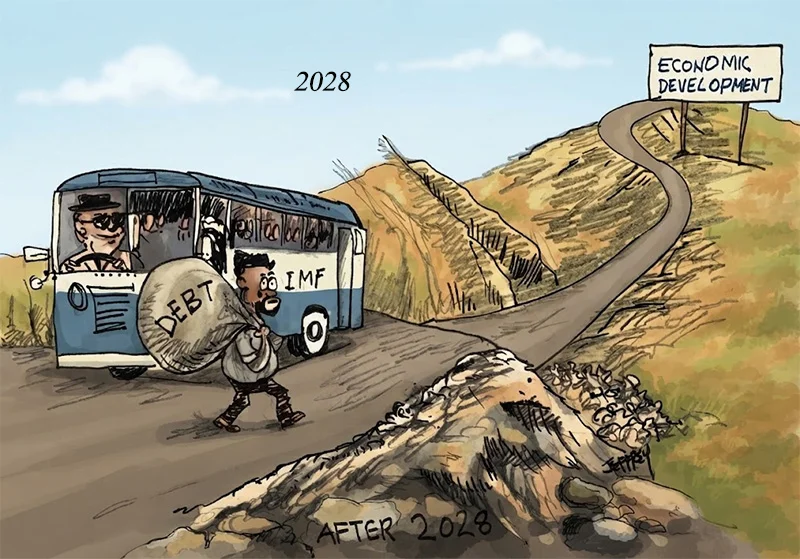
In March 2027, Sri Lanka’s Extended Fund Facility with the International Monetary Fund (IMF) will expire. It is the seventeenth arrangement the country has entered into with the Fund since 1965. That number is not a footnote; it is the argument. Sixteen previous left the underlying structure of the economy intact – an economy that imports what it consumes, exports what it cannot process further, and borrows to cover the difference. Each programme ended, and the conditions that produced it reassembled themselves.
The seventeenth has been the most invasive. Approved on 20 March 2023, in the aftermath of the sovereign default and the uprising that followed, it arrived at a moment of maximum leverage for the creditor and minimum room for the debtor. Fiscal consolidation was achieved primarily through indirect taxation, so that the burden fell heaviest on the poor. Energy subsidies were withdrawn and utility pricing made cost-reflective, transmitting global price movements directly into household budgets and industrial input costs. Public investment was compressed, and public sector wages held below inflation for years.
The revenue target was met but the social consequences are now well documented.
First, poverty in Sri Lanka roughly doubled after 2022 and has remained near a quarter of the population – a level not seen for two decades. Malnutrition among children, school dropout, and the depletion of household savings and assets are the transmission channels through which a fiscal adjustment becomes a lost generation.
Second, the most mobile and most skilled workers – nurses, doctors, engineers, IT workers – have left in numbers that constitute a structural loss of productive capacity, subsidised by the Sri Lankan state and captured by the labour markets of the Gulf, East Asia, and the West.
Third, and the least discussed, is the loss of economic sovereignty. The Central Bank Act of 2023 grants the Central Bank of Sri Lanka operational independence under a narrow inflation-targeting mandate and prohibits the monetary financing of government deficits, removing an instrument of development finance that every industrialised economy used on its way up. The Economic Transformation Act of 2024 legislates the programme’s own quantitative targets as binding statutory obligations on all future governments.
Although the IMF programme ends in March 2027, the framework it installed does not. Austerity has been converted into a legal architecture. Any government that wishes to finance development after 2027 will find that the fiscal space to do so has been pre-emptively legislated away, and that the debt service profile steps up sharply from 2028 as the restructured bonds begin to amortise in earnest.
The instruments on the table
Three instruments are currently under discussion for managing the debt portfolio. Each is worth examining on its merits, and each shares a common limitation.
Macro-linked bonds.
The upside triggers are more likely to be hit than the underlying real economy warrants, because the reference variable is dollar GDP. A nominal appreciation of the rupee lifts dollar GDP without a single additional unit of output being produced. The control variable intended to guard against precisely this – a requirement of 11.5% cumulative real growth – is a low bar following two consecutive years of contraction, when the base effect alone does much of the work. The country may find itself paying creditors a growth premium for an exchange rate movement.
Climate swaps.
Debt-for-nature and debt for-climate arrangements can retire a portion of the stock and may unlock multilateral climate grants, which are concessional. But they do not address the productive structure that generates the deficit in the first place, and their conditionalities – conservation commitments over land, forest, and coastal zones – can cut directly against the industrial and energy build-out that any serious development strategy requires. A country cannot finance debt relief by constraining its own industrialisation.
Bond buybacks. Retiring restructured bonds converts a contingent, complex portfolio into a plainer one, which makes debt management tractable. If the bonds trade below face or recovery value, Sri Lanka retires debt at a discount. Lazard reportedly advised this course for Zambia, so the playbook exists. However, Sri Lankan bonds have performed strongly since the restructuring, which means the discount that would make a buyback attractive has largely disappeared. A buyback becomes cheap only if sentiment softens again, or if specific contingent tranches are marked down on fear of the upside triggers. Moreover, a sovereign buying back its own debt shortly after a restructuring invites the interpretation that it anticipates difficulty, which raises the cost of future issuance. Selective buybacks are worth pursuing, given the uncertain external environment and the value of a cleaner portfolio, but that they are a marginal improvement rather than a solution.
All three instruments manage the existing stock of debt. None of them generates new finance for development. They are exercises in liability management, and a country cannot manage its way out of underdevelopment. Sri Lanka needs relief and it needs capital, and the current conversation addresses only the first.
Building the domestic architecture
New financing without new institutions reproduces the crisis. Before Sri Lanka seeks capital abroad, it must rebuild the machinery that governs how it borrows.
The primary dealer system requires reconstruction on a proper legal footing. Before the crisis, the primary dealer network degenerated into a captive placement channel: when the central bank could no longer absorb unsold stock, dealers took paper on terms set by proximity rather than price. This is allocation by moral suasion, and it produced a domestic debt market that told the government nothing useful about the cost of its own borrowing. Rebuilding it with binding contractual obligations, genuine capital requirements, and published performance rankings – as China does for its own dealer network – would restore price discovery. A government that cannot read a true yield curve cannot manage a debt portfolio.
Sri Lanka also needs a published Medium-Term Debt Management Strategy (MTDS) with explicit targets for the composition of the portfolio: external against domestic, concessional against commercial, and fixed against floating rate. Borrowing at present is reactive, driven by immediate financing needs rather than by a strategic view of currency, rollover, and interest rate risk. An MTDS makes those trade-offs visible and accountable. It is unglamorous and it is prerequisite.
The China angle
Sri Lanka’s most underused financial asset is its existing relationship with China’s monetary and capital market infrastructure. A currency swap line of 10 billion RMB is already in place, renewed in 2025, and it functions almost entirely as a passive reserve backstop. It could be the foundation of a financing strategy.
Broaden the use of RMB for trade settlement.
The swap is presently constrained in its permitted uses. Extending it to cover bilateral trade invoicing and settlement would reduce the dollar dependency that is the primary transmission channel for external volatility into the Sri Lankan economy. Every import invoiced in dollars is a claim on reserves that fluctuates with US monetary policy, over which Sri Lanka has no influence whatsoever.
Request eligibility for the FIMA RMB repo facility.
China’s facility, announced in June 2026, provides eligible central banks with access to RMB liquidity against holdings of Chinese government bonds. For Sri Lanka this would mean an RMB reserve buffer that is genuinely liquid rather than notional, and a second source of emergency liquidity that does not require a Fund programme as its precondition.
Issue panda bonds in the onshore Chinese market.
Sri Lanka has already begun refinancing dollar-denominated loans from Chinese banks into RMB, which establishes the precedent and the relationships. Issuance in the Shanghai interbank market would lock in RMB funding at rates below what the Eurobond market will offer a recently defaulted sovereign, and it diversifies the creditor base away from the Paris Club and Western commercial holders whose collective action in 2022 and 2023 was itself a lesson in concentration risk.
Access the offshore dim sum market in Hong Kong.
The offshore CNH market is deep – new issuance reached $157.2 billion in 2025 – and is a plausible source of medium-term infrastructure financing on terms that do not carry policy conditionality.
Integrate with CIPS.
None of the above scales without payments infrastructure. Integration with China’s Cross-Border Interbank Payment System reduces exposure to dollar-clearing volatility, carries lower transaction costs than routing through SWIFT correspondent banking, and is what allows the swap facilities to be used at volume rather than symbolically.
Establish direct LKR–RMB settlement.
Building on the Indonesia–HKMA–PBoC framework of June 2026, a direct settlement mechanism for bilateral trade would give Sri Lanka a working channel into one of the largest markets in the world, and create a pipeline for foreign direct investment and other inflows that does not transit the dollar system at all.
Multipolarity as infrastructure
What Sri Lanka should build is a blueprint for a local currency settlement corridor that can be scaled to any partner. Begin with China, where the infrastructure already exists, and extend it to India, the country’s nearest neighbour and one of its largest trading partners, where rupee settlement arrangements are already operating with other states. The same institutional template – bilateral swap, direct settlement mechanism, payments system linkage, local currency invoicing – applies to any counterparty with which Sri Lanka has meaningful two-way trade.
The immediate prize is energy. A large share of Sri Lankan inflation originates in oil, transmitted through both the world price and the exchange rate at which it is paid. That volatility does not merely raise the cost of living; it creates genuine industrial hurdles, because manufacturers cannot plan around input costs that move with a currency they do not earn. Denominating energy imports in local currency terms would break one of the most damaging transmission channels between external shocks and domestic prices. For a country whose recent history is defined by a fuel queue, this is not an abstraction.
Multipolarity, understood correctly, is a portfolio strategy. A sovereign with settlement channels in several currencies, funding relationships across several capital markets, and reserve buffers denominated in more than one unit of account is a sovereign with options during a crisis. Sri Lanka in 2022 had none, and the terms it accepted in 2023 reflect that.
By Chula Goonasekera,
on behalf of the LEADS Forum
Based on discussions with Ajith Wijemanna, Director General of the Department of Meteorology, and Kithsiri Abayasinghe, former Director of the Department of Meteorology
Sri Lanka may be facing another major natural challenge. Unlike many disasters, however, the warning signs are already visible, giving the country an opportunity to prepare before the situation becomes critical.
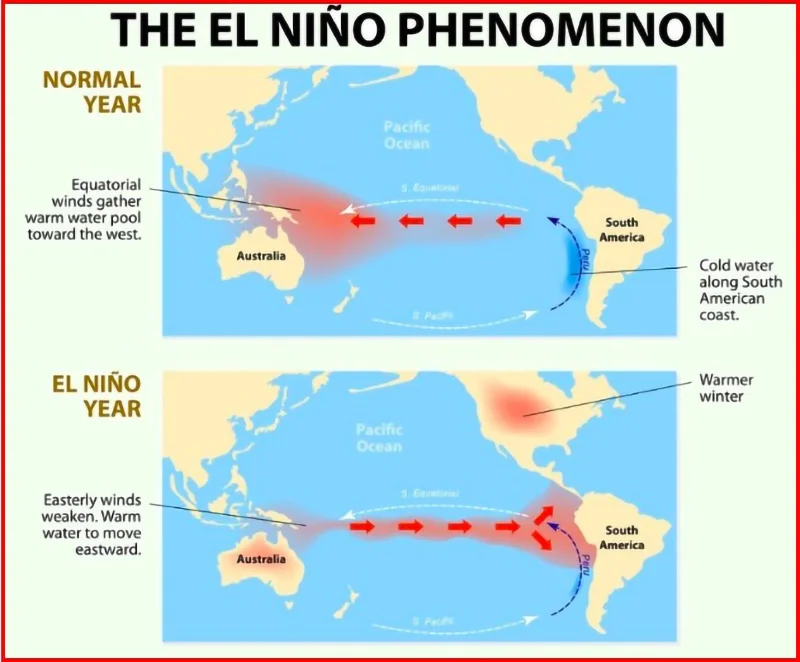
A recent discussion with two of Sri Lanka’s most experienced meteorologists highlighted concerns about the developing El Niño phenomenon and its potential consequences for the country. While no scientist can predict with certainty exactly how El Niño will evolve, current indications suggest the possibility of above-normal rainfall later this year, followed by reduced rainfall and potentially severe drought conditions in early 2027.
This is a warning Sri Lanka cannot afford to ignore.
Most Sri Lankans still remember the devastation caused by the Indian Ocean tsunami in December 2004. El Niño is fundamentally different. It does not arrive as a single catastrophic event. Instead, its effects can develop over many months, potentially bringing drought, water shortages, crop failures, extreme heat, wildfires, flooding and food insecurity.
The critical difference is that, unlike a tsunami, El Niño gives us time to prepare.
Sri Lanka therefore has a choice: act on the warnings now or pay a far greater price later.
We Must Not Wait for Disaster
The 2004 tsunami exposed Sri Lanka’s vulnerability to large-scale disasters and demonstrated the immense human and economic costs of inadequate preparedness.
El Niño cannot be prevented. However, many of its potentially damaging consequences can be reduced through early planning, effective coordination, public awareness and practical risk-reduction measures.
The purpose of this article is not to predict exactly what will happen. Rather, it is to ask a more important question:
Are we prepared for what could happen?
Depending on the intensity and evolution of El Niño, Sri Lanka could face:
· severe drought and prolonged dry spells;
· water shortages affecting households, agriculture and industry;
· reduced agricultural production and increased food insecurity;
· increased risks of forest and grassland fires;
· heatwaves and heat-related illness; and
· localised flooding caused by unusually heavy rainfall.
One threat deserves particular attention: wildfires.
During prolonged dry periods, fires can spread rapidly through forests and grasslands, destroying ecosystems, wildlife habitats, agricultural land, livelihoods and critical infrastructure, while placing enormous pressure on emergency services.
The lesson is straightforward: understanding potential worst-case scenarios before they occur greatly improves our ability to prevent them from becoming national catastrophes.
A Crucial Role for Disaster Management
We understand that Sri Lanka’s Disaster Management Centre (DMC) is already engaged in preparing the country for the potential impacts of a stronger El Niño event. Its focus must remain on helping communities prepare before emergencies arise, while ensuring that essential services continue to function during periods of crisis.
Disaster response and recovery come at a high cost to the public through government expenditure and taxpayer-funded resources. Investing in preparedness is therefore not only a humanitarian responsibility but also a sound economic strategy—particularly at a time when Sri Lanka continues to face considerable fiscal constraints and limited capacity to absorb another major shock.
The principle is clear:
Prevention is invariably less costly than recovery.
Every rupee invested in preparedness today can help prevent far greater social and economic losses tomorrow.
Listen to the Scientists
The public should pay close attention to forecasts and guidance issued by the Department of Meteorology.
At the same time, it is important to recognise that long-range forecasting is inherently complex. Climate systems involve countless interacting variables, many of which cannot be measured or predicted with complete accuracy months in advance.
When a forecast subsequently changes, this should not automatically be regarded as a failure of science. Forecasting is, by its nature, an assessment of probabilities and risks based on the best available evidence at a particular point in time.
The appropriate response is not to dismiss forecasts because they contain uncertainty, but to use them as tools for informed preparation.
What Should the Government Do?
The Government and relevant public institutions should urgently review Sri Lanka’s preparedness for drought, flooding, wildfires and extreme heat.
Key priorities should include:
· strengthening climate monitoring and early-warning systems;
· improving weather forecasting and public communication;
· developing comprehensive drought, flood and wildfire preparedness plans;
· enhancing reservoir, catchment and water-resource management;
· maintaining drainage infrastructure to reduce urban flooding;
· strengthening wildfire prevention, detection and response capabilities;
· investing in climate-resilient infrastructure; and
· establishing clear lines of responsibility and coordination among government agencies.
Coordination is particularly important. During a national emergency, citizens should never be left wondering which institution is responsible for taking action.
Water Security Must Be a National Priority
If prolonged dry conditions materialise, water security could become one of Sri Lanka’s most pressing challenges.
The country should strengthen groundwater protection, support the rehabilitation and maintenance of wells, and implement long-term water-security strategies in drought-prone regions. Such measures are important not only for human communities but also for agriculture, livestock and the natural ecosystems that sustain the country’s biodiversity.
Reservoirs and catchments must be managed carefully, while water conservation should be actively promoted among households, businesses, industries and farmers.
The key question is simple:
How much water will Sri Lanka require if the dry season lasts significantly longer than expected?
That question is far easier to answer before reservoirs begin to run dry.
Protecting Agriculture and Food Security
Agriculture remains highly vulnerable to drought and irregular rainfall. Significant disruption could result in rising food prices, reduced farm incomes and increased pressure on vulnerable households.
Sri Lanka should accelerate the adoption of drought-resistant crops, climate-smart farming techniques and efficient irrigation systems, including drip irrigation. Measures should also be taken to secure water and feed supplies for livestock, maintain strategic food reserves and strengthen weather-based advisory services for farmers.
Food security must be regarded not merely as an agricultural concern but as a matter of national resilience.
Preparing for Wildfires
Prolonged dry conditions can significantly increase wildfire risks. Sri Lanka must strengthen its capacity to prevent, detect and respond to fires before they escalate.
An effective strategy should rest on four pillars:
Prevention. Preparedness. Early detection. Rapid response.
Seasonal climate forecasts should be used to identify periods of heightened risk. Vegetation dryness, weather conditions and fire-prone regions should be monitored systematically, with modern technologies used wherever feasible.
Firebreaks should be established and maintained around vulnerable communities, forests and critical infrastructure. Dry vegetation and other combustible materials should be appropriately managed. Where environmentally and scientifically justified, carefully regulated controlled burning could also form part of an integrated fire-management strategy.
Human activity is responsible for many wildfires. During high-risk periods, open burning should therefore be restricted and unsafe land-clearing practices rigorously controlled. Public education campaigns should reinforce these measures.
Firefighting resources should be pre-positioned in high-risk areas before peak fire seasons begin. Adequate equipment and water supplies should be secured, and coordination strengthened among local authorities, fire services, forestry officials, disaster-management agencies and, where necessary, the armed forces.
Where practical and affordable, aerial firefighting capabilities should also be considered.
The guiding principle is straightforward:
Fight fires when they are small, rather than after they become uncontrollable.
Protecting Sri Lanka’s Natural Ecosystems
Healthy ecosystems are among the country’s most effective natural defences against climate stress.
Sri Lanka should protect wetlands and other water-retaining ecosystems, conserve forests, prevent unnecessary land clearing and fragmentation, and safeguard wildlife habitats from fire and degradation.
Forest conservation is not simply an environmental issue. It is central to water security, food security, biodiversity protection, public health and long-term national resilience.
Citizens Also Have a Responsibility
Preparedness cannot be the responsibility of government alone.
During dry periods, households should conserve water and avoid unnecessary waste. Communities should ensure that wells are cleaned, maintained and restored where necessary, particularly if prolonged disruptions to piped water supplies occur.
During periods of extreme heat, people should remain hydrated, avoid unnecessary outdoor activity and follow public health advice.
Families should maintain basic emergency plans and supplies. Communities in fire-prone areas should know evacuation routes and designated safe assembly points. Citizens should also avoid activities that could inadvertently start fires and remain alert to official warnings.
Particular attention should be given to vulnerable groups, including older people, people with disabilities and those with limited mobility. Communities should also be prepared for the health effects of wildfire smoke and deteriorating air quality.
From Response to Preparedness
Sri Lanka’s greatest challenge is not responding when disaster strikes. It is ensuring that natural hazards do not develop into national catastrophes.
This requires a fundamental shift from a culture of reaction to a culture of preparedness.
Government agencies, scientists, farmers, businesses, schools, community organisations and individual citizens all have important roles to play. A coordinated approach combining climate forecasting, land management, public education, community preparedness, early-warning systems and rapid emergency response can significantly reduce the risks posed by El Niño and other climate-related threats.
Even if severe drought conditions do not materialise, investments in preparedness will strengthen Sri Lanka’s resilience against future disasters. If severe conditions do occur, early preparation could save lives, protect livelihoods, reduce economic losses and prevent a difficult situation from escalating into a national crisis.
Sri Lanka has already learned, at enormous cost, the consequences of being unprepared. We should not wait for another disaster to teach us the same lesson.
The warning signs are present. The scientists are speaking. The risks are increasingly clear.
What remains is the political will and public commitment to act.
Preparation today will always cost less than recovery tomorrow.


After nearly 77 years of wildlife conservation, Sri Lanka must strengthen the institutions, professional leadership and political will needed to safeguard its natural heritage for generations to come.
By Dilum Alagiyawanna
Sri Lanka has a long and proud history of protecting its natural heritage. Generations of wildlife officers, forest officers, scientists, researchers, field staff and conservationists have worked, often under difficult circumstances, to protect our forests, wildlife and ecosystems. Their contribution deserves recognition and respect.
One important milestone in this journey came in October 1949, when the Wildlife department was established as a separate institution, following the Fauna and Flora Protection Ordinance of 1937 and the expansion of the country’s wildlife reserves. The creation of a dedicated department reflected an important recognition of the time: wildlife conservation required specialised institutional attention.
Today, nearly 77 years after its establishment, Sri Lanka has an opportunity not simply to reflect on that institutional journey, but to consider what kind of institutions and leadership we need for the next 75 years.
This is not an argument about the individuals currently holding positions in our conservation institutions. Nor is it intended to question the commitment, professionalism or sacrifices of the many public servants who have served these institutions over the years.
It is a broader institutional question.
What kind of leadership does Sri Lanka need to protect its natural heritage in the 21st century?
The issue is not who occupies a particular position today. It is whether our system of identifying, developing and appointing leaders is designed to meet the conservation challenges of tomorrow
A Changing conservation landscape
When many of our major conservation institutions were established, the principal challenges were relatively straightforward: establish protected areas, prevent poaching, enforce wildlife legislation and protect forests and wildlife from direct exploitation.
Those responsibilities remain fundamental.
But conservation today is considerably more complex.
Habitat fragmentation, expanding infrastructure, human-elephant conflict, climate change, invasive species, pollution, wildlife disease, road mortality, unplanned tourism and competing demands for land and water are placing increasing pressures on ecosystems.
Conservation can no longer be treated as an isolated environmental concern.
A highway can fragment a wildlife habitat. An irrigation project can alter an ecosystem. Poorly planned tourism can degrade a protected landscape. Agricultural expansion can affect wildlife movement. Climate change can alter species distributions, water availability and ecosystem resilience.
Conservation therefore intersects with agriculture, irrigation, energy, transport, tourism, disaster management, climate policy, land-use planning and national economic development.
It has become a multidisciplinary national policy challenge.
Beyond administration: What conservation leadership requires
There is nothing inherently wrong with a career public service.
Sri Lanka needs a professional, impartial and experienced public administration. Administrative knowledge, institutional memory and an understanding of government procedures are indispensable to the functioning of the State.
The question is whether administrative experience and seniority alone should be the principal criteria for leading institutions entrusted with complex living ecosystems and irreplaceable natural capital.
I believe they should not.
Leadership of major natural-resource institutions should combine administrative competence with scientific and technical understanding, field experience, strategic thinking, integrity, sound judgement and a demonstrated commitment to conservation outcomes.
This is not an argument for automatically replacing administrators with scientists. Nor is personal passion for nature, by itself, sufficient.
What Sri Lanka needs is mission-driven professional leadership.
A person leading a conservation institution should understand not only how to administer a government department, but also why that institution exists, what ecological outcomes it is expected to achieve and what may happen if those outcomes are not achieved.
Dr P. E. P. Deraniyagala: A legacy of scientific leadership
Sri Lanka’s own history provides a remarkable example of what can happen when scientific expertise, intellectual curiosity and institutional leadership come together.
Dr P. E. P. Deraniyagala was a zoologist, palaeontologist and naturalist whose contribution to Sri Lanka’s natural heritage extended far beyond the formal responsibilities of a government position.
He was appointed Director of the Colombo Museum in 1939 and, following the reorganisation of the museums, became the first Director of the Department of National Museums, a position he held until his retirement in 1963. His scientific work ranged from Sri Lanka’s living fauna to fossil elephants and other extinct prehistoric mammals.
It lies in what he brought to that position.
He brought scientific curiosity, intellectual independence, research capability and a lifelong commitment to understanding Sri Lanka’s natural heritage.
He did not simply administer an institution concerned with heritage. He contributed to the body of knowledge upon which our understanding of that heritage depended.
That is an important lesson for today.
Our conservation institutions must not merely administer conservation programmes. They must increasingly become knowledge-driven institutions capable of generating, interpreting and applying scientific evidence to management decisions.
From institutional continuity to institutional renewal
After nearly 77 years of experience, the appropriate response is not to criticise or dismantle the institutions that have served the country.
It is to ask how we can make them stronger, more scientifically capable, technologically advanced and better equipped for the next 75 years.
The challenges of 2026 are vastly different from those of 1949.
Satellite remote sensing, GIS, GPS telemetry, camera trapping, drones, genetic analysis, artificial intelligence and ecological modelling can transform how wildlife and ecosystems are understood and managed.
But technology alone cannot transform conservation.
Institutions need the scientific capacity to interpret information, the field capacity to collect reliable data and, above all, leadership capable of turning evidence into timely decisions.
A capable leader, however, also needs an institution with adequate resources, professional autonomy, scientific capacity and the authority to act. Leadership reform therefore cannot be reduced simply to changing individuals. It must also strengthen the institutional environment in which those individuals operate.
From species management to ecosystem stewardship
Sri Lanka must also move beyond a narrow concept of wildlife management.
An elephant is not simply an animal to be managed when it enters a village.
A leopard is not simply a species to be protected when a conflict occurs.
A forest is not simply a designated area on a map.
Each exists within a larger ecological system.
Effective conservation therefore requires landscape-level thinking: protecting habitats, maintaining ecological connectivity, securing watersheds, managing human activity and ensuring that development decisions properly account for ecological consequences.
Conservation expertise must therefore be incorporated into national development planning before decisions are made, rather than being brought into the process after environmental conflicts have already emerged.
Preventing conservation conflicts before they reach the courts
There is another reality that cannot be ignored.
For decades, conservationists, environmental organisations, researchers, professionals and concerned citizens have repeatedly found themselves having to seek administrative, political and sometimes judicial intervention when environmental concerns have not been adequately resolved through normal institutional processes.
The courts have consequently become an important safeguard for environmental protection.
But this should make us ask a deeper question.
Why should citizens repeatedly have to go to court to protect a forest, wildlife habitat, wetland or other environmentally sensitive area when the State already has institutions, laws, scientists and regulatory mechanisms designed to address these matters?
Judicial intervention is an essential component of a democratic system and an important safeguard for the public interest. But courts should not have to become the primary mechanism through which conservation policy is resolved, case by case.
A judicial determination necessarily operates within the legal and evidentiary framework before the court. It cannot substitute for a scientifically informed conservation policy or a strong institutional mechanism capable of identifying and resolving environmental risks at an early stage.
The objective should therefore be to build institutions strong enough to prevent many of these disputes from reaching the courtroom in the first place.
Conservationists and environmental organisations should ideally be able to engage with government institutions early in the decision-making process, supported by credible scientific evidence and transparent procedures, rather than being forced into the role of permanent opponents of the State.
Leadership that gets decisions right
This is precisely why Sri Lanka needs conservation leadership with the knowledge, independence, judgement and courage to make the right decisions at the right time.
Good conservation leadership is not simply about enforcing the law after a conflict has emerged.
It is about anticipating problems, understanding ecological consequences, identifying risks early and taking scientifically sound decisions before an issue becomes a political, social or legal dispute.
Sometimes the right decision may require saying no.
Sometimes it may require proposing a better alternative.
And sometimes it may require bringing scientists, communities, development agencies and political decision-makers together early enough to find a solution that protects both the public interest and the environment.
This is not about confrontation with governments or development.
It is about preventing unnecessary confrontation by getting the decision right in the first place.
The right leader can prevent a conservation problem from becoming an administrative problem, an administrative problem from becoming a political problem, and a political problem from ultimately becoming a legal dispute.
The best conservation decision is often the one that prevents the conflict from arising in the first place.
Conservation requires political will
Strong professional leadership, however, is not enough.
Conservation also requires political leadership with the vision, commitment and political will to support the right decisions, particularly when they may be difficult or politically inconvenient.
India’s Project Tiger, launched in 1973, provides a compelling example. The Government of India established the programme in response to the serious decline of tiger populations, creating a national conservation initiative that combined scientific management, protected areas and strong political commitment.
Indira Gandhi’s interest in environmental protection and her government’s support helped create the political conditions for major conservation initiatives during that period.
The lesson is not that political leaders should run conservation institutions.
It is the opposite.
Political leadership must create the space, authority and support for professional conservation institutions to do their job properly.
A scientifically sound decision made by a conservation institution can achieve little if political leadership is unwilling to stand behind it. Conversely, political will, working together with scientific and professional leadership, can turn a good conservation idea into a transformative national programme.
Sri Lanka needs both sides of this equation:
professional conservation leadership capable of making the right decisions, and political leadership with the will to support those decisions in the national interest.
The ideal relationship is not political interference in conservation.
It is political commitment to evidence-based conservation.
Natural Heritage Is National Capital
Sri Lanka’s natural resources should also be recognised as national capital.
Forests support water security.
Wetlands provide natural flood protection.
Healthy watersheds support agriculture and hydropower.
Biodiversity supports tourism.
Marine ecosystems support fisheries.
Intact landscapes provide resilience against climate-related disasters.
When these systems are degraded, the country incurs an economic cost.
The question should therefore not simply be:
How much will conservation cost?
It should also be:
How much will it cost Sri Lanka if we fail to conserve its natural capital?
This is why conservation expertise must be integrated into national development decision-making from the beginning.
Choosing the leaders for tomorrow
Sri Lanka does not lack people with knowledge, experience and commitment.
Our universities, research institutions, wildlife and forest services, professional organisations and civil society contain scientists, researchers, field practitioners and conservationists with considerable expertise.
What is needed is a system that allows this expertise to contribute more effectively to institutional leadership.
Future appointments to senior positions in natural-resource institutions should therefore consider more than administrative seniority.
They should consider:
Scientific and technical competence
Conservation and field experience
Strategic leadership
Institutional management capability
Integrity and independence
Understanding of communities and stakeholders
A demonstrated record of achieving meaningful outcomes
Such a system would not weaken the public service.
It would strengthen it by bringing administrative excellence and conservation excellence together.
The Wildlife Department is a useful lens through which to examine this broader question, but the issue extends far beyond wildlife. It concerns every institution entrusted with Sri Lanka’s forests, biodiversity, wetlands, coastal ecosystems, marine resources and other forms of natural capital.
What should Sri Lanka’s conservation institutions look like for the next 75 years?
Sri Lanka should be proud of the conservation institutions it has built since the middle of the last century.
But institutional pride should never become institutional complacency.
The establishment of the Wildlife Department in 1949 was itself an example of institutional adaptation. The country recognised that wildlife conservation had become sufficiently important and specialised to require a dedicated institution.
The same principle applies today.
The conservation challenges of 2026 are vastly different from those of 1949.
The answer is not to abandon what was built.
It is to evolve it.
We need conservation institutions that are stronger, more scientific, more innovative and better equipped to influence national development decisions.
We need leadership selection systems that recognise conservation as a specialised professional responsibility.
We need a public service in which administrative excellence is complemented by scientific expertise, field experience and a genuine commitment to conservation outcomes.
And we need political leadership with the vision and will to recognise that protecting natural capital is not an obstacle to national development, but an essential condition for sustainable national prosperity.
This is not about replacing individuals.
It is about building a better system for the future.
It is not about weakening existing institutions.
It is about strengthening them for the challenges ahead.
And it is not about choosing between development and conservation.
It is about ensuring that development does not destroy the natural capital upon which Sri Lanka’s long-term prosperity depends.
After nearly 77 years of dedicated wildlife conservation, perhaps this is the right moment to ask a fundamental question:
What should Sri Lanka’s conservation institutions look like for the next 75 years?
The answer should not reject the past.
It should be an ambitious evolution of it.
Because when the next generation looks back at our time, they will not judge us simply by how well we administered the institutions we inherited.
They will judge us by what forests remained standing, what species survived, what ecosystems remained intact, and whether we had the wisdom and courage to pass on Sri Lanka’s extraordinary natural heritage in better condition than we received it.
Author: Dilum Alagiyawanna is a telecommunications engineer turned environmental and wildlife conservationist, citizen scientist and wildlife documentary filmmaker. His work bridges science, public policy and sustainable development, with particular emphasis on the long-term conservation of Sri Lanka’s elephants and other threatened species.

Muneeba, Pakistan’s spinners knock Thailand out of Asia Cup

Showers will occur in the Western and Sabaragamuwa provinces and in Galle, Matara, Kandy and Nuwara-Eliya districts

Sun directly overhead Anamaduwa, Moragollagama, Dambulla, Manampitiya and Valaichchenai, at about 12.10 noon today (02)

SC rejects petitioners’ request for full bench

Seven years RI for former Civil Aviation Minister Piyankara Jayaratne

40 professional organisations and TU oppose proposed 22A

‘Dates have the highest sugar content to fight Coronavirus’

Sunday Island 27 December – Headlines

#SundayIsland 17th December – Headlines

Sunday Island – 28th March

Sunday Island Headlines – 21 March

Sunday Island – 21st February – Headlines
-

 News5 days ago
Eight politicians in drug kingpin probe
-

 Features3 days ago
“Wrap Me Up in My Blazer”— A Gentlemanly Bradby Reminiscence
-
 Business5 days ago
Sri Lanka opens up: A new season of direct connectivity
-

 Features5 days ago
Redefining ageing in Sri Lanka
-
 Latest News6 days ago
Nepal-Tibet floods: What happened, what caused them and who is missing?
-

 Editorial6 days ago
Unfolding El Niño and burning issues
-
 Foreign News7 days ago
At least eight killed, hundreds missing after Nepal flash flood
-
 Latest News7 days ago
Advisory for High Waves for the sea areas extending from Colombo to Pottuvil via Galle, Matara and Hambantota