
News
HRCSL asks govt. to revise Online Safety Bill


The Human Rights Commission of Sri Lanka (HRCSL) thas urged the government to revise the recently gazetted Online Safety Bill. It has made seven recommendations.
In a letter addressed to the Minister of Public Security Tiran Alles, the HRCSL has revealed its preliminary observations and recommendations on the controversial Bill.
The HRCSL has said the general observations and recommendations are presented for consideration in view of revising the Bill to ensure compatibility with the fundamental rights Chapter of the Sri Lankan Constitution.
Text of the HRCSL letter: We write to you with reference to the Bill titled ‘Online Safety’ published in the Official Gazette on 18 September 2023. We have reviewed the said Bill and wish to share our observations and recommendations on the Bill in terms of our mandate under section 10(c) of the Human Rights Commission of Sri Lanka Act, No. 21 of 1996. The said provision empowers the Commission to ‘advise and assist the government in formulating legislation…in furtherance of the promotion and protection of fundamental rights’.
At the outset we wish to acknowledge that making online spaces in Sri Lanka safer for its citizens is a valuable legislative objective. However, we observe that law enforcement authorities in Si Lanka have encountered significant challenges in interpreting and applying existing provisions of criminal law applicable to the online activity of citizens. The most significant example in this regard relates to section 3 of the International Covenant on Civil and Political Rights (ICCPR) Act, No. 56 of 2007. On the one hand, the said provision has not been adequately enforced to address online incitement to violence. On the other hand, the said provision has been misapplied to punish online content that does not constitute incitement. We draw your attention to the Commission’s general guidelines on the scope of section 3 of the ICCPR Act published in August 2019. The Commission wrote to both the Attorney-General and the Inspector General of Police pointing out that section 3 of the Act was not being applied in a ‘consistent and even-handed manner’. However, we observe that this Act continues to be misapplied to online activity that does not constitute incitement. The Commission also wishes to draw your attention to the recent order of the High Court in Case No. HCEBA/1335/2023, in which the Learned High Court Judge A.M. Patabendige made certain key observations with respect to the scope of section 3 of the ICCPR Act and its misapplication in that case.
In view of the foregoing general concern, the Commission invites you to reconsider the timing of the proposed Bill. The strengthening of institutional capacity of law enforcement authorities to interpret and apply the existing criminal law in good faith should precede any proposals to introduce new legislation with criminal offences pertaining to online activity. Proceeding with such legislation without such institutional reform will irreversibly jeopardise the freedom of speech and expression and elated fundamental rights of the people of Sri Lanka.
In any event, the following general observations and recommendations are presented for your consideration in view of revising the Bill to ensure compatibility with the fundamental rights chapter of the Sri Lankan Constitution:
1. The Bill should avoid criminalising statements deemed merely to be ‘distressing’ to persons, as feelings of ‘distress’ can vary in degree and can be highly subjective. Remedies for such injury are best left to civil proceedings wherein damages can be sought by the injured person.
2. The proposed Online Safety Commission should be appointed through an appointment mechanism that guarantees its political independence. This Commission should not be vested with quasi-judicial powers, nor with powers to designate online locations as ‘declared online locations’.
3. The provisions in the Bill that set out procedures for adverse decisions to be made against persons should be consistently revised to ensure that such persons be afforded an opportunity to be heard in keeping with the rules of natural justice.
4. The various offences in the Bill that relate to ‘prohibited statements’, which incite others to commit offences, already found in the Penal Code Ordinance, No. 2 of 1883, need to be either removed due to such new offences in the Bill being superfluous, or substantially revised in terms of their precision, and the rationality, reasonableness, and proportionality of the penalties imposed.
5. Clear criteria for the classification of ‘inauthentic online accounts’ should be included in the Bill in a manner that preserves the freedom of online users to remain anonymous, and to engage in parody or satire.
6. Experts appointed to assist police investigations should not be vested with police powers, as they may be private actors who are not publicly accountable.
7. The Commission welcomes the introduction of a new offence on child abuse through online means and encourages the Ministry to work closely with the relevant ministries dealing with the subjects of Justice and Child Affairs to introduce such an offence through a separate enactment.





News
Prime Minister of Sri Lanka holds a bilateral meeting with Minister for Education and Skills Development of Bhutan

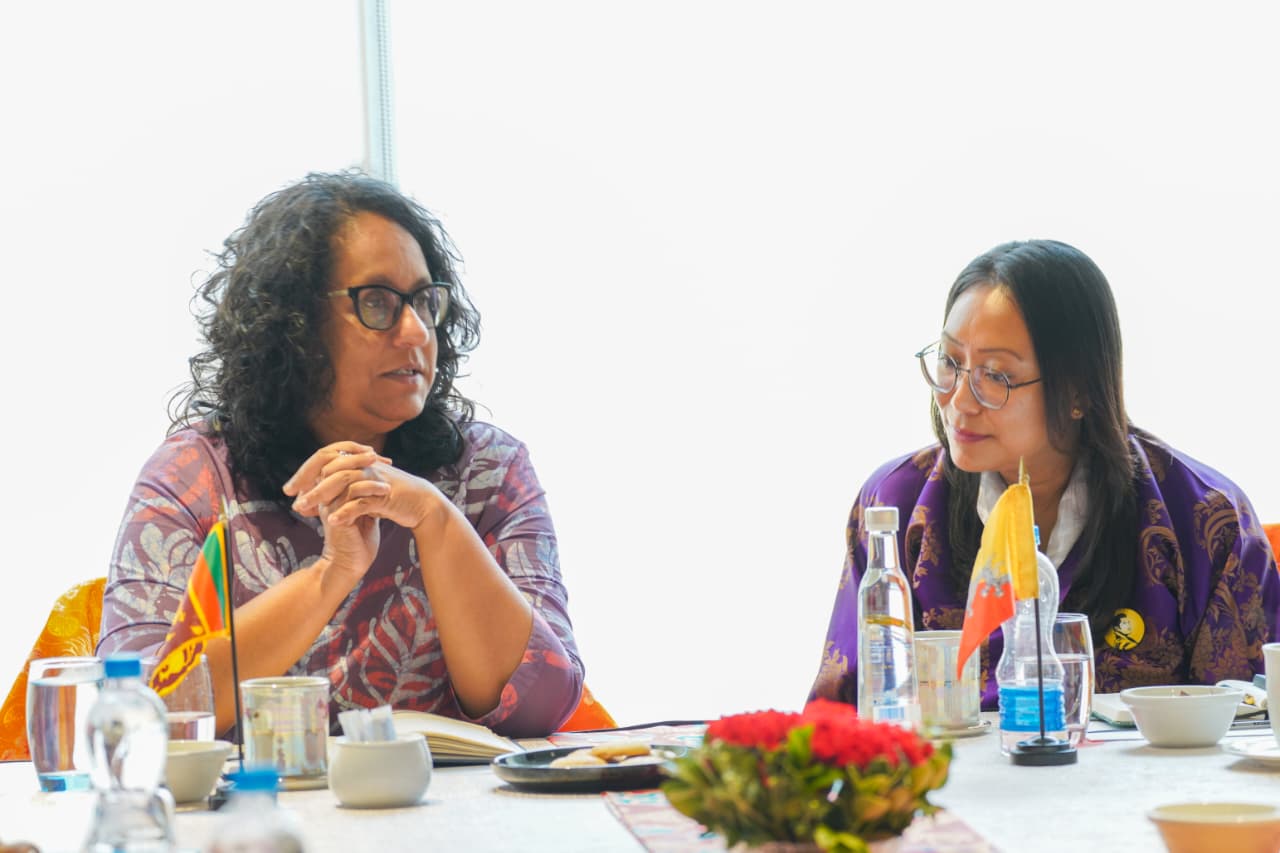
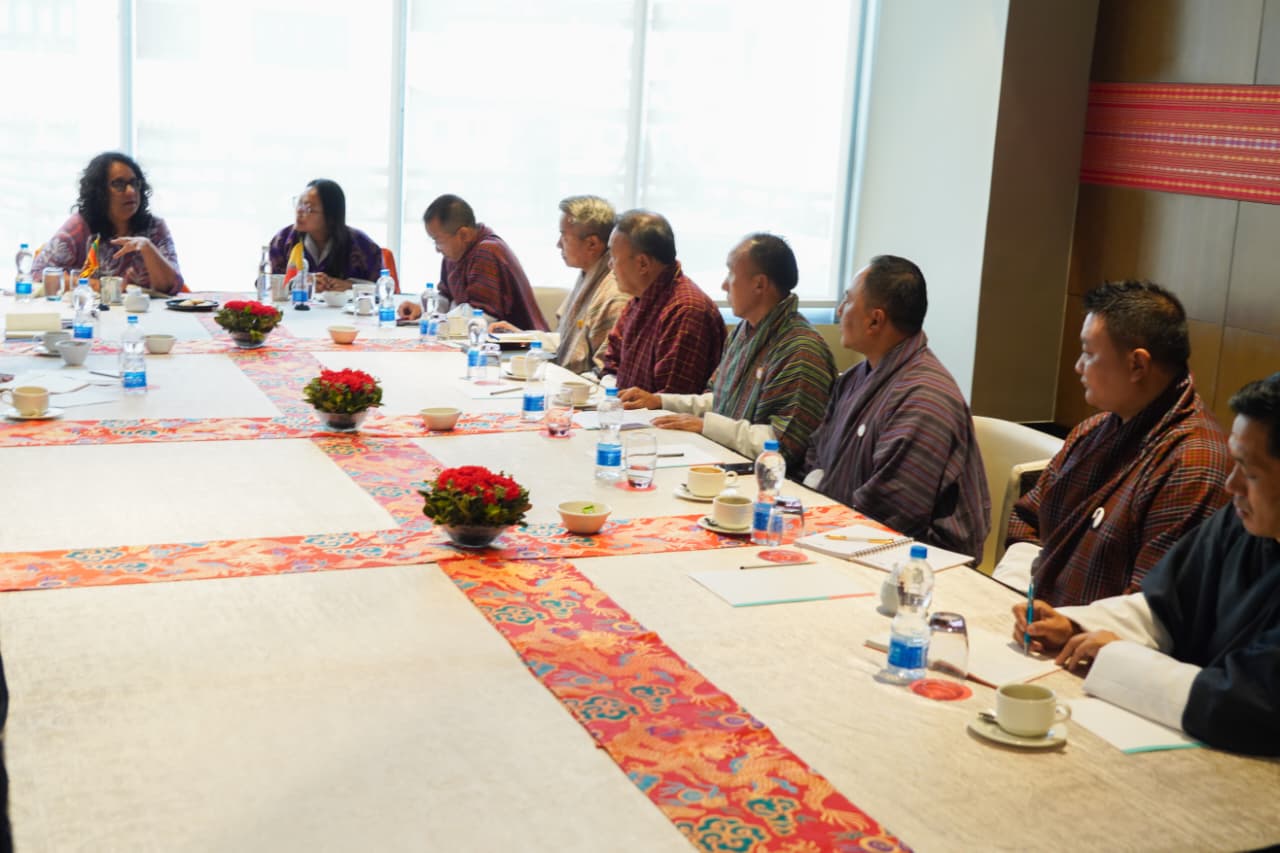
On the sidelines of the inaugural Global Conscious Food Systems Summit 2026, being held in Bhutan from 31 August to 4 September 2026, Prime Minister of Sri Lanka, Dr. Harini Amarasuriya, in her capacity as Minister of Education, Higher Education and Vocational Education, held a productive bilateral meeting with Yeezang De Thapa, Minister for Education and Skills Development of Bhutan, on 03 September 2026.
The discussions focused on further strengthening and expanding Sri Lanka-Bhutan cooperation in the education sector, with particular emphasis on developing mutually beneficial initiatives through enhanced Government-to-Government engagement.
Both sides underscored the importance of deepening institutional cooperation and exploring new avenues for collaboration in education, higher education and vocational training, with a view to creating greater opportunities for students, educators and academic institutions of both countries.
During the meeting, both sides agreed to initiate discussions towards the finalization and signing of a Memorandum of Understanding (MoU) on cooperation in the fields of education and vocational training. It was also agreed that the implementation of the MoU could be facilitated through the establishment of a Joint Working Group, headed at the Secretary level, with meetings to be convened annually to review progress, identify new areas of cooperation, and facilitate the effective implementation of agreed activities.
The major areas of cooperation discussed included enhancing collaboration among universities and academic institutions, promoting academic and faculty exchanges, joint research and university programmes, strengthening training and capacity-building opportunities for educators and teachers, and sharing expertise and best practices in the education and vocational training sectors.
The two sides also discussed strengthening child protection and safeguarding mechanisms, promoting ethical values among students, and addressing violence against children while ensuring their safety, protection, well-being and access to quality education.
Opportunities for Bhutanese students to pursue undergraduate studies at universities in Sri Lanka were also discussed, with particular emphasis on Dentistry, Medicine (MBBS), and allied health disciplines such as Physiotherapy. The discussions further covered opportunities for postgraduate studies in medical and health sciences at Sri Lankan universities, as well as enhanced collaboration among universities and other academic institutions of the two countries.
The meeting provided a valuable opportunity for Sri Lanka and Bhutan to advance cooperation in education and vocational training and explore new avenues for long-term collaboration for the mutual benefit of students, educators and academic institutions of both countries.
(Prime Minister’s Media Division)
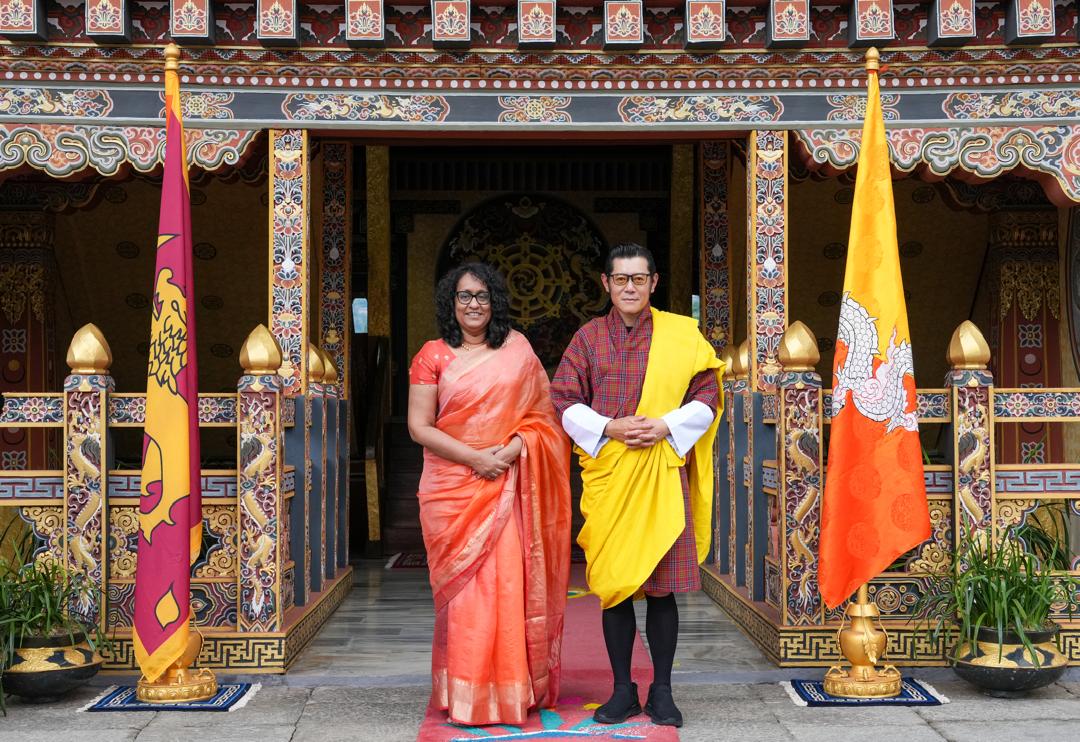
Prime Minister Dr. Harini Amarasuriya had an audience with His Majesty King Jigme Khesar Namgyel Wangchuck at the Tashichhodzong in Thimphu on September 02, during her official visit to the Kingdom of Bhutan.
The cordial discussion focused on Bhutan’s future development priorities and opportunities for cooperation between the two countries.
His Majesty expressed Bhutan’s interest in drawing on Sri Lanka’s experiences and expertise in areas relevant to its development plans. The discussion also focused on promoting investment between the two countries, including the possibility of establishing an investment zone in Bhutan.
The two sides also exchanged views on demographic challenges facing Bhutan, including the increasing migration of young people and its impact on the country’s population and future workforce.
The meeting highlighted the importance of strengthening bilateral cooperation and sharing experiences and best practices in support of the sustainable development of both countries.
(Prime Minister’s Media Division)
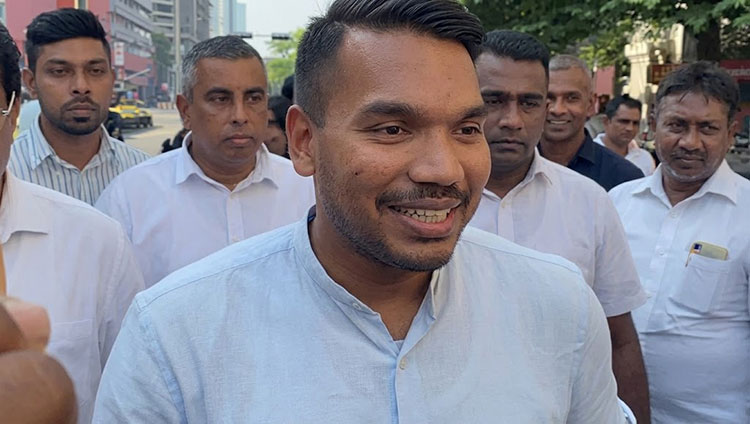
Sri Lanka Podujana Peramuna (SLPP) Member of Parliament Namal Rajapaksa has been arrested by the Commission to Investigate Allegations of Bribery or Corruption (CIABOC).
Namal Rajapaksa had been summoned by CIABOC to provide a statement in connection with investigations into the controversial Airbus deal. He was subsequently arrested by CIABOC after recording his statement for over 5 hours.

Prime Minister of Sri Lanka holds a bilateral meeting with Minister for Education and Skills Development of Bhutan

Prime Minister Meets His Majesty the King of Bhutan

Kusal Mendis, Binura Fernando ruled out of T20I series in England

SLPP MP Namal Rajapaksa arrested by CIABOC

Devapathiraja clinch U15 Division I title with 33-run win over Royal

Mandhana’s record ton powers India into semi-finals

‘Dates have the highest sugar content to fight Coronavirus’

Sunday Island 27 December – Headlines

#SundayIsland 17th December – Headlines

Sunday Island – 28th March

Sunday Island Headlines – 21 March

Sunday Island – 21st February – Headlines
-

 Features6 days ago
“Wrap Me Up in My Blazer”— A Gentlemanly Bradby Reminiscence
-

 Features5 days ago
When Sri Lankan stories find their own voice
-
 Features6 days ago
JVP/NPP government as seen from outside by Lionel Bopage now domiciled in Australia
-

 News5 days ago
BASL takes exception to Justice Ganepola being denied a place in SC
-

 Editorial7 days ago
Govt. trying to dupe UN Rapporteur?
-
 Features6 days ago
Prof. Savitri Goonesekere: What has she done?
-

 News2 days ago
Denied of promotion to SC despite vacancies, justice Gurusinghe retires
-

 Latest News2 days ago
Grade 5 scholarship exam results released