
News
RW says great power rivalries and geopolitics emerging threat to Third World


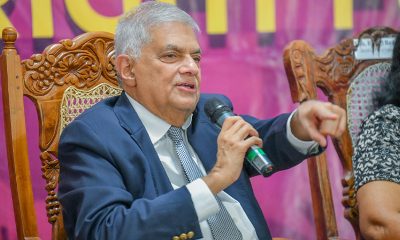
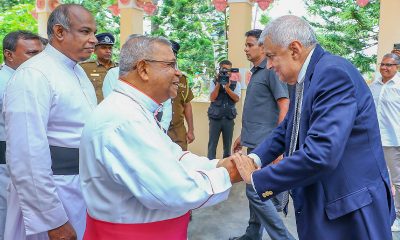
The West has labeled China’s Belt and Road Initiative as a cohesive program, and the participating countries like Sri Lanka are looked upon with suspicion, President Ranil Wickremesinghe said on Thursday (28) at the Berlin Global Conference.
“This will further hurt economic prospects in the global South, and the polarization will become more evident,” he said.
Great power rivalries and geopolitics have been an emerging threat for open access to trade, investment, capital, and technology that are vital for the economic recovery of the developing world, Wickremesinghe said.
He said that recently Jake Sullivan, United States national security advisor to President Joe Biden, rejected the Washington Consensus at an address at the Brookings Institute.
“With the new concept of de-risking and decoupling, the developing South, which was compelled to follow the Washington Consensus, is now asked to do a 180 degree turn even without consultation with us. With decoupling, whatever it is, we have been asked to change the system. We were compelled to get into it. Now we are told this is no longer relevant,” he said.
Wickremesinghe said the global south is now looking for alternative leadership, given the expansion of the BRICS and the downgrading of G20. In 2024, the US leadership might change and that people are wondering what policy changes would ensue.
“We know in 2024, the US leadership may not be there. Then who is going to act? So I think it’s a chance for the EU to come up and work with the other countries. There’s no one else. So I am suggesting that the EU, together with G20 BRICS, certainly USA, and some selected other Asian and African nations, the IMF and the NDBs, and you can bring in the big financial institutions, private ones, sit down and find urgent solutions,” he said.
The President said the world requires a constructive dialogue between the West and China.
“We need a constructive dialogue between the US and China. We need a constructive dialogue between the EU and China. Otherwise we will not move forward. So this is the stark reality. It’s a question of how we get together and how we work, and who’s going to take the lead in 2024,” he said.
Below are excerpts of the speech : “I don’t think in any other period of modern history have we gone through this type of a crisis. And in all these instances, it’s the developing economies and the global south that has suffered extremely. We are now faced with stubbornly high inflation in advanced economies, oil prices edging towards US $100 a barrel, and monetary tightening by the global central banks.
“One example is that Sri Lanka’s export to Europe has not increased at all this year, so far this year. That’s an indication of how we are being affected as we try to recover from the crisis we face. The confluences of factors face serious risk for many developing countries. In the global south, we are facing rising import costs, food, energy, insecurity, and the problems of our exports. The resulting balance of payment stress translates into a weaker economy for all of us. The difference between the advanced economies and the developing nations is that you all have all the buffers and reserves to deal with these shocks. We haven’t. And it’s from here that the sovereign debt crisis started.
“In this context, I think the world may be in another crisis if corrective measures are not taken immediately. Many developing countries find themselves with large debt burdens. For example, the IMF has no mechanism to face this new situation. When Sri Lanka declared bankruptcy, all foreign funding ceased and that started the political crisis. If not for the help given by the World Bank in re-graduating Sri Lanka, and the help given by my old friend Samantha Power in funding us with fertilizers, the chances are that I may not be, I would not be able to come here today.
“The funding on the table is woefully inadequate to address the vast challenges at hand. So we haven’t got any money. But we do have 100 billion with the IMF. Let’s start with that money. 100 billion is better than nothing. Then let’s see how we can raise the rest of it. Because though I talk of Sri Lanka, I must say Africa’s needs, especially of the low-income countries, are far greater than ours. The problems Africa faces need not be described by me because I think there are enough representatives here.
The developing countries require financing up to US 5.9 trillion to fulfil their nationally determined contributions. Then a further US 4 trillion, for clean energy technology to achieve net zero emissions, look at Sri Lanka’s financing needs for our climate prosperity plan to succeed. We need five billion US dollars by 2030.
“This is a country that’s bankrupt. And the IMF states, we’ll have for the next few years a growth rate of 3.5% if you are lucky. Here again, global coordination and leadership to resolve these challenges have simply not been sufficient to address the magnitude of the urgency of the problem. So what we need here is a new architecture.
Now we’ve been talking of the many crises and shocks we have discussed today. And we’ve been talking about what we have to do. First, we’ve all agreed that the core of the international financial architecture today was designed almost 80 years ago. The world has seen dramatic changes since then with many emerging economies in Asia, Middle East, South America, and Africa becoming global economic powerhouses.”








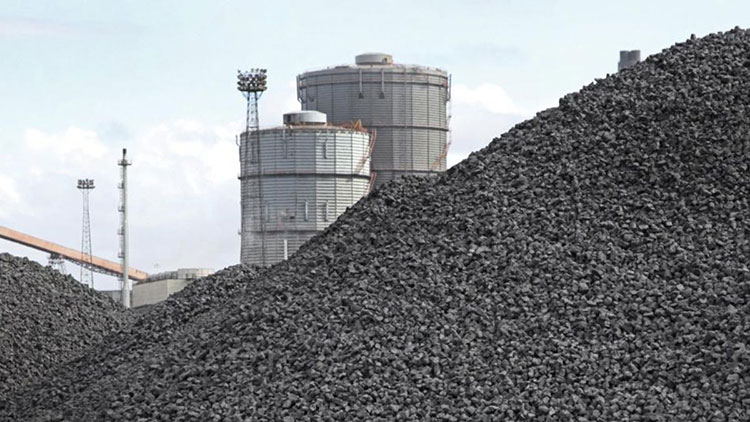
Open hearing of evidence into alleged irregularities in coal procurement is scheduled to begin in the first week of July, while the Presidential Commission of Inquiry continues recording statements from relevant officials, investigators said.
So far, the Commission has recorded statements from around 40 government officials, including members of procurement committees and other personnel attached to institutions involved in coal-related transactions.
Officials said that, depending on evidence gathered during the ongoing inquiry, statements may also be obtained from former ministers if required.
The Commission has also received 28 complaints in connection with alleged irregularities in coal imports and related procurement processes.
President Anura Kumara Dissanayake on April 17 appointed a three-member Presidential Commission of Inquiry under the Special Presidential Commissions of Inquiry Act No. 07 of 1978 to probe alleged malpractice in coal imports and electricity generation since the inception of coal-based power generation up to April 16, 2026.
The Commission is chaired by Supreme Court Justice Gihan Kulatunga, with Court of Appeal Judge Aditya Patabendige and High Court Judge Sanjeewa Somaratne serving as members. Former State Ministry Secretary P.V. Bandulasena acts as Secretary to the Commission.
The inquiry covers alleged procurement irregularities, possible financial losses to the State, import of substandard coal, quality inspection failures, contractual breaches and operational issues in power generation, including whether corrective measures were taken where necessary.
It will also identify responsible political authorities, officials of Sri Lanka Coal Company (Private) Limited and suppliers, while recommending legal or administrative action and measures to prevent future lapses.
Meanwhile, the Committee on Public Enterprises (COPE) is also preparing to table its report on coal procurement in Parliament, with officials from relevant institutions having been summoned during its proceedings. COPE Chairman MP Dr. Nishantha Samaraweera said audit findings had also been considered, and any matters requiring further investigation would be referred to law enforcement and anti-corruption authorities.
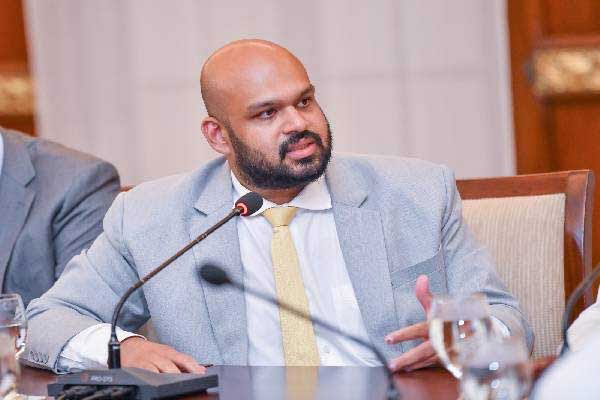
Trincomalee District TNA MP Shanakiyan Rasamanickam has submitted a motion to Parliament calling for the immediate repeal of the Prevention of Terrorism Act (PTA), arguing that the controversial law has enabled arbitrary detention, torture and the targeting of minority communities for more than four decades.
In his motion, now published in the Addendum to the Order Book of Parliament, the MP urged the Government to repeal the Prevention of Terrorism Act, No. 48 of 1979, in its entirety and refrain from introducing any replacement legislation containing similar provisions.
Rasamanickam contended that the PTA had been used for over 40 years to facilitate prolonged arbitrary detention and to obtain false confessions through torture. He further alleged that the law had disproportionately affected minority communities and civil society groups.
The motion states that there is no justification for maintaining a permanent counter-terrorism law that grants sweeping powers to the authorities.
The TNA legislator argued that existing legal provisions were sufficient to address security threats, noting that terrorism-related offences could already be prosecuted under the Penal Code.
He also pointed out that the Government retained the power to declare a state of emergency when circumstances warranted extraordinary measures, rendering a permanent anti-terrorism framework unnecessary.
Accordingly, the motion calls on Parliament to resolve that the Government take immediate steps to abolish the PTA without replacing it with legislation containing comparable powers.
The Prevention of Terrorism Act, enacted in 1979, has long been the subject of criticism from human rights organisations, civil society groups and international bodies, which have raised concerns over provisions relating to detention without trial and safeguards against abuse.

An assistant manager and a security officer attached to a state bank branch in Horana have been arrested in connection with the robbery of more than Rs. 30 million that was being transported to replenish automated teller machines (ATMs), Police said.
The two suspects were taken into custody on Friday after statements were recorded from them regarding the incident, which occurred on Wednesday afternoon at the Horana branch of the People’s Bank.
According to Police, a bank employee was carrying two bags containing cash through the rear entrance of the bank at around 2.45 pm when an individual who had arrived on foot allegedly snatched the bags and fled the scene.
The stolen money, amounting to approximately Rs. 30.5 million, had been prepared for distribution to ATM machines and transportation to other bank branches. Earlier reports had estimated the loss at around Rs. 35 million.
Investigators subsequently arrested a suspect believed to have been directly involved in the robbery and recovered Rs. 17 million of the stolen cash.
Police have not disclosed the exact circumstances that led to the arrest of the assistant manager and security officer but said investigations uncovered information linking them to the incident.
The Western Province North Crime Division is conducting further investigations to determine whether additional suspects were involved and to recover the remaining stolen money.
The daring daylight robbery has raised concerns over security procedures employed during the transportation of large sums of cash from banking institutions.Further investigations are continuing.
by Norman Palihawadane ✍️

Open hearing on coal procurement inquiry set for July first week

TNA MP calls for complete repeal of PTA

Assistant manager, security officer held over Horana bank cash robbery

Korea, UNDP launch anti-corruption initiative assessment in Lanka

Lankan audio drama earns international recognition at BBC competition

Lankan-Canadian inducted to Toronto Sports Hall of Fame

‘Dates have the highest sugar content to fight Coronavirus’

Sunday Island 27 December – Headlines

#SundayIsland 17th December – Headlines

Sunday Island – 28th March

Sunday Island Headlines – 21 March

Sunday Island – 21st February – Headlines
-

 News5 days ago
Lankan duo emerge winners in Latin dance championship held in Blackpool, UK
-
 Business6 days ago
IMF’s unstated rate:Sri Lanka’s $695m loan costs about 5.33% per annum
-
 Latest News3 days ago
Kusal Mendis, Pathum Nissanka, bowlers put Sri Lanka 1-0 up
-
 News3 days ago
New US tariffs proposed on 60 countries, including Sri Lanka
-

 Business6 days ago
Sri Lankan scientist-innovator Milinda Edirisinghe introduces AI-integrated gem testing system to gemological world
-
 Features2 days ago
Power crept into the Sangha and is now tearing it apart
-

 News6 days ago
UNP challenges NPP move to amend Vihara – Devalagam Act
-

 News5 days ago
Sri Lankan teen killed in Chennai clash; three arrested