
News
Kiriella flays govt. over using Bogambara as a quarantine facility

By Saman Indrajith
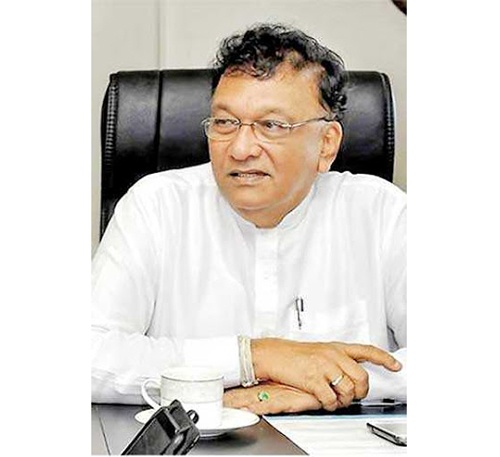
Having COVID-19 infected prisoners in the old Bogambara prison premises in Kandy was like keeping a ticking time bomb in the city, Chief Opposition Whip and Kandy District MP Lakshman Kiriella told Parliament yesterday (18).
At the time for Notices of Motions and Orders of the Day, MP Kiriella, with the permission of the Chair, said that he had warned Bogambara prisons now used as a quarantine centre that it would lead to the transmission the virus but the authorities had not heeded his warning. “There was an incident last night. Some of the infected inmates escaped. The guards opened fire and one person died and another was admitted to hospital. Some others have made good their escape. This is a dangerous situation. As I once said this is nothing but a ticking time bomb.
“We removed prisoners from Bogambara and started developing the facility as a cultural centre. After the change of government the project was suspended. After the detection of COVID cases in prisons, the infected persons were brought to the former Bogambara prison, which It is in the heart of the Kandy city.
There are around 50 people working within the prison premises, and they come to the city to buy their provisions. Soon there would be a massive number of infections in Kandy. On the other hand, it is the city where the sacred tooth relic of the Buddha is kept. The location of a quarantine centre there is improper. Please shift this quarantine centre.”
Kurunegala District SJB MP Nalin Bandara said that the Bogambara prison buildings were more than 200 years old and posed a serious threat to the lives of those held there. “I, as a deputy minister, participated in the Bogambara prison development project. Some sections of the building are on the verge of collapse. We wanted to restore them owing to its architectural and historical value, but before the project got underway, there was a change of government. So, the threat of buildings collapsing is still there. In addition to the health hazard, there is a threat to the lives of those being held in that place. We hope the government will take necessary action to avert a disaster waiting to happen.?


Four persons died in a head-on collision involving a car and a bus at Murasumoddai on the Paranthan-Mullaitivu road yesterday. Police said at the time of the accident, five persons were travelling in the car, of whom four died.
In another accident, one person died and six others sustained injuries when a three-wheeler collided with a car at Oyamaduwa, Anuradhapura. Police identified the dead person as the driver of the three-wheeler.
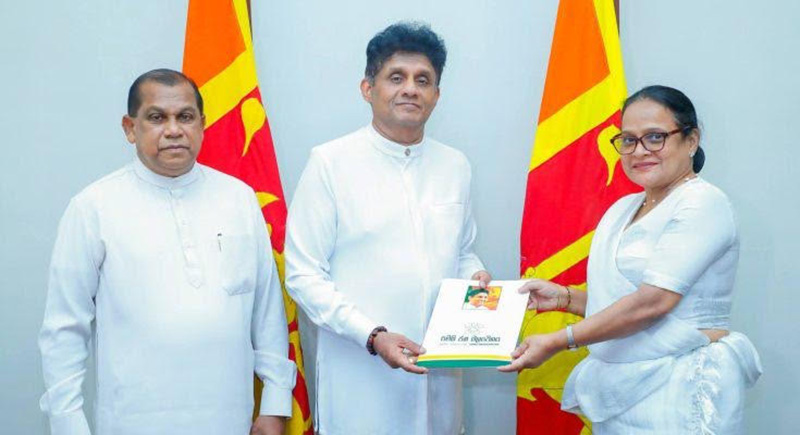
Member of Parliament Rohini Kaviratne has been appointed the Chairperson of the Samagi Vanitha Balawegaya, the women’s wing of the Samagi Jana Balawegaya (SJB).
The official appointment letter to Ms Kaviratne was handed over by the Leader of the Opposition, Sajith Premadasa yesterday in his office.
The General Secretary of the SJB, Ranjith Madduma Bandara, was also present during the handover. MP Kaviratne, known for her vocal advocacy for women’s rights and education in Parliament, is expected to lead the party’s women’s front in its future political and social initiatives.
News
Seventeen out of 18 court cases against SLFP concluded; Only Dayasiri’s case remains – Nimal Siripala de Silva
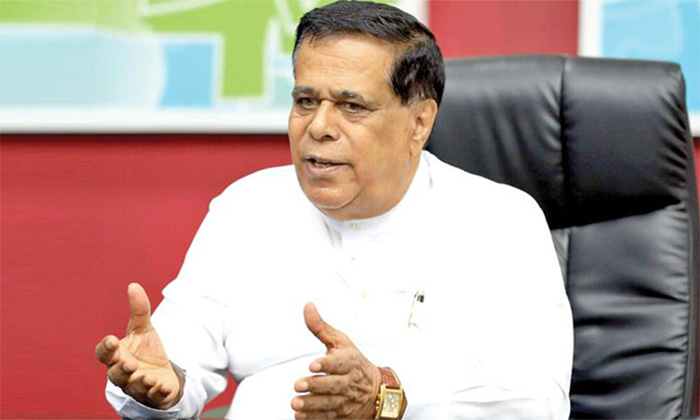
Sri Lanka Freedom Party (SLFP) Chairman Nimal Siripala de Silva announced that 17 out of the 18 court cases filed against the party have now been concluded, with only the case involving Dayasiri Jayasekara remaining.
The Chairman made these remarks in Kandy on Friday (09th) after paying homage to the Sacred Tooth Relic and calling on the Most Venerable Mahanayake and Anu Nayake Theros of the Malwathu and Asgiri Chapters.
“We are currently rebuilding the SLFP. Setting aside all differences, we are moving forward by uniting everyone. As part of this reorganisation, we have appointed MP Chamara Sampath Dassanayake, a skilled parliamentarian, as the National Organiser,” de Silva said. He expressed confidence that the remaining legal hurdle would soon be cleared, strengthening the party’s position for the upcoming Provincial Council election.
Addressing the media, the newly appointed National Organiser, MP Chamara Sampath Dasanayake, struck a defiant note. “It is difficult to rise once you have fallen, but we are back on our feet. Once we rise, it will be hard to knock us down again. In 1994, when we formed a government, this position was held by Anuruddha Ratwatte. Now that responsibility has been given to me. Wait and see what I achieve in the next six months,” he said.
The delegation included former ministers Wijeyadasa Rajapakshe, Mahinda Amaraweera, Duminda Dissanayake, Anuradha Jayaratne, Lasantha Alagiyawanna, and former Governor Tikiri Kobbekaduwa.
By S.K. Samaranayake

Five killed, six injured in two accidents

Ne-Yo … where are thou?

CMTA advocates removal of 15% depreciation and enforcement of 3-month registration policy

Rohini Kaviratne appointed chairperson of Samagi Vanitha Balawegaya

Seventeen out of 18 court cases against SLFP concluded; Only Dayasiri’s case remains – Nimal Siripala de Silva

Women in Tech Sri Lanka and Teens in AI bring the fourth annual International Women’s Day Global Techathon to Sri Lanka

‘Dates have the highest sugar content to fight Coronavirus’

Sunday Island 27 December – Headlines

#SundayIsland 17th December – Headlines

Sunday Island – 28th March

Sunday Island Headlines – 21 March

Sunday Island – 21st February – Headlines
-

 News2 days ago
Sajith: Ashoka Chakra replaces Dharmachakra in Buddhism textbook
-

 Business2 days ago
Dialog and UnionPay International Join Forces to Elevate Sri Lanka’s Digital Payment Landscape
-

 Features2 days ago
The Paradox of Trump Power: Contested Authoritarian at Home, Uncontested Bully Abroad
-

 Features2 days ago
Subject:Whatever happened to (my) three million dollars?
-

 News2 days ago
Level I landslide early warnings issued to the Districts of Badulla, Kandy, Matale and Nuwara-Eliya extended
-
 News7 days ago
Broad support emerges for Faiszer’s sweeping proposals on long- delayed divorce and personal law reforms
-

 News2 days ago
National Communication Programme for Child Health Promotion (SBCC) has been launched. – PM
-

 News2 days ago
65 withdrawn cases re-filed by Govt, PM tells Parliament