
News
President tells UN major powers need to curtail military expenditure

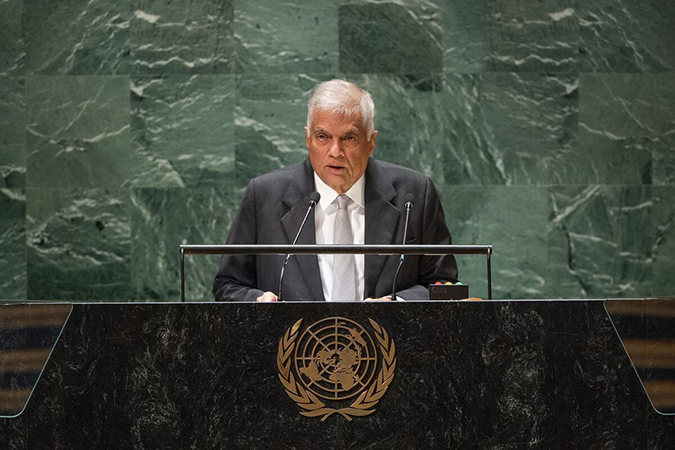
Neutral, nonaligned countries of the global South, such as Sri Lanka, are once again being dragged into conflicts between major powers that do not respect the sovereignty of our nations, President Ranil Wickremesinghe said addressing the UN General Assembly in New York on Thursday (21), highlighting the country’s recent challenges.
The President also urged the powerful nations to limit the increase of military expenditure which leads to escalation of conflict.
“While we seek solidarity and financing to alleviate poverty and climate challenges, global military expenditures have risen today to record levels, reaching $2.24 trillion. This reflects the strategic trust deficit among the powerful, key arms control frameworks which were instrumental in maintaining system stability in the past have collapsed and nuclear conflict is once again under open discussion, potentially and apocalyptically triggered by autonomous control. We urge restraint in the increase of military expenditure which leads to escalation of conflict,” he said.
Following is the full speech delivered by President Ranil Wickremesinghe at the 78th session of the United Nations General Assembly:
“Rebuilding trust and reigniting solidarity” is an appropriate point of departure, not only for reflecting on the challenges before the multilateral today, but also for reviewing developments in my own country, Sri Lanka, over the past year.
“At this time last year, amidst multiple global crises, Sri Lanka was experiencing its most challenging period in recent times, socially, economically and politically, which had a devastating impact on people’s lives.
“Even our democratic traditions were threatened by attempts to occupy our Parliament and bring it to a halt. Nevertheless, we succeeded in bringing about a democratic political transition, due to our deeply entrenched and resilient democratic traditions.
“Resorting to the re-graduation of Sri Lanka’s economy, coupled with the gift of fertiliser from the United States’ Government, which led to a bumper harvest, has assisted us in ensuring stability during that period.
“The reforms I have since initiated in the economic, financial, institutional, and reconciliation fronts have been directed on the one hand towards rebuilding trust and confidence between the people and the government; and on the other, towards laying the foundation for economic stabilisation and recovery. Sri Lankans are already witnessing the positive outcomes of these measures in their daily lives and the revival of confidence internally and externally in the progress of the country.
“It is my intention to lead the country towards sustainable and stable recovery and growth which will benefit all segments of Sri Lankan society in all parts of the country, ensuring a future of peace, prosperity and reconciliation for the present and future generations of women and men. In reaching this goal, we will be accompanied by the support, trust, and solidarity of our own people and of the international community.
“As we turn the corner towards the 80th Anniversary of the UN and prepare for the Summit of the Future in 2024, we see the fragmented geopolitical landscape of a multipolar world where new centres of global power have emerged.
“Accompanying this systemic change, are, on the one hand, great expectations of development and human progress with millions of people rising out of poverty to prosperity. On the other hand, we see a world where former big power rivalries and geopolitical tensions have reignited in open war, overlapping with new theatres of conflict and tension on land and in the oceans. Security Alliances have expanded and recent arrangements have been formed to deal with strategic threat perceptions in old and new theatres of conflict.
“North-South divisions are widening with the digital divide, the financial and debt crisis and the energy transition. Contrary to the promise of 2030, today we are seeing levels of poverty and hunger not witnessed since decades.
“Neutral, nonaligned countries of the global South, such as Sri Lanka, are once again constrained in-between new global power configurations facing those who do not respect the sovereignty of our nations.
“In numerous recent Declarations in the UN and beyond including at the G20 in Delhi, the BRICS in Pretoria and G7 in Hiroshima, we have agreed that our challenges are interconnected, across borders and all other divides. We must grasp the opportunity to unite in order to build an inclusive future.
“It is an appropriate reflection of this current global predicament, that the theme of this year’s general debate is “Rebuilding trust and reigniting global solidarity”.
“This year, in parallel with the UNGA, we have participated in three interrelated summits dealing with accelerating the SDGs, Financing for Development and Climate Ambition where we agreed that international solidarity and collective action is needed to address these simultaneously.
“Cross-border financial impacts of crises, such as climate change and the pandemic, are impeding the ability of smaller indebted countries, such as mine, to make progress on SDG’s and climate adaptation and mitigation. Conflicts and tensions among big powers are complicating the policy environment for the rest by adding uncertainty to economic and macro-financial stability, disrupting supply chains and causing inflation, as well as food and energy insecurity.
“Long before the SDGs, Sri Lanka had achieved high human and social development indicators which ranked us in a category well above other middle-income countries. Neither has Sri Lanka shirked its responsibility to the planet. Last year at COP27 we outlined our Climate Ambition Plan. We said that by 2030 we will have 70% renewable energy in electricity generation, increase forest cover by 32% and reduce greenhouse emissions by 14.5%. We will phase out coal by 2040, and reach net zero by 2050.
“Our low carbon development trajectory gave us one of the lowest per capita carbon emission rates for a lower MIC country. This year as a result of exogenous shocks and debt, the incremental progress we were proud to have reached has been reversed. Food inflation reached putting significant pressure on food security amongst vulnerable communities. At the same time children’s education and nutrition have suffered due to the pandemic and the economic crisis.
“In parallel, last month in Sri Lanka we were grappling with the driest weather spell seen in recent years, followed by torrential rainfalls. Adverse climate outcomes spill over onto our tight fiscal space just as we begin to stabilize from last year’s economic crisis. As a climate vulnerable developing country in debt crisis, the urgency to mobilize climate finance is greater today than it was ever before.
“However, despite promises made to which we were all witness, rich countries are not delivering to expectation. Developed countries must do their part and fulfill what they agreed – assume their share of the common but differentiated responsibility, provide assistance for mitigation and adaptation and compensation for loss and damage.
“National efforts alone will not suffice to ensure the success of the SDGs and reverse climate change. The need for global solidarity to restructure the international financial architecture is paramount. This is articulated loud and clear in multiple global fora including in G20, and the BRICS. The Secretary General’s SDG stimulus highlights the interconnections between the achievements of the SDGs, combating climate change and the concrete interventions required by creditors sovereign and private, as well as by IFIs including to mitigate the debt crisis.
“It is estimated that the 2008 financial crisis has cost the U.S. economy $4 trillion. Recent studies in the U.S. have stated that the impact of the pandemic on the U.S. economy from 2020 to 2024 would reach $14 trillion. These numbers would more than double if the rest of the global economy is added. We have not faced an economic crisis of this magnitude any time before in our modern history. The cost of World War 2 in today’s USD would amount to $4 trillion, and the Marshall Plan would be $ 150 billion.
“This is the magnitude of the challenge before us. Therefore if we are unable to restructure the global fiscal order, then certainly we will fail in the struggle to reverse climate change and achieve the SDG goals.
“There is still time for course correction as the crisis has not reached its peak. At the same time, the Paris Summit for a New Global Financing Pact will come up with the funding requirements.
“Therefore, the Summit of the Future should not be crafting new programmes, but re-structuring the present financial architecture to suit the needs of climate change and sustainable development.
“This must be the priority of this General Assembly; we cannot afford to allow divisions to drive focus away from this crisis. While key issues such as the Bridgetown Initiative and the necessity to address the debt of low-income countries are being discussed in this assembly, it is not commanding the attention it deserves. Unfortunately, the Security Council has failed to give priority to these connected issues of climate change, debt relief and sustainable development. This impacts the future of mankind. The survival of the planet must be our priority, we cannot afford to go into this war with a divided high command. The future of all species on the globe is dependent on our ability to put aside our rivalries until this crisis is solved.
“Multilateral machinery which reflects the world of the past century needs to be reformed to meet the challenges of the present and the future, a machinery which has failed to find a solution to the longstanding Palestine question. The composition of the Security Council must be expanded to be representative of current global diversity and decision-making. In parallel, the role of the UNGA must be strengthened.
“We are asking that the permanent members engage in a credible dialogue which will lead to a unified approach to combat these threats ahead of the next sessions. While we seek solidarity and financing to alleviate poverty and climate challenges, global military expenditures have risen today to record levels reaching $2.24 trillion. This reflects the strategic trust deficit among the powerful, key arms control frameworks which were instrumental in maintaining system stability in the past have collapsed and nuclear conflict is once again under open discussion, potentially and apocalyptically triggered by autonomous control. We urge restraint in the increase of military expenditure which leads to escalation of conflict.
“Developing countries have been the voice of sanity and reason in this regard for decades. In keeping with Sri Lanka’s longstanding position supportive of disarmament of WMD and nuclear weapons, this year Sri Lanka ratified the Comprehensive Test Ban Treaty. Yesterday, we acceded to the Treaty on the Prohibition of Nuclear Weapons.
“The war in Ukraine has far-reaching and severe financial and humanitarian repercussions on food, hunger and debt in all parts of the world including Sri Lanka. It is recalled that the UN Charter vests on powerful states in the Security Council the responsibility to maintain international peace and security and to deescalate rather than ignite conflict.
“We need to halt the momentum where this and other big power tensions are spilling over into established areas of international rules-based cooperation forged over decades of multilateral negotiation, ranging from international trade to ocean governance.
“This international system is today undergoing vast changes. At the same time, it is being confronted with unprecedented challenges. We come to the United Nations to demonstrate solidarity in arriving at common solutions. What is at stake is not the future of the United Nations, but of our planet as a whole. Member States will need to find new ways of working together despite the increasing mistrust that has permeated international relations.
“We who have not been able to find a solution to the Palestinian question must now at least be able to find a solution to the questions which threaten the existence of the present global community.
“This can be achieved through the willingness of the permanent members to work together in solidarity with the developing world. They must show the way.”
President Wickremesinghe also extended his sincere condolences to the victims and families of the natural disasters that hit Morocco and Libya in recent days and pledged solidarity with Moroccan and Libyan friends during this difficult time.

Latest News
Sun directly overhead Madampe, Thorayaya, Thotagamuwa, Rattota and Kalavanchikudy about 12.09 noon today (03)


The sun is going to be directly over the latitudes of Sri Lanka from 28th of August to 07th of September due to its apparent southward relative motion.
The nearest places of Sri Lanka over which the sun is overhead today (03) are Madampe, Thorayaya, Thotagamuwa, Rattota and
Kalavanchikudy about 12.09 noon.

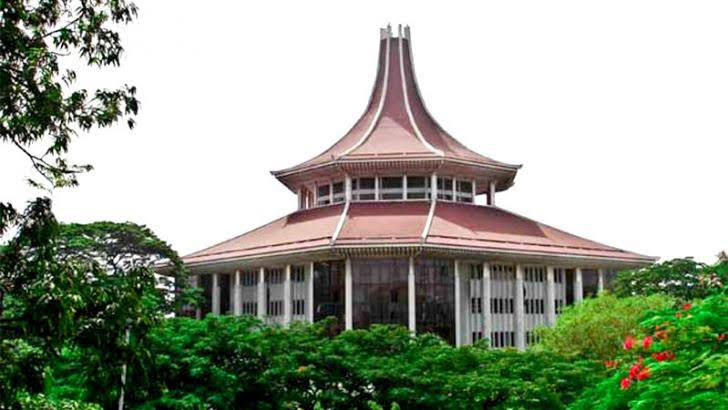
Attorney-at-Law Sugandhika Fernando, on behalf of the Vinivida Foundation, petitioned the Supreme Court yesterday (02), seeking a full bench, excluding Chief Justice Preethi Padman Surasena, to hear the petitions challenging the 22nd Amendment Bill. She also requested that the hearing be suspended immediately until the matter was fully heard and determined.
Among the respondents are Chief Justice Surasena, the first respondent, and Attorney General Parinda Ranasinghe. Justices Yasantha Kodagoda, Shiran Gooneratne, Achala Wengappuli and Priyantha Fernando have also been named as respondents.
The petitioner has sought to have quashed the decision of the first respondent to appoint a five-member bench, which she alleged was made in violation of the norms of public law. She also sought a bench comprising all Supreme Court judges, excluding those cited as respondents, to hear the special determination applications on the 22nd Amendment.
The petitioner further contended that Chief Justice Surasena, who is due to retire on December 1, 2026, would be the main beneficiary of the 22nd Amendment.
The hearing of the petitions continued for a second day yesterday (02) before a five-member Supreme Court bench comprising Chief Justice Preethi Padman Surasena and Justices Achala Wengappuli, Arjuna Obeyesekere, Sampath Abeykoon and Gihan Kulatunga.
The hearing, which commenced on Tuesday morning, continued for nearly 12 hours, until 10:30 p.m.
Solicitor General Viraj Dayaratne, appearing for the Attorney General, submitted yesterday that the Government had presented the 22nd Amendment Bill to the Constitution and the Judicature (Amendment) Bill with the objective of expanding and streamlining the country’s judicial system.
After the Solicitor General’s submissions concluded, counsel representing the petitioners requested an opportunity to respond to the Solicitor General and the intervening petitioners. However, the Chief Justice declined to allow the petitioners’ counsel to make further oral submissions, concluded the determination hearing and directed them to file written submissions instead.
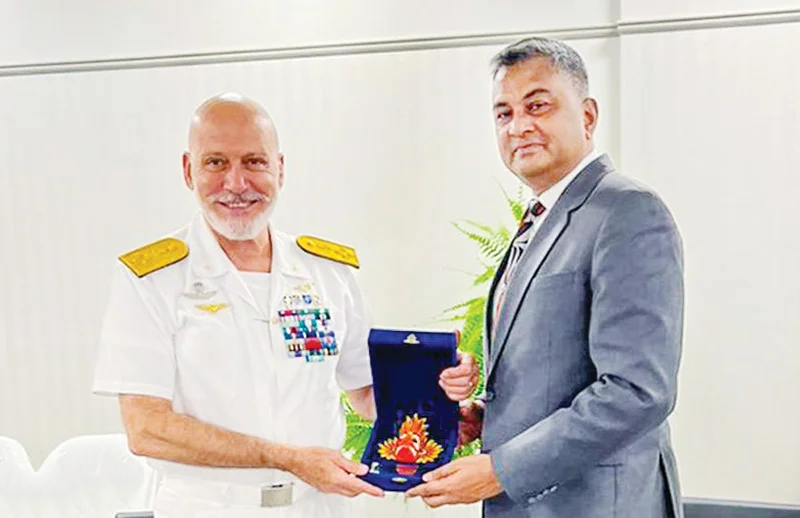
Sri Lanka has formally requested assistance from the North Atlantic Treaty Organisation (NATO).
According to a press release issued by the Defence Ministry, Defence Secretary Air Vice Marshal (retd) Sampath Thuyakontha has discussed defence cooperation with NATO, with discussions focusing on military modernisation, advanced technology, cyber capabilities and disaster response.
This was during talks between AVM Thuyakontha and NATO Military Committee Chairman Admiral Giuseppe Cavo Dragone on the sidelines of the Chiefs of Defence Conference in Victoria, Canada.
During the meeting, Secretary Thuyacontha outlined Sri Lanka’s defence requirements and areas of interest, including the modernisation of military hardware, acquisition of advanced technologies, and strengthening cyber capabilities and surveillance platforms, the Ministry of Defence said in a statement.
The two sides also discussed opportunities for greater technical cooperation, including the exchange of military personnel, expanded education and training programmes, and increased sharing of expertise and information.
Humanitarian Assistance and Disaster Relief (HADR) was also identified as an area for potential cooperation. The discussions included the exchange of expertise and the effective use of unmanned aerial vehicles (UAVs) in disaster response and related operations.
Defence Secretary Thuyacontha invited NATO to further strengthen its engagement with Sri Lanka, emphasising sustained dialogue, information sharing and practical cooperation in areas of mutual interest.

India to host inaugural Women’s Champions Trophy in February

Sun directly overhead Madampe, Thorayaya, Thotagamuwa, Rattota and Kalavanchikudy about 12.09 noon today (03)

Afternoon thundershowers in the Northern, North-central, Eastern and Uva provinces in next few days, starting from today (03).

22A: SC urged to suspend hearing, appoint full bench

Govt. seeks NATO assistance

Recent ‘Ice’ detection at the Colombo Port made on US intelligence – Embassy

‘Dates have the highest sugar content to fight Coronavirus’

Sunday Island 27 December – Headlines

#SundayIsland 17th December – Headlines

Sunday Island – 28th March

Sunday Island Headlines – 21 March

Sunday Island – 21st February – Headlines
-

 News7 days ago
Eight politicians in drug kingpin probe
-

 Features5 days ago
“Wrap Me Up in My Blazer”— A Gentlemanly Bradby Reminiscence
-

 Business7 days ago
Sri Lanka opens up: A new season of direct connectivity
-

 Features4 days ago
When Sri Lankan stories find their own voice
-
 Features7 days ago
Redefining ageing in Sri Lanka
-

 Editorial7 days ago
The toxic legacy of two lakes
-
 Business7 days ago
Jaffna Teaching Hospital secures lifeline water supply via ADB-funded Thalaiyadi sea water desalination plant
-
 Features5 days ago
JVP/NPP government as seen from outside by Lionel Bopage now domiciled in Australia