
News
CEB GM Eng. Rohan Seneviratne steers electricity sector toward sustainable and renewable future

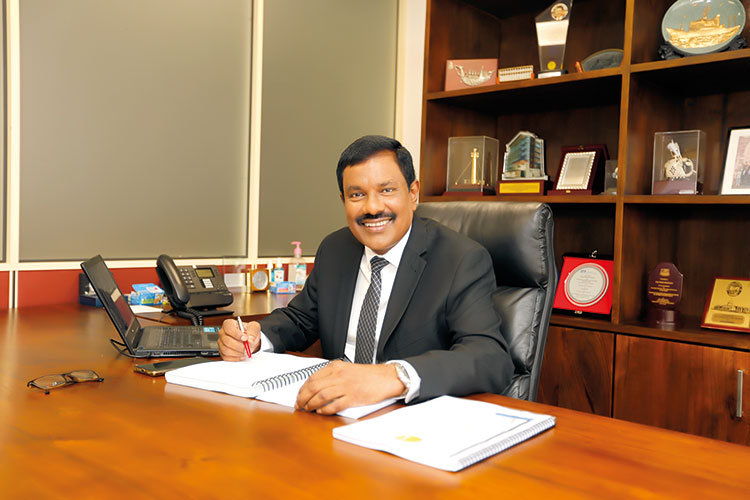
“Our focus is on achieving 70% renewable energy by 2023. This includes 25% from solar panels, 15% from wind power, and 10% from natural gas. However, transitioning the energy mix is a gradual process, requiring meticulous planning and execution. We aim to reach 60% renewable energy by 2026 and eliminate fossil fuel-based electricity generation by 2030.”
“Our electricity conservation efforts must improve as a nation. Efficient electricity usage can reduce the unit cost. Additionally, we are working to reduce generation costs, and I believe that by the next year, these efforts will result in reduced electricity bills for consumers.”
by Sirimantha Rathnasekara
The year 2023 commenced against the backdrop of multiple crises facing our nation. Long queues for oil and gas became a common sight, while daily power cuts lasting five to six hours plunged the country into an energy abyss. The non-availability of 24-hour electricity delivery proved a severe blow to the nation’s economy. However, today, the nation is making a remarkable recovery.
At the outset of the year, the prospect of uninterrupted 24-hour electricity supply was uncertain. Today, electricity flows seamlessly without any hitches, thanks to the dedicated efforts of the Ceylon Electricity Board. This transformation is nothing short of commendable. The Ceylon Electricity Board, previously criticized heavily, now stands as a shining example of a public institution that doesn’t burden the country’s economy. This remarkable turnaround is praiseworthy, and the Electricity Board is surmounting its historical challenges. This success story is a result of collaborative efforts by the HE the President Ranil Wickremesinghe, Minister of Power and Energy Hon. Kanchana Wijesekara, Secretary to the Minister of Power & Energy, Chairman, CEB and the Board members and CEB. Notably, CEB’s General Manager Electrical Engineer Rohan Seneviratne played a pivotal role in systematically guiding his team toward a specific goal.
“In fact, 2023 was an extremely challenging year for us,” remarked General Manager Seneviratne. “Our primary challenge was to ensure round-the-clock electricity supply in a time when the nation’s economy was teetering on the brink. We had to overcome this challenge in a backdrop of fuel shortages necessary for electricity generation.”
Team work to success
Seneviratne attributed their success to teamwork and determination, stating, “We came together as a team – the President, the Minister, the Electricity Board, the Chairman, and my team. This collective effort has already achieved several milestones, with the primary victory being the provision of 24-hour electricity. We are committed to maintaining uninterrupted power supply, irrespective of the crises we may face. This is a significant relief for both the economy and the people, contributing to the nation’s revival.”
However, despite the restoration of continuous electricity supply, concerns about electricity bills linger. Seneviratne acknowledged these concerns but emphasized the importance of considering broader implications. He noted that subsidies provided by various governments in the past had plunged the Electricity Board into a severe financial crisis. The cost of producing electricity units was not being recovered from consumers, which jeopardized the institution’s sustainability.
Seneviratne stressed the economic principles that should govern an organization’s operation. “To sustain an institution, the income must match the expenses. It’s a simple economic theory, applicable to both public and private sectors. When government institutions suffer losses, the public ultimately bears the burden through increased taxes. While consumers may directly feel the impact of electricity bill increases, the public indirectly benefits from a stable economy.”
Discussing potential future electricity bill increases, Seneviratne explained: “According to government policy, electricity tariffs can change twice a year, on January 1st and July 1st. Any changes before these dates are subject to approval by the Public Utilities Commission. We are obligated to report our financial situation to them, and they determine tariff adjustments based on our submissions.”
He elaborated on past adjustments, stating, “In the July 1st tariff revision, we proposed a 3.15% reduction, but the Public Utilities Commission approved a 14.5% reduction. This presented us with certain challenges, but we implemented cost-saving measures.”
CEB’s commitment to renewable energy
Seneviratne also highlighted their commitment to renewable energy, in line with government policy. “Our focus is on achieving 70% renewable energy by 2023. This includes 25% from solar panels, 15% from wind power, and 10% from natural gas. However, transitioning the energy mix is a gradual process, requiring meticulous planning and execution. We aim to reach 60% renewable energy by 2026 and eliminate fossil fuel-based electricity generation by 2030.”
Seneviratne said that global energy trends also supported their emphasis on renewables. “Around the world, the electricity supply mix includes 38% coal, 20% natural gas, 10% nuclear power, and 26% renewables. In the previous year, we generated 50% of our electricity from renewable sources.”
Discussing upcoming projects, Seneviratne mentioned their efforts to connect Sri Lanka and India’s power grids, emphasizing the mutual benefits. He also highlighted the importance of modernizing the transmission system and the focus on minimizing distribution losses. “Our vision is to provide high-quality service to customers through digital transformation,” he said.
“In the pursuit of ensuring a continuous and reliable supply of electricity, we have implemented a system that may entail some inconveniences for the general public. However, this measure is imperative to sustain uninterrupted electricity provision 24 hours a day. Last year, the Electricity Board incurred a staggering loss of Rs. 167 billion. Thanks to the innovative strategies implemented by our team, we anticipate a significant reduction in these losses this year. We are currently settling all bills promptly and acquiring fuel from CPC through upfront payments, with no reliance on borrowed funds. Despite the myriad challenges faced, we successfully managed to import 30 coal shipments, all thanks to the efficiency of our system, affirming the strength of our organization.”
The General Manager has also emphasized our commitment to alleviating the burden of electricity bills on the public. He is firmly dedicated to realizing the government’s target of achieving 70% renewable electricity by 2030, serving as a stalwart leader in this endeavor. In a global scale, the electricity supply mix predominantly comprises 38% coal, 20% natural gas, 10% nuclear power, and 26% renewable energy, among others. The resolute focus of General Manager Seneviratne on renewable energy underscores our achievement of generating 50% of nation electricity requirement from renewable sources during 2022.
Government policy of achieving 70% renewable electricity
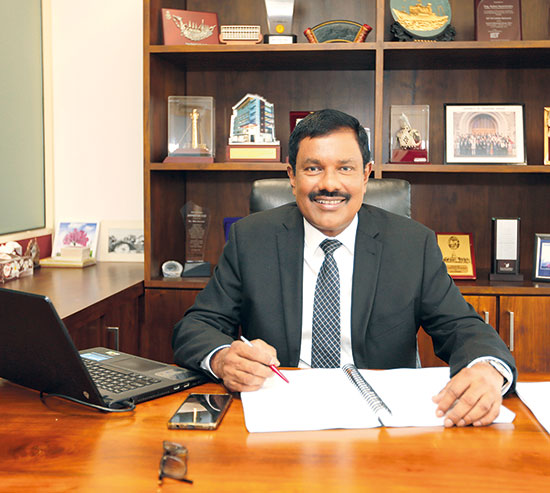 “Currently, we are diligently aligning with the government’s 2023 policy of achieving 70% renewable electricity, comprising 25% solar panels, 15% wind power, and 10% natural gas. However, transitioning the energy mix is a complex process that requires meticulous planning and execution. Our immediate target is to reach 60% renewable electricity by 2026, and we are actively working on introducing natural gas at the earliest opportunity. Our ultimate objective is to cease electricity generation from fossil fuels entirely by 2030.”
These statements from the General Manager offer a glimmer of hope in the nation’s electricity sector, and rightfully so. Under the astute leadership of General Manager Seneviratne, comprehensive plans have been devised to transform these aspirations into tangible accomplishments.
A significant portion, 85%, of the Electricity Board’s expenditures are attributed to electricity generation costs. Therefore, in order to witness a notable reduction in electricity bills for consumers, it is imperative to curtail these generation costs. Several factors have contributed to cost increases, including the rapid escalation of global coal prices at the outset of 2022, coupled with rising oil prices and a strengthening US dollar. However, we are now witnessing a decline in coal prices, offering the prospect of lower costs in the coming year. Furthermore, oil prices have moderated to some extent. The General Manager has shared the encouraging news that these developments will lead to reduced electricity generation costs, benefiting consumers in the coming year.
Integration of Uma Oya Hydro Power project to national grid
In approximately one month, the Uma Oya Hydro Power project will be integrated into the national electricity grid, with Moragolla Hydro Power Project expected to follow suit by the end of the next year. Additionally, we plan to acquire 150 MW of renewable electricity this year, all of which will contribute to a decrease in electricity generation costs by the following year. Wind and solar power are anticipated to play a pivotal role in the future energy mix. However, it’s essential to acknowledge that renewable energy alone cannot provide the necessary balance for the system. Therefore, the construction of more conventional power plants is required. The Sobadhanavi power plant in Kerawalapitiya, scheduled to commence operations on March 1st next year, will provide 212 megawatts of power. Initially, it will run on diesel for the first year, transitioning to natural gas thereafter. Furthermore, we plan to procure a 135 MW power plant in Kelanitissa and construct another 350 MW power plant in Kerawalapitiya by 2026. It is a journey that we are embarking upon collectively,” he said.
The General Manager has outlined a plan to generate electricity from natural gas, a resource currently unavailable to us. However, he has provided an insightful solution to this challenge. “In countries where natural gas is readily available, it is directly piped from underground reserves to power plants without the need for liquefaction. Unfortunately, this isn’t feasible for us due to the absence of natural gas deposits. Consequently, in countries with access to natural gas, it is converted into liquefied form by cooling it to minus 162 degrees Celsius, stored in ships, and then transported to our shores. Upon arrival, it is reconverted into a gaseous state before being supplied to power plants. While this method incurs additional costs compared to sourcing natural gas directly from the ground, it remains more cost-effective than generating electricity from diesel. Furthermore, it is essential to transition away from diesel-powered plants due to their substantial environmental impact. We will initially operate on diesel for a year before transitioning to natural gas, as it poses a significantly lower environmental risk. Therefore, expeditious adoption of natural gas is imperative for our energy future.”
Seneviratne concluded by encouraging electricity conservation and efficiency. “Our electricity conservation efforts must improve as a nation. Efficient electricity usage can reduce the unit cost. Additionally, we are working to reduce generation costs, and I believe that by the next year, these efforts will result in reduced electricity bills for consumers.”
Engineer Rohan Seneviratne, the General Manager of the Electricity Board, stands as a beacon of leadership and professionalism in steering the electricity sector toward a sustainable and renewable future. His vision and dedication have paved the way for a brighter and more energy-efficient Sri Lanka.



The National Water Supply and Drainage Board (NWSDB) on Friday said the largest groundwater source discovered in Sri Lanka so far had been identified during tube-well drilling near the Pitabeddara Police Station.
Indrajith Gamage, geologist in charge of the Southern Province, said the source recorded a continuous flow of about 10,000 litres (10 cubic metres) per minute, marking the first instance in the country where a groundwater source of that magnitude had been found.
He noted that the previous largest groundwater source was discovered in the Madhu area, which recorded a flow of about 7,000 litres per minute.
According to the NWSDB, the tube well was drilled following geological studies of rock layers and the identification of underground water through fractures in rock strata using specialised technical instruments.
The Board said steps would be taken to distribute water from the newly discovered source to residents facing shortages in Pitabeddara, Morawaka and surrounding areas.

The Ceylon Chamber of Commerce has formally handed over its historical records to the National Archives Department, entrusting over a century of the nation’s commercial history to the country’s official custodians of heritage.
The archive, spanning from the CCC’s founding in 1839 to 1973, includes correspondence, meeting minutes, reports, ledgers, and publications that chronicle the development of trade, enterprise, and industry in Sri Lanka. Together, the records provide a rare and detailed account of the island’s economic evolution and the role of its business community in shaping national progress.

The Ministry of Defence said on Friday (13) that arrangements had been made to repatriate to Iran the bodies of 84 sailors who died aboard the IRIS Dena, which sank in the southern seas off Sri Lanka.
A special aircraft carrying the bodies departed from Mattala Rajapaksa International Airport on Friday, the Ministry said, adding that the repatriation was carried out in coordination with the Embassy of Iran in Sri Lanka.
The remains had been kept in two mobile cold-storage units at the Galle National Hospital before being transported to Mattala by lorry following a court order. Forty-five bodies were moved in the morning, while the remaining 39 were transported later in the day.
Earlier this month, the Iranian naval vessel suffered an incident about 40 nautical miles off Port of Galle while carrying around 180 personnel. Thirty-five rescued sailors were admitted to the Karapitiya Teaching Hospital, while 84 bodies were subsequently recovered.
Following the incident, Pete Hegseth confirmed that the Iranian vessel had been sunk in international waters by a torpedo fired from a submarine of the United States Navy.
Showers will occur at several places in the Western, Sabaragamuwa, Central, North-western and Uva provinces and in Galle, Matara, Mannar and Anuradhapura districts after 2.00 pm.

Lanka discovers largest groundwater source

Lanka’s commercial legacy preserved in National Archives

Bodies of 84 Iranian sailors flown home

Kirsten brings pedigree, but Sri Lanka must fix the system

Barrels vs bombs

‘Dates have the highest sugar content to fight Coronavirus’

Sunday Island 27 December – Headlines

#SundayIsland 17th December – Headlines

Sunday Island – 28th March

Sunday Island Headlines – 21 March

Sunday Island – 21st February – Headlines
-

 News6 days ago
Repatriation of Iranian naval personnel Sri Lanka’s call: Washington
-

 Features6 days ago
Winds of Change:Geopolitics at the crossroads of South and Southeast Asia
-

 News5 days ago
Prof. Dunusinghe warns Lanka at serious risk due to ME war
-

 Sports4 days ago
Royal start favourites in historic Battle of the Blues
-

 Sports3 days ago
The 147th Royal–Thomian and 175 Years of the School by the Sea
-

 News3 days ago
Historic address by BASL President at the Supreme Court of India
-

 News4 days ago
CEBEU warns of operational disruptions amid uncertainty over CEB restructuring
-

 Business4 days ago
BOI launches ‘Invest in Sri Lanka’ forum