
Features
The Scapegoating of Humanities and Social Sciences: A Convenient Cover-up?


by Maduranga Kalugampitiya
 The Chairman of the University Grants Commission (UGC) of Sri Lanka, Prof. Sampath Amaratunge, is widely being quoted on social media these days as having said at a COPE (Committee on Public Enterprises) meeting that there are no employment opportunities for as many as 70 percent of the Arts graduates (graduates produced in the fields of the humanities and social sciences) in the country. He is also quoted as having said that the under-employment of the Arts graduates is the sole reason behind the criticism that is out there against the entire university system in the country.
This statement by the current Chairman of the UGC, who interestingly happens to be someone from the social sciences, sums up a widespread attitude towards the humanities and social sciences and also university faculties which are associated with those disciplines. Such disciplines and faculties are often criticised for failing to produce graduates who are capable of making a positive and impactful contribution towards the workforce and national development.
The UGC Chairman’s latest statement indicates his assumption that the primary role of universities is to produce graduates who would fit the jobs that are supposedly out there. The Chairman is undoubtedly joined by many who share the same view. There is a widespread feeling in society that jobs are out there but the universities have failed to produce graduates who are worthy of those jobs. The problem, according to this perspective is primarily with universities, specifically with the faculties of humanities and social sciences. Now, some of us have argued that the humanities and social sciences as disciplines in the present-day university system not only in Sri Lanka but also elsewhere are in crisis, but the crisis that we have been worried about is quite different to the one that the UGC Chairman is talking about. (See Kuppi column “Have Humanities and Social Sciences muddied water enough?” published on June 6, 2023, for more along this line.)
Let’s take a closer look at the key assumption behind the UGC Chairman’s statement. There is no question that people need jobs. Unemployment is a serious problem, and I believe that the government as the main state actor has a responsibility to ensure that there are employment opportunities and avenues for those who come into the workforce every year. And universities as a key part of the state structure have a responsibility to ensure that the graduates whom they produce can add value to the respective fields that they are in and productively contribute to the advancement of society. That said, as has been argued many times by many of us, universities are not factories that produce workers for predefined jobs. There are many professional degrees where there is a direct link between the training that the undergraduates get and the profession that they would go into upon graduation; nevertheless, to say that the primary responsibility of the universities is to produce graduates who fit predefined slots in society simply indicates a failure to recognise the role that the universities have historically been bestowed with and the purpose of higher education more broadly.
In an ideal setting, the goal of university education is to produce individuals who can think out of the box. It is precisely their ability to think out of the box in which ever the discipline they are in that makes them special. One could argue that that may be what makes them special but what good does it make if there are no jobs for them in society. This line of argument is not very different from the thinking behind the claim that the government cannot control inflation because the factors that determine inflation are beyond the government’s control. We don’t need a government to tell us that inflation is beyond their control. Similarly, we don’t need a government to tell us that there are no jobs out there for those who are coming out of universities. If there are no jobs available in society that is an indication of a broader structural problem in society. It is a failure of the government itself. Blaming it entirely on universities is not only to ignore what university education is primarily for but also to divert public attention from the real factors behind the absence of employment opportunities in society.
The degree programmes in the humanities and social sciences have been scapegoated for quite some time for the lack of employment of opportunities for the graduates in those fields, and the perceived failure of such programmes has been criticised in relation to the perceived success of the more technically oriented degree programmes. The humanities and social sciences degree programmes have been criticised for being irrelevant mainly in comparison to the relevance of the technically oriented degree programmes to the world of work. The unemployment or under-employment of the humanities and social sciences graduates has been discussed in relation to the higher rates of employment in technically oriented fields. Now, it is no secret that within the context of the present financial crisis in the country, there has been a clear decrease in the employment opportunities that are available for those coming out of technically oriented programmes. The simple question is whether that sudden decrease in employment opportunities render those technically oriented programmes irrelevant. If it does not then there is clearly a problem with the criticism against the humanities and social sciences programmes on the employment front.
One of the key attempts at addressing the employment related issues has been to push the humanities and social sciences programmes in the direction of incorporating technical know-how wherever possible, irrespective of whether such components complement the key focus of those programmes. The assumption appears to be that the disciplines in questions have nothing much to offer, and therefore the graduates of those programmes are not going to be employable, so let’s give them a little bit of IT and English wherever possible, and with that they’ll be able to find a job. As has been pointed out by many, not only do such moves violate the disciplines in question, they also result in completely blocking the unique ways in which those programmes contribute to the advancement of society.
Let us acknowledge that employment is a broader structural problem in society, which the universities cannot be held responsible for, or at least universities alone cannot be held responsible for. Let us remain mindful of the role that the universities have historically been bestowed with.
(Maduranga Kalugampitiya is attached to Department of English, University of Peradeniya)
Kuppi is a politics and pedagogy happening on the margins of the lecture hall that parodies, subverts, and simultaneously reaffirms social hierarchies.

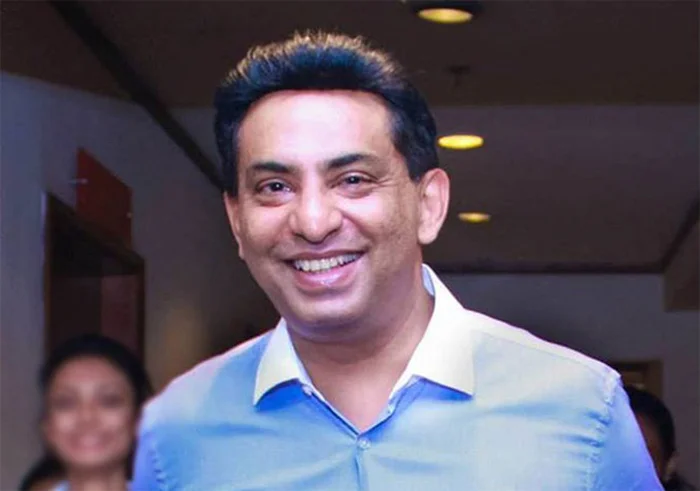
The death of the most important suspect in the Sri Lankan Airlines Airbus deal has drawn intense public speculation. Kapila Chandrasena the former CEO of the heavily loss-making national airline was found dead under circumstances that the police are still investigating.
He had recently been arrested by the Commission to Investigate Allegations of Bribery or Corruption in connection with the controversial Airbus aircraft purchase agreement signed in 2013. Police investigations are continuing into the cause of death and whether or not he committed suicide. The unresolved death brings to light the high stakes involved in accountability efforts of this nature.
The uncertainty surrounding Chandrasena’s death has revived public memories of other mysterious deaths linked to corruption investigations and public scandals. Among them is the death of Rajeewa Jayaweera, a former SriLankan Airlines executive and outspoken critic of the Airbus transaction. He was following in the tradition of his father, the late foreign service officer and public servant Stanley Jayaweera who mentored the younger generation in good governance practices and formed the group “Avadhi Lanka” along with icons such as Prof Siri Hettige. Rajeewa had written a series of articles exposing irregularities in the deal before he was found dead near Independence Square in Colombo in 2020. The CCTV cameras in that high security area were turned off. Questions raised at that time whether or not he had committed suicide were not satisfactorily resolved.
The controversy about the cause of Chandrasena’s death is diverting attention away from the massive damage done to the country by the SriLankan Airlines deal itself. The value of the aircraft agreement was close to the size of the International Monetary Fund bailout package that Sri Lanka desperately needed by 2023 in order to stabilise the economy after bankruptcy. Sri Lanka’s IMF Extended Fund Facility amounted to about USD 3 billion spread over four years. The comparison shows the scale of the losses and liabilities that irresponsible and corrupt decisions have imposed on the country and which must never happen again.
Wider Pattern
The corruption linked to the Airbus transaction came fully into the open only because of investigations conducted outside Sri Lanka. In 2020 Airbus agreed to pay record penalties of more than EUR 3.6 billion to authorities in Britain, France and the United States to settle global corruption investigations. Sri Lanka was identified as one of the countries where bribes had allegedly been paid in order to secure contracts. The Airbus deal involved the purchase of six A330 aircraft and four A350 aircraft valued at approximately USD 2.3 billion. Investigations showed that Airbus paid bribes amounting to nearly USD 16 million in order to secure the contract. According to court submissions, at least part of this money amounting to USD 2 million was transferred through a shell company registered in Brunei and routed through Singapore bank accounts linked to the late airline CEO and his wife.
The commissions involved in this deal may seem comparatively small compared to the overall value of the contracts but devastating in their consequences. But they also show that a few million dollars paid secretly to decision makers could lead to the country assuming liabilities worth hundreds of millions or even billions of dollars over decades. This is why corruption is not simply a moral issue. It is a direct economic assault on the living standards of ordinary people. Money lost through corruption is money unavailable for schools, hospitals, rural development and job creation. In the end the burden falls on ordinary citizens who are left to repay debts incurred in their name without receiving commensurate benefits in return.
The SriLankan Airlines transaction gives an indication of the wider pattern of corruption and misuse of national resources that has taken place over many years. This was not an isolated incident. There were numerous large scale infrastructure and procurement projects that imposed heavy debts on the country while enriching politically connected individuals and their associates. Other projects such as the Colombo Port City, Hambantota Harbour and highway construction reveal a similar pattern.
Less publicised but equally damaging scandals have involved fertiliser medicine and energy contracts. Investigations into medicine procurement in recent years uncovered allegations that substandard pharmaceuticals had been imported at inflated prices causing both financial losses and risks to public health.
Moral Renewal
The present government appears determined to investigate major corruption cases in a manner that no previous government has attempted. Those who ransacked and bankrupted the treasury need to be dealt with according to the law. There is considerable public support for efforts to recover stolen assets and ensure accountability.
In his May Day speech President Anura Kumara Dissanayake stated that around 14 corruption cases were nearing completion in the courts this very month and called upon the public to applaud when verdicts are delivered. Political opponents of the government claim that such comments could place pressure on the judiciary and blur the separation between political leadership and the courts. But the deeper public frustration that underlies the president’s remarks also needs to be understood.
The challenge facing Sri Lanka is twofold. The country must ensure that justice is done through due process and independent institutions. If anti corruption campaigns become politicised they can lose legitimacy. But if corruption and abuse of power continue without consequences the country will remain trapped in a cycle of economic decline and moral decay. Sri Lanka also needs to confront past abuses linked to the war period. There are allegations of kidnapping, extortion, disappearances and criminal activity in which members of the security forces have been implicated. Vulnerable sections of the population suffered greatly during those years. If political leaders turned a blind eye or actively connived in such crimes they too need to be held accountable under the law. Selective justice will not heal the country. Accountability must apply across the board regardless of political position, ethnicity or institutional power.
Sri Lanka has paid a very heavy price for corruption and impunity. The economic collapse of 2022 did not occur overnight. It was the result of years of bad governance, reckless decision making, abuse of power and the misuse of public wealth. If the country is to move forward the focus cannot be diverted by sensational speculation alone. Suspicious deaths and political intrigue may dominate headlines for a few days. But the larger issue is the system that enabled corruption to flourish without accountability for so long. The real national task is to end that system. Sri Lanka cannot build a prosperous future on a foundation of corruption and impunity. Unless those who looted public wealth are held accountable and the systems that enabled them are dismantled, the country risks repeating the same cycle again.
Jehan Perera
Features
When University systems fail:Supreme Court’s landmark intervention in sexual harassment case
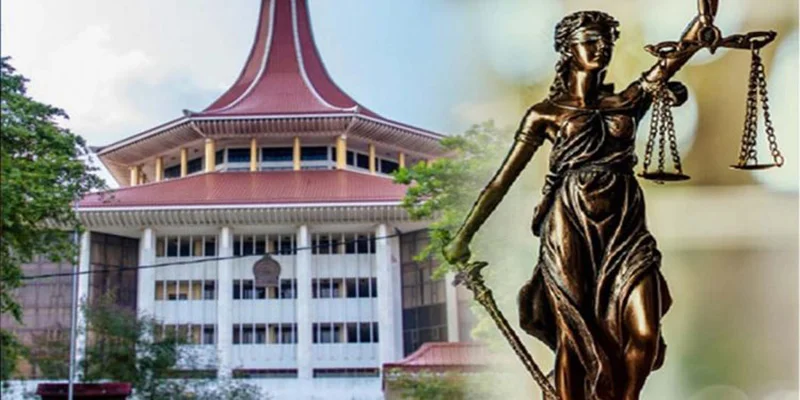
 Over seven years after making an initial complaint of sexual harassment against her research supervisor, Dr. Udari Abeyasinghe, then a temporary lecturer and now a senior lecturer at the University of Peradeniya, has been finally served justice. On May 8, 2026, the Supreme Court made the following directions regarding Udari’s fundamental rights case: “1) The 1st Respondent [her research supervisor] is prohibited from accepting any post, whether paid or not or honorary, in any university, educational institute or other academic institution; 2) The UGC to issue a direction to all universities and other institutions, coming under its purview, to abstain from giving any appointment, whether paid or not, or honorary, to the 1st Respondent; and 3) The University of Peradeniya, including the Council and respective Respondent [sic], are directed to take appropriate measures to enforce and raise awareness of the University of Peradeniya’s policy on Sexual or Gender-Based Harassment and Sexual Violence for staff and students, including conducting mandatory annual seminars for all academics, staff and students.” I recently spoke with Udari to learn about her experience battling the University’s sexual and gender-based violence (SGBV) procedures.
Violence and injustice
Udari was a temporary lecturer when she began working on her MPhil degree. Her research supervisor was a Senior Professor and Dean of her faculty. The harassment began in 2017.
When Udari reached out for support to the SGBV Committee of the University of Peradeniya, the Chair explained the complaint procedure, including how a third party could make a complaint on her behalf. In July 2018, Udari’s mother made a written complaint to the Vice Chancellor (VC). “The very next day [my supervisor] called me … and asked me to withdraw the complaint because it would look bad for me … the university should have taken measures to separate the complainant from the perpetrator … but nothing like that happened.”
Before making the formal complaint, Udari reached out to other academic staff at her Faculty. She shared her experience with a few close colleagues. Many advised her to leave the Faculty. “No one in the Faculty supported me publicly, although some sympathised privately … I was a temporary lecturer … no one really cared.” Some of her colleagues and non-academic staff who knew about the harassments, asked her to avoid involving them because they feared retaliation from higher powers.
Udari faced a preliminary inquiry and then a formal inquiry. The preliminary inquiry took place about four months after her complaint, and the inquiry committee recommended proceeding to a formal inquiry. The latter was held about a year after the initial complaint. “I got to know unofficially that [my supervisor] had got hold of all the statements made at the preliminary inquiry and pressured some colleagues to change their statements before the formal inquiry.” During the time of the formal inquiry, an anonymous letter (“kala paththaraya”) was circulated among staff: “It was a character assassination … the same kala paththaraya would get circulated from time to time.” After the formal inquiry committee submitted its report and recommendations, Udari was informed, in writing, that the University Council had dismissed the report.
“Neither the preliminary inquiry report nor the formal inquiry report were shared with me … I had to make a formal request to the VC and only then did I get a copy of the preliminary inquiry report… I had to get the formal inquiry report through an RTI (a request under the Right to Information Act). What I understand is that [my supervisor] had influenced the Council … that’s why they rejected the report…saying there had been a delay of six months to make a complaint ….” (N. B. there are no time limitations for submitting a complaint in the SGBV by-laws of the University of Peradeniya, although such time bars exist at other universities).
Udari then submitted formal complaints to the University Grants Commission (August 2020) and the Human Rights Commission of Sri Lanka (December 2020), and finally filed a fundamental rights case at the Supreme Court in March 2021. Five years later, on May 8th 2026, Udari’s complaint was vindicated.
University procedures and inquiries
When her mother submitted the complaint against her supervisor, Udari was a temporary lecturer. She had given up her dream of pursuing an academic career because she did not think she would be recruited to a permanent position after making a complaint against a faculty member. It is encouraging that Udari was recruited, but in most instances, students and junior staff endure and stay silent to avoid jeopardising their academic careers. We currently have no procedures in place at universities to protect victims and witnesses from backlash.
According to Udari, the former Chair of the SGBV Committee and the members of her preliminary inquiry panel played a crucial role in her case, and, in her words, “could not be influenced.” But SGBV by-laws at state universities place inordinate power in the hands of the Council and VC. According to the SGBV by-laws of the University of Peradeniya, the Council appoints the 15-member SGBV Committee comprising “[t]wo (02) persons from among the members of the Council; [t]en (10) persons drawn from the permanent and senior members of the academic community; and [t]hree (03) persons external to the University, from among the retired academic or administrative staff of the University” (Section 2.1). While the by-laws recommend appointing persons who have demonstrated “gender-sensitivity, proven interest in working on issues of gender equality and equity, and trained to investigate and inquire into cases of sexual or gender-based harassment and sexual violence” (Section 2.1), we know this is often not the case. In many universities, VCs control which cases are taken up and end up in an inquiry. Most students and staff at state universities have little faith in the existing SGBV complaint procedures.
As Udari experienced, the decisions of inquiry committees can be overruled and dismissed by University Councils, indicating the importance of appointing appropriate members to the Councils. The Deans of faculties, who are Ex-officio members, usually collude to protect their own interests and fiefdoms, while the appointment of external members to Councils is deeply politicised. At present, there is no application process or vetting of candidates before they are appointed. They are usually persons who are seen to be sympathetic to the incumbent political dispensation. Furthermore, external members are dependent on the university hierarchy for information on the issues being discussed, the details of which are often hidden from them. It is not surprising then that University Councils would adjudicate on the side of power.
Final recommendation
Beyond barring Udari’s former research supervisor from holding positions in the university system, the Supreme Court has directed the University of Peradeniya to raise awareness on SGBV among staff and students. While SGBV is addressed in the induction courses and orientation programmes at universities, staff and students must be made aware of the nitty-gritties of complaint procedures, including time bars, which were crucial to the outcome of Udari’s case. But is raising awareness sufficient? Do we have ways to hold university authorities accountable for arbitrary and/or prejudicial decision-making and other abuses of power?
For Udari, life continues to be difficult, with constant surveillance of her activities.
“In November 2024 , I shared a post about my case.. it was a newspaper article stating that the Supreme Court had granted leave to proceed… I just took a photograph of it and posted it on my Facebook without any captions… a few weeks later I was summoned by higher authorities…I was informed that several academics had verbally complained about me using my social media to tarnish the name of the faculty and the university and, if that’s the case, that I should know that the University Council has the authority to take action against me … we also spoke briefly about the case and at one point I was told that this incident (harassment) happened to me because I showed some positivity towards (the perpetrator) …”
Let’s hope that university administrations pause before victimising and revictimising SGBV survivors in future. As a community, we have to rethink the hierarchical ways in which universities function and create a meaningful mechanism that supports students and staff to complain without fear of repercussion.
Thank you, Udari, for taking this step forward. University administrations will have to stop, listen and change their ways.
(Ramya Kumar is attached to the Department of Community and Family Medicine, Faculty of Medicine, University of Jaffna, and is an alumna of the University of Peradeniya).
Kuppi is a politics and pedagogy happening on the margins of the lecture hall that parodies, subverts, and simultaneously reaffirms social hierarchies.
By Ramya Kumar

 Senani Wijesena, the Sri Lankan-Australian singer-songwriter, known for fusion pop/R&B with ethnic elements, like the tabla and sitar, is in the news again.
She was featured in The Island, in early April (2026), regarding her career in the music scene, and the release of her first ever Sinhala song ‘Nidahase.’
The song was released in Sri Lanka, on 17th April, with Senani in town to do the needful.
The music video was filmed at the Polgampola Waterfall, in Sri Lanka, and also features co-star Senura Ambegoda … playing the romantic interest.
Describing the setup, Senani had this to say:
“To achieve the high falls scenes, I had to climb large rocks and slippery edges to get to the top of the falls, and I had to do it in the yellow saree I was wearing. Of course the film crew assisted me.”
The initial scenes were filmed in bustling Pettah where Senani meets co-star Senura Ambegoda, working in a street stall, and when their eyes meet it triggers a memory of soul connection and transports her into another world entering the forest scene.
The forest, says Senani, symbolically represented a retreat to nature and peace.
The couple later rejoin at Colombo City Centre where they danced together and enjoyed each other’s company.
Says Senani: “The short dance routine was created on the spot, on set. Senura is a dance teacher, as well as a model and actor, and we learnt the routine, in 10 minutes, before it was filmed.”
‘Nidahase’ means Freedom in English – about being free in life, love, expression and movement.
It’s, in fact, a reworked version of her highly successful English song ‘Free’ which was nominated for a Hollywood Music In Media award in the RNB/Soul category, and also reached the Top 20 of the Music Week Dance charts in the UK.
‘Nidahase’ can be heard on all streaming platforms, including Spotify, Apple Music and Amazon.
Senani’s YouTube channel is www.youtube.com/senanimusic
Her social media pages are: www.instagram.com/senanimusic and www.facebook.com/senanimusic. Her website is www.senani.com
For the record, Senani is the daughter of film actress Jeevarani Kurukulasuriya and Dr Lanka Wijesena.

Former President Mahinda Rajapaksa has arrived at the Bribery Commission

US in closely-guarded talks to open new bases in Greenland

Trump says Iran ceasefire is on ‘massive life support’

Draw on the cards, but Mominul and Shanto extend Bangladesh’s lead

Miller, Axar and Ashutosh keep Delhi Capital’s IPL alive

Showers above 100 mm are likely at some places in the Western, Sabaragamuwa, Southern, North-western and Northern provinces and in Trincomalee district.

‘Dates have the highest sugar content to fight Coronavirus’

Sunday Island 27 December – Headlines

#SundayIsland 17th December – Headlines

Sunday Island – 28th March

Sunday Island Headlines – 21 March

Sunday Island – 21st February – Headlines
-

 News5 days ago
MIT expert warns of catastrophic consequences of USD 2.5 mn Treasury heist
-

 News2 days ago
Lanka Port City officials to meet investors in Dubai
-

 Editorial5 days ago
Clean Sri Lanka and dirty politics
-

 Editorial4 days ago
The Vijay factor
-
 News3 days ago
SLPP expresses concern over death of former SriLankan CEO
-

 News6 days ago
Development Officer bids Rs. 48 mn for CPC’s V8 at auction
-
 News3 days ago
Police inform Fort Magistrate’s Court of finding ex-CEO of SriLankan dead under suspicious circumstances
-
 Opinion6 days ago
Postmortem reports and the pursuit of justice