
News
SLPP urged to take up GR’s draft constitution with Prez

By Shamindra Ferdinando
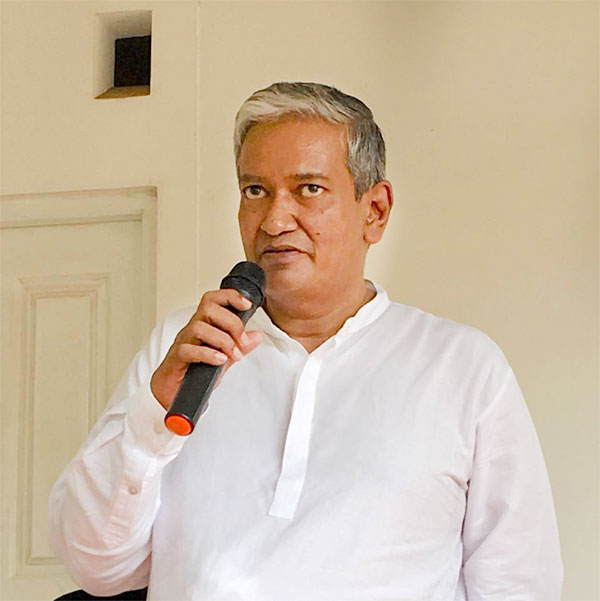
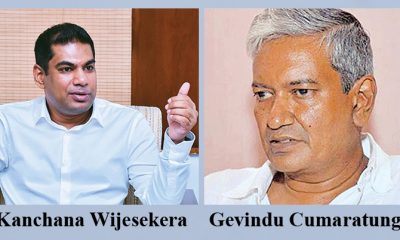
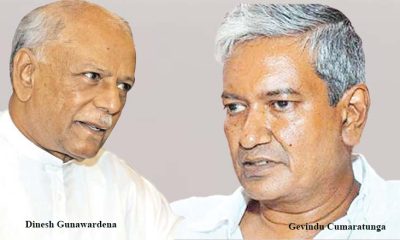
The ruling SLPP parliamentary group should intervene to make President Ranil Wickremesinghe examine the draft Constitution formulated by the nine-member committee appointed by President Gotabaya Rajapaksa’s Cabinet-of-Ministers, rebel SLPP List MP Gevindu Cumaratunga said yesterday (15).
President’s Counsel Romesh de Silva headed the committee.
Having elected UNP leader Wickremesinghe in July last year as the President to complete the remainder of the then President Gotabaya Rajapaksa’s five-year term, the SLPP couldn’t remain silent on their own initiative, Cumaratunga said.
Responding to a query raised by The Island, the leader of civil society group Yuthukama stressed that the SLPP received two mandates at the Nov. 2019 presidential and Aug. 2020 parliamentary polls to introduce a new Constitution.
President Wickremesinghe should under no circumstances implement the 13th Amendment to the Constitution or contemplate going beyond that particular amendment, the first time entrant to Parliament said.
Questioning the President’s Office’s request for political parties to submit their recommendations, regarding the 13th Amendment, by 15th August, MP Cumaratunga said that the SLPP owed an explanation regarding its failure to take up the issue at hand with the President.
The committee announced by the then Justice Minister Ali Sabry, PC, comprised Gamini Marapana P.C., Manohara de Silva P.C., Sanjeewa Jayawardena P.C., Samantha Ratwatte P.C., Prof. Naazima Kamardeen, Prof. A. Sarveswaran, Prof. Wasantha Seneviratne and Prof. G.H. Peiris.
According to the committee, the draft that had been finalized in March 2022 was handed over to the then President Gotabaya Rajapaksa in April though it was never subject to public discussion. Both Sinhala and English copies were handed over to the President while the Legal Draftsman was requested to translate it to Tamil.
Of the political parties represented in Parliament, the main Opposition SJB and President Wickremesinghe’s party the UNP haven’t made representations to Romesh de Silva’s Committee. In spite of the Joint Legal Secretaries of the SJB meeting the Chairman of the Committee to work out modalities, the anticipated meeting didn’t take place, sources said.
The Committee received representations from delegations led by Basil Rajapaksa (SLPP), R. Sampathan (TNA), Dinesh Gunawardena (MEP), Udaya Gammanpila (PHU), Wimal Weerawansa (JNP), Tiran Alles (UPP), Vasudeva Nanayakkara (DLF), Anura Kumara Dissanayake (JJB), Raja Collure (Socialist Alliance), Dew Gunasekera (CP), Nimal Siripala de Silva (SLFP), Rushdi Habeeb (ACMC), Douglas Devananda (EPDP), Bandula Chandrasekera (JHU), Mano Ganesan (TPA), V. Radhakrishnan (UPF), Sivanesathurai Chandrakanthan (TMVP), Senthil Thondaman (CWC), Prof. Tissa Vitharana (LSSP), C.V. Wigneswaran (TMTK) and Asanka Navaratne (SLMP).
About a week before President Rajapaksa fled the country, amidst violent protests, the Committee planned to address the media regarding the new Constitution at the Presidential Secretariat. However, the media briefing was cancelled at the eleventh hour.
The committee has been divided over the 13th Amendment to the Constitution, enacted in 1988, in the wake of the Indo-Lanka Accord, signed in the year before.
The majority of Romesh de Silva’s Committee has not endorsed the Provincial Council, introduced in terms of the 13th Amendment, whereas Prof. A. Sarveswaran disagreed with the relevant Chapter (XXII) that he asserted deprived Provincial Council the powers enjoyed under the present Constitution, thereby affected reconciliation efforts.
Those who opposed asserted that the 13th Amendment undermined the unitary character thereby threatened the security of the State.
One member declared his opposition to the Provincial Council system and was not in favour of the provisions incorporated in Chapter XXII. That particular member has explained the grave danger in continuing with the existing system and the intensification of that threat in case of further devolution of power.
But two members supported the proposed Chapter XXII on the basis that
(i) No separate elections are held to constitute Provincial Councils,
(ii) Provincial Councils to consist of representatives of Local Authorities elected at the Local Authority Elections,
(iii) Provincial Councils to exercise executive power subject to the executive powers of the President and the Cabinet of Ministers
(iv) Power of the National State Assembly is not restricted in any manner with regard to any subject on which a Provincial Council has the power to make statutes.
The draft contained a full chapter on Provincial Councils. The Committee has suggested election of members to Provincial Councils and Local Authorities will be held on the same day in one election with each elector having two votes to elect a member for his electoral unit [ward] and a member for the Provincial Council from any one of the candidates in his local government area.







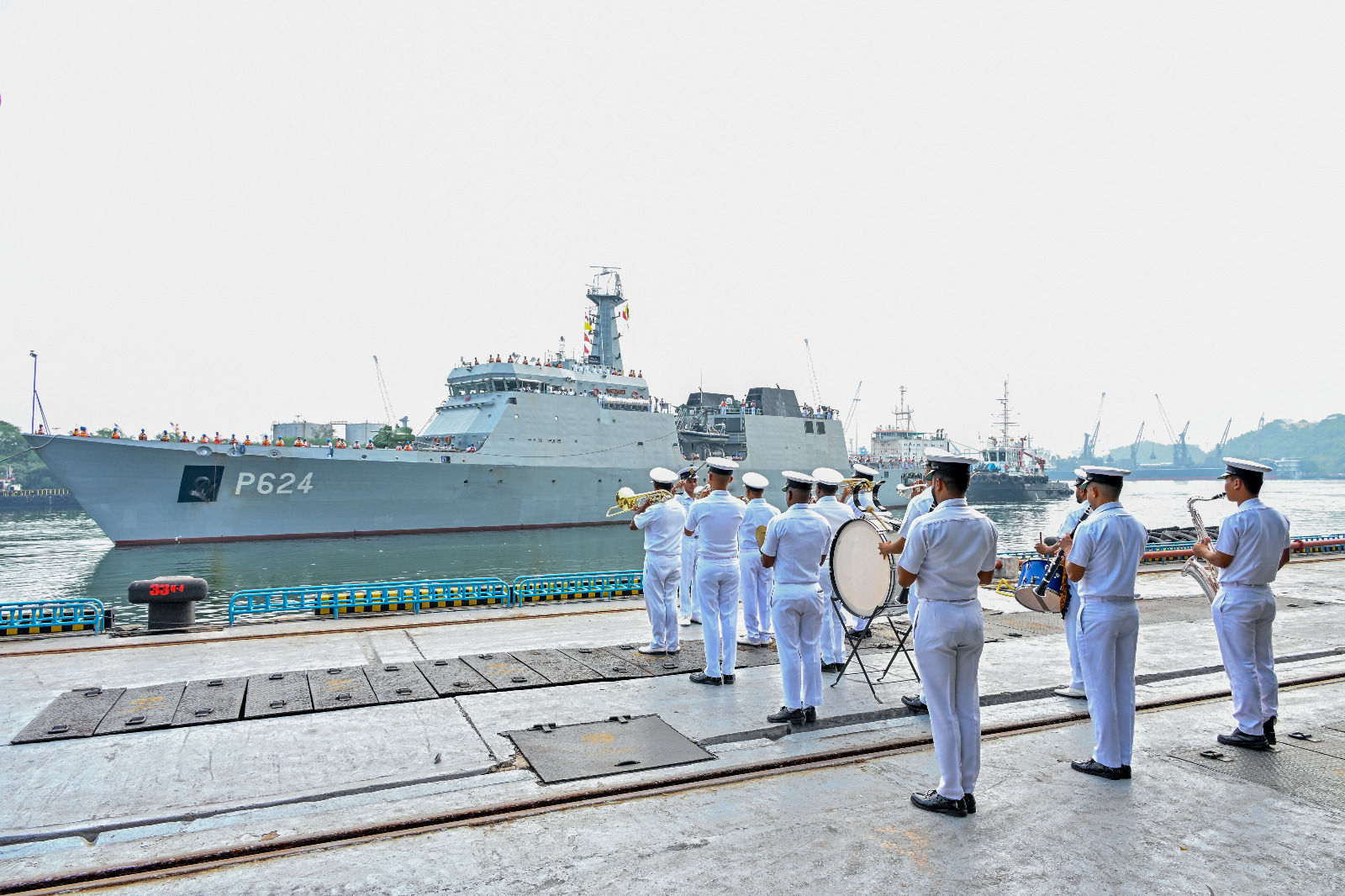
Sri Lanka Naval Ship (SLNS) Sindurala arrived at the port of Visakhapatnam in India on 17 September 2026, to participate in the bilateral naval exercise ‘SLINEX – 2026’.
The Indian Navy formally welcomed the SLN vessel upon its arrival, adhering to naval traditions.
The joint exercise will take place on 20 and 21 September in the seas off the east coast of India. On 18 September, the Commanding Officer SLNS Sindurala, Captain Sunanda Appuhamy, held official discussions with Commander Suraj Aiyappa, Commanding Officer Indian Naval Ship (INS) Kavaratti, aboard both vessels.
The annual exercise aims to enhance cooperation, interoperability, and professional exchange between the two navies. During the exercise, crew members from SLNS Sindurala will also participate in several professional and cultural exchanges organized by the Indian Navy.
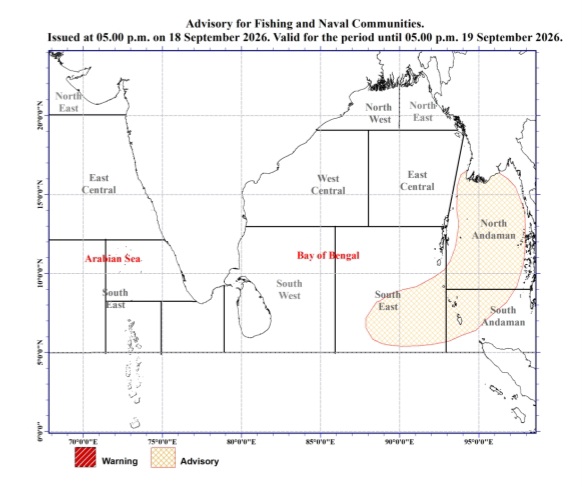
Advisory for strong winds and rough seas for Multi-day boats in the Bay of Bengal deep sea areas
Issued by the Natural Hazards Early Warning Centre
Issued at 05.00 p.m. 18 September 2026, valid for the next 24 hours.
PLEASE BE AWARE!
The atmospheric disturbance to the North of the Andaman Islands in the Bay of Bengal, is likely to develop into a low pressure area within the next 24 hours.
Due to its influence, wind speed over the Bay of Bengal sea areas will increase during the next few days starting from
tomorrow (19th).
The wind speed in the sea areas marked under the “Advisory” category on the map below will increase to 55-65 kmph at times and those sea areas will be rough or very rough at times.
Navel and fishing communities engaging the activities over this sea area are advised to be vigilant and be attentive to the future forecasts and bulletins issued by the department of Meteorology in this regards.


Text and Pic by Priyan de Silva
Director General of the Commission to Investigate Allegations of Bribery and Corruption (CIABOC) Ranga Dissanayake has questioned whether some promises contained in the National People’s Power (NPP) manifesto, A Thriving Nation – A Beautiful Life, could be fulfilled even if the government wanted to implement them.
Dissanayake raised the issue during a discussion following the release of the third biannual report on manifesto monitoring by the March 12 Movement, at the BMICH, on Wednesday.
He questioned whether the report had taken into account legal and institutional constraints affecting the implementation of certain pledges.
Citing the proposal to establish Anti-Corruption Investigation Offices in each district, Dissanayake said such offices could be established only with the agreement of CIABOC and that amendments to the Anti-Corruption Act would be necessary.
He also referred to the pledge to abolish the Executive Presidency, noting that successive governments had made similar commitments since 1994. He questioned whether there had been adequate consideration of where the powers vested in the Executive President would be transferred if the system were abolished.
On the proposal to establish a Public Prosecutor, Dissanayake questioned whether the Government intended to maintain the office alongside the Attorney General, who currently performs prosecution-related functions.
Executive Director of the Institute for Democratic Reforms and Electoral Studies (IRES) Manjula Gajanayake said Dissanayake’s remarks should be regarded as his personal views and not as Government policy.
Monitoring and Evaluation Consultants M. Thilakarajah and D.D. Mataharaarachchi presented the third-phase findings, covering January to June 2026.

Pakistan face familiar Sri Lanka in Asian Games semi-final

Jos Buttler ransacks small chase as England cruise to 3-0 series sweep

SLNS Sindurala arrives in Visakhapatnam for SLINEX 2026

Advisory for strong winds and rough seas for Multi-day boats in the Bay of Bengal

Showers in the Western, Sabaragamuwa and North-western provinces and in Galle, Matara, Kandy and Nuwara-Eliya Districts

Some NPP manifesto promises may be difficult to fulfil – CIABOC DG

‘Dates have the highest sugar content to fight Coronavirus’

Sunday Island 27 December – Headlines

#SundayIsland 17th December – Headlines

Sunday Island – 28th March

Sunday Island Headlines – 21 March

Sunday Island – 21st February – Headlines
-

 News7 days ago
Gnanasara Thero absconding after SC ruling
-

 Opinion6 days ago
From Galkissa (Mount Lavinia) to Tambuttegama
-

 Business7 days ago
HNB Finance strengthens Board with four independent directors
-

 News3 days ago
US embassy won’t comment on IGP’s probe into joint drug raid
-
 Sports7 days ago
Culture within cricket team worrying authorities
-

 News7 days ago
House to debate 22A, Judicature Bill next week
-

 Features6 days ago
Sri Lanka’s university crisis: Brain drain and union action demand urgent reform
-

 Features5 days ago
The emptying university: why are academics leaving?