
Editorial
Harebrained stunts of ‘Miracle Mike’


Friday 11th August, 2023
Signs are that the dark forces which hijacked Aragalaya in a bid to compass their sinister ends and almost succeeded in capturing Parliament, last year, are working overtime to make a comeback. Regrettably, the government is helping advance their anarchical agenda, albeit unwittingly, by refusing to heed public opinion and address the people’s burning problems expeditiously. It should have taken prompt action to nip the Embilipitiya water issue in the bud when hundreds of irate farmers took to the streets, demanding water to prevent crop losses. Instead, it chose to let the grass grow under its feet with some members of the Cabinet being at loggerheads.
The government refused to meet the protesting farmers’ demand that water be released from Samanalawewa to the Udawalawe reservoir, which is almost empty, to save their paddy cultivations; what one gathered from some ministers’ statements was that the government was keener to generate hydroelectricity with the Samanalawewa water than to use it to save the withering rice plants in Embilipitiya. About two weeks later, it made an about-turn, and decided to provide water to the Embilipitiya farmers. By that time, the prevailing drought had cut a swathe through their paddy fields. If only the Samanalawewa water had been released at least about a week earlier.
What snowballed into a countrywide protest campaign, causing the ouster of President Gotabaya Rajapaksa, last year, was a wave of farmers’ agitations triggered by an ill-advised blanket ban on agrochemicals in the name of promoting organic farming. Nobody would have paid much attention to the protesting farmers’ threat that they would march on Colombo unless fertilisers, etc., were made available to them fast, for President Rajapaksa was considered a ruthless leader, who would not hesitate to do everything in his power to neutralise dissent. Protests are contagious, so to speak, and generate seismic activity in public consciousness, driving the people to fight against injustices, and take up the cudgels for their rights. The situation took a turn for the worse owing to the deterioration of the economy and the resultant hardships with conditions being created for a mass uprising. The rest is history.
Thankfully, the farmers’ agitation has ended in Embilipitiya with the Samanalawewa water reaching their paddy fields, but the problem is far from over. The next phase of their protest campaign is bound to commence sooner than expected; they will demand compensation for the partial crop losses caused by the government’s failure to release water in time. The Finance Ministry had better have a solution ready without waiting until the problem spins out of control to act. The ultraradical elements that thrive on people’s resentment are already girding up their loins for another farmers’ protest, we are told.
As if the seemingly intractable issues on the economic front were not enough, the current dispensation, which is surviving like Miracle Mike, a Wyandotte chicken that lived for 18 months after being beheaded, in Colorado, in the 1940s, is attempting risky political stunts unnecessarily. What possessed it to undertake to implement the 13th Amendment fully, at this juncture? President Ranil Wickremesinghe has, in his wisdom, chosen to rush in where his predecessors, numbering seven, feared to tread—no pun intended. Instead of taking a huge political gamble, shouldn’t he concentrate on solving the national problem, which is the economic crisis affecting the members of all communities and threatens the very existence of the state? The 13th Amendment (13A) plunged the country into a bloodbath in the late 1980s. The JVP, which unleashed barbaric violence in a bid to prevent the implementation of 13A, and caused an even more violent reaction by the UNP regime, may be in the democratic mainstream at present, but certain developments during last year’s popular uprising, such as the abortive bid to storm Parliament, caused it to be accused of working according to a hidden agenda.
Political stability is a prerequisite for economic recovery and vice versa, and it will be a huge mistake for the government to embark on unnecessary missions fraught with the danger of triggering political upheavals, and shift its focus from the ongoing efforts to sort out the economy. It has to keep its ear to the ground, heed public opinion, refrain from performing harebrained stunts, and stop testing the people’s patience.








Friday 11th September, 2026
President Anura Kumara Dissanayake’s recent announcement that the government would set up 50 new universities came while university teachers were urging the government to solve a host of issues affecting their institutions. The Federation of University Teachers’ Associations (FUTA) lost no time in responding to the President’s grand plan.
FUTA Secretary Senior Lecturer Charudatta Ilangasinghe stressed that the government should focus on maintaining, funding, and improving the existing 17 state universities. Several key Opposition figures and opinion makers have also questioned the feasibility and prioritisation of establishing 50 more universities.
FUTA staged a protest the other day to pressure the government into addressing the structural problems affecting the university system. It is doubtful whether the government took any notice of the FUTA trade union action. Power blinds rulers to ground reality and drives them to bulldoze their way through.
The JVP-NPP government ought to get its priorities right. True, it cannot be held responsible for the current university crisis, which is not of recent origin. But it will have to take urgent steps to address the problems besetting the state universities. Previous governments let their political agendas take precedence over the wellbeing of the university system. They increased university admissions without adequately expanding academic staff and infrastructure. There is no gainsaying that university intakes should be increased for the benefit of students, but there should be a corresponding increase in resource allocations if universities are to function efficiently. FUTA has warned that university admissions based on the 2025 GCE A/L results could be delayed by one to two years until the enrolment of two previous batches.
All state universities in this country are being pushed beyond their capacity. Rising student numbers have placed enormous pressure on the already inadequate academic and physical resources. In 2025, FUTA pointed out that the annual student intake had steeply increased from around 25,000 in 2015/2016 to about 45,000, causing a severe strain on the entire university system. According to media reports quoting FUTA, state universities are operating with only about 6,800 permanent academics though there is a requirement of 12,000–13,000 teachers. FUTA has stated that PhD holders are unwilling to work for the current salaries, which are heavily taxed. Universities are among the state institutions worst affected by the human capital flight.
Among the burning issues highlighted by FUTA over the years are chronic staff shortages, brain drain, funding constraints and insufficient remuneration, lack of infrastructure and research, challenges to university autonomy and academic freedom, deterioration of the quality of higher education, and the misdirection of education reforms. Successive governments have sought political solutions to serious structural problems affecting the state university system.
As we pointed out in a previous comment, students in other Asian countries typically complete their first university degrees before they turn 21–24 years, but Sri Lankan students, particularly those in the state university system, often graduate in their mid-20s, with 24–26 years being a commonly observed range, according to the OECD (Organisation for Economic Co-operation and Development) data. The late entry of Sri Lankan graduates into the workforce has economic, political and social consequences, and, above all, the delayed graduation places Sri Lankan graduates at a disadvantage in the global job market. This sorry state of affairs is basically due to cumulative institutional delays involving, among other things, the GCE A/L examination, university admissions, disruptions caused by strikes, irregular academic calendars, a shortage of academic and non-academic staff, student protests and university closures.
Modern universities are more than centres of academic excellence. They are central to the development of nations; they not only educate graduates in the conventional sense of the term but also generate new knowledge, skills and innovations, driving modern economies. The OECD has identified higher education as a key source of advanced skills in many countries, universities being the main providers of basic research that underpins innovation.
It is hoped that the government will put its grandiose plan to set up 50 universities on hold and intensify its focus on equipping the existing 17 seats of higher learning to meet current and future challenges.


Thursday 10th September, 2026
Sri Lankan politicians are notorious for carrying out personal attacks instead of countering arguments. So, the JVP-NPP government’s attack on the Commonwealth Lawyers’ Association (CLA) in Parliament on Tuesday (08) came as no surprise. The CLA, whose President Steven Thiru attended the recent Supreme Court (SC) hearing of petitions against the 22nd constitutional amendment (22A) bill, as an observer, has raised concern over several key issues, such as the rejection of a request for a full bench, the refusal of a request for the Chief Justice’s recusal, non-inclusion of senior judges on the SC bench, and the denial of opportunity for petitioners to make oral submissions.
Minister of Justice Harshana Nanayakkara took great pains to belittle the CLA, in Parliament on Tuesday, claiming that it was not an organisation officially recognised or registered under the Commonwealth Secretariat. It was a private club whose members paid fees for membership, he claimed. Deputy Minister Sunil Watagala joined the Justice Minister in bashing the CLA. Both of them are lawyers.
The government also resorted to the classical straw-man approach; misrepresenting the CLA arguments as biased views of an organisation lacking Commonwealth recognition, it claimed that they were both unacceptable and unworthy of consideration. The CLA’s observations on the SC hearings went unchallenged in Parliament for all intents and purposes.
Defending the CLA and its observations, Opposition Leader Sajith Premadasa said that if the government did not recognise the CLA it ought to make a formal statement in Parliament to that effect. The ruling party members ignored his challenge. Another Opposition MP demanded to know why the Justice Minister said he had agreed to meet Steven Thiru if he thought the CLA was only a private club.
There is no way the government can justify its diatribe against the CLA. This is what the Commonwealth Secretariat’s own website says about the CLA: “The CLA’s objectives are to maintain and promote the rule of law throughout the Commonwealth: CLA is a pan-Commonwealth organisation which seeks to uphold the rule of law in the Commonwealth by encouraging exchange of ideas between legal professionals, academics and students, through projects and by driving improvements in legal education. It holds a number of short events throughout the year and has a biennial conference, the Commonwealth Law conference, which regularly attracts over 1,000 delegates including some of the finest legal professionals in the world today to discuss issues of interest to the profession over a four-day period.” It will be interesting to hear what the government has to say about this? One can only hope that in a bid to defend the indefensible, the JVP-NPP bigwigs will not condemn the Commonwealth itself as a colonial relic that perpetuates the imperial legacy, facilitates British soft power, reproduces unequal North-South relationship, retains the monarchy as an important symbol of its imperial past, and serves elite interests.
Besides the CLA, the International Association of Judges, representing 93 national organisations across five continents, LAWASIA and the French National Bar Council have taken exception to 22A. In fact, counsel, warnings and criticism need not come from experts for them to be worthy of consideration. For example, a warning that the rear wheels of a heavy vehicle being reversed are dangerously close to the edge of a precipice could come from a child. To disregard such warnings is to invite disaster. One may recall that it was a child who told the proverbial emperor that he was waking in the buff while everyone else was pretending to admire his new clothes.
Meanwhile, the position of some prominent civil society activists and public intellectuals on 22A defies logic. One could argue that they are engaged in an intellectual steeplechase, skillfully clearing all obstacles except the key issues, especially the possible politico-legal consequences of 22A. Perhaps, they are wary of offending President Anura Kumara Dissanayake by expressing their candid views and therefore behave like the proverbial curate who lacked the courage to say an egg on his plate was bad and in deference to his host and Bishop claimed that parts of it were excellent.
If raising mandatory retirement ages is a sine qua non for making a system efficient and doing away with delays, as the government has claimed in the case of the judiciary, then one can argue that the retirement ages of doctors, university teachers, and other state employees must also be raised as part of a strategy to do away with delays that characterise government hospitals, universities, the Department of Motor Traffic, the Department of Registration of Persons, the Department of Immigration and Emigration, the Colombo Port, the state-owned bus service, etc.
The SC determination on 22A is yet to be announced. Nevertheless, if the legitimacy and acceptability of laws derive solely from SC determinations thereon, then one can argue that no one should be critical of the 18th Amendment (2010), which abolished the presidential term limit and concentrated more power in the executive presidency for the benefit of the then President Mahinda Rajapaksa, and the 20th Amendment (2020), which allowed dual citizens to serve as legislators, benefiting the then President Gotabaya Rajapaksa’s sibling Basil. Those amendments passed muster with the apex court but obviously lacked legitimacy and acceptability. The Prevention of Terrorism Act was also ‘duly passed’ by Parliament, but it is one of the worst laws this country has ever seen. The same holds true for 22A, crafted to enable the JVP-led government to consolidate its grip on power and lay the foundation for the perpetuation of its rule. NPP General Secretary Dr. Nihal Abeysinghe has publicly stated that the JVP/NPP will be in power until 2050. One may recall that the JVP went on a killing spree and destroyed state assets worth billions of dollars in a bid to scuttle the 13th Amendment, which was passed by Parliament with a five-sixths majority. So, as for 22A, problems will not go away even if the government succeeds in securing its passage.
Wednesday 9th September, 2026
Power is as addictive as narcotics, and those who savour it cannot let go of it. When out of power, they find themselves in the same predicament as drug addicts who kick the habit cold turkey. Hence politicians’ determined efforts to perpetuate their grip on power regardless of the methods used to achieve that end.
NPP General Secretary Dr. Nihal Abeysinghe has declared that his party will remain in power until 2050, as we reported yesterday. He first said so at a political rally in Kalutara over the weekend. His declaration cannot be dismissed as mere platform rhetoric aimed at boosting the morale of his party’s rank and file or provoking the Opposition, for it is the leitmotif of all speeches made by JVP big guns, who even publicly speak of their intention to establish a one-party rule. A few months ago, after returning from a junket in China, JVP General Secretary Tilvin Silva said the Chinese leaders had told a JVP delegation led by him that a political party had to remain in power for about two decades at a stretch to develop a country.
Interestingly, Dr. Abeysinghe’s statement at issue happened to be made on the same day as US President Donald Trump’s absurd claim that the moon, of all things, belonged to the US. Trump went so far as to post a photo of the moon on Truth Social, with the words, “The Moon is Ours”, written across it. He added a US flag next to the picture, sharing AI-generated images of new black uniforms for the US Space Force, according to media reports. This is what happens to politicians when power goes to their heads. Intoxicated with power, they live between fantasy and reality, so much so that they confuse fantasy with reality and vice versa.
As for Trump and the US, one may recall that when President George W. Bush appointed John Bolton as US Ambassador to the UN in 2005, a US newspaper, which was critical of Bolton, famously said that thankfully the problem was now confined to the UN. Likewise, the earthlings troubled by the consequences of Washington’s hard-power projections replete with military force, economic leverage, and coercive diplomacy to influence or compel the behaviour of other global actors, must be wishing that Trump and the coterie of hawks around him were sent to the moon so that the problem would be confined to the earth’s natural satellite.
It is worth recalling that after defeating the LTTE, launching numerous mega development projects, and securing a second term with an impressive majority, President Mahinda Rajapaksa became so cocky in 2010 that he thought he would be able to retain the coveted presidency indefinitely. He amended the Constitution, enabling himself to seek a third term. But five years later, he became the first serving Sri Lankan President to lose a presidential election. When former Defence Secretary Gotabaya Rajapaksa (GR) became President in 2019, with the SLPP mustering a two-thirds majority in Parliament the following year, many thought he would deliver and secure a second term easily, and the Opposition would have its work cut out to return to power, but a couple of years later, he happened to show a clean pair of heels to the Aragalaya protesters. In Bangladesh, Prime Minister Sheik Hasina, who thought no end of her power, ordered a crackdown on a mass uprising against her government, and the SLPP backers here hailed her counterattack, blaming GR for not having done so to suppress Aragalaya. But a few months later, Hasina fled to India.
Nothing is so certain as the unexpected in politics. When pressure builds up in a polity owing to economic hardships, the suppression of democratic rights, etc., with protests spilling over onto the streets, there is no defence for a government that fails to make good on its promises.
The inhabitants of cloud cuckoo land would do well to be mindful of the fact that those who do not learn from history are doomed to repeat it. The only way the incumbent government leaders could avoid the fate that befell the Rajapaksas here, Hasina in Bangladesh, and other such leaders elsewhere is to bear in mind that mandates are fragile and ephemeral, and it is the people who decide whether a government should continue to be in power.

President meets representatives from Sri Lanka Scout Association

Putin lands in India for BRICs summit, shadowed by Iran and Ukraine wars

Meeting between Catholic religious leaders and President

Shafali, Deepti power India into sixth T20 Asia Cup final

Showers will occur in the Western and Sabaragamuwa provinces and in Kandy, Nuwara-Eliya, Galle and Matara districts.

Sri Lanka faces new grid challenge as rooftop solar surges: former CEB GM

‘Dates have the highest sugar content to fight Coronavirus’

Sunday Island 27 December – Headlines

#SundayIsland 17th December – Headlines

Sunday Island – 28th March

Sunday Island Headlines – 21 March

Sunday Island – 21st February – Headlines
-
 News6 days ago
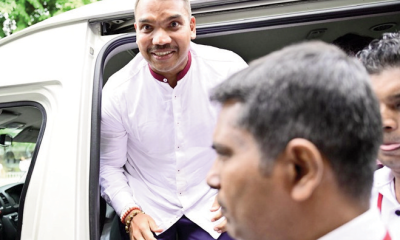
Namal remanded until Sept. 18 over Airbus deal investigation
-

 Latest News5 days ago
Tharanga creates history with Diamond League crown in Brussels
-

 News5 days ago
Dispute which triggered listed company director being detained at BIA resolved
-

 Features4 days ago
After the parade: What a traffic OIC’s walk-out tells us
-

 Editorial6 days ago
Power vs Equality
-
Editorial4 days ago
Arrests as theatre
-

 Latest News4 days ago
Harshitha’s composed knock seals Sri Lanka’s semi-final berth
-
 Latest News7 days ago
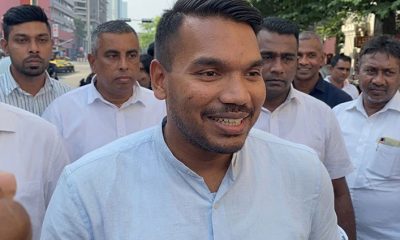
SLPP MP Namal Rajapaksa arrested by CIABOC