
Editorial
Brain exodus and band-aid remedy


Monday 7th August, 2023
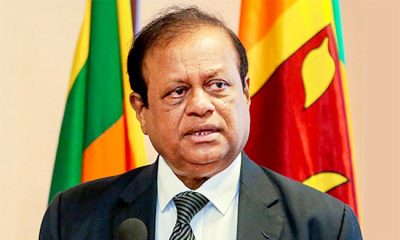
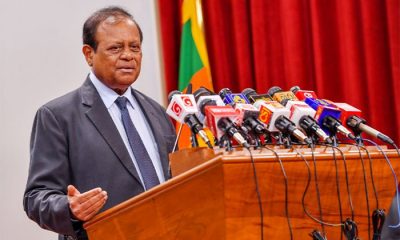
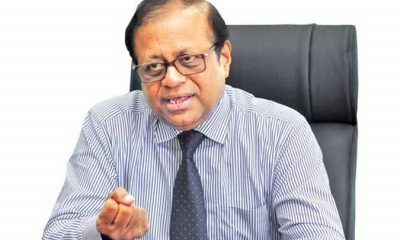
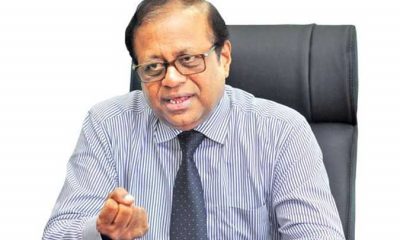
Minister of Education Susil Premajayantha has said the government will take action to fill the vacancies created by the unprecedented migration of university dons. Circumstances may have left it with no alternative but to do so in a bid to mitigate the ever-worsening crisis in the higher education sector with so many teachers voting with their feet. But the proposed course of action will end up being an exercise in futility in the long run unless the factors that drive university teachers to leave the country are eliminated.
University teachers are among the frustrated professionals who are leaving the country in droves mostly due to economic difficulties and uncertainty about their future. Not that everyone who opts for foreign employment achieves a higher station of life overseas, but despondency blinds people to reality and drives brain exodus. The government has to address these issues urgently if it is to make any headway in its efforts to resolve the university crisis once and for all.
It is being argued in some quarters that unprecedented income tax increases have affected only a small section of the workforce. But the fact remains that the aggrieved ones are highly specialised professionals who are not easy to replace, as evident from the crisis in the health sector owing to the exodus of medical specialists. They are paid relatively high salaries for a reason. Among them are IT professionals who help boost the country’s foreign exchange inflow by teleworking for foreign companies from here. The so-called KPO (Knowledge Process Outsourcing) has become the order of the day in the modern world. It is prevalent in industries where intellectual capital and technical expertise play a crucial role in driving business success; they include the IT industry, where companies leverage the skills and knowledge of specialised professionals scattered across the world to enhance their operational efficiency and reduce costs. A large number of Sri Lankan IT professionals have already left the country.
Brain export, which has become a fact of life for many developing countries, could yield positive results, if properly handled. But human capital flight, if allowed to spin out of control, could prove disastrous as it entraps nations in a vicious cycle; excessive brain drain diminishes a country’s capacity to attain development, and that exacerbates skill migration and brings about impoverishment, which causes brain exodus. This has been Sri Lanka’s predicament, especially since the beginning of the current economic crisis, which shows no signs of going away anytime soon.
The government may be able to recruit university teachers in a hurry, as planned. There will be thousands of applicants because the country is full of job seekers, but the question is whether those who are to be recruited will be the right ones for the jobs on offer in universities, which were facing a dearth of experienced teachers even before the onset of the current crisis. How bad the situation at present is not difficult to see. On the other hand, what guarantee is there that the university teachers to be recruited in a hurry will not leave the country if opportunities present themselves?
Before trying to resolve the university crisis, the government ought to grasp the sheer scale thereof. Understanding a problem properly is half the battle in solving it. The current administration seems to think that anyone could teach at a university. Maybe it does not hold university teachers in high esteem because many of them demean themselves by stooping so low as to strike Faustian bargains with the ruling party politicians with deep pockets and shallow minds. Some of them have even taken to active politics and cut pathetic figures in Parliament.
The government must have talks with the Federation of University Teachers’ Associations on the problems affecting the university system and make a serious effort to sort them out.









Monday 29th December, 2025
Sri Lankan politicians love the media dearly and take up the cudgels for the rights of journalists when they are out of power. The JVP/NPP leaders also defended the media to the hilt while they were languishing in the Opposition. Jekylls become Hydes after being ensconced in power, with the media exposing their failures and malpractices. Those who can, do; those who cannot, attack the media, one may say of the governments in this country, with apologies to Bernard Shaw.
The JVP-led NPP government, angered by bad press, is all out to intimidate the media it cannot control. Previous governments had the police on a string and used them to attack and harass independent journalists. The incumbent administration has gone a step further; the police have reportedly written to the Telecommunications Regulatory Commission (TRC), asking for action against Hiru TV for what they describe as broadcasting unverified, misleading news. Thus, the government has used the police to give Hiru a choice between toeing the official line and losing its licence. Thankfully, its efforts have run into stiff resistance, with media institutions and various associations circling the wagons around Hiru.
If the government thinks Hiru or any other media institution disseminates false information to the detriment of its interests, legal avenues are available for it to seek redress. The police must not be used as a political tool to intimidate the media.
Among the current defenders of the media are the SLPP, the UNP, the SLFP, etc. Their leaders are shedding copious tears for Hiru. But it was while the UNP and SLPP leaders were in power that the suppression of media freedom and violence against journalists became institutionalised for all intents and purposes. UNP governments not only throttled media freedom but also murdered journalists. SLFP regimes had media institutions attacked and journalists killed. An SLFP-led government, with the current SLPP leaders at the helm, had media institutions torched and journalists abducted, assaulted and murdered. These sinners currently in the political wilderness are condemning other sinners in power for suppressing media freedom.
The government deserves the bad press it gets. The police have been reduced to a mere appendage of the JVP/NPP. Two of the NPP’s Retired Police Collective members, namely former Senior DIG Ravi Seneviratne and former SSP Shani Abeysekera, have been appointed Secretary to the Public Security Ministry and CID Director, respectively. Absurd claims the police make in defence of the government remind us of Matilda, whose dreadful lies made one gasp and stretch one’s eyes.
When the police were asked why NPP MP Asoka Ranwala had not been subjected to a breathalyser test immediately after a recent road accident he caused, they had the chutzpah to claim they had run out of test kits. They transferred two of their officers over the incident to enable the government to save face. They arrested one of their own men assaulted by an NPP MP following a recent police raid on a cannabis cultivation in Suriyakanda. Acting just like legendary King Kekille, they let the MP off the hook and arrested the policeman, who was bailed out; they went on to suspend him from service. A few months ago, they unashamedly sided with a group of JVP cadres who stormed a Frontline Socialist Party office in Yakkala and forcibly occupied it. They go out of their way to ensure that the arrests of drug dealers with links to the Opposition get maximum possible publicity, but they do their best to keep the media in the dark when narcotics dealers with ruling party connections are taken into custody. They crack down on Opposition politicians and activists but steer clear of government members and their supporters. The despicable manner in which they are doing political work for the government reminds us of the Gestapo. Now, they are zeroing in on Hiru TV at the behest of their political masters for exposing their sordid actions.
The only way the NPP government can overcome problems and challenges on the political front and shore up its crumbling image is to mend its ways and fulfil its election pledges while taking action against its errant members who have brought it into disrepute and turned public opinion against it. Shooting the messenger is not the way to set about the task.

Pressure is mounting on President Anura Kumara Dissanayake to ensure that an Auditor General is appointed without further delay. But he has remained unmoved. He is determined to wear down the Constitutional Council (CC) and appoint one of his party loyalists as Auditor General. The CC has rejected his nominees—and rightly so; they are not eligible. Former Executive Presidents went all out to railroad the CC into rubber-stamping their decisions. They had no qualms about doing so while claiming to uphold the independence of the public service. President Dissanayake has failed to be different. His refusal to compromise amounts to brinkmanship; he is waiting until the CC blinks.
The NPP’s election manifesto, A Thriving Nation: A Beautiful Life, attributes the deterioration of the public service to ‘political appointments’ and state workers making political decisions. Among the steps the NPP has promised to take to straighten up the public service are ‘merit-based appointments and promotions’. This principle has fallen by the wayside where the question of appointing the Auditor General is concerned.
The government should take cognisance of the possible negative effects of the prolonged delay in appointing the Auditor General during a period of disaster response and international relief and rebuilding support.
The Bar Association of Sri Lanka has called upon President Dissanayake to appoint a person with proven competence, integrity, and independence, who commands wide acceptance as Auditor General forthwith. It has stressed the need to appoint a nonpartisan professional as the Auditor General to safeguard the integrity of the National Audit Office and inspire the confidence of both citizens and international partners in the financial governance of the State.
Transparency International Sri Lanka, the Civil Society Organizations (CSOs) and the other good governance activists, too, have faulted President Dissanayake and his government for the inordinate delay in appointing the Auditor General. They are of the view that a strong, independent Auditor General enables Parliament and the public to scrutinise government expenditure, identify irregularities, prevent misuse of funds, and ensure that those entrusted with public resources are held to account. The delay in appointing the Auditor General has weakened the effectiveness, authority, and the independence of the entire public audit system and created space for inefficiency, mismanagement, and corruption, they have noted. The situation will take a turn for the worse if the government succeeds in having one of its cronies appointed Auditor General.
The government is apparently playing a waiting game in the hope that the reconstitution of the CC due next year will provide a window of opportunity for it to appoint one of its loyalists as Auditor General.
Why the government is so desperate to place a malleable person at the helm of the National Audit Office is not hard to understand. If it succeeds in its endeavour, the next Auditor General will be beholden to the JVP/NPP. When an ineligible person is elevated to a high post, he or she naturally becomes subservient to the appointing authority. Such officials go out of their way to safeguard the interests of their political masters in case of irregularities involving state funds and other accountability issues.
A protracted delay in appointing the Auditor General or the appointment of a government supporter to that post will increase the risk of mismanagement of state funds and corruption, lead to the erosion of public trust and confidence in the National Audit Office, undermine legislative oversight and impair fiscal discipline. Most of all, the government’s failure to appoint a competent, independent person of integrity as Auditor General will diminish donor confidence especially at a time when the country is seeking disaster relief funds from the international community. There is no way the government can justify its refusal to appoint the current Acting Auditor General as the head of the supreme audit institution. He is obviously the most eligible candidate.

Saturday 27th December, 2025
The NPP government has released a cordial diplomatic letter from Indian Prime Minister Narendra Modi to President Anura Kumara Dissanayake, and gained a great deal of publicity for it as part of a propaganda campaign to boost Dissanayake’s image. Such moves are not uncommon in politics, especially in the developing world, where the heads of powerful states are deified and their visits, invitations and letters are flaunted as achievements of the leaders of smaller nations. However, the release of PM Modi’s letter to President Dissanayake is counterproductive, for it makes one wonder why the government has not made public the MoUs it has signed with India?
PM Modi’s Sri Lanka visit in April 2025 saw the signing of seven MoUs (or pacts as claimed in some quarters) between New Delhi and Colombo. Prominent among them are the MoUs/pacts on the implementation of HVDC (High-Voltage Direct Current) Interconnection for import/export of power, cooperation among the governments of India, Sri Lanka, and the United Arab Emirates on developing Trincomalee as an energy hub, and defence cooperation between India and Sri Lanka.
The NPP government has violated one of the fundamental tenets of good governance––transparency; there has been no transparency about the aforesaid MoUs or pacts, especially the one on defence cooperation. They cannot be disclosed without India’s consent, the government has said. This is a very lame excuse. The JVP/NPP seems to have a very low opinion of the intelligence of the public, who made its meteoric rise to power.
When the JVP/NPP was in opposition, it would flay the previous governments for signing vital MoUs and pacts without transparency. But it has kept even Parliament in the dark about the MoUs/pacts in question.
Ironically, the JVP, which resorted to mindless violence in a bid to scuttle the signing of the Indo-Lanka Accord in 1987, has sought to justify the inking of an MoU/pact on defence cooperation between Sri Lanka and India and keeping it under wraps, about three and a half decades later. The signing of that particular defence MoU/pact marked the JVP’s biggest-ever Machiavellian U-turn. How would the JVP have reacted if a previous government had entered into MoUs with India and kept them secret? It opposed the proposed Economic and Technology Cooperation Agreement (ETCA) between Sri Lanka and India tooth and nail, didn’t it?
Whenever one sees the aforesaid letter doing the rounds in the digital space, one remembers the MoUs/pacts shrouded in secrecy, which have exposed the pusillanimity of the NPP government, whose leaders cannot so much as disclose their contents without India’s consent.

Navy seizes an Indian fishing boat poaching in northern waters

Mandhana, Shafali and Ghosh help India edge run-fest to go 4-0 up

Showers predicted in several provinces today (29th December)

Delay in govt. response to UK sanctions on ex-military chiefs, and others causes concern

Sri Lanka outlines seven key vectors of international cooperation at Moscow forum

Sri Lanka third most preferred destination for Indians

‘Dates have the highest sugar content to fight Coronavirus’

Sunday Island 27 December – Headlines

#SundayIsland 17th December – Headlines

Sunday Island – 28th March

Sunday Island Headlines – 21 March

Sunday Island – 21st February – Headlines
-

 News6 days ago
Members of Lankan Community in Washington D.C. donates to ‘Rebuilding Sri Lanka’ Flood Relief Fund
-

 News4 days ago
British MP calls on Foreign Secretary to expand sanction package against ‘Sri Lankan war criminals’
-

 Features6 days ago
General education reforms: What about language and ethnicity?
-
 News6 days ago
Suspension of Indian drug part of cover-up by NMRA: Academy of Health Professionals
-
 Sports4 days ago
Chief selector’s remarks disappointing says Mickey Arthur
-
 News3 days ago
Street vendors banned from Kandy City
-

 Editorial6 days ago
A very sad day for the rule of law
-

 News6 days ago
US Ambassador to Sri Lanka among 29 career diplomats recalled