

News
Dr. Jane Goodall, DBE gifts autographed books to the WNPS
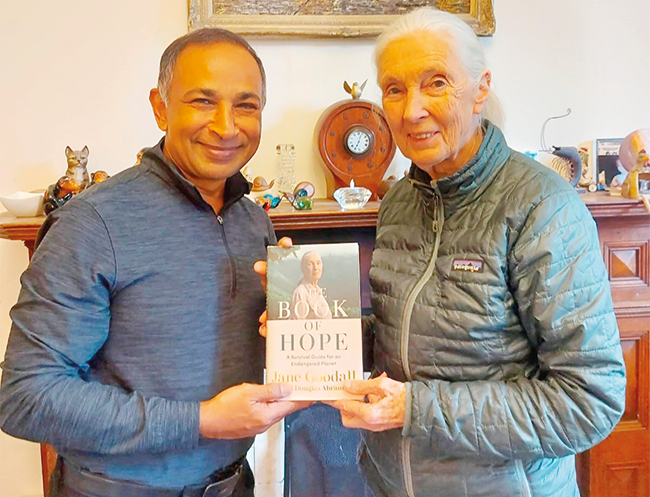
Dr. Jane Goodall, recently gifted several signed copies of her “The Book of Hope” to the Wildlife and Nature Protection Society of Sri Lanka (WNPS) for their library and to Sri Lankan youth as a means of spreading the word and inspiring them to remain hopeful of their future,.
An ethologist and environmentalist, Dr. Goodall is Founder of the Jane Goodall Institute and a UN Messenger of Peace and is known for her ground-breaking research into the lives of wild chimpanzees in Gombe, western Tanzania. Dr. Goodall was interested to learn of the work being done by WNPS to protect Sri Lankan nature and its different species, including the Toque Macaques, who were under threat of export in the recent past ( www.wnpssl.org ).
Dr. Goodall’s powerful message to protect all living creatures is complemented by her campaign to spread optimism and hope for future generations as evidenced by Jane Goodall’s Roots & Shoots programme. Founded in 1991, Roots & Shoots empowers young people of all ages to become involved in hands-on projects of their choosing to benefit people, animals (including domestic animals) and the environment and is now active in more than 65 countries.
At the invitation of the WNPS, she addressed and inspired Sri Lankan audiences through the Nations Trust WNPS public lecture series two years ago, (see Monthly Lectures – The Wildlife & Nature Protection Society, Sri Lanka (wnpssl.org) ) and continues to engage with the team when possible. Among many elements touched on during her message for International Biodiversity Day this year she spoke of the importance of Ecosystems, Rewilding, and Green Forest Corridors as critical elements for species protection and was happy to hear about the efforts of WNPS PLANT to build more forest corridors in Sri Lanka (www.plantsl.org).
“She encouraged us all to keep working on these tough challenges and urged us to seek to find a better balance with our wildlife. Dr. Goodall also pointed out the similarities in the work being done by the WNPS Youth Wing and her global humanitarian and environmental programme Jane Goodall’s Roots & Shoots (www.rootsandshoots.global) and encouraged WNPS to explore opportunities to partner further,” the release said.
Accepting the books and thanking her on behalf of the WNPS team, Past President Sriyan de Silva Wijeyeratne extended the WNPS appreciation to her for her inspiration and support for the work being done by the teams and partners, and for shining a bright light for so many to follow.
“The WNPS, as the third oldest conservation organization in the world, wishes her all success and good health, as she continues her tireless dedication towards building hope for the natural world, and for humanity. The WNPS hopes that she might be able to find time amidst her busy schedule to visit Sri Lanka at some future date to address local audiences in person,” the release concluded.
News
New Digitalization Policy draft reviewed
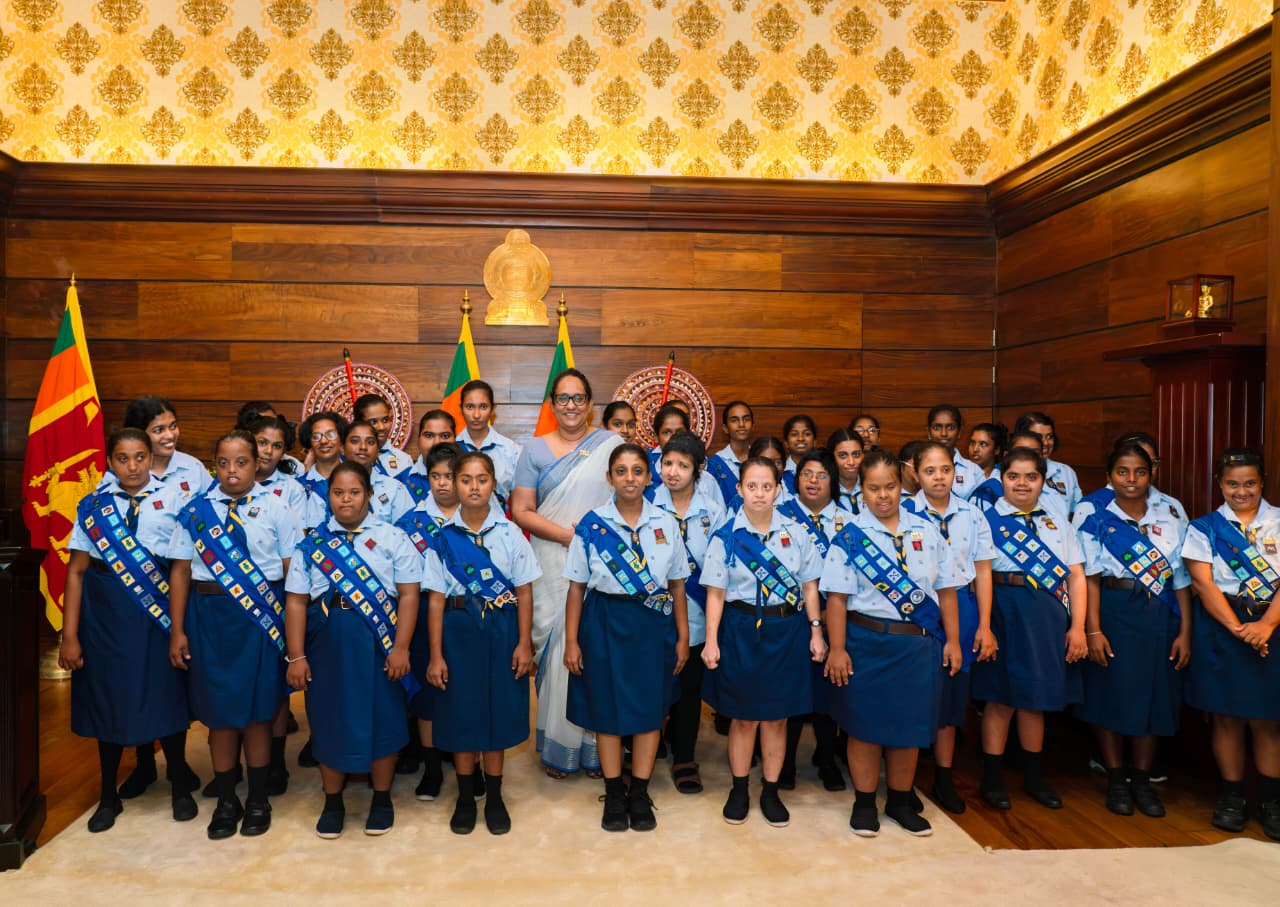
A meeting between representatives of UNICEF and Prime Minister Dr. Harini Amarasuriya was held on the 10th of December at the Prime Minister’s Office.
During the discussion, an initial review of the new digitalization policy draft was conducted, and it was emphasized that the new digital policy must be formulated to align with the ongoing education reforms.
The Prime Minister highlighted that the digital policy should be developed in a way that supports all five core pillars of the current education reforms, including curriculum reform, infrastructure development, and administrative restructuring.
It was further noted that the current draft is primarily focused on curriculum-related matters, and the digital policy should be structured to influence the overall education reform process.
Extensive discussions were also held on the importance of digital literacy, NEMIS, the provision of digital infrastructure, and minimizing the existing digital divide.
Attention was also drawn to the gaps in the current teacher training mechanisms , and the Prime Minister stressed the need to reduce paper usage.
The meeting was attended by the UNICEF representatives Dr. Emma Brigham and Deborah Wyburn, Secretary to the Prime Minister Pradeep Saputhanthri, Additional Secretary A.B.M. Ashraff, and several other officials.
[Prime Minister’s Media Division]
Business
The government is taking steps to streamline trade facilitation, customs processes, investment approvals, and improving export facilities – Prime Minister
Prime Minister Dr. Harini Amarasuriya stated that the government is taking steps to strengthen local exporters by making trade facilitation, customs procedures, and investment approvals more efficient, and by improving export services.
The Prime Minister made these remarks while addressing the 27th Presidential Export Awards 2024/25 ceremony organized by the Ministry of Industries and Industrial Development together with the Export Development Board.
At this ceremony, which was held to recognize the best exporters of Sri Lanka for the financial year 2024/2025, a total of 107 awards including 15 overall awards and 92 sectoral awards for products and services were presented. Merit awards were also presented to eligible sectors based on applicants’ performance and their contribution to national economic development. Awardees were selected on several criteria such as export market diversification, job creation, growth in export revenue, repatriation of export income, environmental sustainability, institutional social responsibility, and value addition.
Institutions that demonstrated outstanding performance in the export sector were presented with the prestigious Presidential Export Awards for the year under the patronage of Prime Minister Dr. Harini Amarasuriya and Minister of Industries and Industrial Development, Mr. Sunil Hadunnetti.
Further expressing her views, the Prime Minister stated:
“The Presidential Awards Ceremony for exporters reminds us that Sri Lanka’s progress depends not merely on policies or administration, but on the ability to produce, to create value, and to compete internationally.
Over the past year, we faced numerous challenges. As a result, global markets and supply chains were disrupted. Economic uncertainty prevailed. We faced natural disasters. Despite this, many exporters had to adjust to these changes, reorganize production processes, diversify customers, and adopt digital technologies in order to remain competitive in the market.
The impact of the Ditwah cyclone also affected several industries within the export sector. Production facilities, storage facilities, and transportation routes in affected areas were damaged. Production chains and delivery schedules were disrupted.
Under such a difficult situation, some exporters experienced significant setbacks while trying to meet international export demands.
The government is taking steps to support exporters by assessing the damages they suffered due to the emergency situation, restoring their operations, and helping them recover. The government is also working to strengthen resilience against future natural disasters and to rebuild affected areas in a way that minimizes the risk of similar situations arising again.
Sri Lanka is currently undergoing a new economic transformation. For many years, instability, policy inconsistencies, and administrative inefficiencies hindered the progress of the country. This weakened investor confidence and made it difficult for businesses to plan ahead.
However, the present government is committed to governance based on stability, transparency, and accountability. This is not a short-term approach. It is a long-term process to ensure that the country does not fall back into uncertainty.
For this purpose, the government is implementing strong fiscal management, predictable policies, clear and simplified regulations, anti-corruption measures, major institutional reforms, measures that allow businesses to plan ahead, instill investor confidence, minimize unnecessary barriers, and support the development of the private sector.
For a long time, we relied heavily on international loans to sustain national expenditures. However, this is not leading a path toward a stable future. Our progress depends on our ability to earn through trade, innovation, and global engagement.
Your ability to take Sri Lankan expertise and creativity to the world is a strength for the entire nation. The government is ready to extend the necessary support to achieve this.
We understand that issues such as policy inconsistencies, delays that increase operational costs, limited access to competitive financing, gaps in infrastructure and technology, weaknesses in trade facilitation, and slow progress in expanding market access have impacted you. I would like to assure you that the government is directly addressing these challenges.
The focus of the government has drawn to build efficient, transparent, and predictable systems, streamlining trade facilitation, customs processes, and investment approvals, improving export facilities, and minimizing the gap between local businesses and global markets.”
This event was attended by Ministers Kumara Jayakody, Ramalingam Chandrasekaran, Sunil Kumara Gamage; Deputy Ministers Chathuranga Abesingha, Eranga Weerarathna, Arun Hemachandra, Nishantha Jayaweera, Muditha Hansaka Wijayamuni; Governor of the Central Bank Nandalal Weerasinghe; Secretary to the Ministry of Industries and Industrial Development Tilaka Jayasundara; Chairman of the Export Development Board Mangala Wijesinghe, along with ambassadors, foreign delegates, exporters, and a large gathering.
[Prime Minister’s Media Division]
News
Big fossil fuel companies are responsible for climate crisis but poor countries like Sri Lanka are battered by it – Greenpeace South Asia
Greenpeace South Asia yesterday sounded a renewed alarm after a rapid analysis by World Weather Attribution (WWA) confirmed that human-induced climate change significantly intensified the extreme rainfall that battered Sri Lanka during Cyclone Ditwah and fuelled severe flooding across the Malacca Strait.
Greenpeace South Asia said that according to the study, the five-day rainfall extremes, like those unleashed by Ditwah, are now 28% to 160% more intense due to the 1.3°C of global warming already driven by greenhouse-gas emissions. Warmer sea surface temperatures in the North Indian Ocean — 0.2°C above the 1991–2020 average — supplied the additional energy that powered the cyclone’s rapid strengthening and heavy downpours.
WWA researchers stressed that Sri Lanka’s existing vulnerabilities magnified the disaster’s impact. Steep highlands funnelled water into densely populated floodplains, while unplanned urbanisation in flood-prone areas heightened exposure. Breakdowns in ICT systems meant early warnings failed to reach many, leaving low-income and marginalised communities to absorb the worst of the cascading disruptions to transport, electricity and essential services.
Avinash Chanchal, Deputy Director of Greenpeace South Asia, said the human toll was worsened by forces far beyond the island’s control.”During Cyclone Ditwah, we saw people coming together — neighbours rescuing neighbours, volunteers working through the night,” he said. “But while ordinary Sri Lankans showed up for each other, the real culprits were nowhere to be seen. The WWA study confirms what we already knew: this disaster was intensified by the carbon pollution of the world’s biggest fossil fuel companies. They caused the crisis, yet it’s the frontline communities who pay the price.”
Greenpeace warned that events like Ditwah signal a dangerous new normal for the region.”With increasing incidents, like Cyclone Ditwah, it is clear that extreme weather events are no longer isolated,” said Kumar. “Communities in South Asia will continue to struggle to cope with such conditions.”
The organisation urged countries most responsible for historic emissions to respond decisively. “This is high time that developed-country governments stop pretending this is normal,” Greenpeace said. “They must immediately cut emissions, phase out fossil fuels, and deliver real finance for loss and damage. Anything less is a betrayal of the people already living on the frontlines of climate breakdown.”
-
Features3 days agoFinally, Mahinda Yapa sets the record straight
-
News5 days agoOver 35,000 drug offenders nabbed in 36 days
-
News4 days agoCyclone Ditwah leaves Sri Lanka’s biodiversity in ruins: Top scientist warns of unseen ecological disaster
-
Features6 days agoThe Catastrophic Impact of Tropical Cyclone Ditwah on Sri Lanka:
-
News5 days agoRising water level in Malwathu Oya triggers alert in Thanthirimale
-
Features3 days agoHandunnetti and Colonial Shackles of English in Sri Lanka
-
Business2 days agoCabinet approves establishment of two 50 MW wind power stations in Mullikulum, Mannar region
-
Business5 days agoSri Lanka betting its tourism future on cold, hard numbers