
Business
‘Leaders must take care of their people in this pandemic’

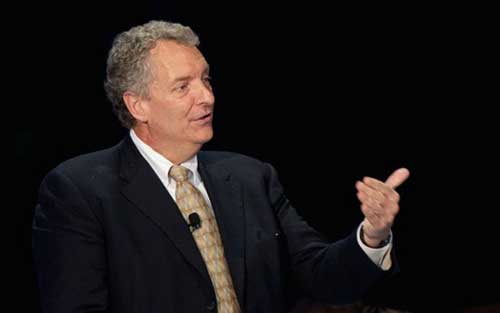
Excerpts from a virtual interview
By Dinesh Weerakkody
Celebrated HR Guru Prof. Dave Ulrich who has helped shape modern HR in this interview emphasizes the fact that leaders must learn to harness uncertainty to be able to help countries and organizations to prosper in the unknowable new normal.Prof. Ulrich has consulted and done research with over half of the Fortune 200 companies and worked in over 80 countries.
Dave, It’s a long time since I’ve seen and spoken to you. What has changed since we last met?
Much has changed and until January 2020 the world was moving along and then in January the corona crisis hit and the entire world went through dramatic change overnight.
The global pandemic has heightened HR’s relevance to business. In this context, what should HR be doing to help people and organizations deliver increased value and what are the new practices that will emerge post crisis?
Let me lay out HR’s value creation with three very simple insights. No. 1, we have to create and capture value for others. The goal of HR is to create value for our employees, for our organizations, for our customers, for our investors and for our communities. So HR’s number one issue is to continue to create value both inside and outside the firm. No. 2, to create value to all stakeholders, HR must deliver great people, organizations, and leadership. No. 3, HR has to continue to reinvent itself, through digital HR, through technology, through analytics. In brief, HR’s agenda is to create value outside into all stakeholders, through talent, organization and leadership and by transforming HR .
What has been the impact of the pandemic on HR skills and competencies? What new skills will HR professionals need to develop post pandemic?
We have studied HR competencies for 30 years, through 7 rounds of research and we are now starting the 8th round. As we look ahead, we envision five HR competencies that we think will have an impact. No 1- is information asymmetry, or learning how to source information in this new world even when working virtually. . Number 2- is being able to separate signal and noise. In this world there is a lot of noise, as evidenced with a lot of activity, emails, ideas, and books. How do we sift important signals that matter from this noise, particularly around emotional wellbeing. Therefore the challenges are ;No. 1 information asymmetry. No. 2 separating noise from signal and No. 3. beginning to build integrated solutions, it’s not isolated staffing, training & compensation initiatives, HR needs to integrate these specialists activities into integrated solutions. . No; 4 is social responsibility and Citizenship. HR now needs to be much more aware of and connected to social responsibility.. No; 5 is guidance. HR should access information that offers guidances. It’s not enough to just describe an organization practices- like culture. We should be specific about the “right” culture, given the situation. Those are the 5 skills we are studying and we want to find out how they deliver value to stakeholders. Information asymmetry, separating noise from signal, managing social responsibility and corporate citizenship , integrated solutions and then organisation guidance.
What has technology really done to empower engagement in this crisis?
Technology, like almost everything else, offers good news and bad news. The good news is that technology enables digital information that supports good decision making. The bad news is that technology can be used to distance people form each other. We have seen 4 phases of digital affecting HR. The first phase of digital HR, is efficiency. So technology allows us to be more efficient to do learning or staffing or compensation efficiently. The second phase is innovation. Josh Berson who is the expert in this area said there are 2,700 new digital HR apps, some of which are good and some are silly. The next (3rd) phase of HR digital that is coming is information guidance. How do we use digital to tell us more of what we do? It’s no longer enough to do a best practice. We have to do a practice that creates an impact on key results. Then, the fourth phase, is experience or connection which is where I think HR needs to focus in this pandemic. Technology should enable us, one- to be more efficient, two- to innovate, three for information management and four to have a better experience and that’s where I think we are heading with technology.
Moving on, today what would HR look like in the new economy?
When people tell you that they know the new normal. My advice to you is turn around and run. I don’t know what the new normal is? I think we live in a world full of uncertainty and our job in HR is to harness that uncertainty. Our message should be; don’t be threatened by the uncertainty, but to discover the opportunity in it.Out of the uncertainty that comes from this crisis will emerge a whole new way to behave and do things. These new behaviors must focus on creating value for all stakeholders. Number two, HR will have to add greater value to the people, organization and leadership. Number three, HR will have to reinvent HR, through transforming the HR department, offering integrated HR solutions, and upgrading HR professionals. HR leaders unlike ever before are expected to help their people and organizations navigate this crisis.
What will the new world of work look like post covid?
I think we’re going to see a new ecosystem where and how we work; I think we used to worry about where we work. When I get up in the morning, I go to work, I’m at work and I go home from work. I think that’s gone, or less likely. For example – I could be in my condominium, my office, my car, a coffee shop, or a hotel. No matter where we work we have to be connected through our shared values, and the boundaries of work are not physical, the boundaries of work are the values we share that create value for our customer. So the boundaries of work are shifting from ‘place’ to ‘values’. This means that no matter where one works there are expectations that shape the boundaries of work. These expectations are about the value created for the customer.
What type of skills will disappear in the next two or three years?
I don’t think skills simply disappear, they build on each other. For example, the skill of connection is going to evolve. It is not going to be connection face to face, I think it’s going to be virtually. How do you and I connect even though we’re 12 hours apart? Your night time, my morning even though we’re in different places, but I can still begin to feel that connection, so the reskilling is building on the past. That is, we still set KPIs and goals, but virtually. We communicate, we communicate virtually. Therefore we will build on the skills that we’ve learned in the past.
What are the three things that HR can do to deliver value to a CEO in this crisis?
Take care of your people. Help them feel emotionally cared for by showing empathy. Caring for them can create a great organization that serves customers. Talent, organization and leadership can all of which serve customers. For example, many have said our people are our most important asset, and I think it needs to evolve to our people are our customers’ most important asset. Do our people do what our customers want? Our culture is the identity of our firm in the marketplace. Our leaders must have the competencies that create value for our customers. Everything we do in HR, talent, organization and leadership should create value in the marketplace.
You talked a lot about the organization guidance system (OGS). Tell us a little bit more about this and how can we make use of OGS?
We have found that organizations are spending about 1% of their annual revenue on people and organization initiatives in talent, leadership, capability, and HR, but they are not clear about how to optimize these investments to deliver results. The guidance system will provide answers to questions like: What talent, leadership, organization, and HR initiatives will have the most impact on employee, business, customer, investor, and community result? To answer this question, we can build on decades of research to guide people and organization initiatives that deliver results. Our work shows 5 outcomes -employee, business, customers, financial, and community and there are 36 initiatives, which equal 180 cells (5 outcomes * 36 intiatives). Business and HR leaders need to know which of these 180 cells they should invest in. Simply go to www.rb.ai and take the short survey for each pathway to get a free report on where to focus to deliver key results. This report offers invaluable guidance on where to priorities your people and organization initiatives.
Dave, finally what is your message to CEOs of Sri Lanka?
I’m going to give the same message to the CEOs that I would to all HR and other professionals; here’s my answer to CEOs in Sri Lanka and to others, the best year of your life is the next 12 months. The best is yet ahead. Sri Lanka has a history of resilience and success, of continually rebounding and coming back. My friends and CEOs, my friends in business, my friends in HR, the best is yet ahead, the next 12 months will be the best ever.

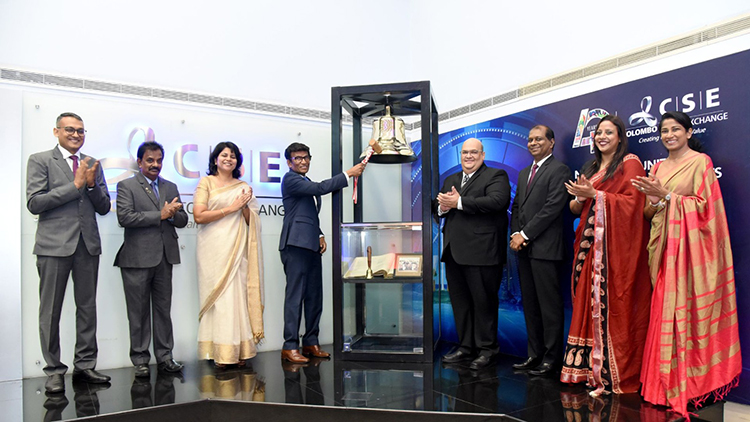
Mahindra Ideal Finance Ltd (MIFL) recently marked the official listing of its inaugural debentures and debut listing on the Colombo Stock Exchange (CSE) with a bell ringing and market opening ceremony held at the CSE trading floor, symbolising a key milestone in the company’s capital market journey and its commitment to transparency and strong governance.
The listed debenture issue, with a total value of LKR 1 billion, was fully oversubscribed on the first day of opening on 23rd March 2026, reflecting strong investor confidence in MIFL’s financial strengths and the debt market.
Mahindra Ideal Finance Ltd is a licensed finance company with a 58.20% majority stake held by Mahindra & Mahindra Financial Services Limited (Mahindra Finance), a non-banking financial institution of India. It offers a suite of financial products, including leasing, loans, fixed deposits, and other asset-backed financing solutions, with 37 branches island-wide.
Through its inaugural debenture, which carries an “A” (lka) rating from Fitch Ratings Lanka Limited and was managed by NDB Investment Bank Ltd, MIFL aims to strengthen its capital structure while supporting its future growth initiatives.
Thilan Wijesinghe, Chairman of Mahindra Ideal Finance Ltd, who was the ceremony’s keynote speaker remarked upon the company’s inaugural debenture issue, commenting “MIFL’s entry to the Colombo Stock Exchange through its debut debenture listing is a significant institutional milestone. It reinforces our long-term commitment to building a well-governed financial services business with the scale, discipline, and credibility to serve Sri Lanka’s evolving financing needs.”
Delivering her welcome address at the event, Ms. Nilupa Perera, Chief Regulatory Officer of CSE, remarked upon the listing, stating: “Through its Debt IPO Mahindra Ideal Finance Limited makes a statement of commitment to diversifying funding sources and strengthening long-term growth while demonstrating its commitment to the highest standards of corporate governance, through a platform that only CSE can offer.”
2025 saw 22 debt listings including 3 new companies listing on the exchange by way of debt initial public offerings (IPOs) including several firsts in the country from GSS+ debt instruments (Green, Social, Sustainability linked), Shariah compliant debt instruments and High Yield Bonds, with access to investors and brokers facilitated by a fully digitized CSE platform, which can be accessed through CSE’s website and mobile app.

In a significant breakthrough for Sri Lanka’s trade and logistics sector, authorities have agreed to halve the number of containers subjected to Customs examination at the Colombo Port—an intervention expected to dramatically reduce congestion and costly delays that have plagued importers and exporters for months.
The decision emerged following high-level discussions between the Ceylon United Business Alliance (CUBA), senior Customs officials, and representatives from the Finance and Industries Ministries.
The business delegation, led by Ms. Tania Abeysundara, included representatives of the Customs House Agents and Traders Association, among them Ghouse Arfin, Jawfer, and Mohamed Niyas. They met with Deputy Minister of Finance Prof. Anil Jayantha and Deputy Minister of Industries Chathura Abeysinghe, alongside top Customs officials.
Sri Lanka Customs Director General Seevali Arukgoda, addressing the concerns of the trade, assured that container examination selectivity would be reduced in line with International Monetary Fund (IMF) recommendations.
At present, nearly 800 containers—amounting to around 40 percent of daily throughput—are flagged for physical examination at key yards, including Grayline 1, Grayline 2, and Rank Container Terminal. This high rate has been widely blamed for severe bottlenecks within the Colombo Port and associated examination yards.
However, under the revised framework, the number of containers selected for inspection will be reduced to approximately 400 per day, bringing the examination rate down to 20 percent.
Senior Customs officials, including Additional Director General (Revenue and Services) S. Loganathan, acknowledged that the current levels of inspections had contributed to mounting congestion, extended clearance times, and increased costs for traders.
Industry stakeholders have long argued that excessive physical inspections—often duplicative and risk-averse—undermine Sri Lanka’s competitiveness as a regional maritime hub.
“The reduction in selectivity is a long-overdue, data-driven reform that aligns Sri Lanka with global best practices,” a senior trade representative said, noting that modern Customs regimes increasingly rely on risk-based profiling and intelligence-led inspections rather than blanket checks.
The move is expected to significantly ease container pile-ups at the port and examination yards, improve turnaround times, and restore confidence among international shipping lines and local businesses.
The Ceylon United Business Alliance welcomed the development, expressing appreciation to both the IMF and Sri Lanka Customs for responding to industry concerns at a critical juncture.
“This is a vital step towards improving trade facilitation and reducing the cost of doing business in Sri Lanka,” the Alliance said in a statement.
Analysts say the reform is part of a broader push under the IMF-supported programme to streamline border processes, enhance transparency, and improve efficiency in revenue collection without stifling trade flows.
With Colombo Port serving as a key transshipment hub in the region, the success of such measures will be closely watched by investors and global shipping operators alike.
If effectively implemented, the reduction in container examination could mark a turning point in Sri Lanka’s efforts to rebuild its trade competitiveness and strengthen its position in the highly competitive Indian Ocean logistics network.
By Ifham Nizam
Business
Extreme polarization, volatility, uncertainty and pessimism since end of Cold War: Possible stratagem

Seldom has the world witnessed such polarization and volatility mixed with uncertainty even more than in the 1990s with the collapse of Berlin Wall leading to the unification of West and East Germany, dissolution of the then Soviet Union known as Perestroika, First Gulf War and rapid expansion of NATO, amongst others. During this period, the undersigned was researching these subject matters in 1990s in Graduate School in the US, but the global community, mostly, was unaware or least disturbed as the impingement did not transcend to the entire world as well as the internet and social media were only at embryonic stage.
The undersigned recollects that the only issue which perturbed the global community, including Sri Lanka, was the First Gulf War of 1990s as it impacted, yet again, the price of oil. Only other instances that the world experienced such uncertainty or polarization after WW II were the two Oil crises of 1970s, Vietnam and Korean War including the Second Indochina War of 1960s, financial crisis of 2008, September 11th Attacks in US, Arab Spring of 2010 and of course the Cuban crisis of 1962. Most of these events occurred at the peak of the Cold War but the crisis of today is totally and on a tectonically different dimension.
Strait of Hormuz and nature of War:
It is none other than Energy known as Oil and to an extent Gas of Middle East with the rupture and blockade of Strait of Hormuz by Iran due to the ongoing Iran-Israel-US conflict. Envision, the 12-day “Operation Midnight Hammer” of June 2025 of which the US bombed Iran did not make much notice or breakeven news mostly due to the swiftness and precision of the US as well as Strait of Hormuz was not strangled, thus the flow of oil was not affected. In this particular occasion, much discussed and debated subjects in geo-political and geo-economic discourse as Ukraine Conflict and Palestine-Israel Conflict were entirely eclipsed and overwhelmed not necessarily by the Iran War or its destruction of both property and human lives but due to a single word i.e. Oil, or rather “demolition” of flow of 20% of oil and gas via the seminal Strait of Hormuz.
Ironically, a scarcely visible and little-known Strait of Hormuz unlike the Suez Canal, could negatively reverberate and resonate from Seoul, Soweto to San Francisco as no other single natural endowment or commodity. This is more impactful and influential to the global economy than vital agricultural commodities such as corn, wheat or rice. The noted Australian political scientist, Geoffrey Blainey, stated quote “Wars can only occur when two nations decide that they can gain more by fighting than by negotiating. War can only begin and continue with the consent of at least two nations” unquote. If one scrutinizes the military conflicts between and amongst nations including both the World Wars as well as a number of bloody and ruthless conflicts since the Roman times, this geo-political proposition would be true in almost in all the conflicts.
Perilous nature of this Conflict both to Economy and World Order:
In this conflict, what was most terrifying or even “intimidating” to the global community was the geography, topography and geomorphology of Iran. That said, Iran has already seized and blockaded, probably, the most crucial chokepoint of Hormuz and has also threatened to block the 18-nautical mile Bab-el-Mandeb Strait, which connects Red Sea to Gulf of Aden and extends to Indian Ocean. The Strait accounts for nearly 10%-12% of total traded seaborne oil, which mostly power the economies of Asia. This could occur since the Houthi rebels of Yemen, which supports the regime of Iran, has formally involved in the hostilities and fired missiles and other attacks, thus making this particular Strait too, literally and metaphorically, unusable for vessels. The end result could be the unprecedented surge of the price of oil to well over USD 140 a barrel, which could cripple the global economy, mostly the developing countries highly depended on oil and gas such as Sri Lanka. Even the global community was ‘elated’ of the two-week ceasefire but it is by no means a durable permanent solution under any circumstances.
As Richard Hass, President emeritus of the premier geo-political institution of the world i.e. Council on Foreign Relations (CFR) and Envoy, expressed his deep concern as well as fear on CNN program titled “Global Public Square” (GPS), one of the most esteemed weekly programs on international affairs hosted by Fareed Zakaria of the current and dynamic developments in Middle East. Haas accentuated that he was most worried that the eight-decade world order, shaped, fashioned and evolved after the WWII in 1945, could be ruptured and fragmented as never before, thus provoking and engendering global instability and disequilibrium, if the conflict was not permanently resolved on an exigent manner by the global community.
Risk of Kindleberger Trap and response by Sri Lanka:
These are profound geo-political observations and conjectures as well as the undersigned is of belief that such a scenario could lead to a “Kindleberger Trap”. This thesis was popularized by much noted Dean of Harvard Kennedy School, Joseph Nye, which underlines that global volatility and fluidity could occur when a dominant power in the comity of nations declines to extend the so-called global public good and emerging power/s is not in a position to assume such a leadership role or global stewardship. This hypothesis could alarm any nation from least developed to most advanced since the genesis of the WWI and WWII as well as the Great Depression of the 1930s could be detected or sketched, directly or indirectly, to this geo-political theory or trap.
It is ironical to note that apart from the property and human lives which were, unfortunately, lost due to the six-week conflict, one of the greatest setbacks or “victims’’ was none other than the application or recognition of International Law. It was most commendable that Sri Lanka applied and upheld the international and humanitarian law, to the letter and spirit, to rescue the crew of bombed Iranian vessel named IRIS Dena on the EEZ of Sri Lanka, without jeopardizing the decidedly delicate geopolitical equilibrium.
Most efficacious Stratagem was execution of Diplomacy and Negotiations:
As the undersigned drafts this article, it is most disquieting to note that the world is involved in three major conflicts, with at least one of them of the conflict is a nuclear power, as well as a number of other interstate and intra-state conflicts, which are reported or focused by the media and political analysts infrequently if not rarely. As Croesus, who was the last King of Lydia (today known as Turkey), enunciated these judicious words vis-à-vis war, during the era Buddha was preaching Buddhism in India and military strategist, Sun Tzu, was preaching Art of War to Emperors of China. Croesus stated quote “No one is so foolish as to prefer war to peace, in which, instead of sons burying their fathers, fathers bury their sons” unquote. It is equally intriguing to note that one of the top most officials of Carter Administration, Zbigniew Brzezinski, stated that it is of the US interest to engage Iran in serious negotiations on both regional security and nuclear challenge it poses.
Concluding remarks with Observations:
These observations must have been pronounced since the late Mohammed Reza Pahlavi better known as Shah, on an interview with one of the most trusted investigative journalists of the time, Mike Wallace, on CBS “60 Minutes” in 1974, stated that Iran was a proud country with a very long and rich history and civilization, which wished to co-exist in peace, but if war was imposed on Iran, it would not hesitate to respond. He further obliquely implied that Strait of Hormuz was indispensable to the world economy. These were stated well over five decades ago.
It would be befitting and politic to conclude with the sapient and sage words of one of the greatest negotiators and statesmen ever to walk on earth in the last Century, Nelson Mandela, quote “If you want to make peace with your enemy, you have to work with your enemy. Then the enemy becomes your partner” unquote. Final parting stratagem is none other than the execution of diplomacy and negotiations as President Kennedy stated in November 1961 at the historic “University of Washington Speech” quote “Diplomacy and defense are not substitutes for one another. Either alone would fail.” unquote.
Author is a former career Ambassador, Professor and Examiner of International Economics with specialization on Geo-economics and Geo-politics, Board Member, and Strategic Advisor. He earned the MBA from San Francisco State/University of California, PhD from Indian Institute of Technology (IIT) Delhi and is a Senior Fellow at Harvard. He could be reached on mendissaj24@gmail.com
By Prof. Saj U. Mendis, PhD

Heat Index at Caution Level in the Northern, North-central, North-western, Western, Sabaragamuwa, Eastern and Southern provinces and in Monaragala district

Naples bank robbers hold 25 people hostage then vanish through tunnel

Oil prices plunge as Iran says Strait of Hormuz ‘open’ during ceasefire

Iran says $270bn war loss must be compensated, as fresh talks with US loom

Navy seize 161kg heroin shipment in high-seas operation

Minister of Power and Energy and Ministry Secretary resign from posts

‘Dates have the highest sugar content to fight Coronavirus’

Sunday Island 27 December – Headlines

#SundayIsland 17th December – Headlines

Sunday Island – 28th March

Sunday Island Headlines – 21 March

Sunday Island – 21st February – Headlines
-

 News6 days ago
CEB orders temporary shutdown of large rooftop solar systems
-
 Features6 days ago
From Royal College Platoon to National Cadet Corps: 145 years of discipline, leadership, and modern challenges
-
 Latest News5 days ago
PNS TAIMUR & ASLAT arrive in Colombo
-

 News7 days ago
Anura Solomons passes away
-

 Features6 days ago
CIA’s hidden weapon in Iran
-
 Latest News5 days ago
Prasidh, Buttler set up comfortable win for Gujarat Titans
-

 News2 days ago
PNS TAIMUR & ASLAT set sail from Colombo
-

 Business7 days ago
SL’s economic outlook for 2026 being shaped by M-E conflict