
News
‘Towards Sri Lanka’s Recovery: Green Resilient and Inclusive Development’


Maldives, Nepal and Sri Lanka World Bank Country Director Mr. Faris H. Hadad-Zervos congratulated the government on securing the International Monetary Fund Extended Fund Facility, the parliamentary approval of the Domestic Debt Restructuring, and securing international financial support from the World Bank and the Asian Development Bank.
He made these observations while addressing the topic: ‘Towards Sri Lanka’s Recovery: Green Resilient and Inclusive Development’ at the Press Club Event hosted by the Sri Lanka Press Institute (SLPI) held at ‘The Blue’ of the Hilton Colombo on Tuesday, July 18, 2023.
The event commenced with the welcome address delivered by Senior Board Member of the SLPI Mr. Manik De Silva. The event was moderated by Business Editor of The Sunday Times, Mr. Feizal Samath.
During his speech Hadad- Zervos stated that the government has committed to an ambitious reform agenda and implemented some difficult and necessary reforms, including tax reforms, cost-reflective utility pricing, a stronger social safety net, and debt restructuring to stabilize the economy.
He stated that there have been some signs of stability in the past few months compared to 2022. Inflation is trending downwards from 69.8% in September 2022 to 12% in June 2023. Market interest rates are also declining as the uncertainty over domestic debt restructuring wanes and the foreign exchange liquidity picture has also improved.
Hadad- Zervos said, “We estimate that poverty doubled from 13.1 to 25 percent between 2021 and 2022—an addition of 2.5 million poor people—and we expect this to increase by another 2.4 percent in 2023. Many more people are just one shock away from poverty. We estimate that 5.7 percent of the population lives less than 10 percent above the poverty line, and a further 5.6 percent between 10 and 20 percent above the poverty line. This dramatic increase in poverty and vulnerability has wiped-out decades-long human capital gains. For example, there is now a serious learning crisis in the country. Only 14% of Grade 3 students have acquired minimum competency in literacy and only 15% in numeracy”
He stated that the World Bank Group’s new Country Partnership Framework and US$700 million financing support through the RESET DPO and the Social Protection project is our commitment to the Sri Lankan people at this difficult time. In response to both COVID-19 and the economic crisis, the World Bank repurposed significant undisbursed funds from its existing portfolio to sustain institutions so they could continue to provide essential goods and services, protect the vulnerable, support livelihoods, and address food insecurity.
The PRESS CLUB is envisaged to be a place where media-related events concerning visiting dignitaries and local personalities on current topics of national and international interest take place. The Press Club functions under the SLPI whose constituent partners are the Newspaper Society of Sri Lanka (NSSL), The Editors’ Guild of Sri Lanka (TEGOSL), the Free Media Movement (FMM), the Sri Lanka Working Journalists Association (SLWJA) with its affiliated partners Federation of Media Employees Trade Union (FMETU), Sri Lanka Muslim Media Forum (MMF), Tamil Media Alliance (TMA), and South Asia Free Media Association (SAFMA).
The event was attended by journalists, diplomats and experts.










News
Cabinet nod to increase the number of new automated passenger clearance gates at the Bandaranayake International Airport to 12

Approval of the Cabinet of Ministers was granted at their meeting held on 19.05.2025 to purchase four (04) automated passenger clearance gates for Bandaranayake International Airport.
In addition, it is expected to extend the automated passenger clearance gates facility so far given only to the Sri Lankans
parallel to the e – passport issuance system to be introduced in the year 2027 also to the foreigners who travel to and from this country.
Furthermore, considering also the number of air passengers rapidly increasing with the fast – forwarding business and tourism field, the appropriateness to increase the total automated passenger clearance gates up to twelve (12) in number has been recognized.
Accordingly, the Cabinet of Ministers, approved the resolution furnished by the Minister of Public Security and Parliamentary Affairs to initiate the procurement and installation of 12
automated passenger clearance gates altogether with the already approved four (04) and another eight (08) automated passenger clearance gates adhering to the formal procurement procedure
Based on the observations submitted by the Task Force on Prevention of Money Laundering and Financing for Terrorism, approval of the Cabinet of Ministers was granted at their meeting held on 18.12.2024 to amend the Trust Ordinance No. 9 of 1917 including amendments proposed by the Financial
Intelligence Unit of the Central Bank of Sri Lanka.
Accordingly, clearance of the Attorney General has been granted for the Trust (Amendment) Draft Bill formulated by the Legal Draftsman.
Therefore, the Cabinet of Ministers approved the resolution furnished by the Minister of Justice and National Integration
to publish the said draft bill in the government gazette notification and thereby, submit the same to the Parliament for its concurrence.
Action was taken to provide a fuel relief for the fuel consumers during the months of April, May and June of 2026 to redress by minimizing the impact caused to the day today life of the citizens of this country as well as the entire economy due to the price hike of petroleum fuel in the global market resulting from the war situation in the Middle East.
Government mediation is essential for minimizing the impact on the day to today life of citizens in this country due to that war situation not being ended further. Therefore, it has been planned to redress on the sale price for Auto Diesel and Industrial Diesel for a period of 03 months by the Government to provide relief to the public as well as to maintain the prices at a bearable level to the consumers without escalating the fuel prices in this country compared to the escalation of fuel prices
in the international market.
Therefore, the Cabinet of Ministers granted approval for the resolution furnished by the President in his capacity as the Minister of Finance, Planning and Economic Development to
allocate provisions subject to the monthly limitations respectively as rupees 15 billion for the month of October, rupees 13.5 billion for the month of November and rupees 12.15 billion for the month of December to provide the said relief

Cabinet nod to increase the number of new automated passenger clearance gates at the Bandaranayake International Airport to 12
Draft Bill for amending the Trust Ordinance
Implementing further relief programme to Public sffected by the Middle East conflict situation
Establishment of a Spectrum Management and Monitoring System and a Quality of Service and Quality of Experience System for the Telecommunications Regulatory Commission of Sri Lanka
Appointment of a Committee for the Restitution of Sri Lankan Cultural Heritage Held Abroad
Ten-Year National Action Plan on the Social Protection Sector (2026–2035)

‘Dates have the highest sugar content to fight Coronavirus’

Sunday Island 27 December – Headlines

#SundayIsland 17th December – Headlines

Sunday Island – 28th March

Sunday Island Headlines – 21 March

Sunday Island – 21st February – Headlines
-

 News7 days ago
Mastermind Naufer Moulavi among 15 found guilty
-
 Midweek Review7 days ago
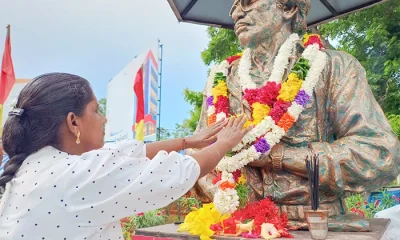
Thileepan’s fast unto death: An authentic narrative that many missed
-

 Latest News6 days ago
Showers above 100 mm are likely at some places in the Western, Sabaragamuwa, Central and North-western provinces and in Galle and Matara Districts
-

 Editorial7 days ago
Big Bad Bills
-
Editorial6 days ago
Crimes punished and unpunished
-

 Features5 days ago
Beyond traditional jobs: Why Sri Lanka needs to facilitate the gig economy
-

 News7 days ago
No referendum needed for passage of 22 A: SC
-

 News7 days ago
One clause in Anti-Corruption (Amendment) Bill requires referendu: SC