
Opinion
Optimism to the fore


It was my friend Rima’s birthday. I rang her.
“If you are calling to wish me a happy year, don’t bother. I am permanently oppressed, suppressed and highly depressed.”
“Oh. Why?”
“Need you actually ask?”
So let me dwell a little on why I am not feeling any of the above. Of course, we are badly off and we are furious with our politicians for putting us in this mess but we are so much better off than much of the world that I feel a note of optimism must be injected into this daily litany of doom.
I do not accept the recent comment that we are the 15th most unhappy country in the world. Who compiles these weird statistics? Sri Lankans are happy-go-lucky by nature. Of course when they are starving it is difficult to be cheerful but it is against our nature to be down for too long and if there is a miasmic cloud floating about that defies dispersal let us try other methods.
Our media has the tools to help. I strongly suggest that the front-page headline be ones of cheerfulness and the present perplexing political doings be relegated to page two. For instance the news that two Junior Sports women won Gold medals at an Asian Competition would mightily cheer me up. As things are, however, the antics of some of our Ministers bring a furious wobble to my morning coffee.
The front pages should Ignore minor infractions that are of no interest to the people …Here are some of the useless pieces of information correspondents seem to think readers find interesting. Teachers and Principals are regularly being sued for abuse of students. Since names of teachers and Principals are never given there is no shame attached to their disgraceful behaviour. Why does the press keep repeating what has become a regular pattern in our outstation schools?
Politicians ridiculous statements simply serve to make us realise how stupid most of them are. The educated few should be encouraged to get together, declare an election and probably WIN with the FULL support of the Media. (The non-corruptible few that is).
The Media can be one of the important implements of chastisement. Corrupt political deals should be highlighted and the ministers and officials involved MUST be mentioned by NAME. There must be a FOLLOW UP to all these riveting tales of horror. What happened to the Gold Smuggler? Why was he not hounded out of Parliament? Why are we forced to listen to the inane babbling of parliamentarians as they argue over trivialities? Lately the House was arguing over the exact meaning of the word ‘Sorry’. Truly the ways of politicians are imponderable.
Happy reporting is the need of the hour. Happy and successful incidents are still happening. Report THEM. Instead, we now face a daily dose of political histrionics enacted by small men of no intelligence. Now, to get back to encouraging cheerfulness.
There is much for which we can be happy. Millions of people in the world have NOTHING. Immigrants are inundating Europe making it uncomfortable in extreme for those governments to handle. Countries are either being flooded or have no water at all. Others are fighting unquenchable fires causing populations to lose all they have. Women are oppressed. Religious minorities (anti Semitism for example) are on the rise and there is great shortage of decent living even in ‘advanced’ countries. Sri Lankans are fortunate indeed as they experience none of the above.
I do not understand the brain drain. Surely, Sri Lanka is not so badly off that we cannot weather this storm together? If we had a government which we could totally trust the memories of past horrors would dissipate. Fortunately, humans have that ability. Foreign television channels tell terrible tales seeking to make out that Sri Lanka is in desperate straits. But we are not as badly off as millions elsewhere. We are slowly pulling ourselves together. We could do better if elections were held and these uneducated and immoral politicians were swept away. But are we not better off than we were three months ago?
Our President is not doing too badly despite some unpopular appointments which are probably forced on him. One must admit he has handled the crisis sensibly. I daily bless our young Minister, Kanchana Wijesekara, for his masterly handling of the energy portfolio. So, let the Media provide us with a massive dose of optimism which will raise our adrenalin to comfortable functioning levels. Let us raise our national mood to one of insouciance which will display an optimism that will result in a definite and positively felt change in our fortunes. Attitudes are SO important.
I read recently in the papers that the President helped two students from Jaffna to attend the “International Criminal Court (Moot) competition” in the Hague. Here is something we would like to hear more about. Our students are clever and these two will probably acquit themselves extremely well. A fine headline.
Here is another one. The Symphony Orchestra recently marked 75 years of Diplomacy with a brilliant Concert. The orchestra gave up their own profits to benefit the Lady Ridgeway Hospital. All Cultural activity and the PERSONALITIES involved are so much more interesting than news of teachers and Principals misbehaving in the provinces.
The Media can tell us about happy doings in the country (with names). Sporting details, competitions between schools of non-sporting activities …. women who are have made interesting careers and lives for themselves …. the list is endless. Just yesterday I heard a name I have not heard before of a lady who lives in Badulla and has published a book in the UK titled “Doppelgangers”. An interesting story surely?
The Media should focus on being POSITIVE, INTERESTING and UPLIFTING whenever possible. What a help the Media could be if properly used to raise the mood and welfare of a struggling people instead of proceeding along inexorable parallel lines of gloom forever.
Obviously political doings need transparency. No one has been more critical than myself about certain aspects but there is no doubt that criticism all the time with no deserving praise is self defeating. There is much that deserves praise.
Let us take the streamlining of the Passport Office. What a boon to us. Why is that not given top billing? Then the ID Office I believe has been greatly modernised. The President seems to be ensuring that Government servants begin to run well oiled offices rather than haphazardly and carelessly carrying out duties to the great inconvenience of the patient public.
Our politicians present imperviously innocent faces to the public with little or no shame. Do they imagine we have forgotten their misdeeds? Our President wears an imperturbable air of confidence. This is strangely reassuring these days I must admit. But he is an exception. He has slowly grown into the job despite being assailed on all sides for the sheer lack of rationale over his appointment.
There is a game a few of us play among ourselves. I shall open it to readers. The game we find fascinating is choosing a cabinet of worthwhile members from among the public figures we know. Some are non-political but we imagine a country with men of ability, education, moral and upright character at the help of affairs. A Utopian dream, but we can always hope. I cannot stress strongly enough how ashamed we are of the behaviour of our parliamentarians. They rarely listen to each other speaking, they make calls on their mobiles while a member is speaking, they answer phones, they chat to each other while important points are being discussed, they even fall asleep occasionally.
So here is what we must do and copy the seating methods of the British House of Commons. Rebuild the seats of the House so that parliamentarians are forced to sit straight and in a somewhat perched manner. They are not there to be comfortable. They are there to WORK. Rebuild those seats so that they are much narrower. The parliamentarian speakers will be gratified by the apparent attentiveness of their audience and any attempt of those lazy members to close their eyes may result in an embarrassing tumble. Let them be objects of ridicule without turning every debate into a social event for themselves.
And finally, PLEASE let the daily headlines give is HOPE and OPTIMISM for the future. Inculcate true patriotism by using the Press to guide our thoughts along REAL restructuring of our ambitions for this lovely island of ours. It is well within our grasp. Let the Press take the lead.
Goolbai Gunasekara


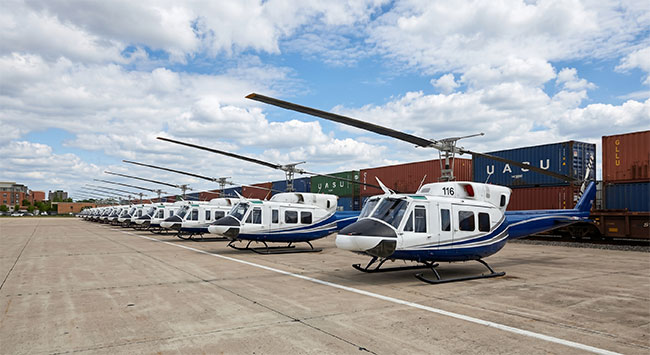
The US Government has gifted 10 Bell 206, Sea Ranger Helicopters to the SLAF for Training and Humanitarian Assistance and Disaster Relief (HADR) purposes. The full specifications are as follows.
Contractor:
Bell Helicopter Textron
Date Deployed: First flight: 1961; Operational: 1968
Propulsion: One Allison 250-C20BJ turbofan engine
Length: Fuselage – 31 feet (9.44 meters); Rotors turning – 39 feet (11.9 meters)
Height: 10 feet (3.04 meters)
Rotor Diameter: 35 feet 4 inches (10.78 meters)
Weight: 1595 pounds (725kg) empty, 3200 pounds (1455 kg) maximum take-off
Airspeed: 138 miles (222 km) per hour maximum; 117 miles (188 km) per hour cruising
Ceiling: 18,900 feet (5,761 meters)
Range: 368 nautical miles (420 statute miles, 676 km)
Crew: One pilot, four students
While they are good for training, I have my serious doubts whether these helicopters are ideal for HADR. As they have only a single engine and They can’t even operate into high rise helipads in hospitals and hotels in Colombo. The law requires twin engine helicopters! What happens if there is an engine failure while operating over the sea or in a mountainous area? There will be hell to pay!
Three twin engine versions would have been better.
How many helicopter pilots does the SLAF require anyway?
Will we be stuck with junk? Like two Russian KA -26’s during the Sirimavo Government and French Aerospatiale Dauphins SLAF acquired. which were not ‘tropicalised’, during the JRJ Government.
Will the Sea Ranger Spares support be available, free of charge?
I doubt it.
There will also be other Geopolitical strings attached. There is no such thing as a free lunch.
Guwan Seeya

Global warming policies were expected to drive a rapid shift toward a renewables-based energy system dominated by wind and solar. While growth in these sources did occur, it has not matched the pace that was widely anticipated. In the United States, the rise of cheap and abundant shale natural gas significantly reshaped the energy mix, displacing coal and limiting the relative share of wind and solar in electricity generation. In China and India, the situation has been different.
Coal remains dominant because it is widely available domestically, while natural gas is more limited or expensive to secure at scale. As a result, coal has retained its central role in both countries’ power systems. Solar and wind always provide intermittent, variable power. It was widely assumed that a cost-effective, utility-scale electricity storage solution would emerge to solve this problem, but that has not yet happened at the scale originally expected. In the pre-AI era, solar and wind were typically integrated into power systems alongside more reliable sources such as coal, natural gas, and nuclear energy.
For example, if the sun was shining on a Monday, electricity demand could be met largely by solar power during the day. At night, coal, natural gas, or nuclear plants would supply the required electricity. If the following Tuesday was cloudy or gloomy, generation would shift back toward coal, gas, or nuclear to maintain supply. AI introduces a new and more demanding challenge. AI data centers require continuous, high-quality, always-on electricity, which solar and wind alone struggle to guarantee without large-scale storage or back-up systems. In addition, they require very large amounts of power.
As a result, the AI industry is now actively searching for new and expanded sources of reliable electricity. One of the major challenges in powering AI systems is electricity transmission. High-voltage transmission lines are expensive, slow to build, and often face regulatory and land-use constraints. As a result, some companies are exploring more localized power solutions, sometimes referred to as microgrids. These are self-contained energy systems that can operate independently from the main electricity grid. Technologies such as small modular nuclear reactors are an example of such microgrids.
In such isolated systems, the focus is on highly reliable, always available power generated close to the point of use. In this context, solar and wind are expected to play a limited role because their output is variable and depends on weather conditions, making them less suited as primary sources in fully self-contained AI-focused microgrids. The pace of AI infrastructure development is extremely rapid in both the United States and China. AI systems are widely seen as transformative technologies that promise significant new wealth creation, which is driving aggressive and sustained investment. As a result, development is moving quickly, without waiting for long-term solutions such as large-scale energy storage to mature alongside renewable energy systems.
In this environment, electricity demand is rising faster than new infrastructure can be built. In the United States, this reinforces the role of natural gas as the dominant source of reliable power. In China and India, where coal remains more established and readily available, it is likely to continue playing a central role in meeting growing demand. In India, AI data centers have not yet been built at the scale seen in the United States and China. When India does reach that stage, it will need to supply large amounts of reliable electricity. India has placed strong emphasis on solar energy in particular and has had some success in meeting the needs of ordinary consumers through renewable expansion. However, the key question is what choices will be made when large-scale AI data centers begin to arrive.
Will India rely more on coal generation, which is relatively cheap, widely available, and highly reliable, or on solar power, which is intermittent, variable, and often more expensive when reliability is taken into account? My view is that India is more likely to turn to coal to meet this demand, given its existing infrastructure and the need for dependable electricity supply. Then there is an overall question. Solar and wind were already struggling in the pre-AI days to displace coal and natural gas at the system level, despite strong expectations that they would become dominant sources of electricity. Now that AI is here and electricity demand is rising rapidly, will they push solar and wind further behind in the energy mix? (The Statesman)
(The writer is an expert on energy and contributes regularly to publications in India and overseas.)
by SUNIL SHARAN
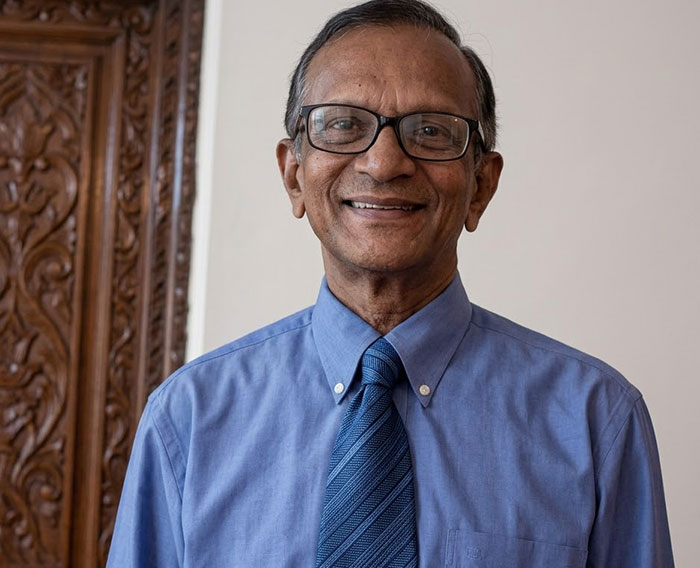
Celebrating the Life and Legacy of Dr Naomal P. S. Gunaratna 10 January 1931 – 07 May 2026
When a colossus of human virtue departs this earthly theatre, the silence left in its wake is not merely the absence of sound, but a profound, resonant reverberation that echoes through the very corridors of our souls. On that most distressing 07 of May, 2026, the mortal final curtain fell upon the magnificent, multi-faceted tapestry of a life lived to its exquisite pinnacle. Dr Naomal P. S. Gunaratna, having completed a glorious earthly sojourn of ninety-five years, surrendered his gentle spirit to the infinite, leaving behind a world demonstrably poorer for his departure.
To speak of him is to speak of an absolute gem of humanity, a mortal who walked among us with the quiet majesty of a king, the tender heart of a saint, and the flawless grace of a true nobleman. He was a Consultant Paediatrician of peerless distinction. Yet for all that, well above and beyond the glittering accolades of his noble vocation, he was, in the truest and most sublime sense of the phrase, a human being par excellence.
In attempting to encapsulate the vast depth of Naomal’s character, even the richness of the English language feels frustratingly inadequate, compelling one to search for words forged in the fires of profoundest reverence. He was a grandee possessed of sterling qualities so rare in this modern transactional era that his presence felt like an exquisite anachronism; a beautiful remainder of an age when honour was a man’s sanctuary, and integrity was his unwavering Northern Star. His uniqueness did not stem from an assertive, ostentatious display of superiority. It blossomed from the quiet, luminous radiance of an authentic soul. To have been counted among his close friends is a privilege of such monumental proportions that it stands as one of the most radiant blessings of my own life. Our bond was not woven from the fragile threads of casual acquaintance, but forged in the durable crucible of mutual respect, shared ideals, and a deep, unspoken understanding of the beauty inherent in lives dedicated to the service of others.
In an age where the ethical landscape is all too often obscured by the shifting mists of compromise and moral ambivalence, Naomal stood like an unyielding granite cliff against the turbulent seas of opportunism. His rectitude was absolute, non-negotiable, and entirely independent of an audience. He did what was right, not for the fleeting warmth of public adulation, but because his internal moral compass was tuned to an otherworldly frequency. His word was a sacred covenant, an unbreakable bond that required no legal seal or written witness. In his professional life as a Consultant Paediatrician, this supreme integrity manifested as an unswerving commitment to the highest principles of Hippocratic devotion. He was a healer who could neither be bought nor swayed by the seductive allure of material gain or institutional politics. He wielded his stethoscope not as an instrument of commerce, but as a sacred conduit of compassion, bridging the divide between clinical expertise and the tender vulnerabilities of human suffering.
How can one adequately depict the soft, enveloping warmth of a heart that beats in perpetual symphony with the distress of others? Naomal’s benevolence was not a performative gesture, nor was it a duty executed with cold, clinical precision. It was an effusive, spontaneous overflow of pure, unadulterated love. It was a kindness that possessed its own unique atmosphere, a soothing gentleness that disarmed fear and banished despair. When he entered a room, the emotional temperature invariably rose, thawed by the genuine, sparkling warmth of his magnificent smile. His eyes, windows to a soul completely devoid of malice, mirrored a profound empathy that could diagnose a broken spirit as swiftly as a physical ailment.
He was brought up in his early days at De Mazenod College in Kandana, St Peter’s College Colombo, Royal College Colombo, and during the period of World War II, in Glendale College, Bandarawela. In a glittering career that followed specialisation in paediatrics, he has worked in the Government Hospital in Gampaha and Kuliyapitiya, the Department of Paediatrics of the University of Peradeniya, North Colombo Medical College in Ragama and then at the Department of Paediatrics of the University of Kelaniya. To the thousands of children who passed through his healing hands across the decades, he was not merely a doctor in a sterile white coat; he was a grand, benevolent guardian angel, a comforting presence whose very touch possessed an alchemy that turned terror into tranquillity and tears into triumphant laughter. To scores of his students, he was a father figure, a mentor and a brilliant teacher. In the years gone by, he was the President of the Sri Lanka Paediatric Association, which is now the Sri Lanka College of Paediatricians, President of the Vaccines and Infectious Diseases Forum of Sri Lanka and a much-valued Council Member of the Independent Medical Practitioners Association (IMPA). The unblemished finesse that he exhibited in these positions is indeed an abiding lesson to all and sundry.
As a Consultant Paediatrician, Naomal’s brilliance was legendary, a beacon of excellence that illuminated the medical fraternity. Yet, his profound intellect was beautifully balanced by an equal measure of humility. He possessed the rare ability to untangle the most knotty, complex medical conundrums with a swift, intuitive diagnostic precision, all while maintaining a bedside manner that was as gentle as a summer breeze. He understood, with a depth that bypassed mere textbook knowledge, that a sick child is a fragile ecosystem, intertwined with the agonising anxieties of distraught parents. Consequently, his consultations were masterclasses in holistic healing. He did not merely treat a disease; he cradled a family. He would spend hours patiently explaining clinical intricacies to frightened mothers, his voice a calm, reassuring anchor in the midst of their emotional storms. He treated the children of royalty and the children of peasants, with the same meticulous care, the same overflowing affection, and the same absolute dedication, recognising the identical, priceless spark of divinity within each innocent soul.
A personal anecdote goes to show the most admirable and true spirit of the man. I did not know Naomal from Adam till 1990. In January of 1990, following my tenure of office in General Hospital Badulla, General Hospital Ratnapura and General Hospital Kurunegala, I was posted as the Consultant Paediatrician to Kalubowila Hospital by the Ministry of Health. Both Naomal and I did our Private Consultations at Asiri Medical Hospital. We worked on the same floor and became really close friends. He had loads of patients, while I had extremely few, as I was totally unknown. Most of the time, I was seated in my Consulting Room, twiddling my thumbs and waiting for some tangible work with children.
Then one day, Naomal came to my room and said that he needed to go abroad for an extended period of about six to eight months and asked me whether I could look after his patients. I was very happy to do it as at that time, as it was like ‘manna from heaven’ for me. So, it went on, I looked after his little patients, and I was financially the richer for it.
Then, when Naomal came back after all those months, I told all his patients that I was only covering up his work and that they should go back to him. However, some of them wanted to stay with me. I told them that the only way in which I would continue to look after their children was for them to get a note to that effect from Dr Naomal Gunaratna. I was quite sure that it would not come to pass that way. They went to him and told him what I said, and Naomal, most nonchalantly, graciously and with the greatest pleasure, issued a little note to each of them in which he had written “My dear BJC, please be kind enough to take over the care of this child“. Need I say more? What a man? What a fantastic person who showed by his quiet deeds that his values transcended petty considerations and monetary reflections?
The longevity of ninety-five years is a milestone granted only to a few. For Naomal, these nine decades plus were not merely a passive accumulation of days but a grand, purposeful march through time. He aged with an unparalleled, majestic dignity, his wisdom deepening like a fine vintage, while his youthful enthusiasm for life remained entirely unextinguished by the passing years. Even as his physical frame grew frail under the inevitable weight of time, his mind remained a brilliant, caerulean laboratory of thought, and his spirit retained its effervescent, childlike joy. He never allowed the cynicism of an evolving world to pollute the pristine waters of his optimism. To sit with him in his twilight years was to drink from a fountain of pure, unvarnished wisdom. He looked back upon his long journey not with the wistful regrets of a man mourning, but with the serene, tranquil satisfaction of an accomplished master craftsman who looks upon a masterpiece and knows he has given it his all, in the finest sense of the phrase.
We must also celebrate the quiet, understated grandeur of his private universe. Naomal was a man of exquisite tastes, an intellectual who found solace in the harmony of great literature, the majesty of classical arts, and the quiet contemplation of nature’s wonders. Yet, his greatest joy was found in the warmth of human connections. He was a loyal, fiercely protective friend, a steadfast pillar of strength upon whom one could lean with absolute confidence, even during life’s most turbulent seasons. In an era dominated by superficial relationships and digital illusions, his friendship was a solid, tangible sanctuary. His conversations were never trivial; they were rich and multi-layered tapestries woven with historical anecdotes, medical philosophies, gentle humour, and profound spiritual insights. To converse with him was to be elevated, and to be challenged to think more deeply, love more expansively, and live more honourably.
On that day of his departure from this mortal world, the world lost an exceptional treasure. The medical profession lost one of its most venerable elder statesmen, humanity lost an exemplary ambassador, and I lost a cherished brother of the heart. The grief we feel is heavy, a dark and suffocating shroud that threatens to overwhelm us. Yet, as we stand in the shadow of this monumental loss, we must not weep as those who have no hope. Naomal’s demise is not an absolute end but a glorious transition. It is the triumphant homecoming of a soul that has magnificently fulfilled its earthly mandate. The physical vessel which carried his inner being may return to the dust from which it came, but the essence of who he was, the kindness he disseminated, the lives he saved, the love he kindled, and the pristine integrity he modelled remain forever immortalised in the fabric of our realities.
He has crossed the ultimate horizon, entering that everlasting realm where pain is obsolete, and peace reigns eternal. We can almost see him now, walking through fields of everlasting light, his countenance radiant, his step light and free, greeted by a chorus of godly beings and even the grateful souls of the children he mended but who preceded him into eternity. The man has fought the good fight, he has finished the race, he has kept the faith with absolute, unyielding fidelity. His life was a beautiful, symphonic ensemble dedicated to the upliftment of humans, and its final stanza, though hushed in death, is an abiding opus which leaves an eternal melody playing in our hearts.
Farewell, my dearly beloved friend; goodbye, Dr Naomal P. S. Gunaratna. You were an absolute gem of a person, a human being par excellence, and a star that burned with a brilliant, comforting light in our earthly sky. Though you have gone away from our sight, your luminescence will continue to guide our steps through the gathering shadows until that glorious dawn when we shall meet again on the farther shore.
May your most beautiful, noble soul rest in eternal, serene, and uninterrupted peace. May you attain eternal bliss!
I conclude with the immortal words, as depicted by the great bard William Shakespeare in Julius Caesar (Act V, Scene 5) “His life was gentle, and the elements so mixed in him that nature might stand up and say to all the world, This was a man.”
By Dr B. J. C. Perera
Specialist Consultant Paediatrician

Confident Bangladesh pose Australia a fresh challenge after 15-year wait for an ODI series

Tehran calls off attacks on Israel; warns not to hit Lebanon

Philippines earthquake kills 15, prompts tsunami fears:

T20 World Cup: Heavyweights, hopefuls and a debutant headline Group 1

Showers in the Western, Sabaragamuwa and North-western provinces and in Galle, Matara, Kandy and Nuwara-Eliya districts

Diesel replacement costs up to Rs. 4.5 bn in April

‘Dates have the highest sugar content to fight Coronavirus’

Sunday Island 27 December – Headlines

#SundayIsland 17th December – Headlines

Sunday Island – 28th March

Sunday Island Headlines – 21 March

Sunday Island – 21st February – Headlines
-

 News7 days ago
Lankan duo emerge winners in Latin dance championship held in Blackpool, UK
-
 Latest News5 days ago
Kusal Mendis, Pathum Nissanka, bowlers put Sri Lanka 1-0 up
-
 News5 days ago
New US tariffs proposed on 60 countries, including Sri Lanka
-
 Features4 days ago
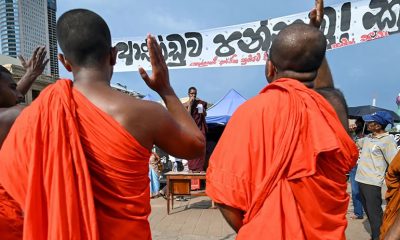
Power crept into the Sangha and is now tearing it apart
-

 News7 days ago
Sri Lankan teen killed in Chennai clash; three arrested
-

 Features4 days ago
Kondachchi wind farm and battery storage project to boost energy security, says Power Ministry Secretary
-
 Features4 days ago
Saudi Arabia sets new benchmark in Hajj management as 1.7 million pilgrims complete sacred journey
-

 News3 days ago
Asst. Manager, security officer arrested over Rs 30 mn snatch at Horana PB branch