
News
HRC reaffirms its commitment to battling torture


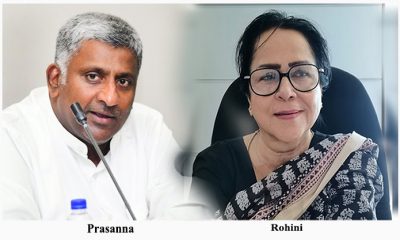
Chairperson of the Human Rights Commission, retired Supreme Court Justice Rohini Marasinghe, has reiterated her outfit’s unwavering commitment to ensuring the prevention of torture, through its countrywide education and training programmes and monitoring processes, notably the National Preventive Mechanism, through which a wide range of detention centres including police stations, prisons, CID/TID and childcare homes are routinely visited.
The following is the text of a statement issued by the HRC to mark International Day in Support of Victims of Torture-2023 which fell on 26 June: “Freedom from torture is an absolute right of all human beings which cannot be restricted under any circumstances. Nonetheless, the heinous act of torture, both physical and mental, is widespread in Sri Lanka, and worldwide. The consequences of this blatant human rights violation is not just faced by the victims of torture but also their families, friends and witnesses.
Thus, on this International Day in Support of Victims of Torture, the Human Rights Commission of Sri Lanka adds special emphasis on the need to provide all forms of support to victims, their families and witnesses without discrimination. The Human Rights Commission of Sri Lanka, through its inquiries and investigative mechanisms, takes all measures, within its capacity, to provide redress and reparation to the victims of torture.
However, the support required by victims and their families extend beyond reparations to receiving fullest rehabilitation through specialised programmes which include provision of continued psychological support until full recovery is attained.
The Commission also highlights the prevalence of many victims and witnesses who self-censor and refrain from accessing the justice system due to fear of reprisals and past instances of impunity.
In light of the foregoing and the international human rights obligations of the State, the Commission calls upon the State to take necessary steps to establish an ecosystem in which the victims can access justice, free from reprisals, and receive full rehabilitation to fully recover from the injustices faced.
It is also a clarion call to all organizations, professionals, individuals and stakeholders to fully commit individually and collectively to provide all forms of support which includes medical, legal, psychological, and social, to the victims of torture, their families and witnesses, without prejudice and discrimination.
On this day, the Commission also reassures its unwavering commitment to ensure prevention of torture through its islandwide education and training programmes, and monitoring processes, notably the National Preventive Mechanism through which a wide range of detention centres, including police stations, prisons, CID/TID and childcare homes, are routinely visited to ensure no person is subjected to torture, under any circumstances.
It also appreciates the efforts taken thus far by the civil society, journalists, non-governmental organizations, and other stakeholders to support the victims of torture to obtain redress and reparations and hold the perpetrators accountable for the injustices caused by them. However, let us collectively be determined to ensure a future free from torture, inhuman and degrading treatment.”



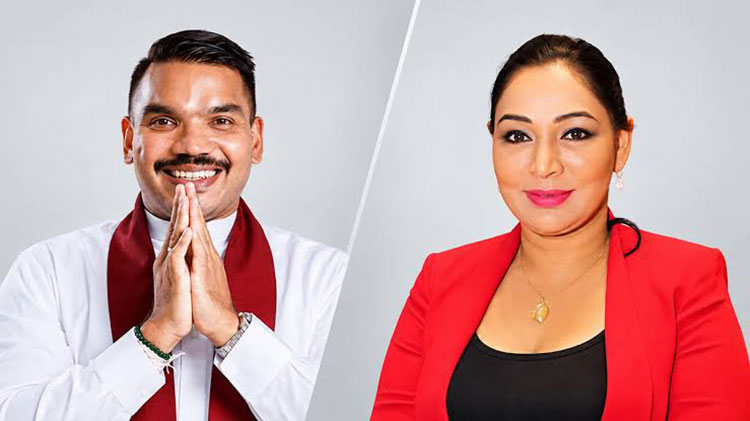
SLPP MP Namal Rajapaksa and former Krrish Group Executive Director and businesswoman Janaki Siriwardena were further remanded until October 23 by the Colombo Chief Magistrate’s Court yesterday in connection with an alleged Rs. 70 million bribery case involving the Krrish Group.
Colombo Chief Magistrate Asanga S. Bodaragama rejected the bail application filed on behalf of Siriwardena.
The Magistrate said the order on Namal Rajapaksa’s bail application was not ready and would be delivered on the next court date.
The Commission to Investigate Allegations of Bribery or Corruption (CIABOC) arrested the two suspects and produced them before court over allegations that a bribe of Rs. 70 million had been solicited and accepted in connection with the affairs of the Krrish Group.

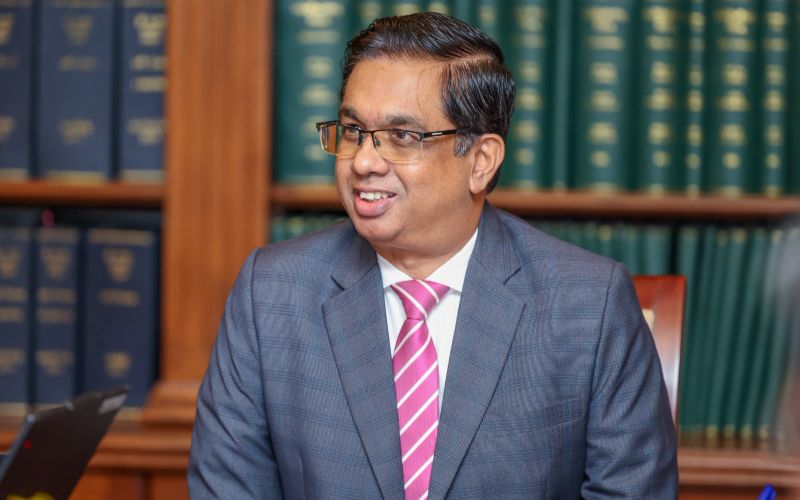
A progress review meeting on reforms and modernisation initiatives at Sri Lanka’s key state revenue-collecting institutions was held on Thursday (15) at the Presidential Secretariat, chaired by Secretary to the President Dr Nandika Sanath Kumanayake, with the participation of representatives of the International Monetary Fund (IMF) and officials of the Revenue Administration, Reform and Modernisation Bureau (RARMB) of the Presidential Secretariat.
At the meeting, the IMF representatives commended the revenue collection efficiency of the Department of Inland Revenue, Sri Lanka Customs and the Department of Excise, the country’s three leading state revenue-collecting institutions. Extensive discussions were also held on the progress of the reform and modernisation programmes being implemented at these institutions.
Secretary to the President Dr Nandika Sanath Kumanayake outlined the progress achieved by the three institutions to date and the reforms planned for implementation in the future.
The IMF representatives also highlighted the importance of strengthening risk management, developing human resources and ensuring the efficient operation of computer systems at the respective institutions.
Senior Additional Secretary to the President Seevali Arukgoda also attended the meeting. The IMF was represented by Cindy Negus, Senior Economist in Revenue Administration for the Asia and Pacific, Europe, Middle East and Central Asia regions; Alison Lister, Revenue Administration Adviser; and Gregory Toppin, Resident Revenue Adviser in Sri Lanka. A group of senior officials from the Revenue Administration, Reform and Modernisation Bureau of the Presidential Secretariat also participated.
(President’s Media Division)
By Anuradha Hiripitiyage
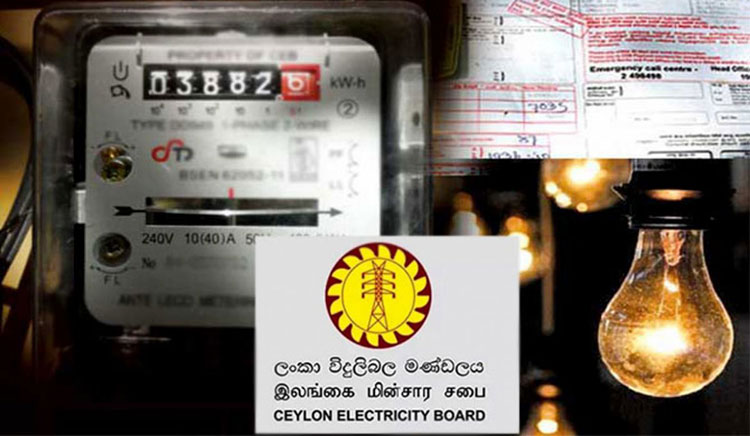
Electricity tariffs should be reduced by between 3 and 5 percent instead of being increased by 2.88 percent in the fourth quarter, as proposed by the National System Operator (NSO), Electricity Consumers’ Association Secretary Sanjeewa Dhammika said.
Addressing a media briefing in Maradagahamula, Divulapitiya, Gampaha, yesterday (16), Dhammika said a proper assessment of electricity generation costs, including the contribution of hydropower, could justify a reduction in tariffs.
He said the NSO had sought approval from the Public Utilities Commission of Sri Lanka (PUCSL) for a 2.88 percent tariff increase, which was expected to generate an additional Rs. 4,438 million.
However, the Commission had indicated that an increase of only 1.46 percent was warranted, amounting to Rs. 2,245 million, he said, adding that even this increase was unnecessary.
Dhammika alleged that the proposed revision sought to pass on to electricity consumers the financial burden arising from the non-arrival of five coal shipments and failed tenders.
“The Government had said that the burden of coal-related losses would not be passed on to the public. It is therefore unjust to make consumers bear these costs,” he said.
He pointed out that the PUCSL had forecast that hydropower would account for 32.34 percent of total electricity generation in the coming quarter, while the cost of such generation would represent only 3.45 percent of the overall cost of electricity production.
Consumers should benefit from the lower cost of hydropower generation rather than bear the burden of more expensive thermal power generation, he said.
Dhammika also questioned the inclusion of Rs. 669 million in capacity charges that had not been approved by the PUCSL, as well as a further Rs. 1,069 million to repay loans relating to incomplete projects.
Including such charges in the proposed tariff revision was unjustifiable, he said.
The PUCSL has given the public until October 30 to submit their views on the proposed tariff revision.
Dhammika said the possibility of increased hydropower generation in the coming weeks, as reservoir levels rise, should also be taken into account when determining electricity tariffs.
He maintained that tariffs could be reduced by 3 to 5 percent if hydropower generation was properly assessed and coal-related losses and unapproved charges were excluded from the calculations.
He further claimed that electricity tariffs could be reduced by as much as 10 percent through the promotion of renewable energy and the effective use of solar power and battery storage systems.
The Electricity Consumers’ Association urged the Government to withdraw the proposed tariff increase, insisting that consumers should not be made to bear costs arising from coal supply problems and other disputed charges.

Namal, Janaki further remanded

Achintha smashes 1,500 metres record at All Island Schools Games

Rare pink diamond goes on display in France 100 years after amateur heist

Nursery owner in China jailed for life after hundreds of children poisoned

Pakistan, Sri Lanka look to find the right mix as World Cup countdown begins

Mumbai Indians and head coach Mahela Jayawardene part ways

‘Dates have the highest sugar content to fight Coronavirus’

Sunday Island 27 December – Headlines

#SundayIsland 17th December – Headlines

Sunday Island – 28th March

Sunday Island Headlines – 21 March

Sunday Island – 21st February – Headlines
-

 News7 days ago
Sri Lanka escalates anti-graft drive with Shiranthi’s jailing
-

 News7 days ago
Iranian ships stranded, Lanka fears US sanctions
-

 Latest News6 days ago
Farhan and Sadaqat help Pakistan seal series in style
-

 Latest News4 days ago
Nissanka’s return headlines Sri Lanka’s Test squad against Pakistan
-

 Features6 days ago
Intake 16: 45 years of duty and honour
-
 News6 days ago
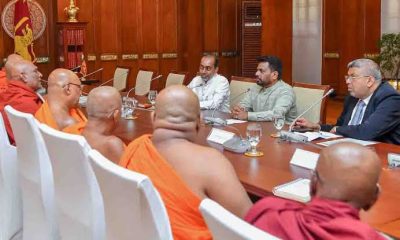
Malwathu Chapter issues statement on talks with President over Gnanasara Thera’s robes
-
 News7 days ago
Navi Pillay’s Lankan affairs in focus as she wins 2026 Nobel Peace Prize
-
 News6 days ago
CP alleges NPP has taken the blame for illegal US sanctions on Iranian vessels