
Latest News
The Government’s objective is to develop Sri Lanka as a thriving nation by 2048 – President

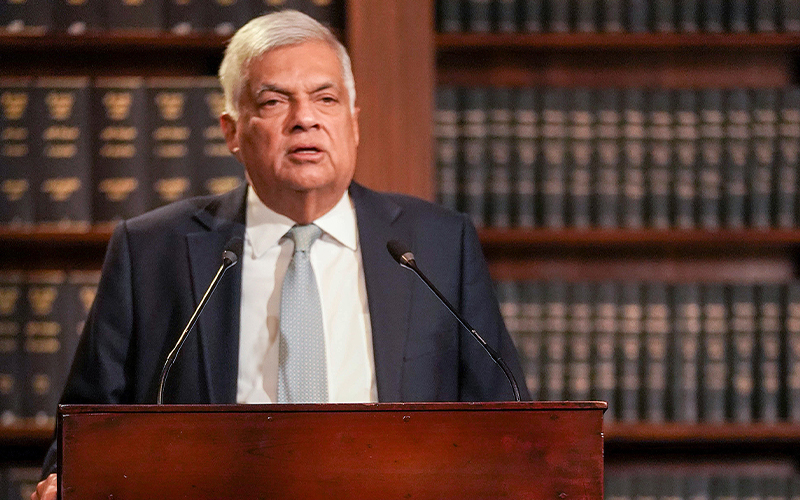
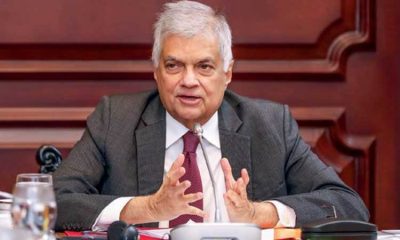
President Ranil Wickremesinghe making a special statement to the nation reiterated his commitment to prevent any regression of the country to its previous state and his determination to transform Sri Lanka into a fully developed nation by 2048.
The President explained at length the measures taken by the government in the past nine months to assist the Sri Lankan economy to recover, as well as the next stages in the state’s social, economic and political reform agenda. President Wickremesinghe also presented the operational proposal to the country to achieve the desired goals.
Following is the full statement delivered by President Ranil Wickremesinghe;
“Since the day I took charge of our nation’s economy, I wanted to ensure you that Sri Lanka’s actual economic situation was made clear and transparent. Over the recent months, I have provided regular updates on Sri Lanka’s economic state, outlined strategies to overcome our challenges, and emphasized the role each of us must play for the betterment of our nation.
We have endured numerous hardships due to a struggling economy, but we are slowly making progress towards achieving stability. Our weakened and crippled economy from the crisis is gradually regaining its footing.
This achievement is a result of the correct policies and practices my government has implemented. It is also a testament to our collective effort as a nation in rising above the many challenges and hardships that came our way.
I would like to express my heartfelt gratitude to all Sri Lankans for persevering through these hardships for the sake of our motherland. If we continue on this path for just a little longer, I am confident we will be able to establish a stable economy free from the difficulties we endured together as a nation.
Sri Lanka is now ready to embark upon a journey of collective growth and prosperity.
In what manner should we proceed on this journey? Which practices should we adopt to ensure our progress?
Today, it is my honour to share with you a roadmap detailing the steps we intend to pursue to forge a brighter and prosperous future for all Sri Lankans.
Throughout my tenure as President, I have consistently emphasized the need for comprehensive economic and social reforms in Sri Lanka. In the 2023 Budget, I highlighted several reforms that aim to restructure and modernize the nation. It is crucial that we remain committed to these reforms to build a better future for Sri Lanka.
I want to remind you that some decisions we make may not always be popular. However, it is only by pursuing policies that are right and difficult can we uplift our country once again. I can assure you that if we remain committed to reform, we can create a nation where future generations can live freely and happily.
Unfortunately, some groups involved in traditional politics are actively working to hinder our economic revival. They are spreading false information about our reform agenda and intentionally misleading the public with claims that we are selling off the country.
Throughout history, these groups have continuously resorted to fear-mongering tactics, falsely asserting that our actions are driven by a desire to sell out our nation. They have deceived many Sri Lankans in the 1950s, 1960s, 1970s, and even the 1980s, instilling an irrational fear of the country being sold away. From then until now, these groups have disrupted real progress for economic reform by perpetuating this slogan of “selling the country”.
I am confident that you will no longer be deceived by such slogans. It is imperative for all of us to work diligently and to totally devote ourselves to the upliftment of our country. Our objective is to transform into a fully developed nation on the global stage by 2048. If we fail to align our economy with the modern world and the latest trends in technology, we will regress. The consequence of failure is the country becoming an economic colony. Let us forge ahead and shape our economy in a way that enables us to compete on the global stage. Let us carry out the necessary economic reforms for the greater good of our nation.
Through these economic reforms, our aim is to rectify misguided policies, programs, and projects. Rebuilding a bankrupt nation cannot be achieved by using traditional methods. We must adopt a fresh approach and embark on a new journey of transformation.
What are the outcomes of these economic reforms?
The cost of living for all Sri Lankans will decrease, and our standards of living will rise. Is that a mistake? Is it tantamount to selling our country? These reforms generate new opportunities for businesses to grow and thrive, ranging from small-scale enterprises to large-scale ventures. Is that a mistake? Is it a country being sold?
We are working to provide necessary relief and essential facilities to the poor and the most vulnerable segments of our society. Is that a mistake? Is it a betrayal of our country?
The burden of covering losses incurred by state owned enterprises will no longer be placed on the people. Is that a mistake? Does it suggest a country’s sale?
A culture of accountability and transparency is being fostered. Is that a mistake? Does that mean the country is being sold? We are working to make Sri Lanka one of the world’s fastest-growing nations. Is that a mistake? Does that imply that the country is for sale?
The implementation of our economic reforms serves only to achieve sustainable development and prosperity for our country. Through these reforms, we will accelerate Sri Lanka’s modernization, expand our market, and encourage greater contributions from the international community toward our development.
We acknowledge that this journey is not an easy one, and we anticipate numerous challenges along the way. However, we are determined to overcome these obstacles. Our government is committed to always acting in the best interest of our country.
We will not allow anyone to drag our motherland back to where we were a year ago. Today, some individuals seem to have forgotten the hardships endured by Sri Lankans during that time. Our economy contracted by 8.7%, our foreign exchange reserves hit rock bottom, and we experienced one of the highest inflation rates in the world. Foreign loans went unpaid, pushing the country into bankruptcy. Food scarcity became a pressing issue, with people waiting in queues for days to obtain oil and gas. Agriculture suffered due to a lack of fertilizer, resulting in crop losses and helpless farmers. Businesses collapsed, leading to job losses and income sources drying up. Hospitals faced shortages of medication, schools had to close, and power cuts lasting 10-12 hours became commonplace. The country was in disarray, with people struggling to survive.
Unable to bear these hardships any longer, the people became restless and began to struggle. In the face of these tremendous challenges, I assumed the responsibility of managing the country’s economy as the Prime Minister. In such a difficult backdrop, I possessed only one source of strength: my unwavering belief and determination to safely guide our motherland across this arduous journey.
When we first took steps to stabilize the country, we implemented stringent financial controls. We recognized that our only way out of this crisis was to seek support from the International Monetary Fund (IMF). Thus, we initiated negotiations with them, which involved multiple rounds of lengthy discussions. Eventually, the IMF agreed to provide us with an Extended Credit Facility. Additionally, we embarked on programs to secure loan assistance from other financial institutions such as the World Bank and the Asian Development Bank.
During this challenging period, our neighbour India played a significant role in supporting us. Bangladesh and Japan also offered their support. Several countries, including China, India, Japan, and members of the Paris Club, agreed to restructure our debt, of which we are immensely grateful for on behalf of the Sri Lankan people. These collective efforts and collaborations are part of our commitment to achieving sustainable development and success for our country.
In our efforts to stabilize the country, we implemented strict financial controls, leading to significant cost savings. Additionally, our foreign workers have made valuable contributions to our nation-building endeavours. In the first quarter of this year, the remittances sent by foreign workers increased by 80.6% compared to 2022. Furthermore, our new tax policies have resulted in an additional income of Rs. 210 billion in the first quarter of 2023. These achievements highlight the positive impact of our measures on our economy.
Today, we are reaping the rewards of our hard work and dedication. Inflation, which had skyrocketed to 70 percent, has now decreased to 25.2 percent, lightening the burden of daily life for all of us. The entire population of Sri Lanka is experiencing a sense of relief given the improvements we made to the economy.
Now, let me explain our vision for the future and how we plan to move forward. We have built our roadmap on four key pillars that will shape our path ahead.
The 1st Pillar – Fiscal and Financial Reforms
We have successfully reached an agreement with the International Monetary Fund (IMF) regarding fiscal and financial reforms, which received approval from Parliament. We have initiated reforms in tax policies, revenue administration, and public financial management, and we will continue to pursue the successful delivery of these efforts. Our aim is to implement necessary reforms that will ensure long-term sustainability of public debt and the stability of our economy. Ultimately, we want to rebuild confidence in the Sri Lankan market.
In our pursuit of economic stability, we have implemented various cost reduction and containment measures since May 2022. We are taking further steps to minimize unnecessary expenses, emphasizing to government officials the need for prudent spending. Our approach includes:
1. Halting unnecessary expenditure,
2. Streamlining government activities to reduce costs,
3. Designing cost-effective government operations, and
4. Leveraging automation and digitalization to reduce costs while delivering quality services.
The 2nd Pillar – Investment Drive
Promoting investments play a crucial role in boosting a country’s economy. We also recognize the significance of collaboration between the public and private sectors in our journey towards economic growth. Our goal is to transform Sri Lanka into an export-oriented economy that is globally recognized, following the successful models of countries like South Korea and Singapore.
Furthermore, we aim to prioritize modern and sustainable efforts such as renewable energy, green hydrogen, and digitization. We can draw inspiration from the Andhra region of India, which has excelled in developing these areas. Such modern and sustainable initiatives are vital for the complete transformation of Sri Lanka’s economy.
Over the next few months, we will make a special invitation to the private sector to submit their own business proposals that align with our vision of modernization and sustainability. We will ensure transparency and openness by publicizing this call for proposals through mass media in a formal manner. We believe that a collaborative partnership between the public and private sectors will drive the engine to accelerate Sri Lanka’s economic growth and revival.
The selection of proposals is based on four key criteria:
1. Size of private investment,
2. Job creation,
3. Export contribution, and
4. Economic contribution.
To ensure the effective implementation of these business proposals, we will introduce a new system called the Lab methodology.
Under the Lab approach, we will bring together Government Ministers, government officials, subject matter experts, and key representatives from the private sector to collaboratively engage in detailed discussions over a period of six weeks. The aim is to collaboratively resolve any roadblocks hindering the roll-out of investments and projects by listening carefully to the private sector. During these discussions, comprehensive implementation plans will be developed, and the necessary facilities to support the implementation of these projects will be organized. Government stakeholders involved in the Labs will dedicate their full-time efforts to ensure the successful execution of these projects.
As President, I, along with the Cabinet Ministers, will actively participate in this event to demonstrate the government’s commitment to ensuring success of the Lab process.
Through the Labs, we aim to achieve three main objectives. They are to:
1. Accelerate the economic recovery through approved business proposals and projects
2. Create new employment opportunities, and to
3. Streamline the government machinery to facilitate the implementation of future projects by removing obstacles through transparent procedures.
In order to foster a conducive environment for investment, we also need to reform Sri Lanka’s trade practices, which have been structured under strict protectionist policies. It is time to remove these barriers that have discouraged investors and to promote a more open and welcoming approach.
3rd Pillar – Social Protection and Governance
We will also apply the Lab methodology to address social safety net concerns. We will engage various government ministries, departments, agencies, civil society representatives, and subject matter experts in the integration process of social security measures.
Over the years, the people of Sri Lanka have expressed three main demands: combating corruption, protecting the poor and vulnerable sections of society, and ensuring transparency in government actions and practices. We are actively working to meet these demands.
Through the Lab methodology, we will assess the adequacy of social security measures for the most vulnerable and disadvantaged sections of society. Our goal is to provide them with the necessary support and relief they require.
A special task force is being established to combat corruption across all sectors, including regulation, procurement, and political corruption. We are committed to implementing anti-corruption practices through a government mechanism that emphasizes accountability via modern techniques such as digitization.
4th Pillar – State Owned Enterprises Transformation
There are currently 430 public enterprises operating in 33 sectors of the economy. These enterprises employ 6% of the Sri Lankan population. However, many of these enterprises have garnered monopolistic positions in the market, hindering private investment. Price fixing, inefficient management, and poor entrepreneurship have weakened public finances, turning these institutions into national burdens that are dependent on the taxpayer.
Notably, entities like the Ceylon Petroleum Corporation, Ceylon Electricity Board, and Sri Lankan Air Lines have incurred significant operating losses, equivalent to 1.6% of the country’s GDP in 2021. It is unjust to burden the 22 million people of Sri Lanka with this debt. We must urgently undertake necessary reforms in our SOEs to ensure the turnaround and success of these enterprises.
We have already initiated the preparation of a restructuring plan for public enterprises. Additionally, we expect the chief officers of these enterprises to be committed to improving their performances. If they fail to meet the annual targets assigned to them, we will not hesitate to replace them with more suitable candidates.
Public Engagement
Public participation is crucial to our Labs. All outcomes from the lab discussion, including plans, analyses, and conclusions during the six-weeks will be shared with the public in a physical forum called the “Open Day”. This platform will allow the public to express their feedback to the lab outcomes and the nation’s reform efforts, of which their contributions will serve to further refine the implementation process.
I am actively taking steps to regularly present information about our reform and reorganization programs to the public. I believe that the President should make it an annual ritual to engage with the people and provide updates on our nation’s progress.
We recognize the importance of incorporating the views of all segments of society in implementing our roadmap towards growth and prosperity. After hearing from the public during the “Open Day”, we will transparently share the progress of the Labs along with the activities of the special task forces related to the economy through digital media. This will allow the public to observe the implementation of the plans in practice, and also be able to identify and resolve obstacles along the journey.
In the last quarter of this year, we will then work to unveil the national transformation plan to the public.
Following extensive efforts, we anticipate revealing the National Reorganization Plan during the final quarter of this year. This plan aims to offer the public the chance to witness the advancement of plan implementation and practices via digital media. Furthermore, it encompasses a systematic approach to shed light on challenges and barriers encountered during implementation. Consequently, it becomes feasible to swiftly identify and resolve obstacles and issues.
To coordinate the implementation of these plans, we are establishing a Presidential Delivery Bureau (PDB) comprising of high-ranking officials from both the public and private sectors. They will collaborate with the line ministries to ensure effective coordination throughout the implementation phase.
Building the future
These reforms are designed to benefit the entire population and foster the development of the entire country. We aim to enhance the living conditions of all Sri Lankans, including you. Our program is not exclusive to any particular segment but targets the entire nation. By doing so, we can enhance Sri Lanka’s international competitiveness in exports and create new opportunities for labour participation amongst the youth, leading to a fully stabilized economy within the next five years.
Ultimately, our vision is to become a fully developed country by 2048, with the responsibility for continued progress passed on to the next generation. We are preparing our youth for this role, and I have full confidence that they will lead our motherland towards this objective.
This work methodology is a collective effort to build the future for all of us and to ensure a better tomorrow for future generations to come.
Therefore, I invite all Sri Lankans to join me in this journey to create our new and shared future our beautiful country”.







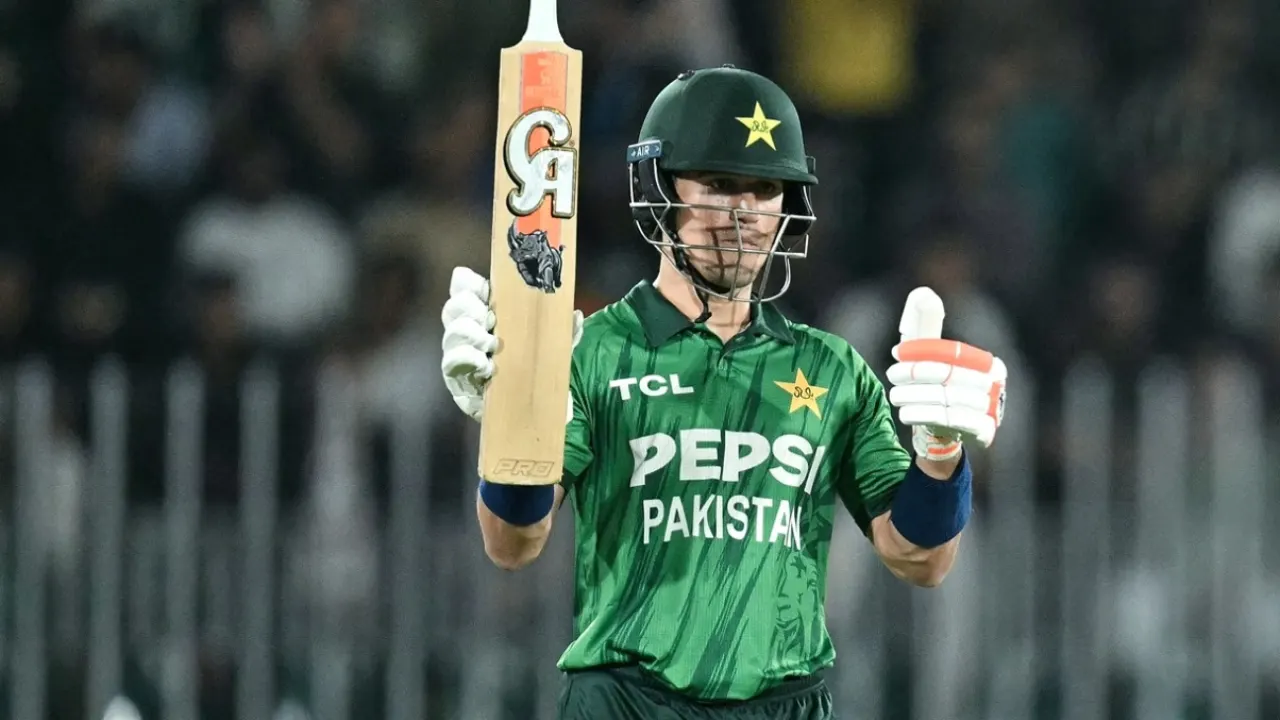
Maaz Sadaqat crashed 96 off 51,Sahibzada Farhan clobbered 73 off 44, and Pakistan scorched their way through the last 12 overs of their innings to mount a fearsome total of 215 for 3. Pakistan reaped 156 runs just in the last 12 overs of their innings, as a 73-run stand between Sadaqat and Farhan was followed by a manic 72-run partnership between Sadaqat and Hasan Nawaz.
Sri Lanka’s batting was woeful in response. They slumped to 64 for 5 by the 11th over, with none of their top seven managing to get to 30. They limped to 133 for 7, having had their hopes of leveling the series wrecked by quicks Mohammad Imran and Salman Mirza, who took five wickets between them.
Sadaqat propels Pakistan into the stratosphere
The openers had laid a decent platform with Pakistan having got to 55 for 1 by the end of the seventh over. But it was Sadaqat who injected the energy that truly set Pakistan on course to their mammoth total. Having gone at less than a run a ball in his first eight balls, Sadaqat unleashed a spectacular lofted square drive off Eshan Malinga to collect his first six, before pumping the same bowler down the ground later in the 10th over.
Sadaqat would go on to clobber six further sixes and five further fours. The big hits tended to come down the ground, while his fours were more square of the wicket. Of the 125 runs Pakistan plundered in the second half of their innings, 79 off 40 came from Sadaqat, who pummeled both pace and spin with equal relish. Off the sixteenth over, bowled by Maheesh Theekshana, Sadaqat thumped three sixes in the arc between long on and midwicket.
Sadaqat, whose previous top score in three T20Is had been 50, could have gone to triple figures off the last ball of the innings, but holed out to deep cover instead, unable to quite find the power to lift a Malinga slower ball over the ropes. He had utterly dominated the middle and late overs, however.
Farhan sets the tone
On another flat Rawalpindi deck, Farhan made the first big charge, although he waited until spin came on to really get into high gear. Theekshana was one of his main victims as well. Farhan’s first six came from a slog sweep off Theekshana in the seventh over, before he launched the same bowler over wide long on and cow corner off successive balls in the ninth over. Getting to his 12th T20I fifty off the 31st ball he faced, Farhan began to aim big blows off the seamers as well. He was caught at deep third off the bowling of Dasun Shanaka, in the 15th over.
Sri Lanka stumble in the powerplay
An excellent Salman Mirza bouncer took the glove of Lahiru Udara in the first over, ending the innings of one of Sri Lanka’s few form batters for a mere five runs. And although Sineth Jayawardena – playing his first international in a full-strength Sri Lanka side – hit three consecutive boundaries in the third over, Sri Lanka were unable to build up any momentum in the powerplay. By the end of the sixth over, they had laboured to 35 for 2.
Imran’s spell lights up the middle overs
A full house in Rawalpindi was treated to some excellent fast bowling by Imran, who finished with the game’s best figures of 3 for 11 from his four overs. Having got Jayawardena to top-edge a desperate pull shot at the end of his second over, Imran had Kusal Mendis caught behind off a slower delivery, before two balls later (a wide in between), he took Sahan Arachchige’s edge with a quick delivery angled across the left-hander. Wicketkeeper Khawaja Nafay made two diving grabs to convert these chances in the eighth over.
All through his unbroken spell, Sri Lanka’s batter struggled to so much as hit Imran off the square, despite the good batting conditions on offer. Imran mixed up his pace, frequently going to slower balls, but his line and length control were also excellent through the spell. When he finished his unbroken spell at the end of the 10th over, Sri Lanka’s required rate had climbed past 15.
Chamindu Wickramasinghe and Theekshana struck some late boundaries, but by the time they came to the crease, Sri Lanka did not have a realistic shot at levelling this series. They lost by 82 runs in the end.
Scores:
Pakistan 215 for 3 in 20 overs (Sahibzada Farhan 73, Fakhar Zaman 22, Maaz Sadaqat 96, Hasan Nawaz 19*; Maheesh Theekshana 1-55, Eshan Malinga 1-41,Dasun Shanaka 1-30) beat Sri Lanka 133 for 7 (Sineth Jayawardena 22, Kamnbdu Mendis 23, Chamindu Wickremasinghe 29, Maheesh Theekshana 32*; Salman Mirza 2=28, Mohammad Imran 3-11, Saim Ayub 1-19, Shadab Khan 1-19) by 82 runs
[Cricinfo]

At least 139 people, including 15 children, have died and 84 are missing after a boat capsized off the coast of Djibouti, according to the United Nations migration agency.
In a statement on Sunday, the International Organization for Migration (IOM) quoted survivors as saying that the incident happened near Guhere off Djibouti’s eastern coast in the Gulf of Aden near the Bab al-Mandeb strait from Thursday night to before dawn on Friday.
The boat was heading from Djibouti to Yemen with more than 300 people on board. More than 80 people – all Ethiopians – survived the shipwreck while Djiboutian search and rescue operations continued.
“Our teams are on the ground alongside local authorities to provide emergency assistance,” IOM Chief of Mission in Djibouti Alexandre Coissac said, lamenting the “devastating loss of life”.
That number only includes those buried by authorities in Djibouti. Others have been buried by the migrants themselves but they won’t be added to the official count until authorities can verify the bodies, Alexandre Coissac, IOM Chief of Mission in Djibouti, told the Associated Press.
“This tragedy is a stark reminder of the dangers faced by migrants along this migration corridor as they seek economic opportunities,” Coissac added.
[Aljazeera]
Foreign News
‘Time for Ukraine to get new president,’ says Trump after Zelensky condemns diesel deal

US President Donald Trump has said he thinks “it’s time for Ukraine to get a new president” as he responded to Volodymyr Zelensky’s criticism of the US diesel deal with Russia.
The Ukrainian president warned a new deal to release millions of tonnes of Russian diesel into the US would provide Moscow with money to continue its war against his nation, calling it a gift to Russian President Vladimir Putin.
Trump told reporters outside the White House on Saturday that Zelensky “wants to make problems for the world” by continuing to authorise attacks on Russian refineries.
“He’d better damn well stop,” Trump said, before suggesting Ukraine should “get a new leader who can make a deal”.
Global fuel supplies, including diesel, have been severely limited by the war against Iran launched by the US and Israel, which led to the effective closure of the Strait of Hormuz, through which roughly a fifth of the world’s oil products usually flows.
Russia – a major producer – and Ukraine have recently intensified their strikes on each other’s energy infrastructure and transport facilities, further straining energy markets.
“We said, ‘you can do whatever you want to Russia, don’t hit the refineries’, because that’s a world problem that’s caused,” Trump continued.
“He could have made many deals and for some reason, he never does.”
Putin’s envoy Kirill Dmitriev described Trump’s intervention as “iconic and historic”, saying that Ukraine “needs leadership actually focused on peace”.
The US president confirmed on Friday that an agreement had been reached with Moscow to suspend sanctions on Russian diesel exports until 7 April.
Zelensky reacted by saying it would allow Moscow to raise new funds to source new military equipment to continue the war.
He also accused Moscow of taking the deal “to mean they can keep fighting, to mean they keep dropping bombs on cities” following deadly new strikes on Zaporizhzhia.
The Ukrainian president spoke to several allies on Saturday to discuss the latest developments, calling for “real decisions to protect lives in Ukraine” and to protect European security.
A Downing Street spokesperson said UK Prime Minister Andy Burnham had spoken to Zelensky and offered his “complete solidarity”.
The pair had agreed Russia should acquiesce to “an immediate energy ceasefire” and end its attacks on shipping in the Black Sea, the spokesperson said, as “this would immediately release more energy and food supplies into the global market”.
News of the US-Russia diesel deal was also met with criticism by EU’s foreign affairs chief Kaja Kallas, who echoed Zelensky in saying that suspending sanctions “provides Moscow with more revenues to wage war”, adding: “This is not the time to ease pressure on Russia, and Europe won’t.”
She said European foreign ministers intended to approve the biggest set of sanctions on Russia since the start of its full-scale invasion on Monday.
The deal with Russia is the latest effort from Trump to lower fuel prices in the US ahead of the midterm elections, after months spent grappling with the political consequences of the Iran war.
That conflict, which began in February, has sent the cost of petrol and in particular diesel skyrocketing, which has soured his standing with the American public who have been stung by the higher pump prices and knock-on effects that led to across-the-board inflation.
The average price of diesel is currently $6.28 (£4.74) a gallon, according to the AAA – up from last month’s $5.94 average, and $3.68 last year.
Under the deal, Russia would release an initial 300,000 tonnes of diesel “to the American and global marketplace” followed by an additional 500,000 tonnes in November.
A further million would follow, Trump wrote on Truth Social, and then another 3m tonnes “within a short period of time” – but he noted that this delivery will be “based on the condition of their diesel refineries”.
In the past 10 months, Russia experienced two waves of severe fuel shortages across the country due to Ukrainian drones strikes on its oil refineries.
Diesel production in Russia dropped by an estimated 30%, according to the International Energy Agency.
Trump had already called for new elections in Ukraine last December, saying Ukrainian voters should have the choice to replace Zelensky.
Since the war broke out in 2022 Ukraine has been under martial law, meaning elections are suspended.
[BBC]

Showers above 75 mm are likely at some places in the Western, Sabaragamuwa, Central, Southern, Uva and North-Western provinces and in Anuradhapura and Mannar districts.

New prison regulations for monks serving jail terms soon: President’s Office

CP alleges NPP has taken the blame for illegal US sanctions on Iranian vessels

Ex-Tiger witness claims Ekneligoda proposed to fire missile at MR’s plane

Chandrasekaran welcomes Indian stand of Katchatheevu

Alleged killer of couple apprehended

‘Dates have the highest sugar content to fight Coronavirus’

Sunday Island 27 December – Headlines

#SundayIsland 17th December – Headlines

Sunday Island – 28th March

Sunday Island Headlines – 21 March

Sunday Island – 21st February – Headlines
-

 Features4 days ago
The Sri Lankan who made Scottish history
-
 Features6 days ago
Preventing grievances from becoming communal
-

 Sports4 days ago
Nissanka absence opens door for Sri Lanka’s young guns
-

 News5 days ago
Gnansara Thera to be assigned to prison printing section: Officials
-

 News3 days ago
NDB fraud Rs 60mn more than reported
-

 News3 days ago
Removing monk’s robes matter for Sangha to decide: Mahanayake Theras
-

 Features4 days ago
Future of Sri Lanka’s state university system: Should it be shut down and reopened?
-
 News5 days ago
OIC of FCID summoned before Maligakanda Magistrate