
Features
Jerome Fernando and his profane gimmicks


By Rohana R. Wasala
The Jerome Fernando escapade, if rightly handled, will provide a golden opportunity to neutralise external threats to the prevailing peaceful religious coexistence in the Sinhalese Buddhist majority Sri Lanka. I hope that the fair-minded reader will not immediately condemn me as a Sinhalese racist and a Buddhist extremist for stating a rational expectation in those terms based on facts. I am proud of my Sinhalese race, as an individual born to parents considered racially Sinhalese, but I never hold myself as superior or inferior to people of other races, but only as equal to them as humans. I outgrew religion at the young age of 16 and now, in my sunset years, I still remain firm in those my early convictions. I have always tried to follow the secular moral principles intrinsic to Buddhism which inspires the ethical culture into which I was born.
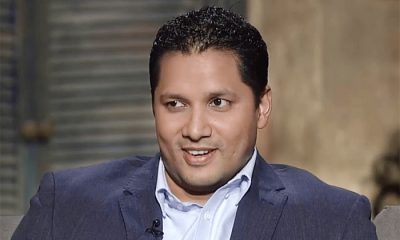
Over the past many days, a maverick Christian pastor, by the name of Jerome Fernando, a self-styled prophet, has been hogging the attention of the media, especially the social media, for insulting the Buddha and Buddhism, as well as Hindu and Islamic religions, by making certain derogatory remarks about them during a sermon, or service, that he conducted. He asserted that Jesus was the Light that the Buddha sought. Unfortunately, hardly anyone, among the vociferous critics, seems to understand that Jerome Fernando is bringing disgrace and disrepute to the noble religion he claims to profess through, what Buddhists are likely to consider, his blatant lies, delusional beliefs, and deceptive stratagems.
Kirthi Ratnayake (former Air Force officer turned journalist) said, during an interview with YouTuber Chamuditha Samarawickrema, that Jerome Fernando had once before uttered something worse in Sinhala: ‘budun ettha, namuth satyaya nowei/The Buddha is true, but not the Truth’. If he is rash enough to judge the Buddha, one can guess how impervious he is to the sensitivities of ordinary Buddhists. Judge not, that you be not judged. For with what judgement you judge, you will be judged and with the measure you use, it will be measured back to you (Matthew 7: Verses 1 and 2, NKJV). This is almost identical with Buddhism. Galatians 6: Verse 7 has this: … whatever a man sows, that he will also reap …, which, needless to say, like the above, agrees exactly with the kamma/karma concept of Buddhism.
For the information of Jerome Fernando and the people whom he was trying to mislead, (particularly for the benefit of the latter) I offer the following facts: Gautama Buddha used the metaphor of light for the Enlightenment he achieved: Declaring “aloko udapadi” “Light arose”, he rejoiced soon after his Enlightenment. He visited his five former closest colleagues and co-seekers to share with them what he had discovered: “There arose in me vision, knowledge, wisdom, true knowledge, and light”. That is, light came to him with his Enlightenment. (Incidentally, the traditional Vesak illuminations that you saw in Sri Lanka around May 5 and 6 were for commemorating the Buddha’s Enlightenment, the Arising of the Light.) The Buddha dedicated his life to teaching and guiding people towards seeing the Supreme Truth of Nibbana. Never did he force anyone to accept his teaching and follow it unless they saw for themselves its potential for enabling them to realise the ultimate truth through their own unaided individual efforts. If you are ill, you must take medicines. No one else can take medicines for your illness. You are your own saviour. In the last analysis, this is pretty much what all religions teach their followers (I don’t include Buddhism among religions). Each individual is responsible for his or her own emancipation (from the unsatisfactory state of earthly existence). ‘Atta deepo bhava/Be a light or lamp unto yourself’ is the essence of the Kalama Sutta to which I will refer later in this essay.
But let’s begin from the beginning. According to news reports, published in online sources that I usually access, Vidura Wickremanayake, the Minister for Buddhashasana, Religious and Cultural Affairs, stated that he was going to take stern action against Pastor Fernando. President Ranil Wickremesinghe instructed Sagala Ratnayake, Presidential Advisor and head of the Presidential Task Force, to initiate an immediate investigation into Fernando, whose irresponsible statements, he said, could lead to conflicts that would be detrimental to religious reconciliation. Their assurances ring hollow, though, to say the least.
Knowledgeable critics, such as Dr Wasantha Bandara, spokesperson for the Federation of National Organisations (FNO), says that Wickremesinghe (if he was really serious) should have assigned the task mentioned to the DIG, who is equipped with the knowledge, competence and capacity, and has the necessary personnel to do it, instead of instructing Ratnayake. As for Minister Wickremanayake, when he visited the Eastern Province as Minister a couple of years ago, he didn’t care to listen to the grievances of the well-known Madakalapuwe Hamuduruwo, who is still conducting his lone struggle against corrupt and inefficient government servants of his area who, under the influence of the local racist and casteist MPs, neglect to perform their duties properly to relieve the hardships of the innocent poverty-stricken rural residents of a couple of isolated villages there, belonging to all three communities. The Minister, on that occasion, did not forget to exchange pleasantries with the very Tamil MPs, or their stooges, he was complaining against, waiting not far from where he was standing, to urge the visiting dignitary to look into his legitimate petitions, on behalf of those suffering people. Obviously, political considerations prevented the Minister from attending to the monk, who later showed the episode in one of his YouTube videos. I derived this information from that video.
Having said that, in my humble opinion as a genuinely concerned, but not unduly worried, ordinary Sri Lankan, the President’s or the Minister’s involvement in this case is not necessary (which, I am sure, is their attitude as well) beyond the point where they leave the law enforcement authorities to deal with the matter without any improper interference from any quarter in or with the due legal processes.
Father Cyril Gamini of the Catholic Church, has told the media that Jerome Fernando has no connection with his church. Some prominent Buddhist monks, kurukkals, and maulvis, have also roundly condemned the man, while pointing at the existing inter-religious amity in the Buddhist-majority country. However, Fernando’s proselytising utterances and activities have different implications for the adherents of the four main religious faiths of Sri Lanka, Christians and Muslims on the one hand, and Buddhists and Hindus on the other. Therefore, they are bound to create distrust and disharmony between the diverse communities. To preserve the unity in diversity that we have enjoyed for many centuries and still cherish, Fernando must be exposed for what he is, and the poison he has begun spreading must be immediately counteracted.
Although there is no one single definition of religion, universally accepted by scholars of religious systems around the world, the most commonly accepted one (particularly, in the West) is what the Oxford Dictionary defines as ‘the belief in and/or a superhuman controlling power, especially a god or gods’. Hinduism and Buddhism cannot be classified as religions, according to this definition, though they also have certain specific spiritual concepts and practices considered sacred that inform long established cultural traditions, involving ritual observances, shrines, and objects of worship. Emeritus professor of Princeton Theological Seminary, Max Lynn Stackhouse, provides a definition of religion that I think might roughly accommodate Buddhism and Hinduism: (a religion is) “a comprehensive worldview or ‘metaphysical moral vision’ that is accepted as binding because it is held to be in itself basically true and just even if all dimensions of it cannot be either fully confirmed or refuted.”
Now, the problem is that in less enlightened times, believers in religions, covered by the Oxford Dictionary definition given above, were required to dismiss other religious belief systems that didn’t come within that identification, as ‘heresies’. That term used to be applied to the Dharmic religions of Hinduism, Jainism, and Buddhism. But Abrahamic religions (Christianity and Islam, not to mention Judaism) have moderated that extremist attitude since. Only a few extremists today would hold on to mediaeval ideas which usually led to violence against people of other spiritual traditions, whom they considered ‘infidels’. Jerome Fernando may be harking back to that outdated mentality, which was behind zealous, self-righteous conversion movements targeting unbelievers or non-believers who were deemed to be in need of being saved in so-called pagan lands; such proselytising attempts were not always nonviolent.
In Sri Lanka, freedom of religion is constitutionally guaranteed to all the citizens. A citizen can profess any religion, practise it, teach it, and disseminate its message among others, but through legitimate means. The sort of blatant abuse of Sri Lanka’s most liberal institution of freedom of religious belief and practice that Jerome Fernando is being accused of cannot be expected of a pastor who claims to have been inspired by Jesus’ answer to a question by Nicodemus the Pharisee (a prominent Jew of the time credited with thorough knowledge of the scriptures and great saintliness): “Most assuredly, I say to you, unless one is born again, he cannot see the kingdom of God” in the Gospel according to John 3:3 (NKJV), where this means ‘born again in spirit, not in flesh’. For the Christian believer this is deeply meaningful. A believer who has ‘seen the kingdom of God’ cannot be thought to be guilty of such outrageous conduct as Jerome Fernando is displaying. By the way, this ‘born again’ idea is akin to the ‘twice born’ (Sanskrit: dvija) sacrament of initiation of a young Brahman’s spiritual journey in terms of Hinduism. Buddhism and the more ancient Hinduism have much in common, and are almost identical in their Dharmic aspect, except that Buddhism has no belief in the existence of an eternal soul (Atman) unlike Hinduism.








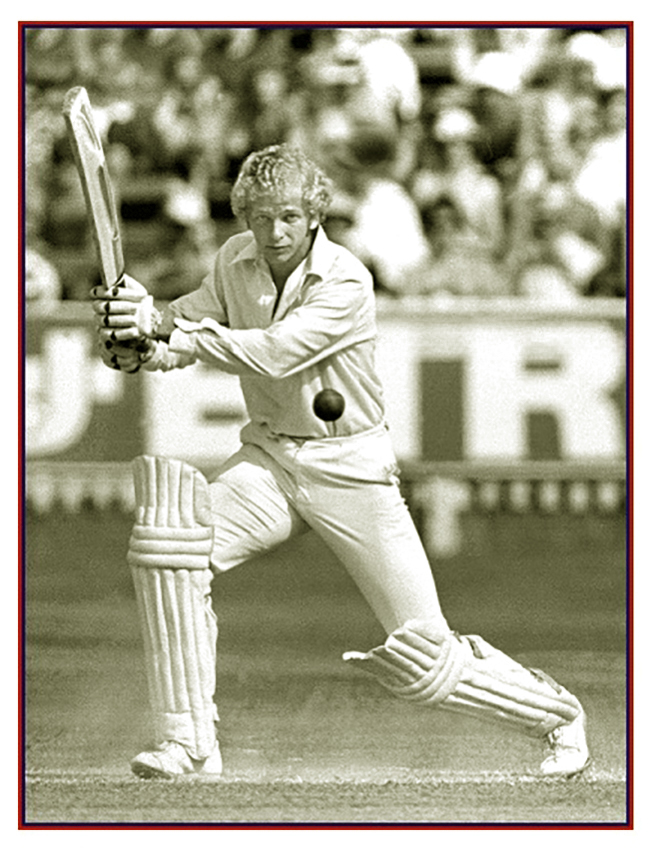
For many Sri Lankans growing up in the late nineteen fifties and early sixties, our cricketing heroes were Englishmen. I am not entirely sure why that was. Perhaps it was a colonial hangover, or perhaps it reflected the way cricket was taught locally, with an emphasis on technical correctness, a high left elbow, and the bat close to the pad. English cricket, with its traditions and orthodoxy, became the benchmark.
I, on the other hand, could not see beyond Sir Garfield Sobers and the West Indian team. Sir Garfield remains my all-time hero, although only by a whisker ahead of Muttiah Muralitharan. For me, Caribbean flair and attacking cricket were infinitely superior to the Englishmen’s conservatism and defensive approach.
That said, England has produced many outstanding cricketers, with David Gower and Ian Botham being my favourites. Players such as Colin Cowdrey, Tom Graveney, Mike Denness, Tony Lewis, Mike Brealey, Alan Knott, Derek Underwood, Tony Greig, and David Gower were great ambassadors for England, particularly when touring the South Asian subcontinent, which posed certain challenges for touring sides until about three decades ago. Their calm and dignified conduct when touring is a contrast to the behaviour of the current lot.
I am no longer an avid cricket viewer, largely because my blood pressure tends to rise when I watch our Sri Lankan players. Therefore, I was pleasantly surprised recently when I was flipping through the TV channels to hear David Gower’s familiar voice commentating. It brought back fond memories of watching him bat during my time in the UK. I used to look forward to the summer for two reasons. To feel the sun on my back and watch David Gower bat!
A debut that announced a star
One of my most vivid cricketing memories is watching, in 1978, a young English batsman pull the very first ball he faced in Test cricket to the boundary. Most debutants play cautiously, trying to avoid the dreaded zero, but Gower nonchalantly swivelled and pulled a short ball from Pakistan’s Liaquat Ali for four. It was immediately apparent that a special talent had arrived.
To place that moment in perspective, Marvan Atapattu—an excellent Sri Lankan batsman—took three Tests and four innings to score his first run, yet later compiled 16 Test centuries.
Gower went on to score 56 in his first innings and captivated spectators with his full repertoire of strokes, particularly his exquisite cover drive. It is often said that a left-hander’s cover drive is one of the most pleasurable sights in cricket, and watching Sobers, Gower, or Brian Lara execute the cover drive made the entrance ticket worthwhile.
A young talent in a time of change
Gower made his Test debut at just 21, rare for an English player of that era. World cricket was in turmoil due to the Kerry Packer revolution, and England had lost senior players such as Tony Greig, Alan Knott, and Derek Underwood. Selectors were searching for young talent, and Gower’s inclusion injected fresh impetus.
Gower scored his first Test century in only his fourth match, just a month after his debut, against New Zealand, and a few months later scored his maiden Ashes century at Perth.
He finished with 18 Test centuries from 117 matches. His finest test innings, in my view, was the magnificent 154 not out at Kingston in 1981 against Holding, Marshall, Croft, and Garner. Batting for nearly eight hours and facing 403 balls, he set aside flair for determination to save the Test.
He and Ian Botham also benefited from playing their initial years under Mike Brealey, an average batsman but an outstanding leader. Rodney Hogg, the Australian fast bowler, famously said Brealey had a ‘degree in people’, and both young stars flourished under his guidance.
Captaincy and criticism and overall record
Few English batsmen delighted and frustrated spectators and analysts as much as Gower. The languid cover drive, so elegant and so pleasurable to the spectators, also resulted in a fair number of dismissals that, at times, gave the impression of carelessness to both spectators and journalists.
Despite his approach, which at times appeared casual, he was appointed as captain of the English team in 1983 and served for three years before being removed in 1986. He was again appointed captain in 1989 for the Ashes series. He led England in 1985 to a famous Ashes series win as well as a series win in India in1984-85.
In the eyes of some, the captaincy might not have been the best suited to his style of play. However, he scored 732 runs whilst captaining the team during the 1985 Ashes series, proving that he was able handle the pressure.
Under Gower, England lost two consecutive series to the great West Indian teams 5-0, which led to the coining of the phrase “Blackwashed”! He was somewhat unlucky that he captained the English team when the West Indies were at the peak, possessing a fearsome array of fast bowlers.
David Gower scored 3,269 test runs against Australia in 42 test matches. He scored nine centuries and 12 fifties, averaging nearly 45 runs per inning. His record against Australia as an English batsman is only second to Sir Jack Hobbs. Scoring runs against Australia has been a yardstick in determining how good a batsman is. Therefore, his record against Australia can easily rebut the critics who said that he was too casual. He scored 8,231 runs in 117 test matches and 3,170 runs in 114 One Day Internationals.
A gentleman of the game free of controversies
Unlike the other great English cricketer at the time, Ian Botham, David was not involved in any controversies during his illustrious career. The only incident that generated negative press was a low-level flight he undertook in a vintage Tiger Moth biplane in Queensland during the 1990-91 Ashes tour of Australia. The team management and the English press, as usual, made a mountain out of a molehill. David retired from international cricket in 1992.
In 1984, during the tour of India, due to the uncertain security situation after the assassination of the then Indian Prime Minister Indira Gandhi, the English team travelled to Sri Lanka for a couple of matches. I was fortunate enough to get David to sign his book “With Time to Spare”. This was soon after he returned to the pavilion after being dismissed. There was no refusal or rudeness when I requested his signature.
He was polite and obliged despite still being in pads. Although I did not know David Gower, his willingness that day to oblige a spectator exemplified the man’s true character. A gentleman who played the game as it should be, and a great ambassador of England and world cricket. He was inducted into the ICC Cricket Hall of Fame in 2009 and appointed an Officer of the Order of the British Empire (OBE) in 1992 for his services to sport.
By Sanjeewa Jayaweera
Love of country, pride, and the responsibility to be honest
I am a Sri Lankan who has lived in Australia for the past 38 years. Australia has been very good to my family and me, yet Sri Lanka has never stopped being home. That connection endures, which is why we return every second year—sometimes even annually—not out of nostalgia, but out of love and pride in our country.
My recent visit reaffirmed much of what makes Sri Lanka exceptional: its people, culture, landscapes, and hospitality remain truly world-class. Yet loving one’s country also demands honesty, particularly when shortcomings risk undermining our future as a serious global tourism destination.
When Sacred and Iconic Sites Fall Short
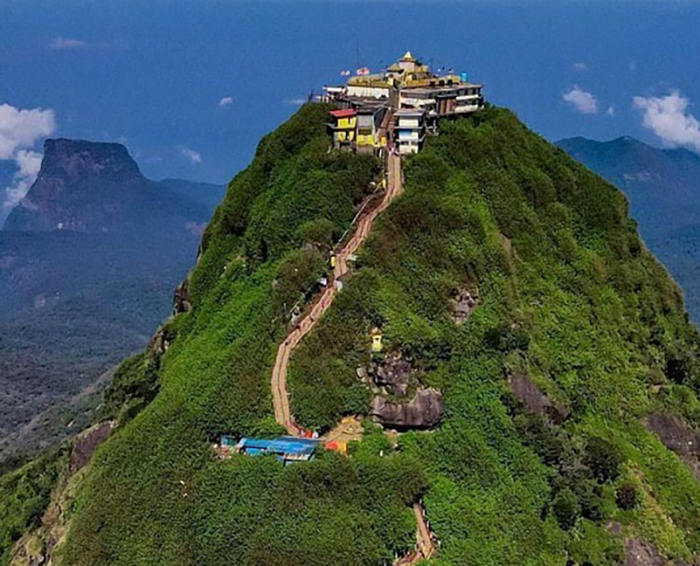
One of the most confronting experiences occurred during our visit to Sri Pada (Adam’s Peak). This sacred site, revered across multiple faiths, attracts pilgrims and tourists from around the world. Sadly, the severe lack of basic amenities—especially clean, accessible toilets—was deeply disappointing. At moments of real need, facilities were either unavailable or unhygienic.
This is not a luxury issue. It is a matter of dignity.
For a site of such immense religious and cultural significance, the absence of adequate sanitation is unacceptable. If Sri Lanka is to meet its ambitious tourism targets, essential infrastructure, such as public toilets, must be prioritized immediately at Sri Pada and at all major tourist and pilgrimage sites.
Infrastructure strain is also evident in Ella, particularly around the iconic Nine Arches Bridge. While the attraction itself is breathtaking, access to the site is poorly suited to the sheer volume of visitors. We were required to walk up a steep, uneven slope to reach the railway lines—manageable for some, but certainly not ideal or safe for elderly visitors, families, or those with mobility challenges. With tourist numbers continuing to surge, access paths, safety measures, and crowd management urgently needs to be upgraded.
Missed opportunities and first impressions
Our visit to Yala National Park, particularly Block 5, was another missed opportunity. While the natural environment remains extraordinary, the overall experience did not meet expectations. Notably, our guide—experienced and deeply knowledgeable—offered several practical suggestions for improving visitor experience and conservation outcomes. Unfortunately, he also noted that such feedback often “falls on deaf ears.” Ignoring insights from those on the ground is a loss Sri Lanka can ill afford.
First impressions also matter, and this is where Bandaranaike International Airport still falls short. While recent renovations have improved the physical space, customs and immigration processes lack coherence during peak hours. Poorly formed queues, inconsistent enforcement, and inefficient passenger flow create unnecessary delays and frustration—often the very first experience visitors have of Sri Lanka.
Excellence exists—and the fundamentals must follow
That said, there is much to celebrate.
Our stays at several hotels, especially The Kingsbury, were outstanding. The service, hospitality, and quality of food were exceptional—on par with the best anywhere in the world. These experiences demonstrate that Sri Lanka already possesses the talent and capability to deliver excellence when systems and leadership align.
This contrast is precisely why the existing gaps are so frustrating: they are solvable.
Sri Lankans living overseas will always defend our country against unfair criticism and negative global narratives. But defending Sri Lanka does not mean remaining silent when basic standards are not met. True patriotism lies in constructive honesty.
If Sri Lanka is serious about welcoming the world, it must urgently address fundamentals: sanitation at sacred sites, safe access to major attractions, well-managed national parks, and efficient airport processes. These are not optional extras—they are the foundation of sustainable tourism.
This is not written in criticism, but in love. Sri Lanka deserves better, and so do the millions of visitors who come each year, eager to experience the beauty, spirituality, and warmth that our country offers so effortlessly.
The writer can be reached at Jerome.adparagraphams@gmail.com
By Jerome Adams
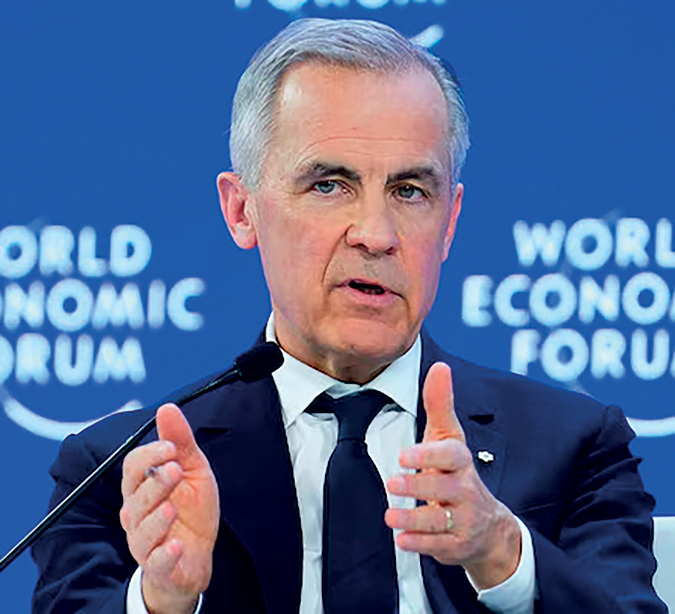
Global temperatures in January have been polar opposite – plus 50 Celsius down under in Australia, and minus 45 Celsius up here in North America (I live in Canada). Between extremes of many kinds, not just thermal, the world order stands ruptured. That was the succinct message in what was perhaps the most widely circulated and listened to speeches of this century, delivered by Canadian Prime Minister Mark Carney at Davos, in January. But all is not lost. Who seems to be getting lost in the mayhem of his own making is Donald Trump himself, the President of the United States and the world’s disruptor in chief.
After a year of issuing executive orders of all kinds, President Trump is being forced to retreat in Minneapolis, Minnesota, by the public reaction to the knee-jerk shooting and killing of two protesters in three weeks by federal immigration control and border patrol agents. The latter have been sent by the Administration to implement Trump’s orders for the arbitrary apprehension of anyone looking like an immigrant to be followed by equally arbitrary deportation.
The Proper Way
Many Americans are not opposed to deporting illegal and criminal immigrants, but all Americans like their government to do things the proper way. It is not the proper way in the US to send federal border and immigration agents to swarm urban neighbourhood streets and arrest neighbours among neighbours, children among other school children, and the employed among other employees – merely because they look different, they speak with an accent, or they are not carrying their papers on their person.
Americans generally swear by the Second Amendment and its questionably interpretive right allowing them to carry guns. But they have no tolerance when they see government forces turn their guns on fellow citizens. Trump and his administration cronies went too far and now the chickens are coming home to roost. Barely a month has passed in 2026, but Trump’s second term has already run into multiple storms.
There’s more to come between now and midterm elections in November. In the highly entrenched American system of checks and balances it is virtually impossible to throw a government out of office – lock, stock and barrel. Trump will complete his term, but more likely as a lame duck than an ordering executive. At the same time, the wounds that he has created will linger long even after he is gone.
Equally on the external front, it may not be possible to immediately reverse the disruptions caused by Trump after his term is over, but other countries and leaders are beginning to get tired of him and are looking for alternatives bypassing Trump, and by the same token bypassing the US. His attempt to do a Venezuela over Greenland has been spectacularly pushed back by a belatedly awakening Europe and America’s other western allies such as Australia, Canada and New Zealand. The wags have been quick to remind us that he is mostly a TACO (Trump always chickens out) Trump.
Grandiose Scheme or Failure
His grandiose scheme to establish a global Board of Peace with himself as lifetime Chair is all but becoming a starter. No country or leader of significant consequence has accepted the invitation. The motley collection of acceptors includes five East European countries, three Central Asian countries, eight Middle Eastern countries, two from South America, and four from Asia – Cambodia, Vietnam, Indonesia and Pakistan. The latter’s rush to join the club will foreclose any chance of India joining the Board. Countries are allowed a term of three years, but if you cough up $1 billion, could be member for life. Trump has declared himself to be lifetime chair of the Board, but he is not likely to contribute a dime. He might claim expenses, though. The Board of Peace was meant to be set up for the restoration of Gaza, but Trump has turned it into a retirement project for himself.
There is also the ridiculous absurdity of Trump continuing as chair even after his term ends and there is a different president in Washington. How will that arrangement work? If the next president turns out to be a Democrat, Trump may deny the US a seat on the board, cash or no cash. That may prove to be good for the UN and its long overdue restructuring. Although Trump’s Board has raised alarms about the threat it poses to the UN, the UN may end up being the inadvertent beneficiary of Trump’s mercurial madness.
The world is also beginning to push back on Trump’s tariffs. Rather, Trump’s tariffs are spurring other countries to forge new trade alliances and strike new trade deals. On Tuesday, India and EU struck the ‘mother of all’ trade deals between them, leaving America the poorer for it. Almost the next day , British Prime Minister Sir Keir Starmer and Chinese leader Xi Jinping announced in Beijing that they had struck a string of deals on travel, trade and investments. “Not a Big Bang Free Trade Deal” yet, but that seems to be the goal. The Canadian Prime Minister has been globe-trotting to strike trade deals and create investment opportunities. He struck a good reciprocal deal with China, is looking to India, and has turned to South Korea and a consortium from Germany and Norway to submit bids for a massive submarine supply contract supplemented by investments in manufacturing and mineral industries. The informal first-right-of-refusal privilege that US had in Canada for defense contracts is now gone, thanks to Trump.
The disruptions that Trump has created in the world order may not be permanent or wholly irreversible, as Prime Minister Carney warned at Davos. But even the short term effects of Trump’s disruptions will be significant to all of US trading partners, especially smaller countries like Sri Lanka. Regardless of what they think of Trump, leaders of governments have a responsibility to protect their citizens from the negative effects of Trump’s tariffs. That will be in addition to everything else that governments have to do even if they do not have Trump’s disruptions to deal with.
Bland or Boisterous
Against the backdrop of Trump-induced global convulsions, politics in Sri Lanka is in a very stable mode. This is not to diminish the difficulties and challenges that the vast majority of Sri Lankans are facing – in meeting their daily needs, educating their children, finding employment for the youth, accessing timely health care and securing affordable care for the elderly. The challenges are especially severe for those devastated by cyclone Ditwah.
Politically, however, the government is not being tested by the opposition. And the once boisterous JVP/NPP has suddenly become ‘bland’ in government. “Bland works,” is a Canadian political quote coined by Bill Davis a nationally prominent premier of the Province of Ontario. Davis was responding to reporters looking for dramatic politics instead of boring blandness. He was Premier of Ontario for 14 years (1971-1985) and won four consecutive elections before retiring.
No one knows for how long the NPP government will be in power in Sri Lanka or how many more elections it is going to win, but there is no question that the government is singularly focused on winning the next parliamentary election, or both the presidential and parliamentary elections – depending on what happens to the system of directly electing the executive president.
The government is trying to grow comfortable in being on cruise control to see through the next parliamentary election. Its critics on the other hand, are picking on anything that happens on any day to blame or lampoon the government. The government for all its tight control of its members and messaging is not being able to put out quickly the fires that have been erupting. There are the now recurrent matters of the two AGs (non-appointment of the Auditor General and alleged attacks on the Attorney General) and the two ERs (Educational Reform and Electricity Reform), the timing of the PC elections, and the status of constitutional changes to end the system of directly electing the president.
There are also criticisms of high profile resignations due to government interference and questionable interdictions. Two recent resignations have drawn public attention and criticism, viz., the resignation of former Air Chief Marshal Harsha Abeywickrama from his position as the Chairman of Airport & Aviation Services, and the earlier resignation of Attorney-at-Law Ramani Jayasundara from her position as Chair of the National Women’s Commission. Both have been attributed to political interferences. In addition, the interdiction of the Deputy Secretary General of Parliament has also raised eyebrows and criticisms. The interdiction in parliament could not have come at a worse time for the government – just before the passing away of Nihal Seniviratne, who had served Sri Lanka’s parliament for 33 years and the last 13 of them as its distinguished Secretary General.
In a more political sense, echoes of the old JVP boisterousness periodically emanate in the statements of the JVP veteran and current Cabinet Minister K.D. Lal Kantha. Newspaper columnists love to pounce on his provocative pronouncements and make all manner of prognostications. Mr. Lal Kantha’s latest reported musing was that: “It is true our government is in power, but we still don’t have state power. We will bring about a revolution soon and seize state power as well.”
This was after he had reportedly taken exception to filmmaker Asoka Handagama’s one liner: “governing isn’t as easy as it looks when you are in the opposition,” and allegedly threatened to answer such jibes no matter who stood in the way and what they were wearing “black robes, national suits or the saffron.” Ironically, it was the ‘saffron part’ that allegedly led to the resignation of Harsha Abeywickrama from the Airport & Aviation Services. And President AKD himself has come under fire for his Thaipongal Day statement in Jaffna about Sinhala Buddhist pilgrims travelling all the way from the south to observe sil at the Tiisa Vihare in Thayiddy, Jaffna.
The Vihare has been the subject of controversy as it was allegedly built under military auspices on the property of local people who evacuated during the war. Being a master of the spoken word, the President could have pleaded with the pilgrims to show some sensitivity and empathy to the displaced Tamil people rather than blaming them (pilgrims) of ‘hatred.’ The real villains are those who sequestered property and constructed the building, and the government should direct its ire on them and not the pilgrims.
In the scheme of global things, Sri Lanka’s political skirmishes are still teacup storms. Yet it is never nice to spill your tea in public. Public embarrassments can be politically hurtful. As for Minister Lal Kantha’s distinction between governmental mandate and state power – this is a false dichotomy in a fundamentally practical sense. He may or may not be aware of it, but this distinction quite pre-occupied the ideologues of the 1970-75 United Front government. Their answer of appointing Permanent Secretaries from outside the civil service was hardly an answer, and in some instances the cure turned out to be worse than the disease.
As well, what used to be a leftist pre-occupation is now a right wing insistence especially in America with Trump’s identification of the so called ‘deep state’ as the enemy of the people. I don’t think the NPP government wants to go there. Rather, it should show creative originality in making the state, whether deep or shallow, to be of service to the people. There is a general recognition that the government has been doing just that in providing redress to the people impacted by the cyclone. A sign of that recognition is the number of people contributing to the disaster relief fund and in substantial amounts. The government should not betray this trust but build on it for the benefit of all. And better do it blandly than boisterously.
by Rajan Philips

England to bowl first in Pallekelle

No child should be deprived of vocational or higher education due to poverty – PM

Ireland thump Thailand to qualify for 2026 women’s T20 World Cup

National Assessment and Policy Review: The impact of social media on children

Public officials must clearly understand public expectations against corruption and fraud – Secretary to the President

West Indies seal consolation win in ten-over shootout

‘Dates have the highest sugar content to fight Coronavirus’

Sunday Island 27 December – Headlines

#SundayIsland 17th December – Headlines

Sunday Island – 28th March

Sunday Island Headlines – 21 March

Sunday Island – 21st February – Headlines
-
 Business7 days ago
ComBank, UnionPay launch SplendorPlus Card for travelers to China
-
 Business4 days ago
Climate risks, poverty, and recovery financing in focus at CEPA policy panel
-
 Opinion3 days ago
Sri Lanka, the Stars,and statesmen
-

 Business2 days ago
Hayleys Mobility ushering in a new era of premium sustainable mobility
-
 Opinion7 days ago
Luck knocks at your door every day
-
 Business2 days ago
Advice Lab unveils new 13,000+ sqft office, marking major expansion in financial services BPO to Australia
-
 Business2 days ago
Arpico NextGen Mattress gains recognition for innovation
-

 Editorial2 days ago
Govt. provoking TUs