
News
Novel project to help second year law students

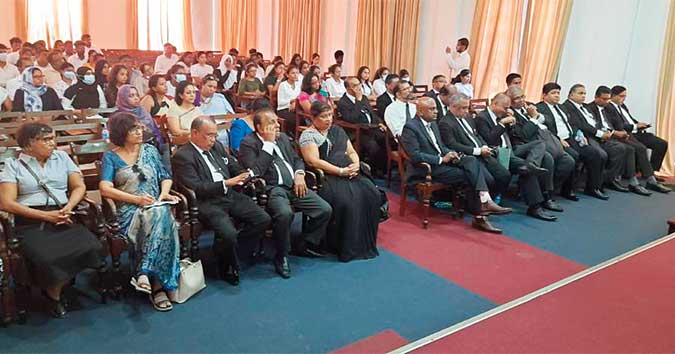
Sri Lanka Law College has introduced a new scheme for second year law students to work under the guidance of a practising attorney-at-law. Project coordinator Senior Lecturer at the Sri Lanka Law College Nirodha Kalansooriya said that what was called ‘The Placement Project’ could provide unique exposure for law students.
“This initiative will undoubtedly, provide an environment for the students to test their legal knowledge and simultaneously experience the dynamics of real life in the legal profession. About 150 students participated at the inauguration of the project while altogether 185 placements allocated by senior lawyers have been secured by students,” Kalansooriya said.
According to her, the project proposed by Principal of the Law College Dr. Athula Pathinayake got underway with the backing of many learned senior counsels and the academic and the administrative staff of the Law College






Latest News
Sun directly overhead Pallawarayankaddu, Akkarayankulam, Ariviyal Nagar, Puthukkudiyiruppu, Ananthapuram at about 12.11 noon today (29)


The sun is going to be directly over the latitudes of Sri Lanka from 28th of August to 07th of September due to its apparent southward relative motion.
The nearest places of Sri Lanka over which the sun is overhead today (29) are Pallawarayankaddu, Akkarayankulam, Ariviyal Nagar, Puthukkudiyiruppu, Ananthapuram about 12.11 noon.

Development officers to launch countrywide protest over pay, unfulfilled Govt. pledge
Development officers in the State and Provincial Public Services are to stage countrywide protests on Monday (31), demanding action on their longstanding salary grievances and the immediate release of a Cabinet paper the Government has repeatedly said was prepared to address their concerns.
The protest, organised by the Trade Union Alliance of Development Officers in the State and Provincial Public Services, will be held from noon to 1 p.m. across the country, alliance General Secretary Dhammmika Munasinghe said yesterday.
The alliance is led by the Frontline Socialist Party (FSP), a political group that emerged as a splinter from the JVP.
Munasinghe said the Government had informed Parliament in June that a Cabinet paper had been prepared to resolve the issues faced by development officers. However, despite several months having passed, the document had not been made public.
“We are asking the Government to make these Cabinet papers public. If the Government wants to stop these protests, it should not put unnecessary labels on us. It should clearly present the measures it intends to take,” he said.
He also challenged Government claims that public servants had already received a significant salary increase, saying the increase being implemented from 2025 to 2027 was insufficient to meet the rising cost of living.
According to Munasinghe, the Government was repeatedly highlighting the salary revision through the Presidential Media Division, Cabinet spokesperson, Ministers and MPs while failing to acknowledge the impact of higher taxes and the rising prices of essential goods.
He said a recent international comparison, based on data from the International Monetary Fund (IMF) and International Labour Organization (ILO), had placed Sri Lanka 120th among 130 countries in terms of wages.
“This makes the real situation behind the claims of a salary increase clear,” he said.
Munasinghe said workers were facing an increasing tax burden, with higher taxes imposed on essential items, including food, medicines and medical equipment. At the same time, the cost of living continued to rise, while fuel prices had been increased six times this year, he claimed.
Against this backdrop, he argued that the salary increases announced by the Government were inadequate in real terms.
He also questioned why public servants and other workers were not being given a mechanism to compensate for rising fuel prices, similar to what he claimed had been provided to Parliamentarians through adjustments to their privileges.
“If fuel adjustments can be given to MPs and Ministers, why can’t the same relief be given to public servants, private-sector employees, fishermen and farmers?” he asked.
Munasinghe said there were mechanisms for adjusting fuel prices and electricity tariffs, but no comparable formula existed to automatically adjust salaries in line with the rising cost of living.
He also pointed to changes in deductions affecting public servants, saying the contribution to the Widows’ and Orphans’ Pension (W&OP) scheme had increased from six to eight percent alongside the salary revisions.
He said such deductions and other costs should also be taken into account when assessing the actual benefit of the salary increases.
“Do not deceive the people. We tell the Government not to lie and not to mislead the public,” Munasinghe said.
Meanwhile, the trade union alliance has also criticised the reported restrictions on social media use by railway employees, describing the move as an attempt to curtail the right of trade unions to express their views.
Munasinghe said the issue arose after the General Secretary of the Sri Lanka Railway Station Masters’ Union publicly stated that train services had declined by around 50%, largely due to problems with railway maintenance.
He said the statement had been made by a recognised trade union as part of its efforts to highlight problems affecting the railway service.
However, Munasinghe claimed that following the statement, disciplinary action had been initiated against the union official.
He questioned the Government’s approach, pointing out that many of its present Ministers and MPs had previously represented trade unions or spoken out in support of workers’ grievances, while in the Opposition.
He said trade unions should not be prevented from raising issues affecting employees and public services.
The Monday protest will, therefore, serve as a broader expression of dissatisfaction over salaries, rising living costs, taxation and what the alliance describes as restrictions on trade union activity.
Munasinghe said the development officers would continue their campaign until the Government clearly sets out its proposals for resolving their grievances and makes the promised Cabinet paper public.

The number of dengue cases reported in Sri Lanka so far this year has risen to 94,805, with 72 deaths recorded, according to the National Dengue Control Unit.
A total of 9,469 cases have been reported so far in August, following 29,962 cases in July and 21,533 in June.
The Western Province accounts for more than half of the reported cases, with 50,167 patients, or 52.92% of the national total. The Southern Province has recorded 13,823 cases, while 8,624 cases have been reported from the Central Province.
At district level, Gampaha has recorded the highest number of cases at 20,207, followed by Colombo with 18,794.
Kandy has reported 6,913 cases, while Kalutara and Galle have recorded 6,117 and 6,111 cases respectively.
Meanwhile, 76 Medical Officer of Health (MOH) areas across the country continue to be classified as high-risk zones for dengue.

Trump announces ‘biggest oil deal in world history’ with Venezuela

Sun directly overhead Pallawarayankaddu, Akkarayankulam, Ariviyal Nagar, Puthukkudiyiruppu, Ananthapuram at about 12.11 noon today (29)

Showers will occur at times in the Western, Sabaragamuwa and North-western provinces and in Galle, Matara, Kandy and Nuwara-Eliya districts

FSP fires fresh salvo at Govt.

Dengue cases near 95,000 as death toll reaches 72

Over two million attend Kandy Esala Perahera

‘Dates have the highest sugar content to fight Coronavirus’

Sunday Island 27 December – Headlines

#SundayIsland 17th December – Headlines

Sunday Island – 28th March

Sunday Island Headlines – 21 March

Sunday Island – 21st February – Headlines
-
 Features6 days ago
My secondary schooling after Royal Primary
-
 Features6 days ago
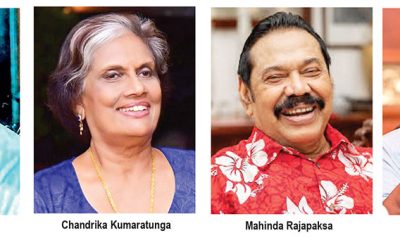
From the First to the 22nd: A short history of Amendment Politics and Reform Frustrations
-

 News4 days ago
Missing doctor’s body found in Mahiyanganaya
-
 Features6 days ago
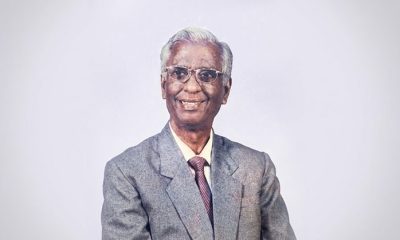
How Shelton Kodikara became first Professor of International Relations
-
 Features6 days ago
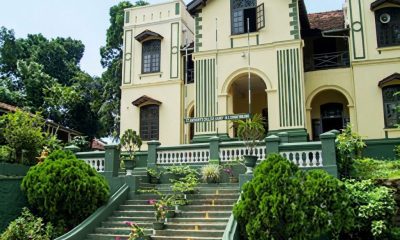
How St. John’s College Shaped Panadura for 150 Years
-
 News4 days ago
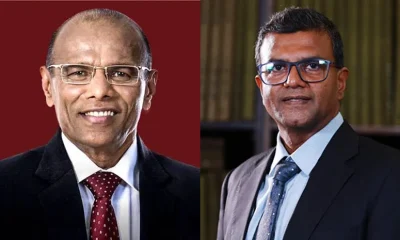
Australia declines to release Finance Secy Suriyapperuma’s citizenship details
-
 News6 days ago
Ex- Atamasthanadhipathi uses Magistrate’s gate to enter court
-
 News4 days ago
22A: BASL suggests CJ recuse himself from hearing petitions