
News
Devolution talks: Gevindu alleges Ranil giving in to TNA


by Shamindra Ferdinando
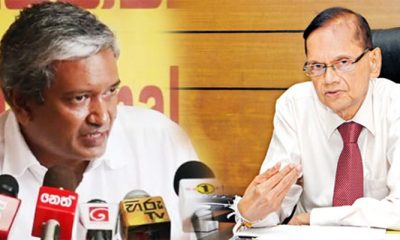
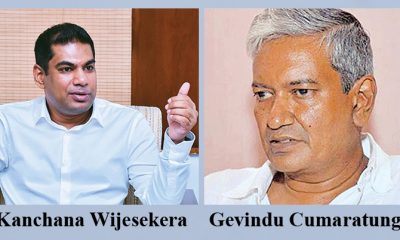
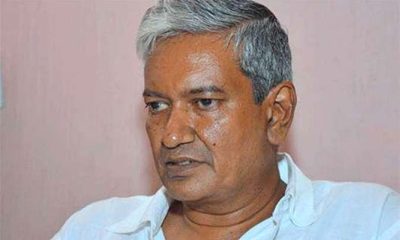
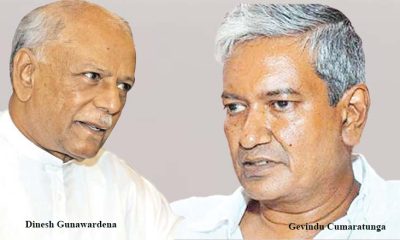
Rebel SLPP lawmaker Gevindu Cumaratunga yesterday warned that post-war national reconciliation couldn’t be achieved by appeasing the Tamil National Alliance (TNA).
National List MP Cumaratunga said so commenting on the discussion President Ranil Wickremesinghe had with lawmakers representing the Northern and Eastern Provinces. The talks centered on devolution of power. The Tamil National People’s Front led by Gajendra Kumar Ponnambalam skipped the meeting.
MP Cumaratunga found fault with President Wickremesinghe for succumbing to TNA ultimatum that it wouldn’t accept government invitation unless members representing both Northern and Eastern Provinces were called together.
“The original plan was for the President to meet legislators representing the two provinces, separately. But, that plan was changed soon after the TNA warned it wouldn’t attend a separate meeting for Northern Province Tamil MPs, lawmaker Cumaratunga said. The TNA parliamentary group consists of 10 members.
In spite of the LTTE’s demise 14 years ago, the TNA apparently believed it could pursue its separatist agenda by putting pressure on individuals, the MP said, drawing President Wickremesinghe’s attention to the TNA wartime relationship with the LTTE as its mouthpiece. The leader of Yuthukama civil society group said that the TNA current strategy should be examined against the backdrop of its recognition of the LTTE way back in 2001 as the sole representative of the Tamil speaking people.
Responding to The Island query, lawmaker Cumaratunga pointed out that in the absence of a consensus among Tamil members representing the Northern and Easern Provinces, President Wickremesinghe couldn’t bring talks on power devolution to a successful concluson.
One-time TNA Chief Minister of the Northern Province C.V. Wigneswaran’s proposal made in parliament for the setting up of an interm administraive arrangement at provincial level until Provincial Council elections were held had been rejected by the TNA.
MP Cumaratunga questioned the rationale in leaving Sinhala lawmakers representing the Eastern Province out of the meeting chaired by President Wickremesinghe. The decision to restrict the meeting to a selected group of lawmakers couldn’t be justified under any circumstances, he pointed out
President Wickremesinghe had quite conveniently forgotten that he was elected by Parliament to complete the remainder of ousted President Gotabaya Rajapaksa’s five-year term, MP Cumaratunga said. Instead of addressing pressing economic issues, President Wickremesinghe was bending backwards to appease the TNA, the MP said, adding that India couldn’t absolve itself of the responsibility for causing terrorism here to facilitate high profile separatist project.
Should we give in to New Delhi’s evil designs, MP Cumaratunga asked, citing numerous examples to stress that Eastern Province couldn’t be merged with the Northern Province as demanded by the separatist movement. The Supreme Court in late Oct 2006 de-merged the Eastern Province from the North as the merger effected in the wake of July 1987 one sided Indo-Lanka Accord was subject to a referendum in the Eastern Province to ascertain whether the majority accepted that arrangement.
The TNA and other interested parties were also propagating lies that attacks were directed at Tamils’ religious sites and lands in the Northern and Eastern Provinces, MP Cumaratunga said.
The nationalist MP said that another issue that has caused concern was the move to introduce a new Central Bank Act. President Wickremesinghe, in his capacity as the Finance Minister should review the Bill titled ‘Central Bank of Sri Lanka’ in the wake of the Supreme Court determination that 46 out of 134 clauses of the said Bill violated the Constitution, hence the need to introduce several dozen amendments.
Alleging Speaker Mahinda Yapa Abeywardena of misinterpreting the SC determination in a bid to deceive parliament and the country, MP Cumaratunga urged the President to present a new bill prepared after having incorporated the amendments proposed by the Attorney General’s Department.
Appreciating the government decision to put off the one day debate and vote scheduled to be taken on May 11 on the Bill, MP Cumaratunga however expressed concern that incorporation of desired amendments at the Committee Stage could go awry. The MP recalled how those who had been in power manipulated the Committee Stage process to insert what they wanted instead of what was agreed on.








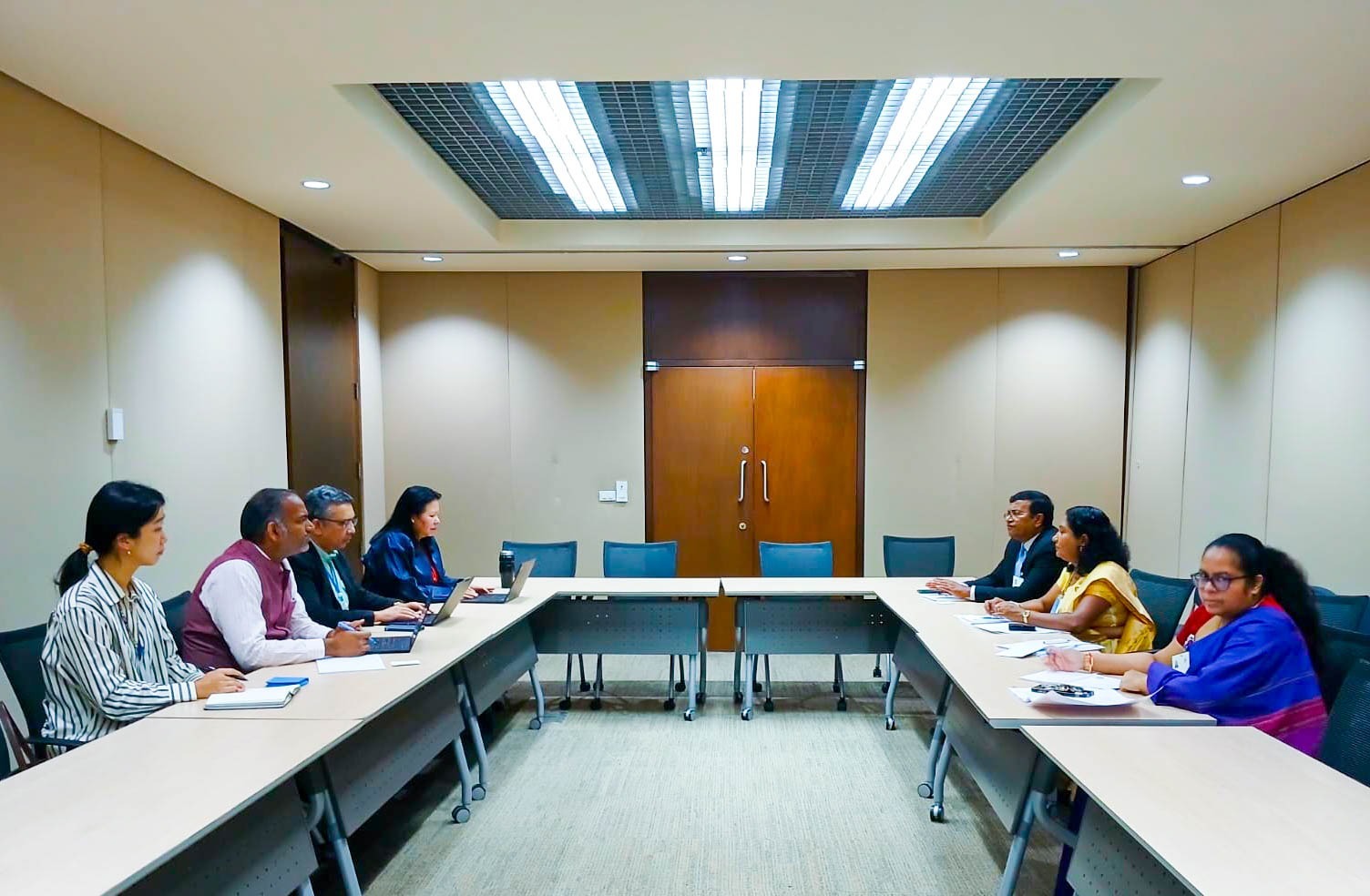
A special bilateral discussion was held on Thursday (02) morning at the United Nations Conference Centre (UNCC) in Bangkok, Thailand, between the Deputy Minister of Environment, Anton Jayakody, and regional representatives of the United Nations Environment Programme (UNEP).
The discussion began with an appreciation of the long-standing relationship between Sri Lanka and UNEP, particularly highlighting Sri Lanka’s role as a UNEA 8 Bureau member and a key partner in Global Environment Facility (GEF) projects. The meeting focused extensively on securing UNEP’s technical
and financial support to advance several of Sri Lanka’s national environmental priorities.
During the meeting, the Deputy Minister expressed Sri Lanka’s gratitude for the guidance provided by UNEP throughout the adoption process of the UNEA Youth Resolution. He outlined the national program currently being designed in Sri Lanka in alignment with the resolution. Under this initiative, attention was drawn to securing UNEP’s technical assistance, capacity-building support, and access to global funding mechanisms.
These resources will be utilized to formulate a “National
Environmental Literacy Index” to assess the environmental awareness of youth, establish “Youth Environmental Committees” spanning from the national to grassroots levels, set up university youth forums, and implement environmental promotion programs driven through sports
In addition, Sri Lanka requested UNEP’s assistance in upgrading its national air quality monitoring systems, enhancing data analysis, and developing policy guidelines.
The Deputy Minister also sought policy advisory services on Extended Producer Responsibility (EPR), technical expertise in plastic waste lifecycle management, and support for pilot projects aimed at minimizing single-use plastics and transitioning toward a circular economy.
Furthermore, the Deputy Minister noted that measures have been taken in collaboration with the Ministry of Transport to expedite sustainable e-mobility projects. He added that Sri Lanka anticipates UNEP’s support for the “Sustainable Cities Integrated Programme” under the country’s GEF 9 national
strategies. Reaffirming Sri Lanka’s active commitment to regional initiatives that foster environmental knowledge sharing among South Asian nations, it is expected that UNEP’s technical intervention during the upcoming GEF 9 financial cycle will continue to support Sri Lanka’s journey toward environmental resilience.

He is the only detainee at old Tangalle prison
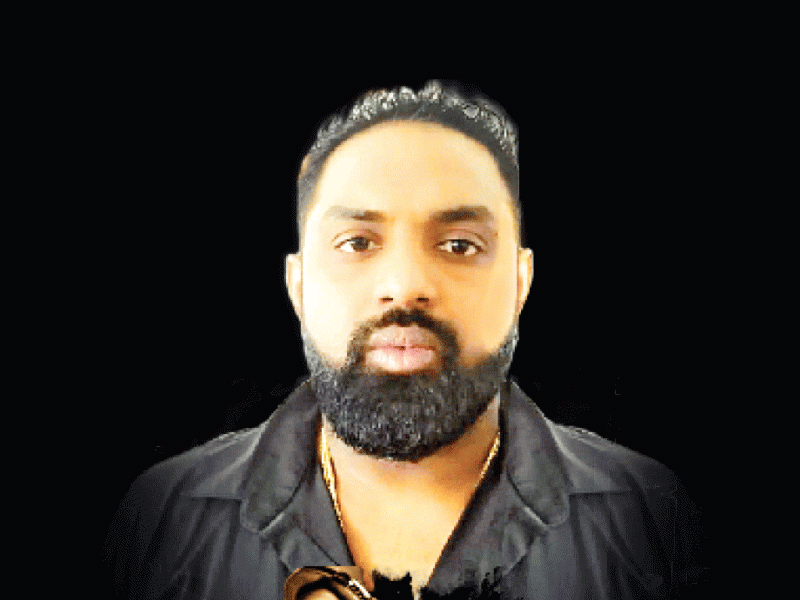
The Commission to Investigate Allegations of Bribery or Corruption (CIABOC) probing bribery allegations pertaining to the recent arrest of attorney-at-law Rakitha Rajapakshe, former SJB Horana organiser Charitha Abeysinghe and another person is expected to question drug dealer Nadun Chintaka Wickremaratne alias Harak Kata being held under the Prevention of Terrorism Act (PTA).
The CIABOC arrested Rakitha and Charitha Kumara Wasantha Abeysinghe and former Director of Airport and Aviation Services Warushahanndige Aruna Sri Chathuranga on 25 June over the Rs 200 mn bribery allegation. Produced before the Colombo Chief Magistrate court on the same day, they were remanded until 3 July.
Sources familiar with the case told The Island that Wickremaratne arrested in Madagascar on 1 March 2023 was brought to Sri Lanka on 14 March 2023, and after preliminary investigations he was detained at the old Tangalle prison. Wickremeratne has been accused of running a major narcotics smuggling operation.
Wickremaratne’s lawyer Udul Premaratne, having visited Wickremeratne, sought the intervention of the Human Rights Commission of Sri Lanka to ensure the latter’s safety.
As many as 90 police (terrorist Investigation Department) and the Special Task Force (STF) have been assigned to the Tangalle old prison where Wickremaratne remains the sole detainee.
The CIABOC, in a statement posted in Sinhala on its website on 25 June said that arrested persons received the money after having initially asked for Rs 500 mn and then reduced it to Rs 200 mn. The Rs 120 mn allegedly received has been described as an advance.
Sources said investigators would question Wickremaratne over his wife’s claim that she had paid Rs. 120 million.
In terms of the PTA, the detention orders can be issued only by the Defence Minister. At the time Wickremaratne was brought to Colombo, Ranil Wickremesinghe held the defence portfolio. According to legal sources, when the President also held the defence portfolio, the responsibility for issuing the detention orders was relegated to the Defence Secretary.
Maj. Gen. Kamal Gunaratne who served as the Defence Secretary during that period.
Sources said that Wickremaratne’s wife was yet to come back and his parents and a brother were believed to be the only visitors except for lawyers. One of the crucial issues was how Wickremaratne had communicated with his wife living abroad, sources said.
By Shamindra Ferdinando
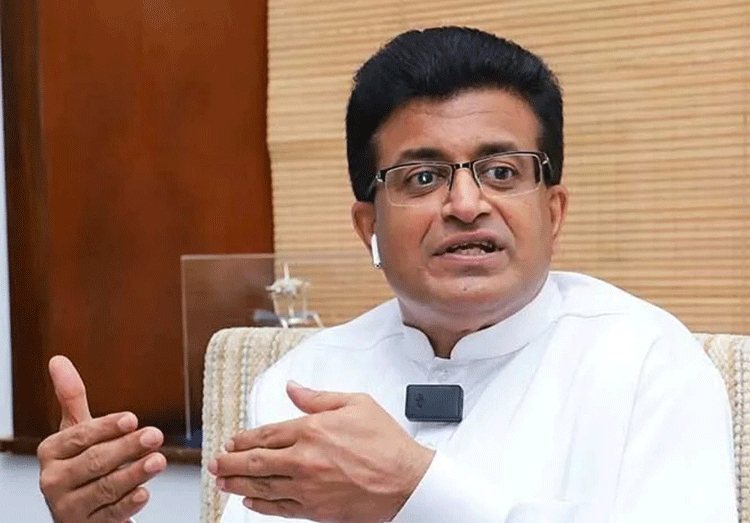
Pivithuru Hela Urumaya (PHU) leader and former Petroleum Minister Udaya Gammanpila yesterday (2) claimed that the price of a litre of Octane 92 petrol and auto diesel could be reduced by Rs 141 and Rs 126, respectively.
The former Energy Minister said that Rs 20 per litre price reduction declared by the Ceylon Petroleum Corporation (CPC) in respect of Octane 92 petrol and Rs 25 drop in litre of auto diesel price proved that the government fleeced the public.
Earlier, Samagi Trade Union Alliance convenor Ananda Palitha claimed that the price of litre of Octane 92 petrol and auto diesel could be reduced by Rs 115.
A litre of Octane 92 is sold at Rs 414 and a litre of auto diesel at Rs 382.
Pointing out that the CPC hadn’t reduced Octane 95 petrol and Super Diesel at least nominally, the former parliamentarian said that the CPC could reduce them by Rs 155 and Rs 149, respectively. A litre of petrol Octane 95 is sold at Rs 495 and a litre of Super Diesel at Rs 478.Gammanpila pointed out that the government had sharply increased prices when the Iran war entered the 12th day having claimed that that it had stocks for 35 days. (SF)

Sai Sudharsan century, Padikkal 94* put India A in command

Iran begins public mourning for Ayatollah killed in February

Hope returns, Roach out for West Indies after injury-hit Sri Lanka bat

Juventus Training Camp from 6-10 July in Colombo

Wijesundara set for debut as injury-hit Sri Lanka struggle to make up XI

UNEP support pledged to strengthen Sri Lanka’s Environmental Priorities

‘Dates have the highest sugar content to fight Coronavirus’

Sunday Island 27 December – Headlines

#SundayIsland 17th December – Headlines

Sunday Island – 28th March

Sunday Island Headlines – 21 March

Sunday Island – 21st February – Headlines
-
 News5 days ago
LAWASIA warns against ad hoc initiative to increase judges’ retirement ages
-
 News6 days ago
Another 1,132 Sri Lankan Personnel to be deployed for United Nations Peacekeeping Missions
-
 News4 days ago
Chamuditha to seek removal of injunction on Youtube programme
-
 Features4 days ago
Climate action to bring South Asia together
-

 Business7 days ago
Month-end profit-takings drive stock trading; indices up
-
 Features6 days ago
People’s Bank expands digital banking network with 125th cheque deposit kiosk
-
 News4 days ago
CPRP alleges another death in custody, seeks protection for witness
-

 News7 days ago
FSP complains of irregularities in a Guinness World Record event held in Sri Lanka