
Life style
US election 2020 polls: Who is ahead – Trump or Biden?


Biden focuses on expanding his electoral map, Trump defends administration’s response to COVID-19 With Election Day less than a week away and close to 65 million Americans having already cast their ballots, the presidential candidates and their star campaigners are criss-crossing the country taking chances on how best to spend their final days in order to win the elections
Last week, U.S. President Donald Trump, focused on defending his gains in 2016, campaigned in the Upper Midwestern States of Michigan and Wisconsin as well as Nebraska after spending intensely focused on Pennsylvania, where he made multiple stops. Mr. Trump won all four of these States in 2016 with wafer thin majorities (except for Nebraska).
First Lady Melania Trump held her first (and possibly, only) campaign rally in Chester County, Pennsylvania, which her husband narrowly won in 2016.
Democratic candidate and former Vice-President Joe Biden is leading in the polls in Pennsylvania (+3.8 points), Michigan (+8.7 points) and Wisconsin (+7.6 points), according to an average of recent polls from polling aggregator Real Clear Politics.
Mr. Trump’s path to victory — 270 seats in the Electoral College — is narrow but still within reach.
Mr. Biden’s strategy this week appears to be different: what’s been described by analysts as an effort to ‘expand his electoral map’ — forcing Mr. Trump to defend States such as Florida and Georgia, which he won in 2016. Mr. Biden will travel to Iowa a State Mr. Trump won comfortably in 2016.
‘Heal the nation’
However, it’s not just about the presidential race. In Georgia, Mr. Biden also campaigned with Democrats Jon Ossoff and Raphael Warnock, fighting competitive Senate races. In Iowa too, Republican incumbent Jonie Ernst and her Democratic challenger Theresa Greenfield are battling it out in the country’s second most expensive Senate race as per the Des Moines Register.
Speaking in Warm Springs, Georgia, at a retreat of former U.S. President F.D. Roosevelt (“FDR”), Mr. Biden brought up the theme of “healing” the nation. “A few weeks ago, I spoke at Gettysburg about the need to unite our nation, and today I’m here at Warm Springs because I want to talk about how we’re going to heal our nation,” he said.
His speech included references to Civil Rights icon Martin Luther King, Pope Francis and the Bible.
“I’m running as a proud Democrat, but I will govern as an American President. I’ll work with Democrats and Republicans,” Mr. Biden said, repeating one of his core campaign messages. The former Vice-President has also dwelt at length on the need to control the pandemic before rebuilding the economy.
Mr. Biden’s star campaigner — former President Barack Obama — held a drive-in rally in Orlando having already made stops in Pennsylvania last week and in Miami over the weekend. Mr. Biden lost Florida in 2016 and is currently running neck and neck with Mr. Trump, falling behind the President by an average of 0.4 percentage points in recent polls, according to Real Clear Politics. “You’ve got the chance to set two things right. You can bring a World Series championship [a baseball tournament] to the Sunshine State and you can send Joe Biden and Kamala Harris to the White House,” Mr. Obama told the audience.
While on the campaign trail, Mr. Obama has focused on contrasting Mr. Trump’s character and Mr. Biden’s, saying the former treats the presidency as a reality show. He has also taken to mocking Mr. Trump. “He’s jealous of COVID’s media coverage,” Mr. Obama said. “If he had been focused on COVID from the beginning, cases wouldn’t be reaching new record highs across the country this week.”
Mr. Obama also talked about his and Mr. Biden’s record on African American unemployment — which had taken a hit in the 2008 financial crisis. He said the only people better off under a Trump administration were those who got tax cuts — cuts, that Mr. Biden would roll back to finance clean energy jobs, Mr. Obama said.
Mr. Obama also said that the Trump administration has sought to dismantle the Affordable Care Act, or Obamacare, but has not come up with an alternative for it: a theme Vice-Presidential candidate Kamala Harris also focused on while campaigning in Reno, Nevada, on Tuesday.
CNN reported that Mr. Obama is expected to join Mr. Biden in a battleground State — possibly Michigan, where Mr Biden is expected Mr. Trump beat Hillary Clinton by 0.3 percentage points in 2016.
Mr. Trump’s messaging has been that the country is “rounding the turn” [turning the corner] on the pandemic — a hypothesis that runs counter to scientists’ expectations based on rising infection numbers and dropping temperatures. He has also linked the pandemic to an economic message — that the election is a choice between a “Trump super recovery” and a “Biden depression”.
Mr. Trump has also included a new segment to his campaign repertoire: playing clips featuring Mr. Biden and other top Democrats.
While at a rally in Erie, Pennsylvania, last week, Mr. Trump played a clip with Mr. Biden and Ms. Harris’s comments on regulating fracking and fossil fuels. Mr. Trump’s messaging also consists of questioning Mr. Biden’s cognitive state and suggesting that he is a hostage to the “radical left” which will lead the country to anarchy if Mr. Biden is elected. The President has also promoted his record of being tough on China and renegotiating trade agreements such as NAFTA, which was replaced by the U.S. Mexico Canada Agreement.
Mr. Trump’s also spoke in Arizona (where Democrats have not won in a presidential election since 1993) and then Florida.


By Zanita Careem
With Sri Lanka tourism entering a new phase of growth, the Deputy Minister of Foreign Affairs, Foreign Employment and Tourism, Professor Ruwan Ranasinghe outlined the Government’s forward looking approach, stressing that Sri Lanka must move forward, and must move beyond short term promotional efforts and build a tourism industry backed by clear strategy, stronger planning and measurable results. At the recent Press Conference, held at the SLTPB, Sri Lanka Tourism launched two World Bank supported consultancy assignments to develop a national tourism strategy and global promotional campaign road map, as the country seeks to attract high spending visitors and generate greater economic reforms. The National Tourism strategy planning consultancy for 2026-2031 will prepare a five-year framework, covering a forward looking approach, centred on transforming tourism into a more competitive sustainable and high value sector. For Sri Lanka, this initiative marks an important shift towards strategic, sustainable and inclusive tourism development with the aim of giving greater economic opportunities to the people. The Deputy Minister said the country does possess the natural beauty, cultural heritage and hospitality needed to compete globally. What is required now, he emphasised, is a coordinated approach that brings together government, industry stakeholders and international expertise.
For Professor Ranasinghe the way forward is not simply about bringing more tourists to Sri Lanka but about creating greater value from every visitor, diversifying markets, encouraging investment, strengthening the tourism institutions and developing a destination that can complete confidentially on the world stage. His speech reflected a clear message, Sri Lanka has the attraction, diversity and potential to compete with the world’s best destinations, but must be driven by stronger strategy, sharper global marketing and co-ordinated action.
He emphasised that Sri Lanka has not lacked tourism plans in the past. Previous governments and tourism authorities had undertaken considerable work and developed important plans but the challenges was that these efforts had not given the strength, continuity and implementation mechanisms needed to produce the desired results. The new approach, he stressed, is about giving tourism greater teeth through stronger planning, better governance, targeted investment, sustainable development and a much aggressive presence in the international markets.
(Q) Why is the launch of the National Strategies Planning Consultancy a major milestone for Sri Lanka’s tourism industry?
(A) The launch marks a turning point because it introduces a structured, evidence-based framework for tourism development. For years, Sri Lanka focused primarily on increasing visitor numbers, but despite strong arrivals, revenue growth lagged. This consultancy, supported by the World Bank, ensures that future strategies emphasise value creation, sustainability, and inclusivity. It is the first time Sri Lanka’s tourism industry is being aligned with global best practices, institutional reforms, and a clear roadmap for implementation, making it a landmark initiative.
(Q) What are key priorities that the new national tourism strategy will focus on?
(A) The new strategy prioritises enhancing visitor spending and length of stay, reducing revenue leakage by strengthening local supply chains, modernising institutions and regulations, and embedding sustainability across all tourism activities. It also emphasises skills development through curriculum modernisation at SLOTH, digital transformation of tourism data systems, and diversification of tourism products to attract high-value segments such as wellness, eco-tourism, and cultural tourism.
(Q) What major gaps in Sri Lanka’s existing tourism strategy do you hope to address?
(A) Previous strategies were heavily arrival-driven, with limited focus on yield per visitor. There was weak differentiation among destinations, limited integration with local communities, and insufficient institutional coordination. The new plan addresses these gaps by embedding sustainability, strengthening provincial tourism bureaus, diversifying products, and ensuring that tourism revenue benefits local communities more directly.
(Q) What is the vision behind Sri Lanka’s new global promotional campaign road map?
(A) The vision is to reposition Sri Lanka as a premier global destination by highlighting its unique blend of culture, nature, and wellness. The campaign, developed with international expertise, will use data-driven marketing, influencer collaborations, and destination storytelling to reach high-value markets. It aims to move beyond generic promotion and instead create a strong, differentiated brand identity for Sri Lanka.
(Q) How will this campaign change the way Sri Lanka is positioned and marketed internationally?
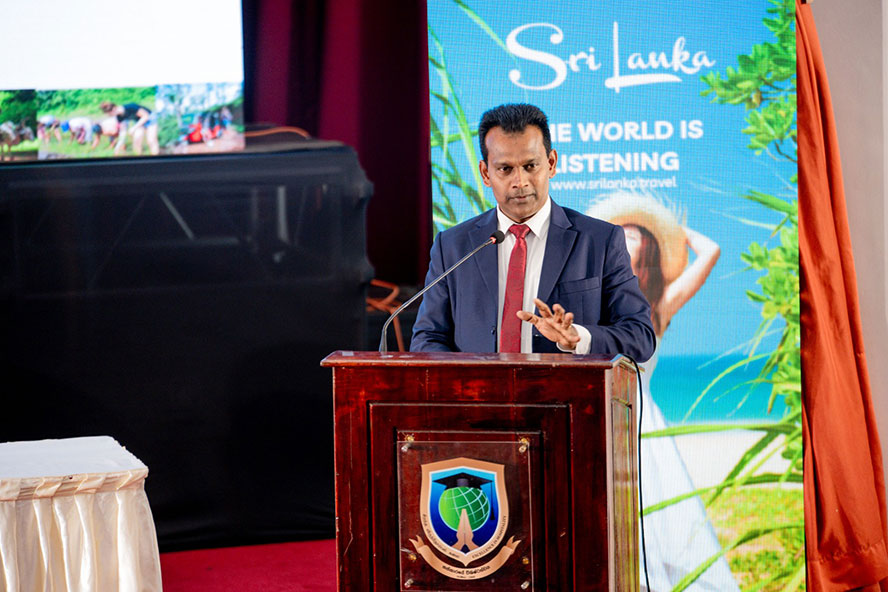
Professor Ruwan Ranasinghe: New international narrative for Sri Lanka
(A) Sri Lanka will be marketed not just as a tropical island but as a destination offering diverse, high-value experiences. The campaign will highlight wellness retreats, heritage tourism, eco-adventures, and community-based experiences. This repositioning will attract discerning travellers who seek authenticity and are willing to spend more, thereby increasing tourism’s contribution to the economy.
(Q) How will the Ministry ensure that the strategy does not remain another document, but is actually implemented?
(A) The consultancy includes costed action plans, institutional reforms, and monitoring mechanisms to ensure accountability. Stakeholder workshops and validation sessions will embed ownership across government, private sector, and communities. The Ministry is committed to ensuring that this strategy translates into tangible outcomes through structured implementation and regular progress reviews.
(Q) Are we ready to market Sri Lanka to the world at a much bigger level or do you first need to fix the gaps in the visitor experience before spending heavily on promotion?
(A) Both aspects must go hand in hand. While global promotion is essential to reposition Sri Lanka, the visitor experience must be strengthened to ensure repeat visitation and positive word-of-mouth. The strategy priorities service standards, infrastructure, and product diversification so that promotional spending translates into genuine value for visitors and communities alike.
(Q) What does the World Bank’s involvement bring to Sri Lanka’s tourism strategy that was missing from previous initiatives?
(A) The World Bank brings international expertise, credibility, and funding support. Its involvement ensures that Sri Lanka’s strategy is benchmarked against global best practices, with stronger institutional frameworks and better data systems. Unlike past initiatives, this partnership emphasizes sustainability, inclusivity, and value-driven growth, ensuring long-term resilience for the industry.
(Q) Will the World Bank’s expertise help Sri Lanka move from simply increasing tourist arrivals to attracting high-value tourists?
(A) Yes, the World Bank’s guidance is focused on shifting from volume-driven growth to yield-driven growth. By strengthening product development, diversifying markets, and embedding sustainability, Sri Lanka will attract high-value tourists who spend more, stay longer, and contribute positively to local communities and conservation efforts.
(Q) Will the new strategy place greater emphasis on sustainable and responsible tourism?
(A) Absolutely. Sustainability is at the heart of the new strategy. ECT-tourism, community-based tourism, and conservation initiatives will be scaled up to protect Sri Lanka’s fragile ecosystems and heritage. Responsible tourism practices will be embedded across the industry to ensure that growth does not come at the expense of the environment or local communities.
(Q) With the World Bank bringing international expertise to Sri Lanka’s tourism strategy, what is the one major transformation for the world to see in Sri Lanka as a tourism destination?
(A) The major transformation will be Sri Lanka’s repositioning as a high-value, sustainable destination. The world will see Sri Lanka move beyond being a volume-driven market to becoming a model of responsible tourism, where visitors enjoy authentic experiences while contributing to local prosperity and environmental conservation. This shift will redefine Sri Lanka’s global image and ensure long-term competitiveness.
By Zanita Careem
Behind every memorable dining experience is a chef whose passion transforms ingredients into something extraordinary. At Taj Samudra Colombo, the hotel’s Executive Chef, Sajesh Nair brings culinary artistry, precision and a deep understanding of flavours, curating dishes that are as refined as they are memorable.
With his passion for quality ingredients, attention to details and commitment to culinary excellence, Chef Nair continues to create flavours, turning the finest ingredients into culinary masterpieces, and transforming the dining table into a stage of indulgence.
Behind every memorable dining experience is a Chef who understands that food is more than what appears on a plate. For Chef Sajesh Nair cooking has been a lifelong journey, shaped by tradition, discipline, curiosity and a passion for authentic flavours.
With an impressive 30 years in the culinary tradition, including 17 years with Taj Hotels, Chef Sajesh Nair has built a career round creating a distinctive dining experience, while remaining deeply connected to the heritage of the cuisines he represented.
His journey with Taj has taken him through some of the group’s most prestigious properties. He was the Executive Chef at the celebrated Taj Falakruma, in Hyderabad, where he became particularly recognised for his expertise in Hyderabad and Nizami cuisine. “My philosophy was rooted in preserving traditional techniques while presenting them with refinement and creativity.” My passion for cooking began at an early age, “My journey was shaped by an early and lasting influence of my father.’’ It was through him that Sajesh developed an appreciation for food, discipline and dedication behind creating something truly special.

Turning ingredients into memorable experiences
His culinary credentials also came into spotlight when he led the team preparing an elaborate royal inspired menu for a high profile dinner at Taj Falakuma Palace, attended by Prime Minister Narendra Modi and Ivanka Trump.
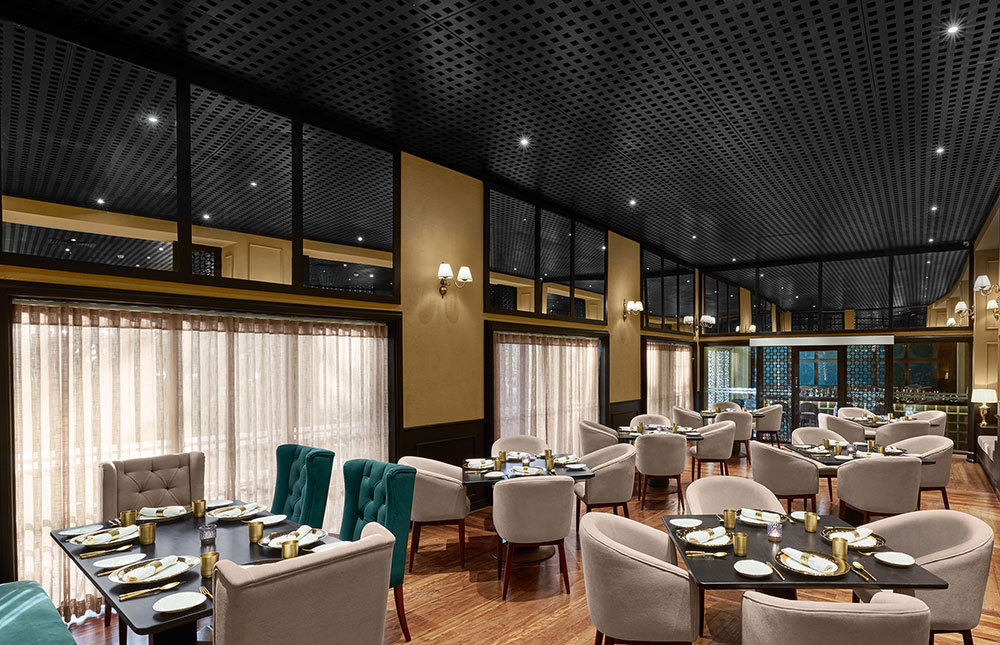
At Taj Samudra Colombo, Chef Sajesh brought his wealth of experience to Sri Lanka’s hospitality scene. His culinary leadership extended to many restaurents, including the revamped Indian Restaurant Navaratne where he has created an experience, centred around cuisines from all parts of India. Adding depth to this culinary journey, Chef Sajesh philosophy fits naturally into the restaurant’s identity, offering guests an introduction to India’s culinary traditions while maintaining the standard of Taj hospitality. Navaratne has become more than an Indian restaurant, it’s a culinary passage to India with Sajesh Nair’s experience in helping bringing its flavours, traditions and stories to the table. Chef Sajesh Nair has a long Taj Hotel career and in Sri Lanka, as the Executive Chef of Golden Dragon – one of the hotel’s specialist restaurant, where he has brought his expertise and creativity to the kitchen, creating flavours that have delighted diners from all walks of life. His association with Golden Dragon, the Chinese restaurant, began in India where he worked at the restaurant as part of his early Taj Samudra hotel’s career. That experience gave him the exposure to the Chinese wider culinary techniques at the Golden Dragon Colombo.

Chef Sajesh Nair: Executive Chef, Taj Samudra, Colombo. Maestro behind flavours
At Taj Samudra Colombo, the Yumi Japanese restaurant is one of the hotel’s speciality dining outlets, His strength lies in creating dishes that balance authentic flavours with contemporary presentation, while his attention to detail and understanding of ingredients gave each creation its distinctive character. He embraced a wider gastronomic repertoire, mastering flavours and techniques from across the world. Chef Sajesh Nair’s culinary canvas extended beyond Indian cuisine. Nair’s role was not simply about mastering one cuisine but about creating different dining experience to suit different tastes. He curated extensive festive menus at Ports of Call and worked across the hotel’s speciality restaurants .
Chef Sajesh Nair’s journey extends beyond the restaurant kitchen with his career giving him opportunities to prepare food for celebrations, distinguished personalities and high profile guests in Sri Lanka and abroad. His work at the Golden Dragon and at the Yumi restaurent further reflect his versatility as a executive. Chef Nair led the culinary team at Taj Falaknuma Palace when a dinner was hosted for Narendra Modi.
Chef Nair and his team prepared the elaborate five-course royal Hyderabad/Nizami menu for Ivanka Trump during her Hyderabad visit. Mukesh Ambani and Ratan Tata both were among the prominent. Indian business leaders who attended the gala dinner. Among the distinguished personalities to experience Chef’s culinary artistry was Cherie Blair, who was among the guests at the glittering banquet at Taj Falaknuma Palace in Hyderbad during the 2017 Global Entrepreneurship Summit. He also curated menus for Mohamed Azharuddin’s wedding reception at Taj Mahal Palace. At this wedding he worked as a young Chef de Partie at the hotel where he won rave reviews. Later he steadily worked his way through the demanding hierachy of professional kitchens.
In Sri Lanka he has created menus for cricketers, both Sri Lankans and Indians. He was also the part of the team when he created various menus during PM Narendra Modi’s visit to Sri Lanka when he stayed at the Taj Samudra. He has also curated menus for all the higher profile personalities, like corporate clients and political figureheads, including the PM of Sri Lanka, Harini Amarasuriya.
From royal banquests in India to distinguished tables in Sri Lanka, Chef Sajesh Nair’s culinary journey is one marked by experience, versatility and an enduring passion for creating memorable dining experiences. His career reflects a Chef who has continually evolved with the times, while remaining rooted in the craft.
He quipped “For me food is more than what is served on a plate it is a way of connecting people.”
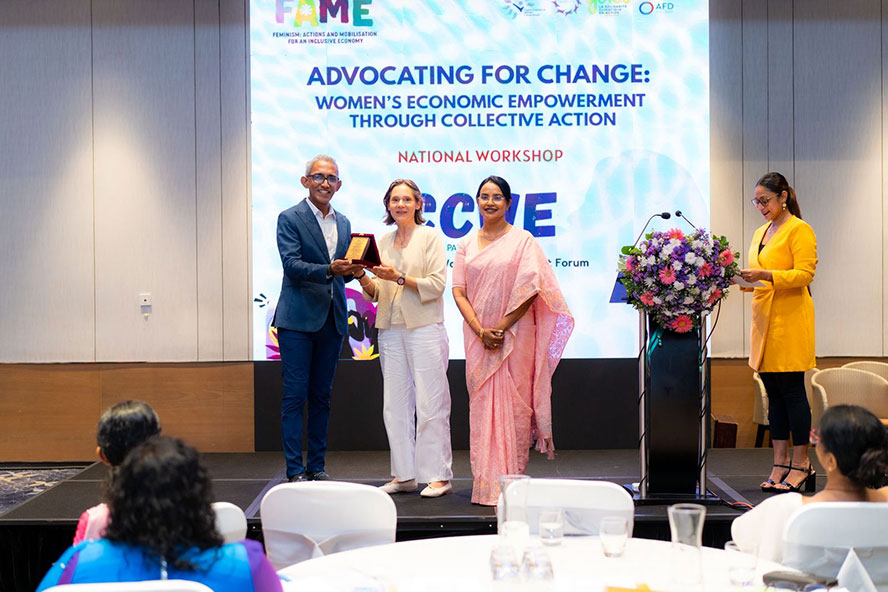
The Ceylon Chamber of Women Entrepreneurs (CCWE), in collaboration with the University of Kelaniya, brought together policymakers, development partners, private-sector leaders, academics, civil society organisations and women entrepreneurs at the National Workshop “Advocating for Change: Women’s Economic Empowerment through Collective Action.”
The workshop formed part of the FAME – Feminism: Action and Mobilisation for an Inclusive Economy Project, supported by the Agence Française de Développement (AFD), and focused on identifying practical pathways to create a more inclusive and enabling entrepreneurial ecosystem for women in Sri Lanka.
The national dialogue provided a platform to bring together policy-level perspectives with the experiences of women entrepreneurs and grassroots organisations, while presenting research evidence on the barriers, opportunities and institutional changes required to strengthen women’s participation in entrepreneurship and economic development.
Welcoming participants, Dr. Ayanthi Gurusinghe, President of the Ceylon Chamber of Women Entrepreneurs, emphasised that women’s economic empowerment cannot be achieved through isolated interventions or training programmes alone. She highlighted the importance of connecting women entrepreneurs with finance, technology, markets, knowledge, networks and policy-making institutions, while ensuring that the voices of women, at community level, are represented in national discussions. She noted that the purpose of “Advocating for Change” is to bring these different voices together and move from identifying challenges towards practical and sustainable solutions.
Dr. Gurusinghe further stressed the importance of collective action among government institutions, development partners, academia, the private sector, women’s chambers and community organisations to create meaningful economic opportunities for women across Sri Lanka.
Partnerships for Progress:
France’s Continued Support for Women’s Economic Empowerment, Matthieu John, Deputy Ambassador of the Embassy of France, highlighted the importance of partnerships in advancing inclusive economic development and reflected on the contribution of the FAME partnership in Sri Lanka.
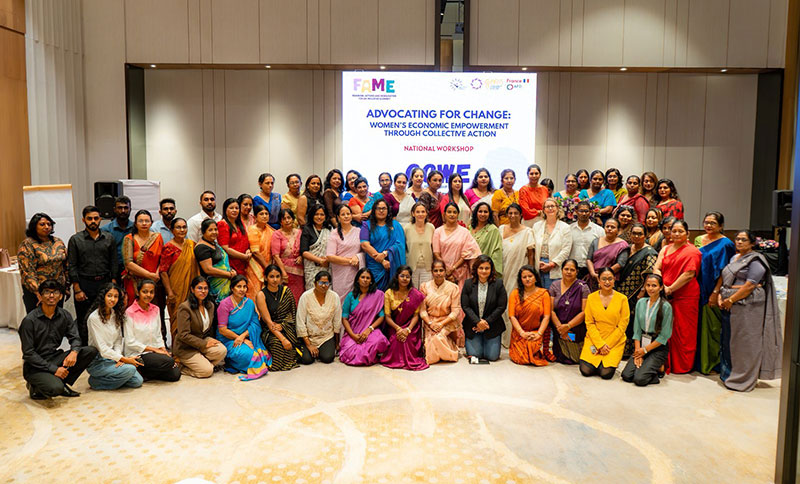
Together we rise: power of collective action
He emphasised the value of strengthening women’s participation in economic decision-making and creating opportunities that enable women not only to establish enterprises but also to build sustainable businesses capable of contributing to employment, innovation and economic growth.The participation of France and AFD in the programme reinforced the importance of international development partnerships that support locally led initiatives, research, advocacy and collective action for women’s economic empowerment.
Creating an Enabling Ecosystem for Women Entrepreneurs:
Delivering the keynote address, Yasas Hewage, Chairman of the Industrial Development Board (IDB), focused on the importance of creating an enabling ecosystem in which women entrepreneurs can move beyond micro and livelihood-based enterprises towards sustainable, growth-oriented businesses. He highlighted the role of enterprise-development institutions in providing entrepreneurs with access to technical knowledge, technology, productivity improvement, business-development services, finance and markets.
Hewage also emphasised that strengthening women-owned enterprises should be viewed not merely as a gender or social-development intervention, but as an important component of Sri Lanka’s wider industrial and economic development
The National Workshop concluded with a call for stronger coordination and continued collective action among government, development partners, financial institutions, academia, the private sector, women’s organisations and entrepreneurs.
Among the broader priorities emerging from the dialogue were the need to strengthen access to finance and markets; improve technology, digital and business-development support; create stronger pathways from micro-enterprise to sustainable business growth; strengthen institutional coordination; improve access to opportunities for women outside Colombo; and ensure that women entrepreneurs have a stronger voice in policy and economic decision-making.
CCWE emphasised that the dialogue is intended to contribute to a wider process of evidence-based advocacy for women’s economic empowerment, ensuring that recommendations are informed not only by research and institutional perspectives but also by the lived experiences of women entrepreneurs themselves.
The workshop reaffirmed a central message: Women’s economic empowerment is not solely a women’s issue—it is fundamental to Sri Lanka’s inclusive economic growth, industrial development and long-term prosperity.

Sandhu’s 6 for 7 seals Pakistan’s semi-final spot

INS Udaygiri makes port call in Colombo

Showers in the Uva, Central and Eastern provinces and in Polonnaruwa district

22A: Exclusion of 8 petitions questioned, action filed against SC Registrar, others

Thailand shuts door on undesirables from Sri Lanka

Expertise France and the EU launch media project to strengthen environmental journalism in Sri Lanka

‘Dates have the highest sugar content to fight Coronavirus’

Sunday Island 27 December – Headlines

#SundayIsland 17th December – Headlines

Sunday Island – 28th March

Sunday Island Headlines – 21 March

Sunday Island – 21st February – Headlines
-

 News5 days ago
Denied of promotion to SC despite vacancies, justice Gurusinghe retires
-

 Latest News6 days ago
Grade 5 scholarship exam results released
-

 News5 days ago
22A: SC urged to suspend hearing, appoint full bench
-

 Midweek Review6 days ago
The local and global dynamics of Sri Lanka’s 22nd Amendment
-

 News3 days ago
Namal remanded until Sept. 18 over Airbus deal investigation
-

 Latest News2 days ago
Tharanga creates history with Diamond League crown in Brussels
-
 News5 days ago
Govt. seeks NATO assistance
-

 News6 days ago
40 professional organisations and TU oppose proposed 22A