
Business
Teejay ends 2022-23 with 70% revenue growth despite tough H2


Sri Lanka’s first multinational textile manufacturer Teejay Lanka PLC has ended 2022-23 with noteworthy revenue and gross profit growth demonstrating its resilience in the face of external challenges and higher taxation that pressured profits in the second half of the year.
In a filing with the Colombo Stock Exchange (CSE), the Group reported revenue of Rs 84 billion for the 12 months ending 31st March 2023, reflecting healthy growth of 70%. Revenue for the fourth quarter was up 28% to Rs 17.3 billion. The Group said revenue growth was the result of an increase of average selling prices on a YOY basis and the depreciation of the Rupee.
The Group posted gross profit of Rs 6.4 billion for the year, a 39% improvement over the previous year, but witnessed a drop in its gross profit margin from 8.1% to 6.9% in the fourth quarter when compared with the same quarter of the previous year, with capacity underutilisation in all three plants continuing from the third quarter due to the softness in the market, increases in fixed costs due to expansion, and higher operating costs.
The Group’s profit before tax for the year improved by 9% to Rs 3.1 billion, but declined by 54% to Rs 409.1 million for the fourth quarter. Income tax nearly tripled to Rs 984.4 million for the full year, and almost quadrupled to Rs 257 million in the fourth quarter as a result of an increase in the tax rate from 14% to 30%. Consequently, the Group’s net profit of Rs 2.1 billion for the year reflected a decline of 16%, while net profit for the fourth quarter was down 82% to Rs 152.4million.
Despite these challenges the Group ended the year with a noteworthy cash and cash equivalent balance of Rs 11.2 billion, an improvement of 36% over the preceding financial year as a result of liquidation of inventory.
Commenting on the challenges faced by the Group Teejay Lanka Chairman Mr Ajit Gunewardene said: “The volatility in the industry persisted throughout the financial year, with the second half of the year being worse than the first half. The Group remained resilient by implementing strategies and innovative solutions to buffer the effects of these external shocks. Although currently experiencing headwinds, we expect an improvement in the forecast year with a pick-up of momentum in the second half of the year.”
Teejay Lanka CEO Mr Pubudu De Silva said the Group views the upcoming financial year with an optimistic lens. “We have set up the necessary infrastructure and tools to consolidate our services. Digitalization, reduction of costs, new product development, improving synthetic capacity, and the upliftment and empowerment of our human capital will be our priorities going forward,” he said. “The immediate six months are expected to be faced with continuing volatility, but the Group is confident that it has deployed the necessary resources to remain resilient.”
Teejay Lanka was the first textile manufacturer in Sri Lanka to receive membership of the US Cotton Trust Protocol, and is a public quoted company with 40 per cent public ownership. The company is backed by Sri Lanka’s largest apparel exporter Brandix Lanka which has a 32 per cent stake. Pacific Textiles of Hong Kong, whose key shareholder is the Tokyo Stock Exchange listed Toray Industries Inc., owns 27 per cent of Teejay Lanka.



National Airport Exit Survey tells quite a story
Australia’s role here is strategic, not charitable
In a quiet but significant shift, Sri Lanka’s tourism sector is moving beyond traditional destination marketing and instinct-based planning. The recent launch of the “From Data to Decisions” initiative jointly backed by Australia’s Market Development Facility and the Sri Lanka Tourism Development Authority, sent an unambiguous message: sentiment is out, statistics are in.
The initiative is anchored by a 12-month National Airport Exit Survey, a trove of data covering 16,000 travellers. The findings sketch a new traveller profile: nearly half are young (20–35), independent, and book online. Galle, Ella, and Sigiriya are the hotspots; women travellers outnumber men; and a promising 45% plan to return. This isn’t just trivia. It’s a strategic blueprint. If Sri Lanka Tourism listens, it can tailor everything from infrastructure to marketing, moving from guesswork to precision.

Tourists have a real sense of achievement after hiking the trail to Ella Rock
The keynote speaker, Deputy Minister Prof. Ruwan Ranasinghe called data “a vital pillar of tourism transformation.” Yet the unspoken truth is that Sri Lanka has long relied on generic appeals -beaches, heritage, smiles. In today’s crowded market, that’s no longer enough. As SLTDA Chairman Buddhika Hewawasam noted, this partnership is about “elevating how we collect, analyse, and use data.”
Australia’s role here is strategic, not charitable. By funding research and advocating for a Tourism Satellite Account, it is helping Sri Lanka build a tourism sector that is both sustainable and measurable. Australian High Commissioner Matthew Duckworth linked this support to “global standards of environmental protection” – a clear nod to the growing demand for green travel. This isn’t just aid; it’s influence through insight.
“The real test lies ahead,” a tourism expert told The Island. “Data is only as good as the decisions it drives. Will these insights overcome bureaucratic inertia? Will marketing budgets actually follow the evidence toward younger, independent, female travellers?,” he asked.
“The comprehensive report promised for early 2026 must move swiftly from recommendation to action. In an era where destinations are discovered on Instagram and planned with algorithms, intuition alone is a high-stakes gamble. This forum made one thing clear: Sri Lanka is finally building its future on what visitors actually do – not just what we hope they’ll do. The numbers are in. Now, the industry must dare to follow them,” he said.
By Sanath Nanayakkare

In his inaugural address as the new Chairman of the Asia Tea Alliance (ATA), Nimal Udugampola placed the region’s millions of smallholders at the core of the global tea industry’s future, asserting they are the “indispensable engine” of a sector that produces over 90% of the world’s tea.
Udugampola, who is also Chairman of Sri Lanka’s Tea Smallholdings Development Authority, used his speech at the 6th ATA Summit held in Colombo on Nov. 27 to declare that the prosperity of Asian tea is “entirely contingent” on the resilience of its small-scale farmers, who have historically been overlooked by premium global markets.
“In Sri Lanka, smallholders account for over 75% of our national production. Across Asia, millions of families maintain the quality and character of our regional teas,” he stated, accepting the chairmanship for the 2025-2027 term.
To empower this vital community, Udugampola unveiled a vision focused on Sustainability, Equity, and Digital Transformation. The strategic agenda includes:
Climate Resilience: Promoting climate-smart agriculture and regenerative farming to protect smallholdings from environmental disruption.
Digital Equity: Leveraging technology like blockchain to create farm-to-cup traceability, connecting smallholders directly with premium consumers and ensuring fair value.
Market Expansion: Driving innovation in tea products and marketing to attract younger consumers and enter non-traditional markets.
Standard Harmonization: Establishing common regional quality and sustainability standards to protect the “Asian Tea” brand and push for stable, fair pricing.
Linking the alliance’s goals to national ambition, Udugampola highlighted Sri Lanka’s target of producing 400 million kilograms of tea by 2030. He presented the country’s “Pivithuru Tea Initiative” as a model for other ATA nations, designed to achieve this through smallholder empowerment, digitalization, and aligned policy objectives.
By Sanath Nanayakkare

Brandix Apparel Solutions was recognised as the Green Brand of the Year at the Sri Lanka Institute of Marketing (SLIM) Brand Excellence Awards 2025, taking home Silver, the highest award presented in the category this year.
The ‘Green Brand of the Year’ recognises the brand that drives measurable environmental impact through sustainable practices, climate-aligned goals and long-term commitment to protecting natural resources.
A pioneer in responsible apparel manufacturing for over two decades, Brandix has championed best practices in the sphere of sustainable manufacturing covering environmental, social, and governance aspects. The company built the world’s first Net Zero Carbon-certified apparel manufacturing facility (across Scope 1 and Scope 2) and meets over 60% of its energy requirement in Sri Lanka via renewable sources.
Head of ESG at Brandix, Nirmal Perera, said: “Being recognised as Green Brand of the Year is an encouraging milestone for our teams working across sustainability.”

New mpox strain identified in England

Indonesia counts human cost as more climate change warnings sounded

Powerful earthquake strikes off Japan, triggers tsunami warning

Government assures University community of support to rebuild Peradeniya stronger and safer

Thousands flee Thai-Cambodia border after deadly clashes

Henry, Santner, Nathan Smith ruled out of rest of West Indies Test series

‘Dates have the highest sugar content to fight Coronavirus’

Sunday Island 27 December – Headlines

#SundayIsland 17th December – Headlines

Sunday Island – 28th March

Sunday Island Headlines – 21 March

Sunday Island – 21st February – Headlines
-
News6 days ago
Lunuwila tragedy not caused by those videoing Bell 212: SLAF
-

 News20 hours ago
Over 35,000 drug offenders nabbed in 36 days
-
 News5 days ago
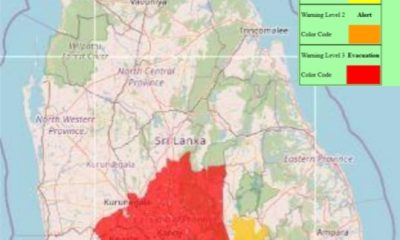
Level III landslide early warning continue to be in force in the districts of Kandy, Kegalle, Kurunegala and Matale
-

 Features7 days ago
Ditwah: An unusual cyclone
-

 Business3 days ago
LOLC Finance Factoring powers business growth
-

 News3 days ago
CPC delegation meets JVP for talks on disaster response
-

 News3 days ago
A 6th Year Accolade: The Eternal Opulence of My Fair Lady
-

 News20 hours ago
Rising water level in Malwathu Oya triggers alert in Thanthirimale